Energise South Downs (ESD)’s recent Energy Forum held in the Bedales Theatre was a great success, with more than 200 attendees. Members of the local community came to learn about the challenges and opportunities with the UK’s journey to net zero. If you weren’t able to attend, you can see the Future Energy Forum recording in five parts here.
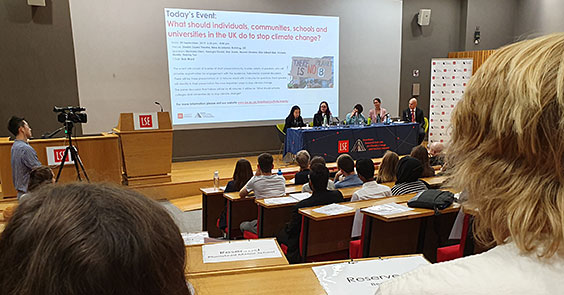
After a brief introduction by ESD Director Catriona Cockburn, the evening was chaired by John Palmer (Deputy Director, Energy Performance of Buildings, Department of Levelling Up Housing and Communities). He oversaw a panel of experts including Professor Mark Gaterell, Professor of Sustainable Construction and Associate Dean for Research in the Faculty of Technology at the University of Portsmouth; Ollie Pendered, CEO of Community Energy South; Steve Shaw, Director of Power for People; and Steve Waygood, Chief Responsible Investment Officer, Aviva.
Professor Gaterell spoke about the importance of energy efficient housing, with a robust policy being essential to ensuring industry meets the standards for net zero. He also highlighted that abrupt changes in policy impact investor confidence in the construction sector, while clear consistent long-term policy ensures the development of appropriate products and skills.
Community Energy South’s Ollie Pendered emphasised the positive impact community energy schemes can have on the health of the planet. Energise South Downs is just one of at least 400 not-for-profit community energy groups across the UK, which all enable renewable energy to be produced locally. This both powers and empowers local communities by providing energy security, helping to green the grid and delivering profits locally from their investment.
The speaker who most inspired the audience to take action was Steve Shaw from Power for People. Steve was instrumental in getting the Climate Change Act passed in 2008 and has now drafted the Local Electricity Bill. He explained the significance of this legislation for community energy schemes, the public and ultimately our ability to reach net zero. Before the evening began he had put cards on every seat in the auditorium for people to take home and send to their MPs requesting they support the bill. At the end of the evening it was pleasing to discover that all but five had been picked up.
The final speaker, Steve Waygood, homed in on how financial institutions and governments can help tackle the climate emergency. “We’ve heard that money talks, about how many of us know what our money is saying on our behalf?” he asked. He told the audience that their money is shaping the world, so by taking more interest in how it is invested, they have the power to promote the kind of future they want for generations to come. With just 20 minutes to discuss a lengthy topic, Steve finished by highlighting two papers – Act Now: A Climate Emergency Roadmap for the International Finance Architecture and A Roadmap for Sustainable Capital Markets.
To close the evening, Catriona referenced Chris Skidmore’s report, which says that the most successful version of net zero will be delivered by unlocking the ambition of places and communities. She hoped the evening’s Future Energy Forum had helped kick start this process.
Attendee Amelia Gabriel praised the event, saying: “An inspiring set of speakers who raised the urgency of the situation and gaps in policy as well as giving positive examples and clear actions that we can take as individuals and as communities.”
Catriona commented: “Energise South Downs was enormously encouraged by the full Bedales Theatre. The event felt hugely positive, and people should feel optimistic about the future and the solutions that are available. ESD has been working with local communities who are passionate about powering the renewable energy transition and we are looking forward to continuing to work together to realise these ambitions and take the opportunities that will help deliver the commitments to net zero.”
Find out more about ESD and their renewable energy projects here.
 Bedales School Blog
You must be logged in to post a comment.