We need to talk

By Colin Baty, Head of Bedales Prep, Dunhurst

As a headteacher with significant pastoral responsibilities, I read the findings from the recently published report from Edurio – Pupil Learning Experience and Wellbeing Review: Pupil Experience in Schools and Multi-Academy Trusts – with discomfort.

The result of a sizeable survey of pupils from primary, secondary and all-through schools, the report covers topics from the learning environment and learning excellence to wellbeing and safeguarding, with a view to enabling school leaders to understand pupils’ needs and priorities and design strategies to mitigate the impact of COVID-19.

The finding with perhaps the greatest sting is that, although less than one half of pupils report feeling well (stress, overwork and sleep are issues for many), under one third will speak to a teacher about it when feeling sad or worried. This is deeply concerning, although perhaps not that surprising. The issue of wellbeing amongst young people has deep roots, and a previous study by Demos suggests that pupils become increasingly disaffected with their school as they get older, with a third of final year students believing their school is focused only on preparing them to succeed in exams, rather than in life. We should also factor into this the government’s enthusiasm for the idea that a ‘good education’ is one transmitted largely from the front of the class by authoritative teachers to quiet, attentive childrenThe recent appointment of Katherine Birbalsingh (Britain’s so-called strictest headteacher) as the government’s social mobility commissioner appears to confirm the idea of teacher as disciplinarian above all else.

Were I at school under such conditions, I’m not sure that I would want to share my worries with a teacher either, and that thought saddens me – not least because I know how keen my colleagues are to be a force for good in the lives of their pupils. I am fortunate to lead a school that makes central to everything it does not only the wellbeing of its pupils, but also the primacy of connection between pupils and adults as key to this being achieved. 

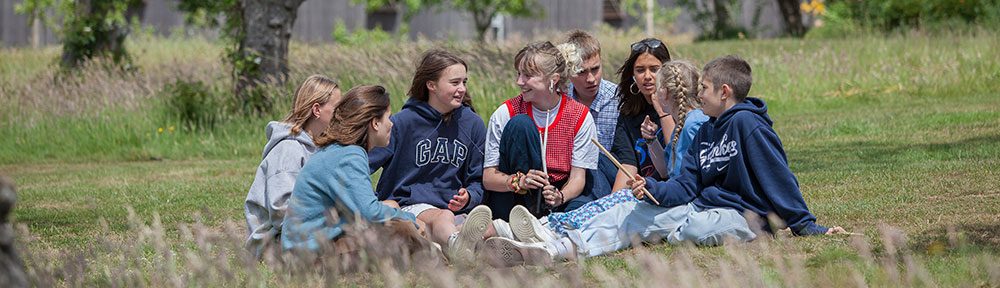
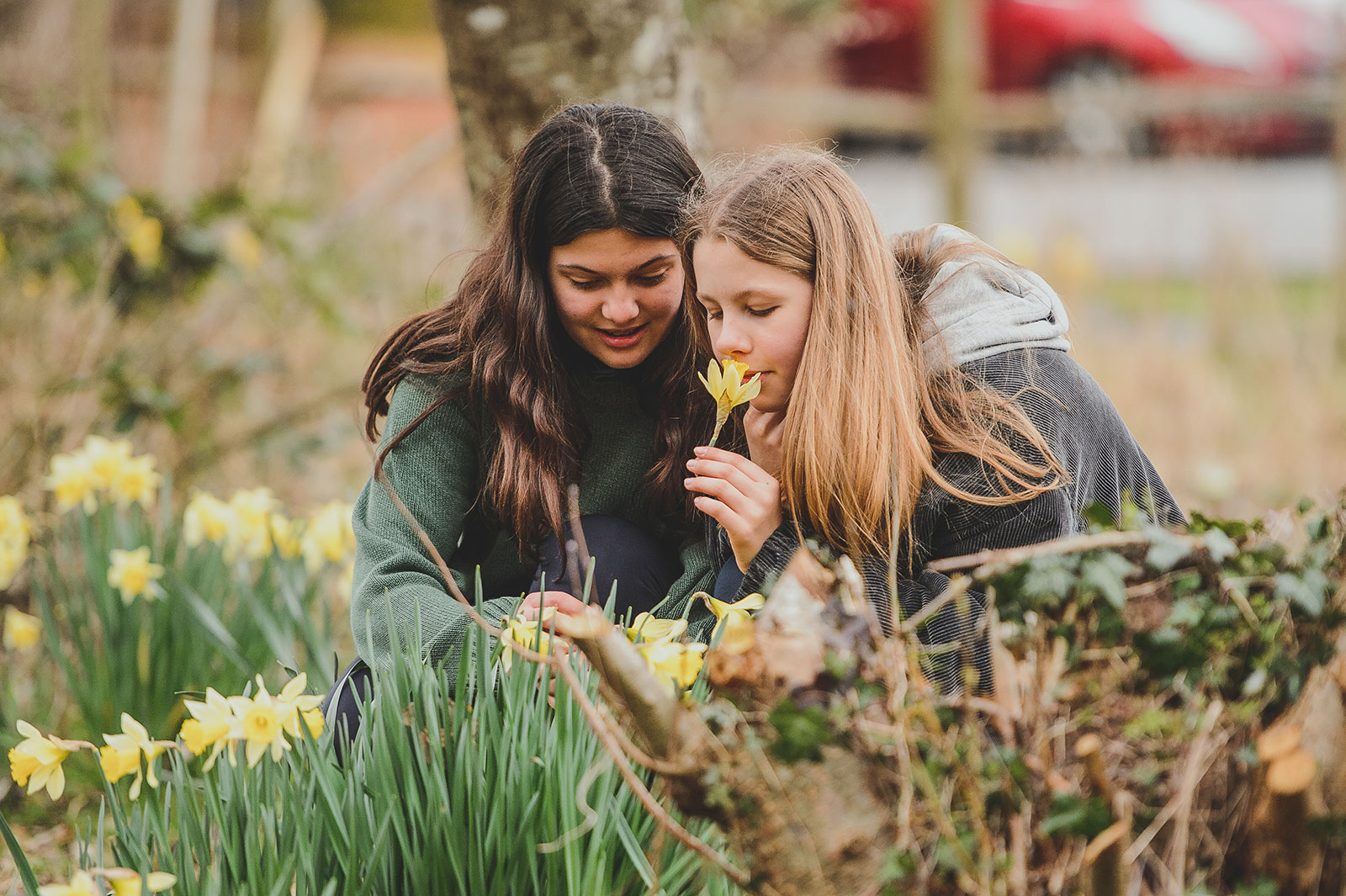
Arguably, this has never been as important as it is right now as we continue to emerge from the pandemic. At Bedales Prep, Dunhurst, we have taken the view that above all else we must pay attention to our pupils, and get a sense of how they are – how they see the world, and themselves. They may well have spent a lot of time looking at screens indoors (itself associated with issues of wellbeing in normal times), and will need to get used to being with their peers once more. So, we have spent as much time outdoors with them as we possibly can – talking, and slowly getting used to being with each other again. Of course, there has been learning too – a carefully-planned cross-curricular programme that has hidden its light in a bushel of fun. However, our first and most important job has been to figure out where they are and help them get them back to land. Whatever the future may hold, we will bring everybody together when we can – and keep doing it. That academic excellence results from such an approach is no coincidence.

In concluding the Edurio report, former Head of Research at Ofsted Daniel Muijs writes, correctly, that we “must not make the mistake of seeing our schools as heartless places”, with pastoral support well established and wellbeing a key concern. Tellingly, he also concedes that overwork and sleeplessness are negative impacts of high stakes testing, but is wary of alternatives to exams such as teacher assessment. It is here that I must resist. Academic achievement must not come at the expense of pupils’ wellbeing, and it does not need to. Schools such as Dunhurst have shown that there are many ways in which learning can both take place and be assessed, and that the entire undertaking is enhanced rather than undermined by pedagogical relationships more ambitious in their scope than government seems willing to consider. If pupils do not trust teachers enough to talk to them it is, at least in part, a problem of government’s own making.

An interview with the Artistic Director of Utopia Theatre

By Eve Allin, Bedales Events Programme Coordinator

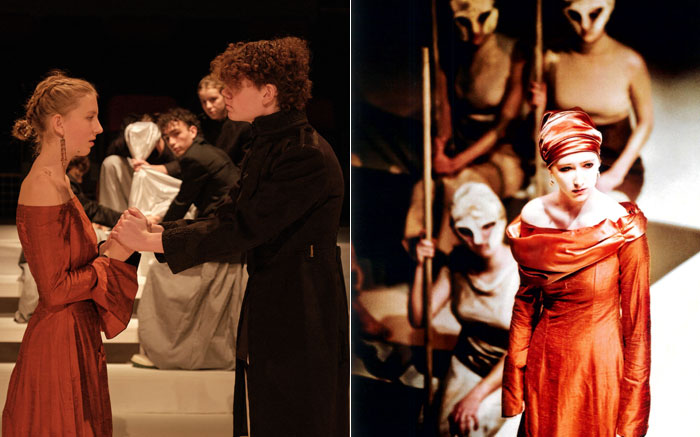
Utopia Theatre‘s production Here’s What She Said to Me is on tour in the South East and East England in February 2022, and comes to Bedales Theatre on 8 February (book tickets here). Before they hit the road, we had five minutes with the play’s creator, Mojisola Elufowoju.

Where did the inspiration for Here’s What She Said to Me come from?
Here’s What She Said to Me is deeply rooted in true events. It was first born out of conversations between me and my daughter. We realised how little communication we would share around certain areas of our lives, that this selective silence was something I had in turn experienced with my own mother and that by not learning from one another’s challenges, mistakes and trauma we are unable to create new paths for the next generation. To break this silence, I went on to tell my story and that of the women in my family to playwright Oladipo Agboluaje.

What can audiences expect from Here’s What She Said to Me?
A family saga that begins in Ibadan, Nigeria, in 1957, three years before the nation’s independence. We see three actors travelling between Nigeria and the UK through the next six decades and playing women down the generations, switching fluidly from direct address to dialogue, from English to Yoruba, and incorporating dance, song and mime in thrilling ways and switching between a panoply of family members around them – from inspiring grandmothers and stern husbands to spirited daughters whose confidence and hope, as girls, is yet unbroken. Oladipo Agboluaje’s script captures the women’s romances, achievements and dashed hopes.

How has the rehearsal process been? 

The cast and creative team have had a busy few weeks preparing for the tour. Whilst Here’s What She Said to Me has been performed before, the cast for the tour are new to the show and Mojisola is working collaboratively with them, Musical Director Juwon Ogungbe and Movement Directors Lati Saka and Maria Cassar to create this newest version of the story. Actor Anni Domingo described the process as “hard work but a lot of fun – there are quite a lot of elements to the play so we have been singing, learning songs, movement and, of course, acting. We’ve been given a lot of freedom to find our different characters.” 

What first drew you to becoming a theatre director and founding your own theatre company? 

I’ve had a passion for theatre from a very young age. Having gone to drama school and performed in a few plays, I realised that I am not in favour of the limelight and most importantly, I don’t like learning lines. Directing seems to be the next best option. 

I set up Utopia Theatre in 2012. The vision for setting up the company came from the need to see representation on stage, and to see a different kind of work produced. It was a vision and commitment to see myself on stage. I began making work with some of the people I graduated with. This began a journey towards a series of partnerships and opportunities. 

What legacy would you like the production to have on the venues and audiences? 

We hope that audiences who have not previously had the opportunity to experience African theatre will enjoy the rich forms of storytelling and music and be encouraged to engage further with African performance and arts. For those who will relate to the story of mothers, migration and intergenerational challenges, we hope it starts a conversation that may have not been addressed before. It is a heartfelt and humbling story brought to life on an almost bare stage. An experience of total theatre where music and movement become metabolised within the story. 

Embracing sustainable theatre practices at Bedales

By Joanne Greenwood, Theatre Manager and Production Designer

Here at Bedales we have always embraced the circular economy when it comes to productions. Reuse. Remake. Recycle. As with many theatres, we have a wardrobe which houses an extensive collection of clothing and accessories, and a prop store built up over the past 25 years.

With the global trend towards sustainably lockdown saw the creation of the Theatre Green Book. The Theatre Green Book gives theatre a path towards sustainability. It maps the journey towards a way of theatre-making that is low carbon and low waste, values people, and contributes to a more sustainable society.

The design brief we set ourselves for the Whole School Show 2021 was to honour 25 years of Bedales Olivier Theatre and to take part in the Theatre Green Book initiative in creating sustainable productions.

When designing any show, I consider what we have available to see what can be reused or adapted. Where possible, purchases are made on the basis that items have a future life and are considered an investment.

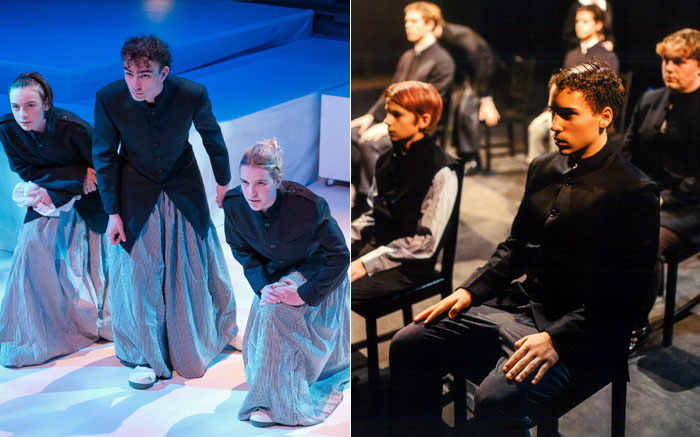
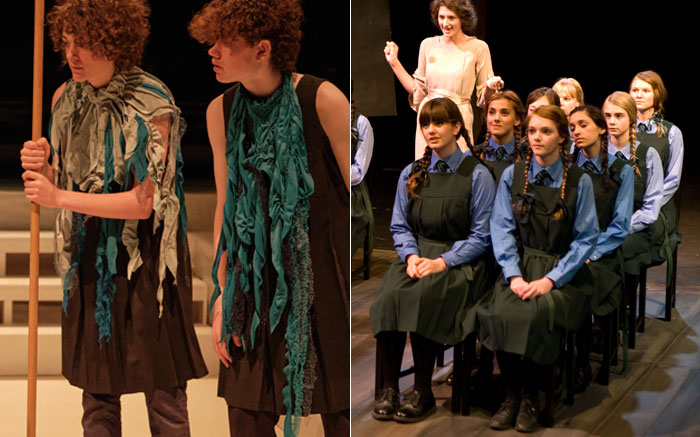
Many costumes in the wardrobe are used time and again, especially period costumes, but for a production to have an original and cohesive design there will always be adaptions and new costumes to be made. For Tales from Ovid (2021) we selected costumes from previous productions which hadn’t been used again and reinterpreted them in a new way to reflect the various tales.

The school pinafores from The Prime of Miss Jean Brodie (2007) formed the basis of the design for the Echo and Narcissus tale with collars made from remnants of fabric we had in stock. The Tereus and Philomela chorus wore jackets from Spring Awakening (2017), skirts from Les Misérables (2004) and boots from Me (2017). The male chorus jackets from Oedipus (2008) were used for the Midas tale with the hi top trainers from Around the World in 80 Days (2019).

The costumes in Jane Eyre (2006) were historically accurate in shape but the design concept was that all the costumes were various shades of red and therefore not realistic to how they would have been worn in the period. Worn by the Bacchic chorus in Bacchus and Pentheus with bare feet, ivy headdresses and doe eye make-up they paid tribute to the Sixth Form production of the Bacchae (1998).

The production also gave us the opportunity to use some memorable character costumes from the past:

  • Juno; Dress originally designed for Medea in Medea (2016)
  • Jupiter; Suit worn by The Prince in Sound of the Night Feather (2015)
  • Procne; Dress worn by Jocasta in Oedipus (2008), originally designed for Gertrude in Hamlet (2003)

Over 95% of the costumes from Tales from Ovid came from our wardrobe stock.

“Everyone in theatre starts their career by creatively stretching resource as far as possible. All theatre-makers are experts in sustainability. To the challenge of responding to the climate emergency, theatre is already bringing resourcefulness, dynamism and creativity.” – Theatre Green Book

Bedales Library’s most read books of 2021

By Matilda McMorrow, Librarian

The ‘beating heart of the school’ – its library, if you ask those in the know, including the 2014 all-part parliamentary report of the same name. So when I read our final borrowing figures for 2021, I felt like the stats threw some light on what kept the school’s heart beating last year.

Our second most loaned book of 2021 was Ms Marvel: No Normal by G. Willow Wilson. From the thriving graphic novel section we created in the library in 2019, it’s the first in the Ms Marvel series. We have a growing community of graphic novel lovers at Bedales, which is no surprise – the medium is immediate, dynamic, and full of artistic experimentation, like most of our students on a good day. American-Pakistani heroine Kamala Khan (AKA Ms Marvel) has been lauded as an engaging and loveable protagonist, the series as a groundbreaking new take on the superhero genre. This book kicks you off with her origin story, and is witty, charming and thoughtful. As Kamala’s dad quotes from the Quran, “Whoever kills one person, it is as if he has killed all of mankind… And whoever saves one person, it is as if he has saved all of mankind.” We all needed some superpowers and a grounded friend in 2021, and Ms Marvel provided. Fingers crossed she’ll keep it up in 2022, as a TV version is being made for Disney+.

Now, number 1, the most loaned book. The Curious Incident of the Dog in the Night-Time is a modern classic. If you didn’t know, it’s a novel about a 15-year-old boy who sees the world in an extraordinary way, and who falls under suspicion for killing his neighbour’s dog. It’s by turns funny, painful and revealing, and is also one of the most banned and challenged books on the American Library Association’s list. I’m sure some of these loans were following the smash-hit stage adaptation at the National Theatre, and some might after teacher recommendation, especially for Block 3’s ‘coming of age’ English topic. For lots of reasons, it’s a book we reached for in 2021. As the author Mark Haddon said, “It’s about flawed people dealing with conflict, like nearly all novels.” 

Of course, a library is more than the sum of its borrowed books. Some people spend months reading a library book without ever borrowing it, which will go unlogged. And then there’s our huge online library of resources I haven’t had space to talk about here. A library is also the curiosity quests, the conversations, the recommendations, burning questions, being steered in the right direction, all kinds of things we don’t have stats on. But we do have stats for what words and phrases were searched for most on the library catalogue, which give some clues. One of the most popular searches was ‘shelf help’, library code for books on mental health. No prizes for guessing that would be a big hitter. Yes, it can be concerning to think about all the students and staff who have been struggling with poor mental health. But I find it reassuring to know there’s somewhere they can be empowered to look for help on their own terms, and to find good quality resources, chosen, managed and navigable. This is what libraries are about. Power to the patrons!

Boys’ First XI Hockey v Kings’ School, Winchester

By Kevin Boniface, Head of Hockey

On Wednesday the first XI travelled to their traditional season opener against Kings’ School, Winchester. Typically, the opposition were well organised and capable on the ball. It was perhaps not surprising then that Kings made the majority of the early attacking play and, despite some impressive defending from Sol Arbib and Joe Cullen, found themselves 2-0 up inside 15 minutes. However, the new look Bedales side began to settle into a rhythm and became more precise moving forward, driven by the influential Zach Stewart and Sam Gibbon.
 
Bedales created a number of decent chances but unfortunately failed to convert. However, on the stroke of half-time, a moment of individual brilliance and a clinical finish from Jac Wheeler, deservedly pulled Bedales back in to the game.
 
Despite a well presented half-time talk from captain Josh Baty, the Bedales side weren’t able to match the same intensity levels as the first half and began to lose shape, producing a number of turnovers which were clinically finished by Kings, who came away deserved winners. Plenty of promise from the Bedales side and a clear target of maintaining intensity and structural discipline levels.

Block 3 English students’ creativity and flair

By Lucy McIlwraith, Teacher of English

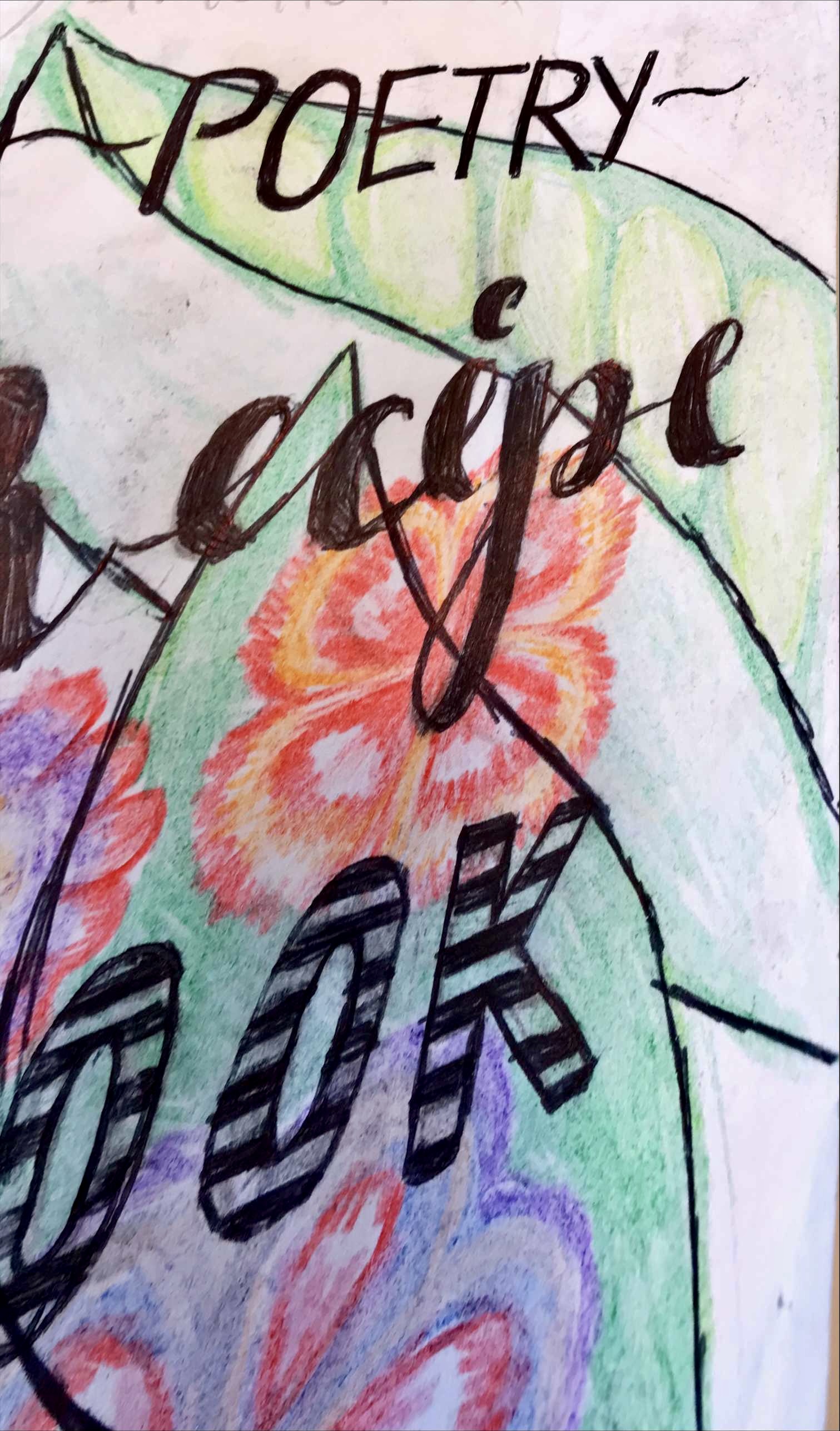
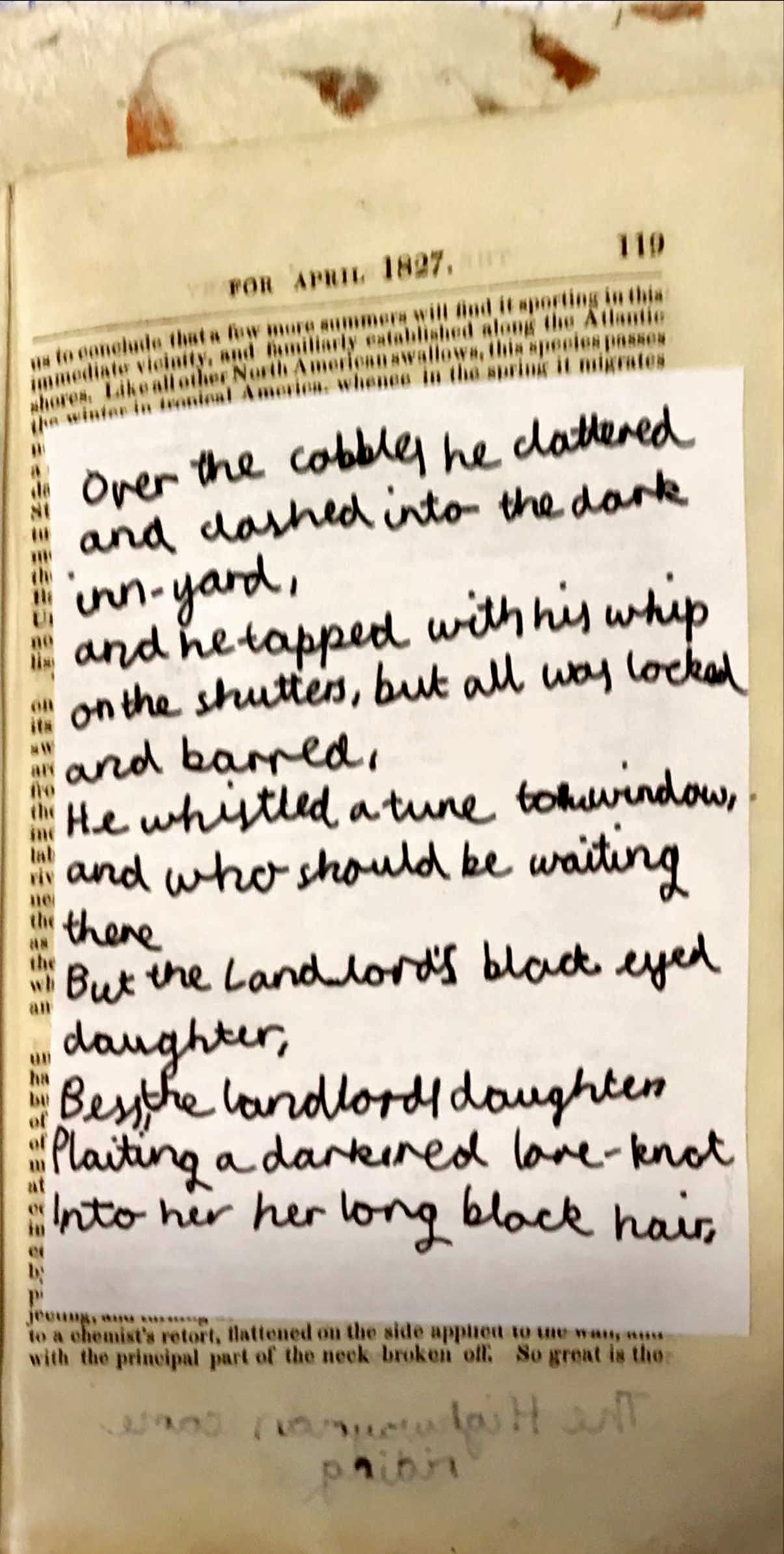
The English department office has recently been awash with truly stunning pieces of work from our Block 3 sets: hand-made, hand-sewn, whimsically decorated with string, ribbon and raffia, the poetry anthologies we asked the students to make over Christmas have been a real antidote to the winter greyness!

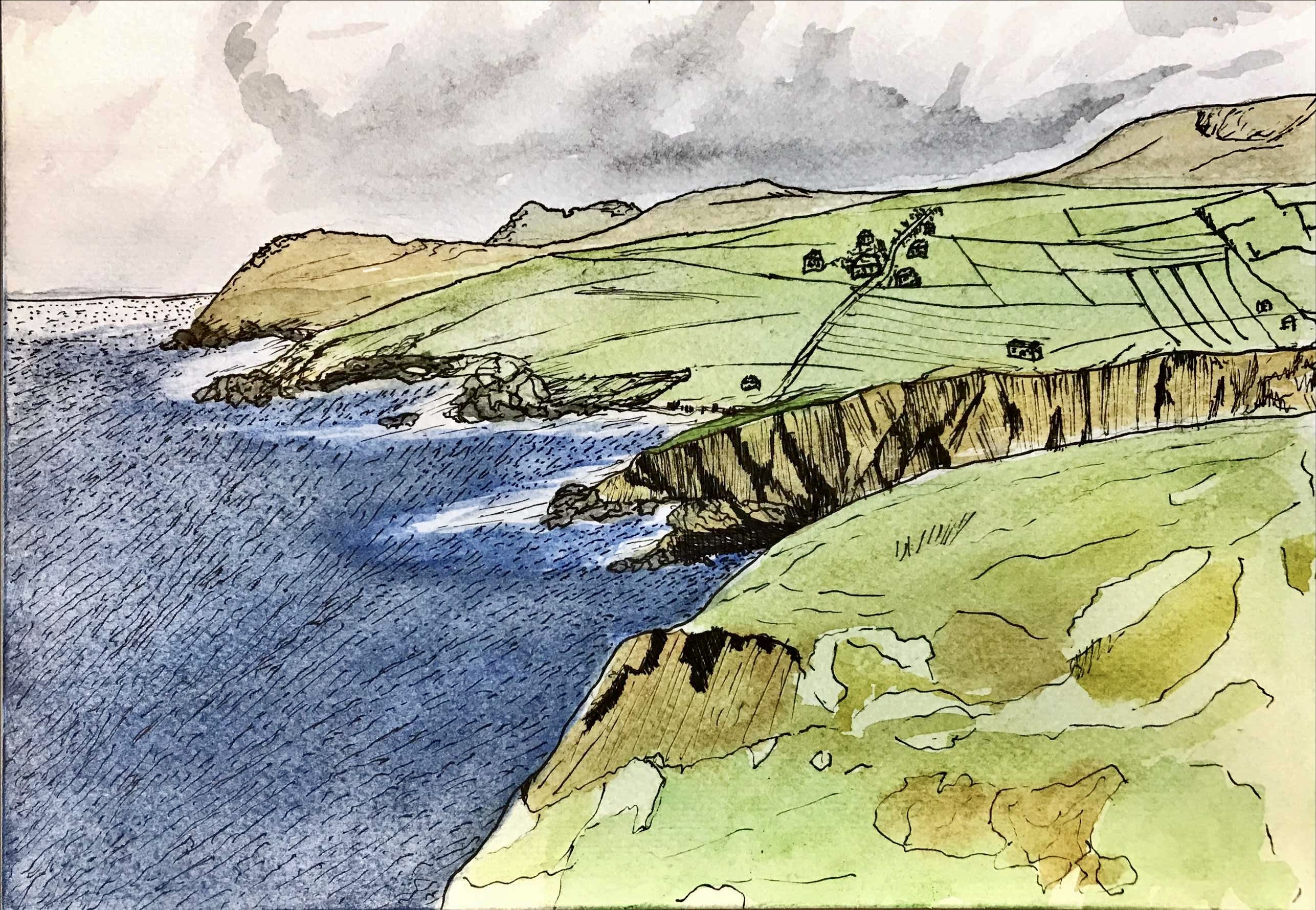
Some students chose to include their own poetry as well as analysis of poems they had studied over the term; others added paintings and sketches their work. We also had anthologies presented as meticulously detailed multi-media scrapbooks with layers of newsprint or card or recycled books. Each page in some of them showed a different layout, with fold-out sections or pockets in which a bonus poem nestled. One example even had fairy lights!

We’ve had such a variety of beautiful and imaginative work which shows truly exceptional sensitivity and creativity and we hope you enjoy see a few examples in the pictures below.