New life on the farm

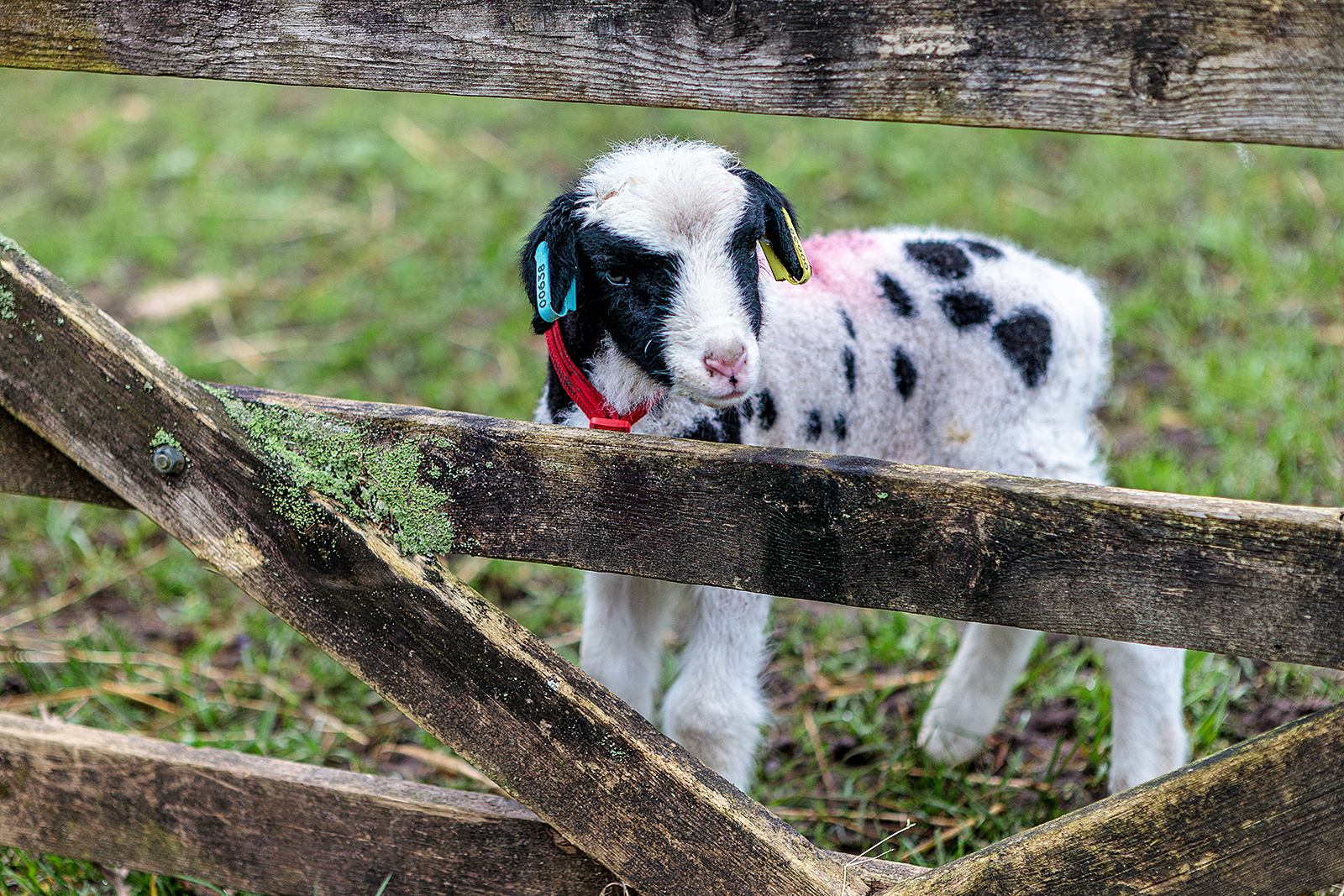
The working farm at Bedales is a fundamental and much-loved part of school life, offering learning opportunities for students at every stage of their learning journey, from Pre-prep to Senior. The Spring term always brings a flurry of activity to the farm and this year has been no different, with lambing season in full swing and five new piglets from our Berkshire sow, Bessie. Not to be outdone, our Pygmy goats have also been awaiting new arrivals of their own – and the first of three sets of twins made their entrance into the world on Easter Sunday!

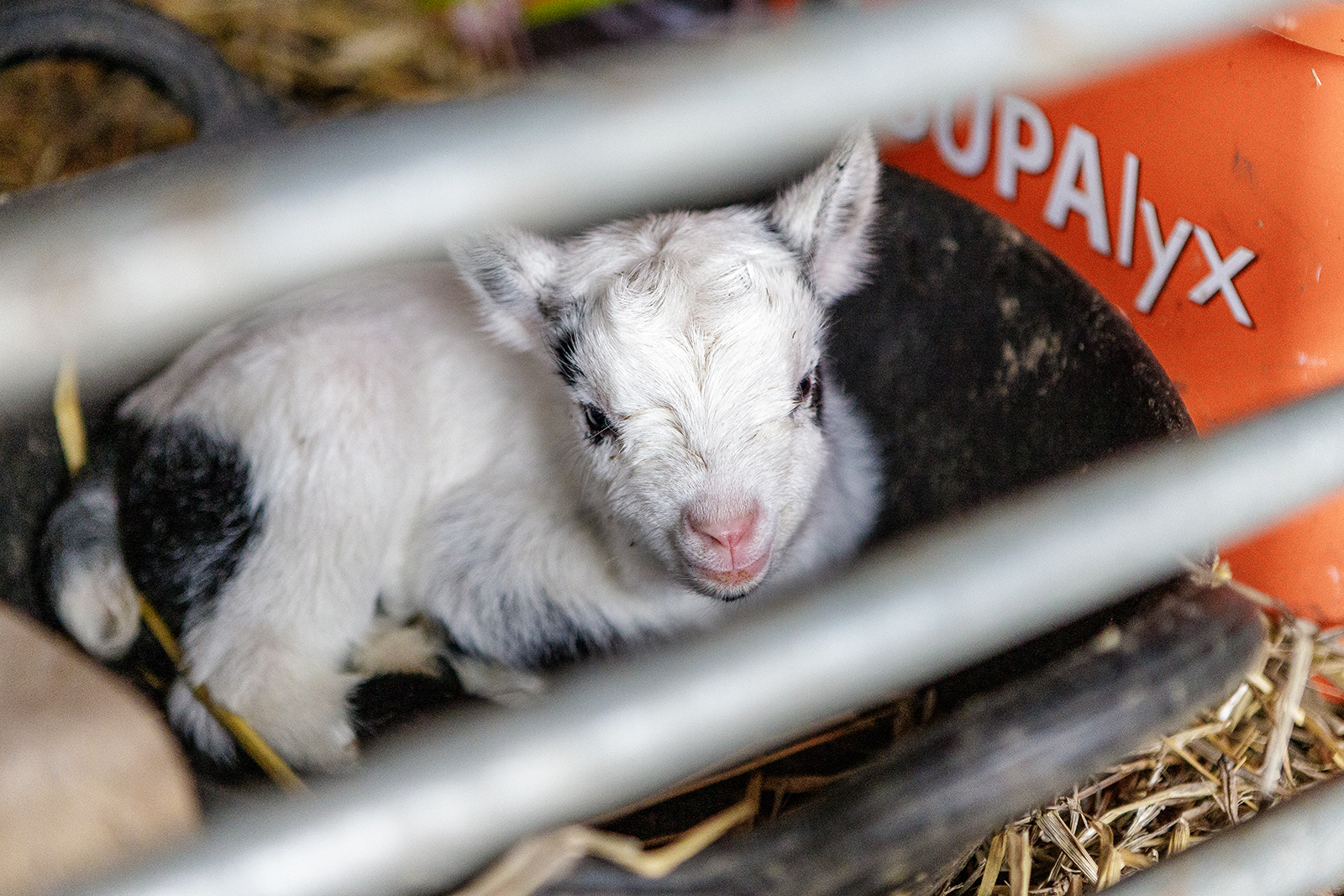
With the farm only a short walk away from the Pre-prep, children always love visiting the farm to see the animals. More than just fun outings, these visits are experiences that nurture children’s budding knowledge, bringing their learning to life in an engaging and memorable way.

This term, the arrival of new life on the farm has given the children the opportunity to observe lifecycle stages of lambs and piglets first-hand. They’ve noticed developmental changes at each visit, and heard from staff at the farm how postnatal mothers tend to their young and how human helpers, at the farm support them. They’ve helped feed them, watched them being weighed, and observed as the animals have outgrown their initial home in the farm’s ‘maternity suite’ (otherwise known as the Black Barn) and moved out into the field (lambs) or woods (piglets). Direct observation like this helps to make abstract concepts more concrete in the minds of our students, so they can develop an understanding of the natural world. 

The farm also adds an extra dimension to the students’ learning enquiries. Students investigating habitats as part of their enquiry on the endangered snow leopard in the first half of the term observed the real-world habitats of animals on the farm, comparing it to the habitats of not only snow leopards, but other animals. Other students, who wrote their own haikus about nature in the second half of the term, were inspired by seasonal changes, including those on the farm. 

While opportunities to get involved in animal husbandry increase as students progress through the school, children at the Pre-prep have an early introduction through activities like incubating hen’s eggs, as Year 2 did earlier this term. The students observed the journey from embryonic development to hatching, giving them insight into the care and responsibility needed to nurture life (and laying the foundation for future involvement in activities like lambing!)
 
Outdoor learning plays a key role in our distinctive educational ethos, which can be traced back to Bedales’ founding, when Outdoor Work was introduced as a core curriculum offering. Over 130 years later, it remains integral to our holistic approach. The embodiment of ‘hand’ in Badley’s belief in educating ‘head, hand and heart’, outdoor learning provides clear benefits for every aspects of a child’s development – intellectual, creative, emotional, social and physical. 

Inspiring creativity

By Sophia Egerton, Outdoor Work Tutor Technician

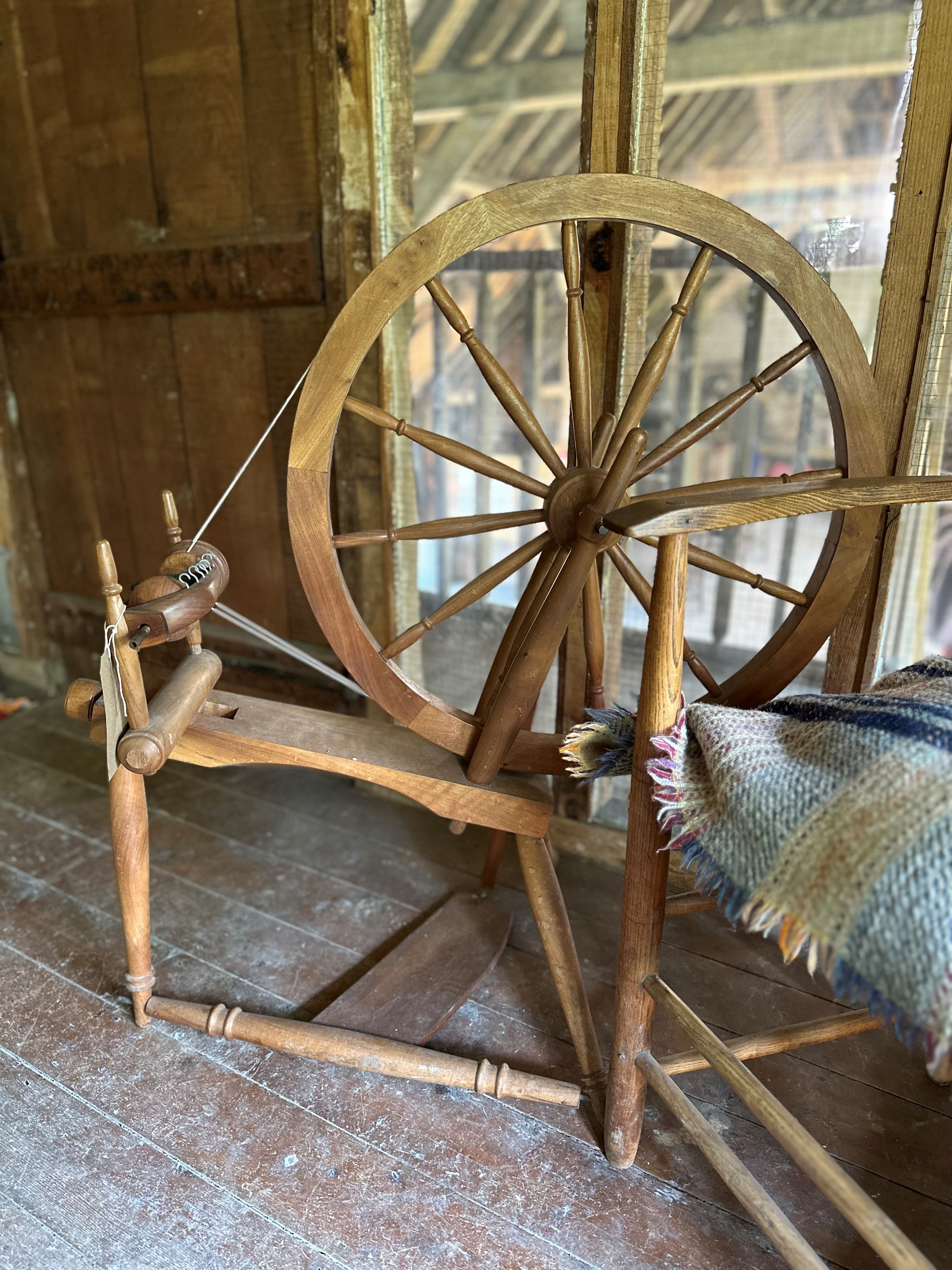
When I joined the Outdoor Work team as a Tutor Technician in January, Andrew Martin shared one of my main priorities in a Saturday Bulletin article – to get the wool room in the Sotherington Barn bustling with students spinning, weaving, knitting and all sorts of other traditional yarn skills.

First though, I needed to organise the wool room on the barn’s mezzanine level which had become quite disorganised. In my spare time I have been busy sorting, clearing out and clearing the room, transforming it into a beautiful, calm and peaceful space that is conducive to learning, will inspire creativity and enhance the barn’s stunning structural features.

In keeping with our recycling and sustainability ethos, we appealed to the Bedales community for furniture, storage baskets and wool to help replenish and coordinate the space. Thanks to the generosity of the community (and a little extra help from Facebook Marketplace!) the wool room is now a fabulous teaching space with organised areas to promote independent working. You can see more photos below:

A cabinet donated by Bedales parent Courtney Winstone is now being used as storage for felting, sewing and needlework equipment. The old school uniform pigeonhole unit has been repurposed as storage for individual students’ work in progress, whilst a dresser from Facebook Marketplace is displaying vintage spinning and weaving equipment, carding paddles, Lazy Katie’s, Bobbins and a small library of reference books and patterns. Bedales parent Eliza Kenan also donated lots of vibrant coloured chunky wool, which will be great for teaching beginners. A huge thank you to everyone who donated and made the makeover of the wool room possible. 

I am passionate about heritage crafts such as crocheting, so I also decided to decorate the room with pieces I crocheted myself, including a blue dreamcatcher hanging from one of the beams. It will be so exciting to teach Bedales students these traditional crafts and to utilise the wool from Bedales sheep for creative expression. As ‘flow’ activities, crafts such as spinning, weaving, knitting and crochet are also super beneficial for mental health and wellbeing, as people can fully immerse themselves in the crafts and feel energised focus, involvement and enjoyment in the process.

Giving the room a makeover has also inspired me to crochet items of clothing using Bedales wool, and you can currently see a bolero I crocheted on display in Reception. Knitting and crochet kits will be coming to the Outdoor Work Farm Shop soon, so watch this space! 

The reaction to the room has been incredible and I can’t wait to see it used by students in the weeks, months and years to come. If any students are keen knitters or crocheters, please get in touch with me as I would love to discuss project ideas. 

A bit of peas and quiet

By Katie McBride, Teacher of Biology

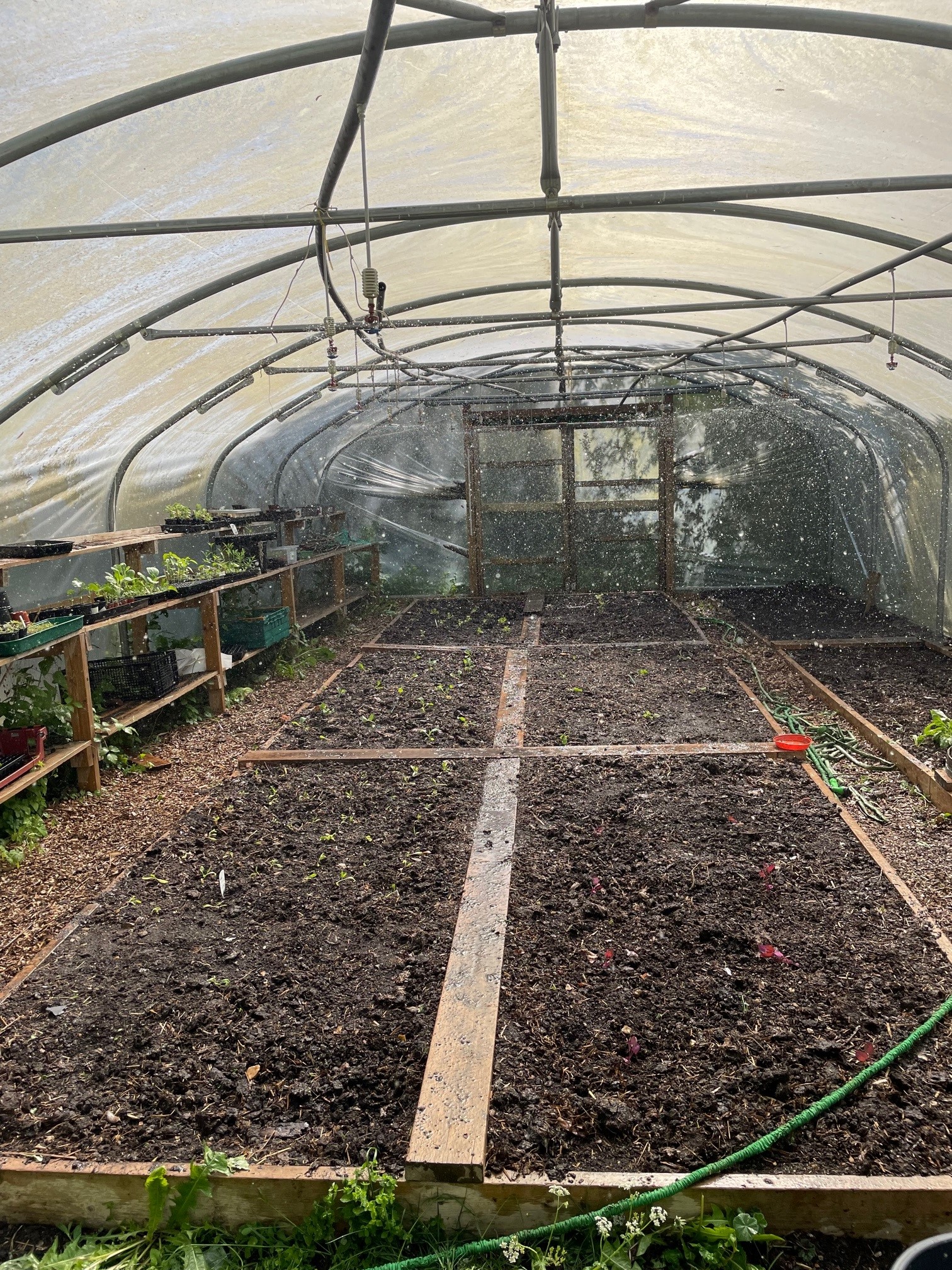
Growing season is well underway in the ODW vegetable patch. Maintaining or improving biodiversity is always at the forefront of our minds whenever we change or impact the land. With the veg patch, we try to incorporate companion planting to maximise our yield and help reduce pests naturally. Planting carrots next to our onions helps to work symbiotically to reduce carrot flies and onion flies on the respective crops, for example. Equally, we try to grow all our crops chemical free, so all our manure is provided by our own livestock and vulnerable shoots are protected with snug woollen wraps to deter slugs and snails. 

When selecting potential plants, we try not only to think of what will be good to use in the Bakehouse, but also to incorporate plants which serve a purpose in nature. Leaving beds of nettles and dandelions not only provide us with edible plants, but are also vital early food sources for bees and habitats for butterfly and moth larvae. Similarly, our circle of sunflowers will provide a beautiful vista of glorious colour and then fade back to an important natural bird feeder throughout the Autumn, and green manure can be turned back into the beds that have been rested.

We are ever mindful of the multitude of organisms we share our land with, and aim to provide suitable habitats for everything from fungi to tawny owls. Hence in the veg beds you might find the occasional decaying log alongside a line of beetroots, providing a great mix of fungi and habitats for the beautiful stag beetles, and our greenhouse has a resident slow worm who helps to keep the snail population in check!

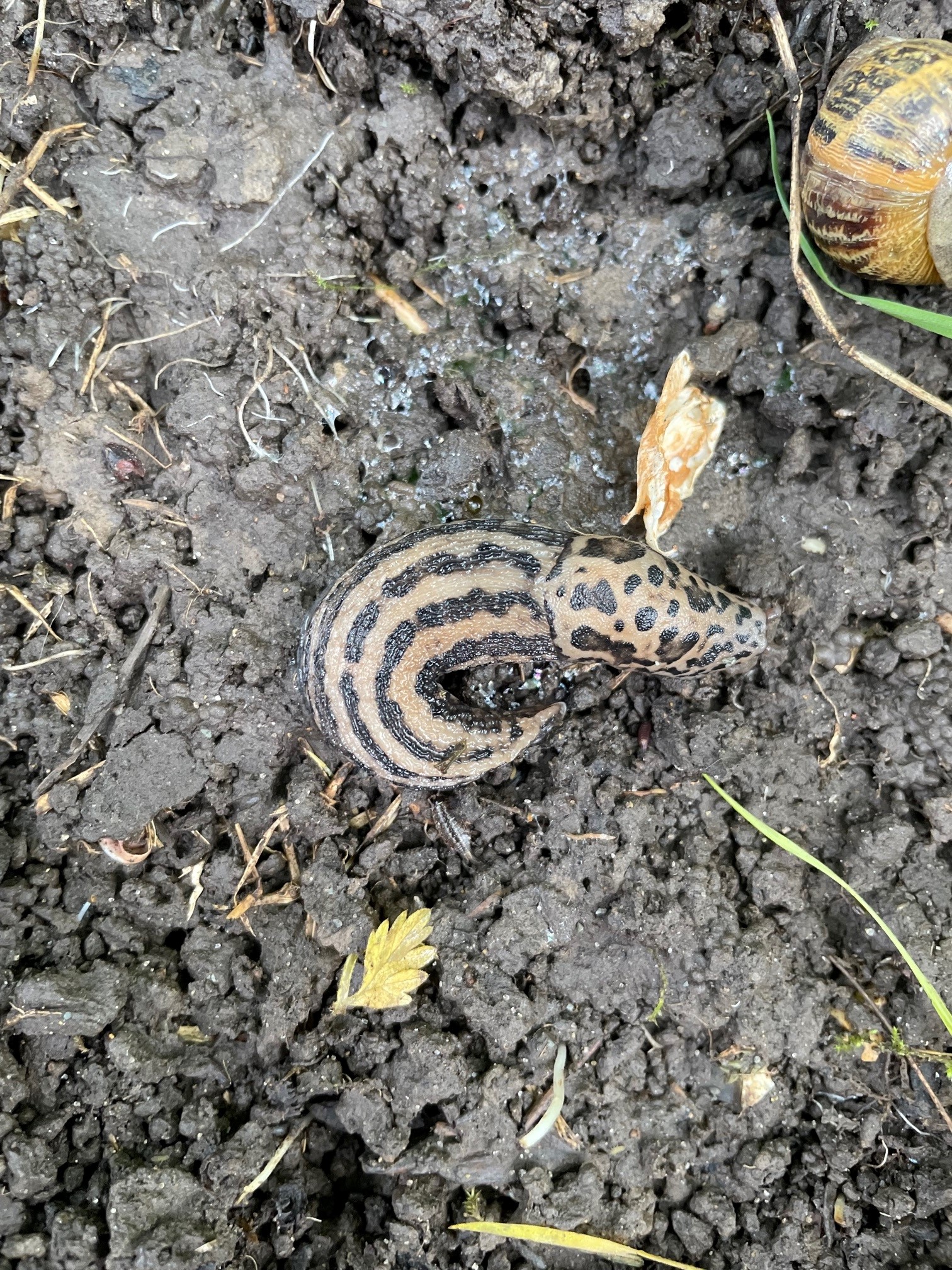
Staying pesticide free allows us to ensure that nature thrives where it can, and we do not pass issues on up the food chains within our ecosystem. It is not without its battles and frustrations of losing crops at times. Knowing that residing in our garden are the leopard slugs that help break down decaying matter, hedgehogs on snail patrol and robins waiting for us to uncover any centipedes makes it all feel much more of a team effort, and allows us to see the funny side when the shameless blackbirds pluck out our freshly planted shallots and proceed to play their own game of volleyball with them!

We still need to hold our breath when watering the tomatoes with a large scoop of comfrey tea, but the rewards will be reaped with a hopefully bumper crop later in the year. We hope that on Parents’ Day you might take a moment to wander through the veg garden, or pop into the ODW Farm Shop to sample and buy some of our produce. Whether you have a hugely productive market garden or simply a basil plant on the kitchen windowsill, we hope you get as much enjoyment from your moments of gardening as we do.

Volunteering as a Parish Councillor

By Andrew Martin, Head of Outdoor Work

I don’t really know a lot about politics and I have never expressed an interest in it, but last summer I was delighted to be elected onto Steep Parish Council. It’s not the start of a new career – or a midlife crisis – but a way of getting to know the community I have lived in for eight years, and trying to help it in some small way.

Most people have heard about the famous ‘Jackie Weaver’ moment during a lockdown council meeting (if you haven’t, YouTube it). We haven’t had anything quite so dramatic, but sometimes it’s not far off! What I have seen though has been really humbling. I’m in awe of the time and effort that my fellow councillors put into their roles. It is a voluntary role and we officially meet once a month, but it is all the work that goes on between meetings that I’m not sure many people are aware of. I’m limited in what I can do, and volunteer for only one area, which is encouraging the young people in the community to be seen, and to take an active role in it.

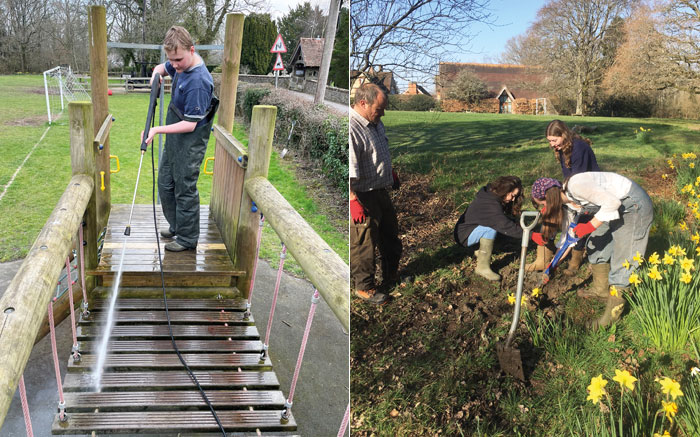
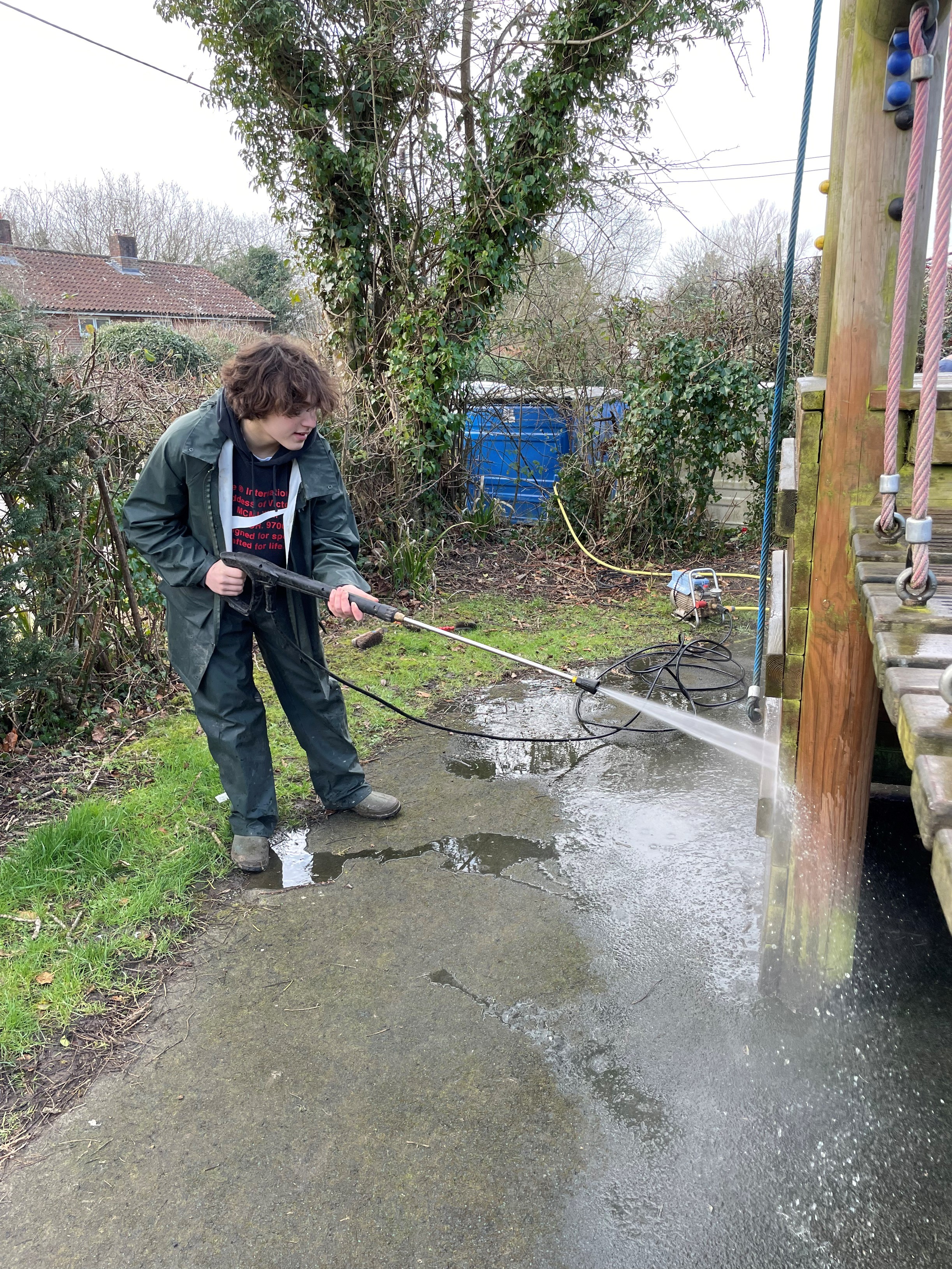
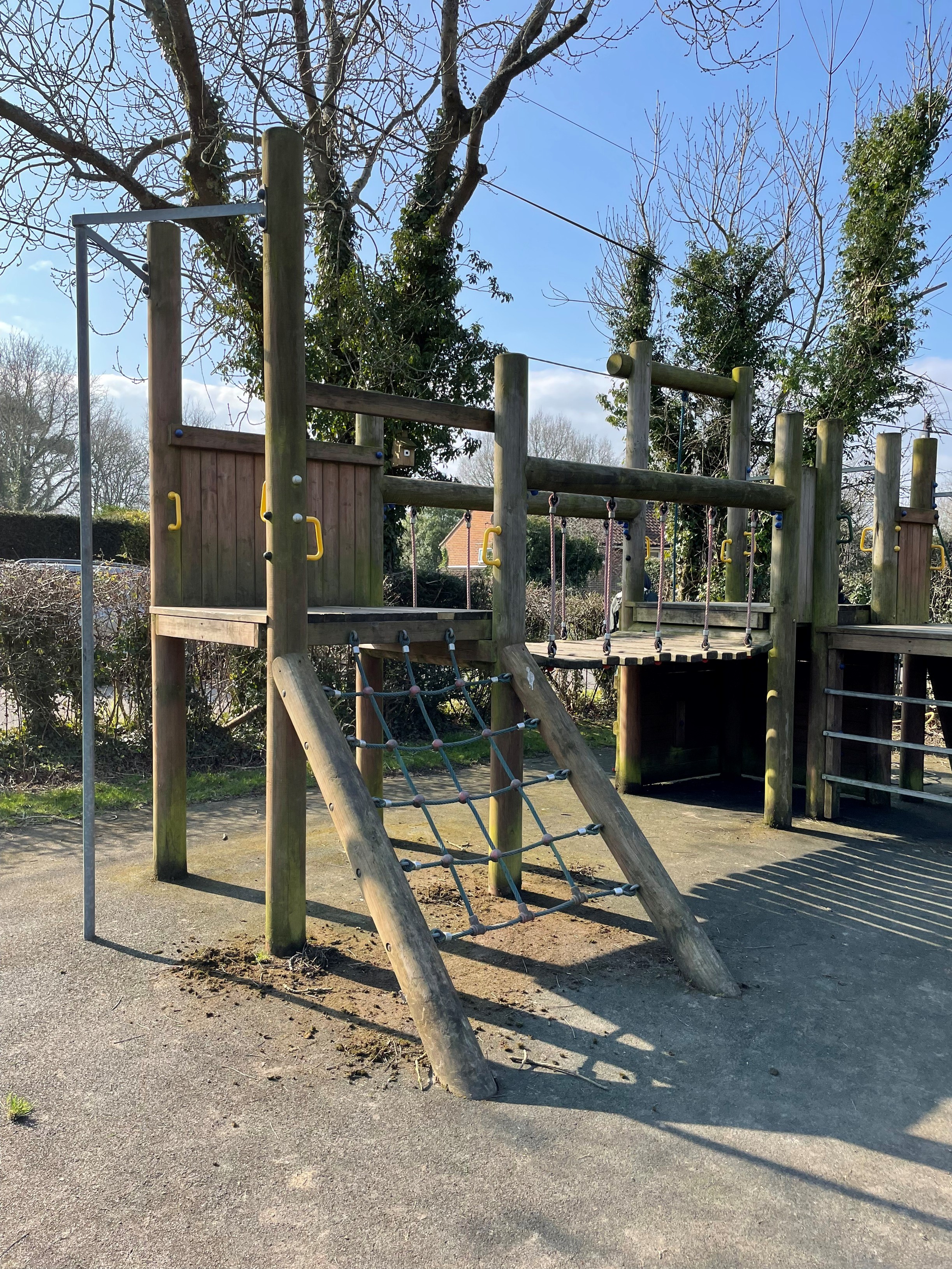
On Tuesday 8 March I spent the morning with five students from Bedales, pressure washing the play equipment on the common. They had a great time removing the dirt that had built up over the years and the equipment is now ready for a coat of wood preserver, which we hope to do in the Summer Term. Pressure washing the swing set is next on our to-do list.

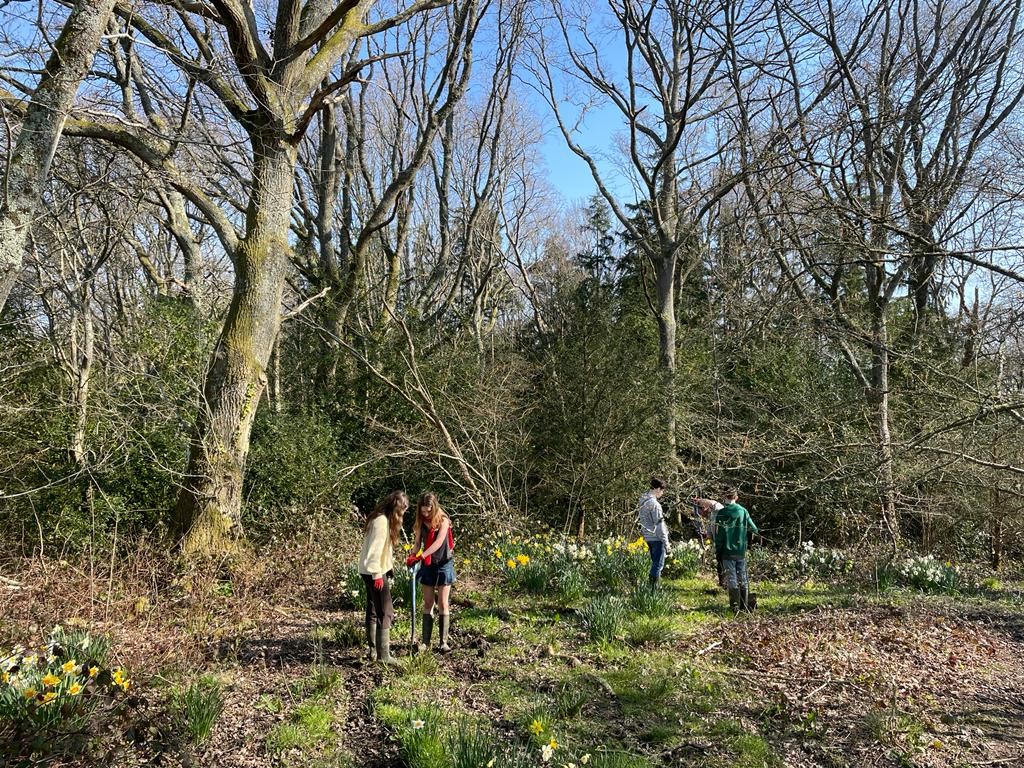
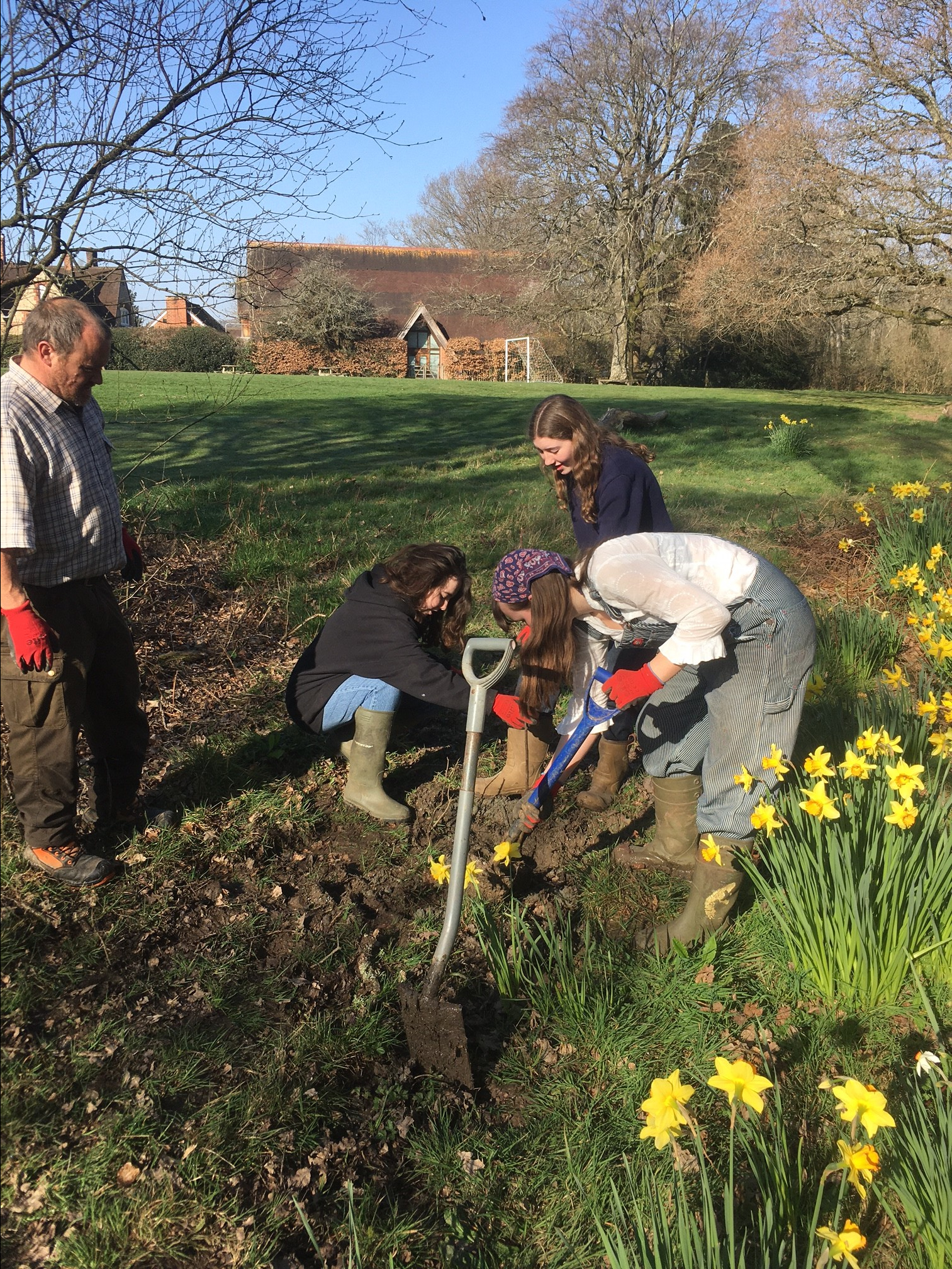
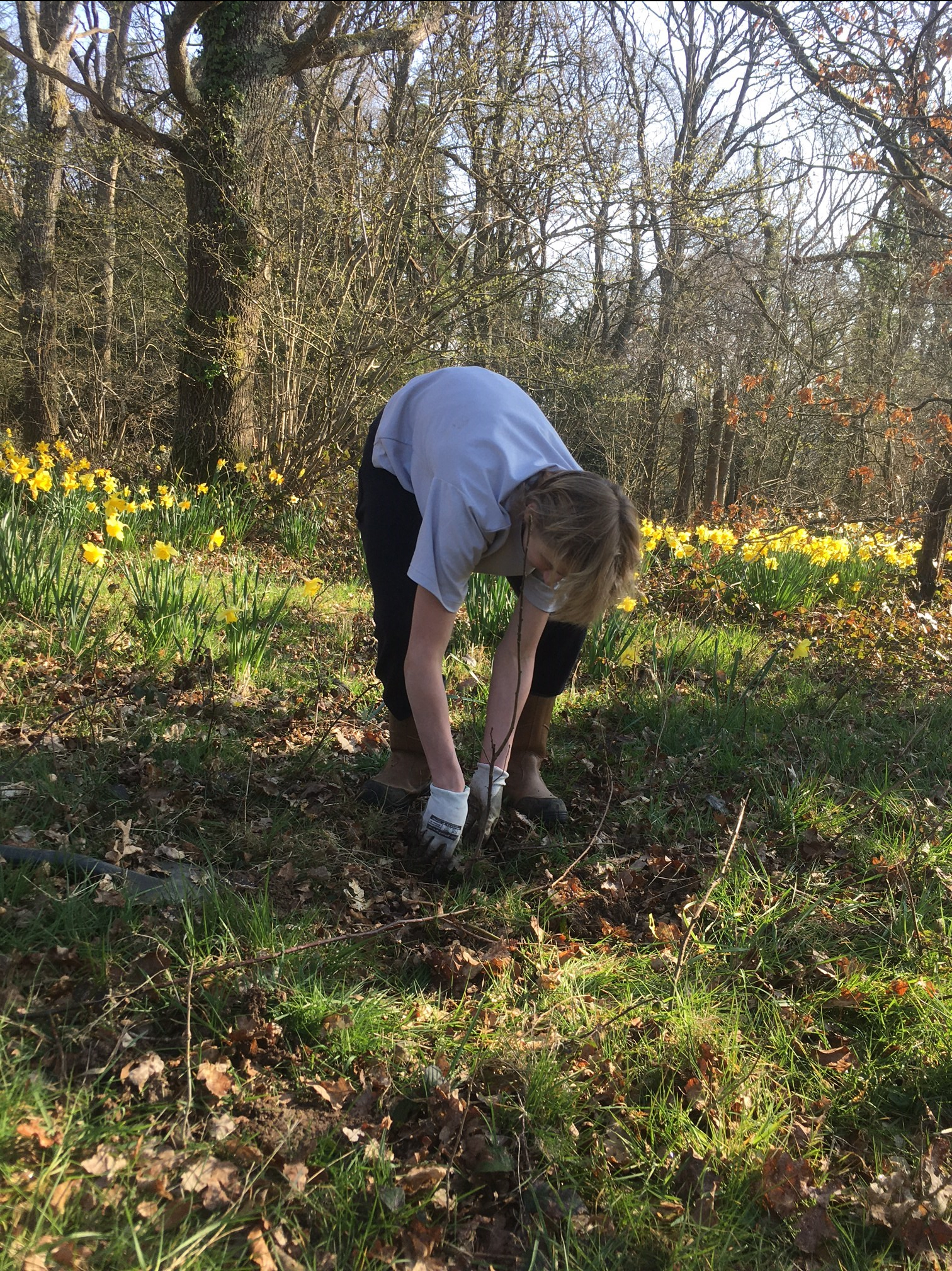
On Thursday 24 March we were back on the common for the morning with four different groups of students. With the help of my colleagues Stu Barilli and Katie McBride, we planted 34 trees complete with tree guards and supporting stakes. This was funded with a grant from East Hampshire District Council, with the aim of replanting the area which has suffered from ash dieback.

Our students got a great deal from it; they connected with something outside Bedales, they contributed something to their community, and learnt a bit about tree planting along the way.

Outdoor Work hosts Small Shepherds’ Club

By Kirsten Houser, Assistant Farm Manager

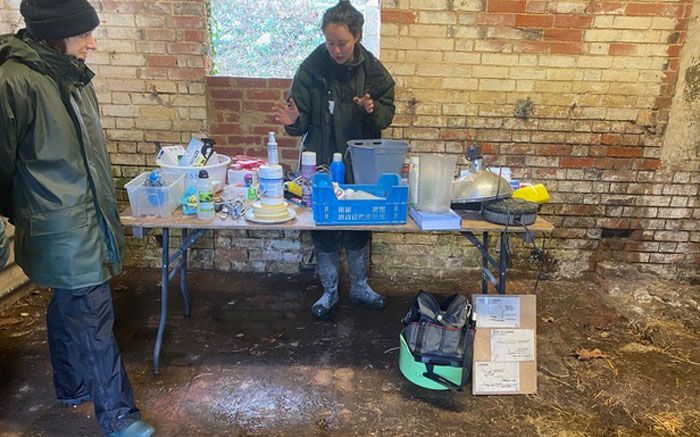
In the wake of Storm Eunice, we were very happy and surprised to welcome over 30 visitors, head-to-toe in waterproofs, to visit our lambing shed on a grey and rainy Saturday afternoon. ‘Preparation for Lambing’ is an annual event run by the Small Shepherds’ Club, a fantastic organisation providing practical help and advice for small scale sheep keepers in the southern counties. Each year a different shepherd hosts the members, some new to lambing and others with years of experience under their belts, and this year Bedales was asked. The aim of the event is to demonstrate our system for managing the lambing shed, equipment we have on standby, essential bits and bobs to make lambing life easier and lessons learnt from our years of birthing baby sheep!

The joy of an event like this is that knowledge is shared so generously between members, and it provided a great opportunity to reflect on how we lamb here at school, and also gave us a gentle nudge to get everything tidied up and organised ready for the first of our 20 ewes to give birth after half term. Outdoor Work students did a fantastic job clearing out the Black Barn and making up pens in the maternity suite, and we received many compliments on the farm and surrounding school estate – even in it’s post-storm raincloud.

We discussed lambing bag essentials (prolapse spoon anyone?!) and the importance of colostrum in the first few hours of a lamb’s life, heat lamps, ewe nutrition and the many many uses of baler twine. We showed off our ‘lambing board’ – a dizzying chart of numbers and notes on an old whiteboard – not high tech but indispensable for keeping note of progress with lambing, any sheep who have needed assistance or medication and anything else to keep an eye on. The afternoon was topped off with cake and tea in the Outdoor Work barnyard, and a display of student work, knitted and woven items from the flock’s wool, and a tour of the spinning room. 

Over the next couple of weeks Andrew and I, along with our students, will take turns to watch over the flock at night, during the day and at dawn, and we take great pride in sharing what we do with visitors inside and outside of the school community. Lambing is easily the most exciting time of year for us on the Bedales farm, and though it is undeniably stressful and tiring, it never fails to be magical as well. Look out for an article in next week’s Saturday Bulletin from our BAC students, with news of all the new arrivals, including baby goats and surprise quadruplet lambs!

Forging ahead with Outdoor Work projects

By Jo Cole, Outdoor Work technician

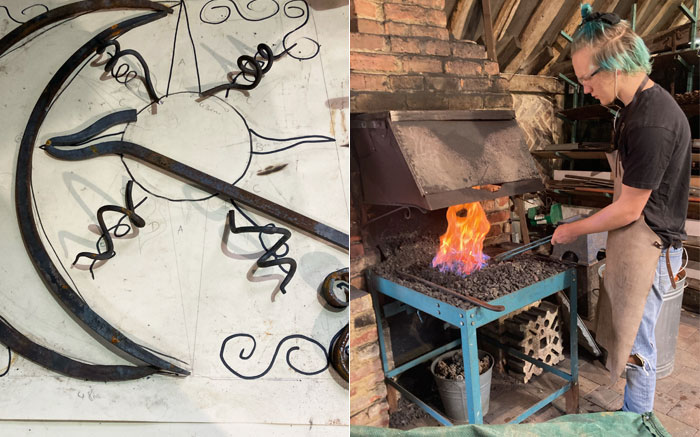
On a chilly Saturday in January I stepped out of my normal role of laying fires, checking tools, stocks and equipment in the forge and joined some of our Block 5 and Sixth Form students for a day with our visiting blacksmith, Lucille Scott from Little Duck Forge

The students aim was to work on their projects; mine was to learn a few basic techniques and make some latches for the barn doors.

There are no thermometers, gauges or apps indicating the temperature of the forges. Instead you have to learn to watch the colour of the coals and read the heat to judge the ‘just right’ moment to remove the work. Remove it too soon and you tire yourself out trying to hammer steel that is cold and won’t give. But leave it too long and you risk burning away the steel – and your efforts so far – entirely.   

I didn’t take me long to realise that it is pretty hard work! Once hot, the steel is only malleable for a very short time. I needed to plan ahead to ensure I had the right tools immediately to hand and to rapidly speed up my decision making.

As I worked away trying to encourage the steel to yield to my will, I was inspired by the students around me. In the few months they have been learning they have absorbed a deeper understanding of blacksmithing than perhaps they realise, both through Lucille’s teaching and their own experiences. 

They moved with ease round the forge, choosing the correct tools for the work in hand. They worked swiftly and adeptly, asking advice only where needed. The complexity of the shapes they were tackling was impressive.

Projects underway included an outdoor cooking tripod, a cutlery set and jewellery. They also include legacy panels inspired by the Bedales estate, which will be galvanised and possibility even gilded in places, before being set into the new timber-framed archway by the study in Outdoor Work. 

Spurred on by the students’ work, I ploughed on. Sometimes with ease, but frequently not! By the end of the day I was definitely quicker and the correct technique was starting to click.

Many thanks to Lucille, Beau, Lila, Lucy and Rosie for sharing their day with me.   

Only 43 sleeps to go…!

By Andrew Martin, Head of Outdoor Work

Last week we had another memorable evening in the Bakehouse, making our famous Christmas puddings with our 6.1 Living with the Land students and their guests. It’s always a shock to hear Christmas music so early in the year, but the big day is only 43 days away!

There was stirring, singing, chatting, zesting and lots of Christmas cheer as we spent the evening making 115 puddings, kindly steamed the next day by the wonderful Matt Potts and his catering team.

Pardon the pun, but these puddings usually sell like hot cakes, so if you’d like to get one, make your way over to our farm shop beside the Bakehouse as soon as possible where they’re ready and ribboned up for Christmas.

As I’m sure most of you are aware, Outdoor Work is run as a cottage industry as well as a department within the school. This unique position allows us to offer you a selection of homemade goods, most of which have been made by students, whenever possible using produce grown here.

This year, you’ll find preserves and honey, as well as sheepskins from our own Jacob flock, each one boasting its own unique, distinctive pattern. We also have a new range of shawls, scarves and blankets from our Jacob fleece, all woven for us at Melin Teifi in Wales. These make brilliant Christmas gifts; allowing the recipient to take a bit of Bedales with them, wherever they go.

All profits are ploughed back into Outdoor Work, so please take a good look; staff, students and animals greatly appreciate your support. A very merry, very premature Christmas from all of us in Outdoor Work!

Standing for Steep Parish Council

By Andrew Martin, Head of Outdoor Work

Bedales has a long and proud association with Steep Parish Council. Over the years many members of our Bedalian community have been elected councillors and this year I am currently in the running to join them…

For the last seven years I’ve lived on the Bedales estate where I manage the school farm and teach Outdoor Work. Steep is where I live and work and where my children go to school.

One of the key things I teach our students is how to live and work together. Whilst we devote much time to environmental aspects such as animal husbandry, farm-to-fork education, planting hedgerows, growing, land management and traditional craftsmanship, we also look at the social aspects too. These include how to live respectfully and happily in a close-knit community.

It has been a difficult few years for our village. Not just because of the pandemic, but also because of deep rifts over the Church Road land and the proposed development which has divided this wonderful Steep community of ours, which Bedales is very much part of.

Sitting on my couch getting cross with a Brazilian president about the Amazon rain forest is easy. Taking the time to meet with the parish council in a public consultation about the future of a patch of land requires some degree of effort. However if we encourage our students to ask questions, challenge ideas, to consider alternative views, listen to others and develop their own thinking. Then certainly I need to live what I preach…

I think I could contribute to an effective, sustainable solution, however there is a lot more to our community than this one, polarising issue.

For example, what could we do for our amazing Steep School? What could we do about traffic calming and making the roads safer? Access to green spaces? Strengthening the relationship between the schools, nurseries, and local residents? How could we build relationships between the young and the old?

I would like to help bring the community together, which is why I’m asking people to vote for me in the forthcoming Steep Parish elections.

I have a deep commitment to this community and a strong desire to see it come back together. I would love to be given the chance to make a difference in it. I believe I could put this experience to great use on the parish council.

Only a small number of you may be eligible to vote in these elections, however every little helps. Vote for me on July 15!

Outdoor Work Summer update

By Andrew Martin, Head of Outdoor Work

It’s only been two months since my last update on the farm, yet it seems a small lifetime ago as so much has happened. We finished our first wave of lambing just in time for the Easter holidays, which produced a healthy flock of 22 new lambs. As the majority of these lambs are Jacob ewes crossed with a Southdown ram, they should reach a finished weight this autumn and will be ready for sale then.

We are currently mid-way through our second wave of lambing with our Jacob sheep, which has also produced 22 lambs (and counting). These are currently in Butts field, on the right as you drive into school. Our pure Jacob flock differs greatly from the earlier flock as they are much slower growers. They have a unique fleece and are a beautiful breed to work with.

Each year during lambing we hope to find the next star ewe lamb who has all the desired traits that make up the strict characteristics of a pure Jacob. All those who don’t quite make the cut and all the males are kept for about 14-18 months before they reach their desired size and weight. Teaching our students about where meat comes from and how long it takes to produce it is integral to discussions about food, the choices we make, and the impact those choices have on our environment.

Our beautiful Dexter herd arrived in March and has been a great hit with the students. One of the primary reasons for getting them was to build on the therapeutic side of animal husbandry. The cows have gone from being a little wary at the start, to being friendly and interested in us. They are all happy on a halter (most days!) and walk really well with their student handlers. We have the cows grazing alongside our ewes and lambs which makes a beautiful sight.

On 11 April, Favour, our pregnant Dexter cow had to have an emergency caesarean. Her calf was presenting in such a way that she could not deliver it herself. It is at least 25 years since I’ve seen the procedure carried out and it was as dramatic and impressive to witness as I first remember. Unfortunately, despite the amazing skills of the vet, the calf was stillborn. Favour was heroic throughout and is making a speedy recovery.

For years now we have been slowly developing the large field opposite the Dunhurst entrance (part of which was a football pitch). Over the Easter break we made the biggest change yet and thanks to a local contractor we split the field into four smaller fields averaging 3.2 acres each. Between each field we have left a corridor for hedging and trees to be planted.

There is enough space for around 1700 hedge plants and 30 trees, six of which we have already planted. This area alone will create much needed habitat for dwindling wildlife. One of the new fields is naturally wet and has the potential to be developed into a habitat that will support many more plant and animal species. (I can see a whole school effort on the cards!!)

Elsewhere on the farm, we have now sold 15 of the 18 piglets born earlier in spring. The pigs go to local families and village pig syndicates who rear them over a six-eight month period. We have also over seeded a small field with a herbal ley for the first time, this is to create a more diverse environment within our field and to provide more mineral and trace elements to the pasture as well as medicinal qualities for our livestock. As the soil warms up and the trees and hedgerows fill out we are looking forward to the beauty that the land provides on our very own farm.

April has proved to be a very challenging month. There has been a record number of frosty mornings and no rain to kick start the grass growth we so desperately depend on at this time of year. It’s not often you hear farmers praying for rain, but if you listen really carefully this year you just might!

We are still on the look out for a pony or donkey. If you hear of any safe, reliable animals (preferably one that can pull a cart, although not essential), please do let us know. 

For the latest updates from Outdoor Work, make sure you’re following us on Instagram and Twitter.

Reflections – height of spring, coming of summer

By Feline Charpentier, 6.2 Houseparent and Teacher of Outdoor Work

Beltane is the third of the eight festivals our Celtic ancestors marked the year with. They divided the year into the two solstices, at the beginning and half way points of the year, and the two equinoxes. The four cross-quarters, the fire festivals, marked the changing energies between those times. It enabled them to tune into the land around them, to mark the turning of the wheel, and to feel the flow of energy from the earth a little more acutely. This helped them mark the passage of time, to plan ahead and reflect, consciously observing the shifting of energies around and within them.

Beltane celebrates the height of spring, and the coming of summer. It is the spring cross quarter, and the fire festival that marks the earth’s building energy. It was a time when people would celebrate the fertility of the land, and marked the beginning of the ‘merry month’, when people would wear green to honour the earth’s new colour, and nature in all its glory. The morning after the Beltane fire would be May Day, or Calan Mai in Wales, and villagers would gather to dance around the may pole, symbolising the union of male and female energies.

This time is a celebration of fertility in all its forms, and it would have been a time for weddings and couples to be celebrated. Our ancestors saw this as the time when the oak king fell in love with the May queen. She would be depicted as a pregnant bride, a mythological manifestation of earth’s potent fertility.

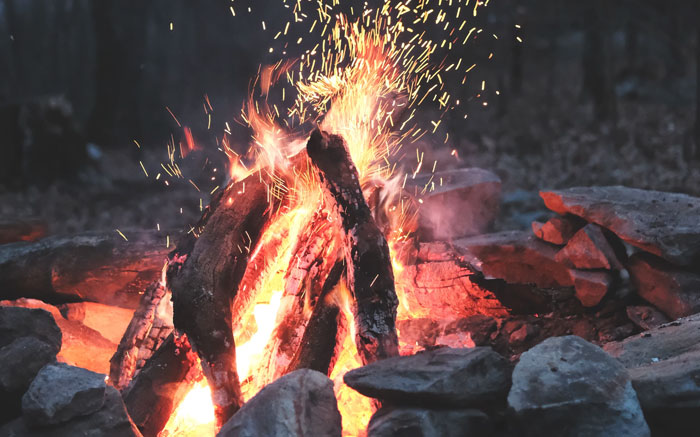
Beltane literally means ‘bright fire’, and the night would be marked with flame. Bel is one of the most ancient of the Celtic gods, associated with fire and flame, and the power of the sun to fuel all life on earth. All the fires in the village would be extinguished, and one big bonfire, the Tein-Eigin, the ‘need fire’, would be lit, often in the fields around the village. These flames were seen as sacred, and people would revere them, using the flames to relight their own hearth the next day.

This is one of the examples of ancient superstitions having its roots in solid science: villagers would drive their livestock through the cooling embers, to ward off ‘evil spirits’. Effectively what this also did was kill off potential microbes in the hooves of the cattle and sheep which would have accumulated over the winter.

Beltane sits at the opposite point of the wheel of the year to Samhain, and is therefore a time when the world is at a significant turning point. The earth’s energy is at its most potent, and we can see this all around us. The trees are covered in the green fuzz of new leaves, the flowers in the hedgerows and meadows are in full bloom. Buttercups, bluebells, wood anemones, self heal, tiny purple violets and wild strawberries are everywhere. The sound of birds and nests full of chicks in trees and rooves, and lambs bouncing in the fields accompanies walks around our beautiful school, which really comes into its own at this time of year.

On Living with the Land, our Sixth Form course in Outdoor Work, we are investing in the year ahead, and reaping the rewards of tuning into the landscape around us. We are busy planting out vegetable seedlings in the garden, as well as foraging in the fields, hedgerows and woods. We have been learning about all the different ways living with the land at this time of year can bring significant health benefits, using herbs and wild foods to boost our diet, appreciating the feel of the sun on our skin after months of grey and cold. It is no wonder our ancestors regarded this time of year as sacred and charged with potent life force.

This Beltane is an opportunity for us all to light a flame, whether a huge bonfire or small candle, and to feel reverence for all life. The flames can be symbolic of burning away all that we need to let go of, and fuelling our energies for what lies ahead. Why not think about what you wish for, and of what you must let go of for that to happen. Write it down and commit it to the flames. Make a crown of green leaves, stay out late or wake up early, watch the sun rise and make plans for the summer ahead. Tune in to the earth’s energies, try to live in harmony with it. Experience how truly privileged we are to be inhabitants and stewards of this incredible planet.

Butser Ancient Farm usually hold one of the best Beltane fire festivals in the UK and are hosting an online version this year. Find out more here.