Reflections – height of spring, coming of summer

By Feline Charpentier, 6.2 Houseparent and Teacher of Outdoor Work

Beltane is the third of the eight festivals our Celtic ancestors marked the year with. They divided the year into the two solstices, at the beginning and half way points of the year, and the two equinoxes. The four cross-quarters, the fire festivals, marked the changing energies between those times. It enabled them to tune into the land around them, to mark the turning of the wheel, and to feel the flow of energy from the earth a little more acutely. This helped them mark the passage of time, to plan ahead and reflect, consciously observing the shifting of energies around and within them.

Beltane celebrates the height of spring, and the coming of summer. It is the spring cross quarter, and the fire festival that marks the earth’s building energy. It was a time when people would celebrate the fertility of the land, and marked the beginning of the ‘merry month’, when people would wear green to honour the earth’s new colour, and nature in all its glory. The morning after the Beltane fire would be May Day, or Calan Mai in Wales, and villagers would gather to dance around the may pole, symbolising the union of male and female energies.

This time is a celebration of fertility in all its forms, and it would have been a time for weddings and couples to be celebrated. Our ancestors saw this as the time when the oak king fell in love with the May queen. She would be depicted as a pregnant bride, a mythological manifestation of earth’s potent fertility.

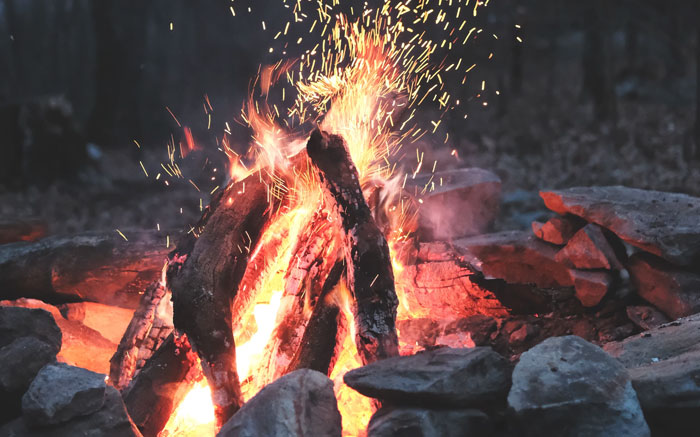
Beltane literally means ‘bright fire’, and the night would be marked with flame. Bel is one of the most ancient of the Celtic gods, associated with fire and flame, and the power of the sun to fuel all life on earth. All the fires in the village would be extinguished, and one big bonfire, the Tein-Eigin, the ‘need fire’, would be lit, often in the fields around the village. These flames were seen as sacred, and people would revere them, using the flames to relight their own hearth the next day.

This is one of the examples of ancient superstitions having its roots in solid science: villagers would drive their livestock through the cooling embers, to ward off ‘evil spirits’. Effectively what this also did was kill off potential microbes in the hooves of the cattle and sheep which would have accumulated over the winter.

Beltane sits at the opposite point of the wheel of the year to Samhain, and is therefore a time when the world is at a significant turning point. The earth’s energy is at its most potent, and we can see this all around us. The trees are covered in the green fuzz of new leaves, the flowers in the hedgerows and meadows are in full bloom. Buttercups, bluebells, wood anemones, self heal, tiny purple violets and wild strawberries are everywhere. The sound of birds and nests full of chicks in trees and rooves, and lambs bouncing in the fields accompanies walks around our beautiful school, which really comes into its own at this time of year.

On Living with the Land, our Sixth Form course in Outdoor Work, we are investing in the year ahead, and reaping the rewards of tuning into the landscape around us. We are busy planting out vegetable seedlings in the garden, as well as foraging in the fields, hedgerows and woods. We have been learning about all the different ways living with the land at this time of year can bring significant health benefits, using herbs and wild foods to boost our diet, appreciating the feel of the sun on our skin after months of grey and cold. It is no wonder our ancestors regarded this time of year as sacred and charged with potent life force.

This Beltane is an opportunity for us all to light a flame, whether a huge bonfire or small candle, and to feel reverence for all life. The flames can be symbolic of burning away all that we need to let go of, and fuelling our energies for what lies ahead. Why not think about what you wish for, and of what you must let go of for that to happen. Write it down and commit it to the flames. Make a crown of green leaves, stay out late or wake up early, watch the sun rise and make plans for the summer ahead. Tune in to the earth’s energies, try to live in harmony with it. Experience how truly privileged we are to be inhabitants and stewards of this incredible planet.

Butser Ancient Farm usually hold one of the best Beltane fire festivals in the UK and are hosting an online version this year. Find out more here.
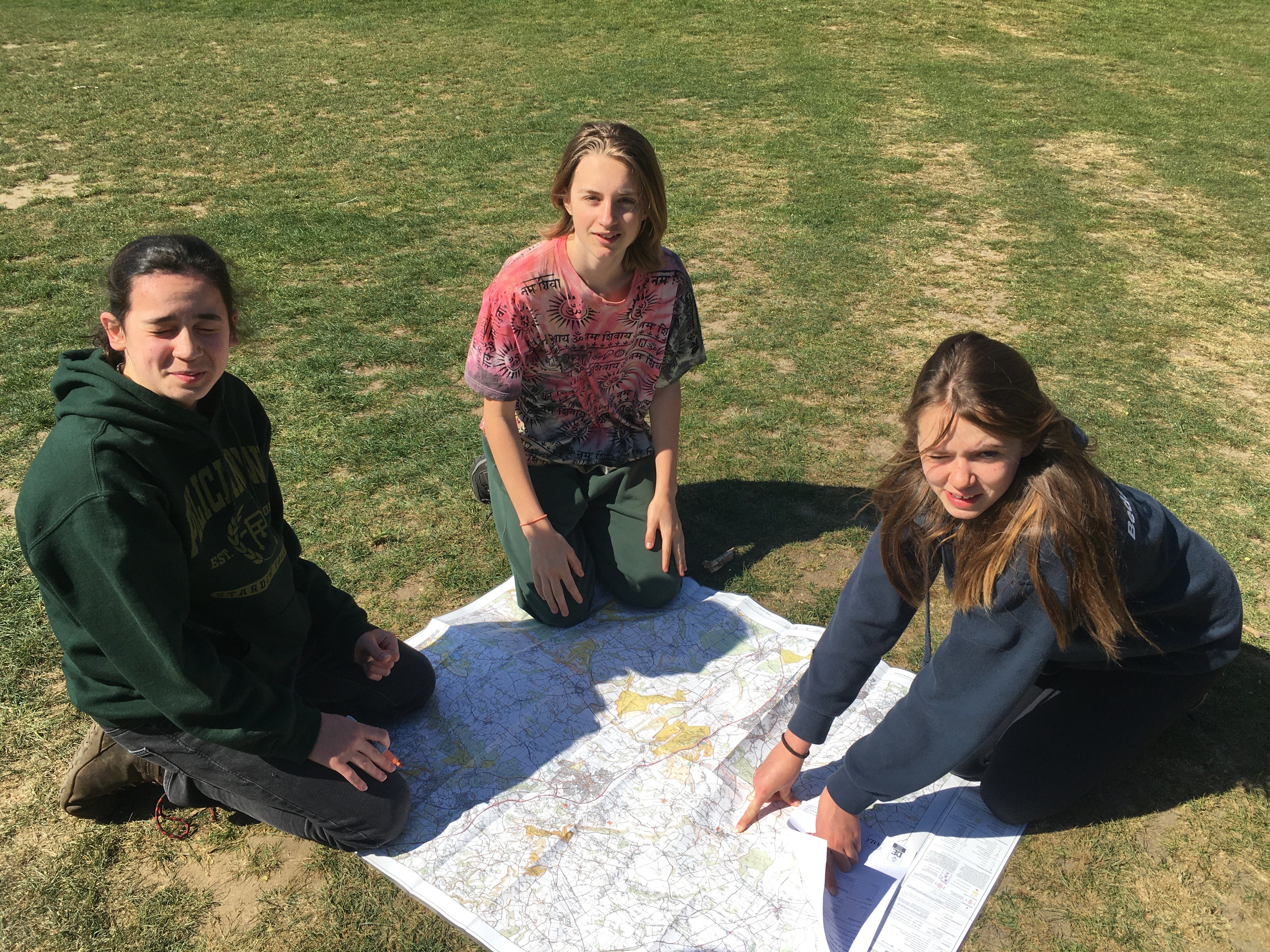
Preparing for expedition

By Julia Bevan, Teacher of English and DofE Manager

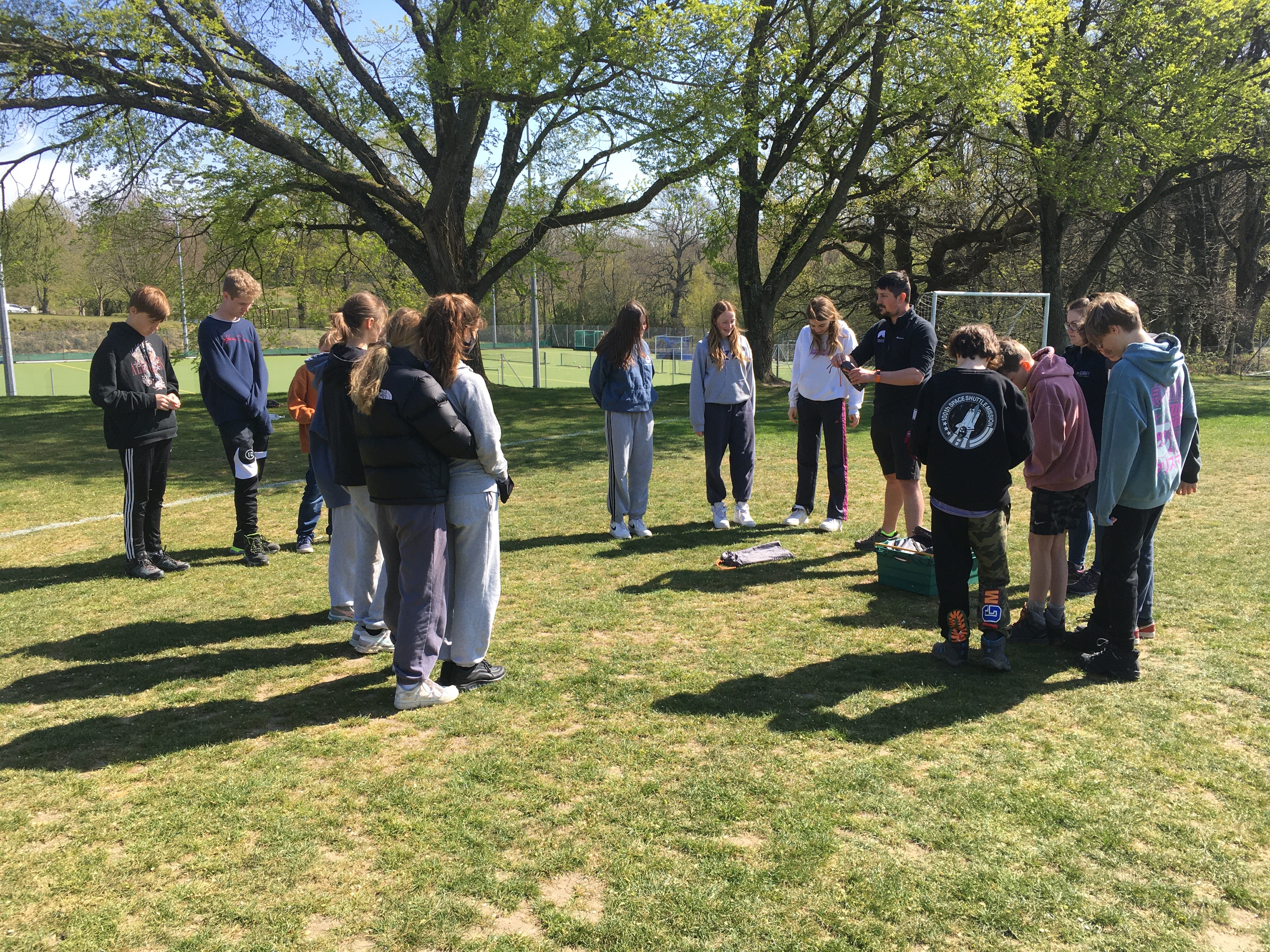
Last weekend we were joined by Isaac Walker and his team from outdoor education provider Ridgeline Adventures, who ran a successful Duke of Edinburgh (DofE) training weekend in the sunshine for Bedales students undertaking their Bronze Award.
 
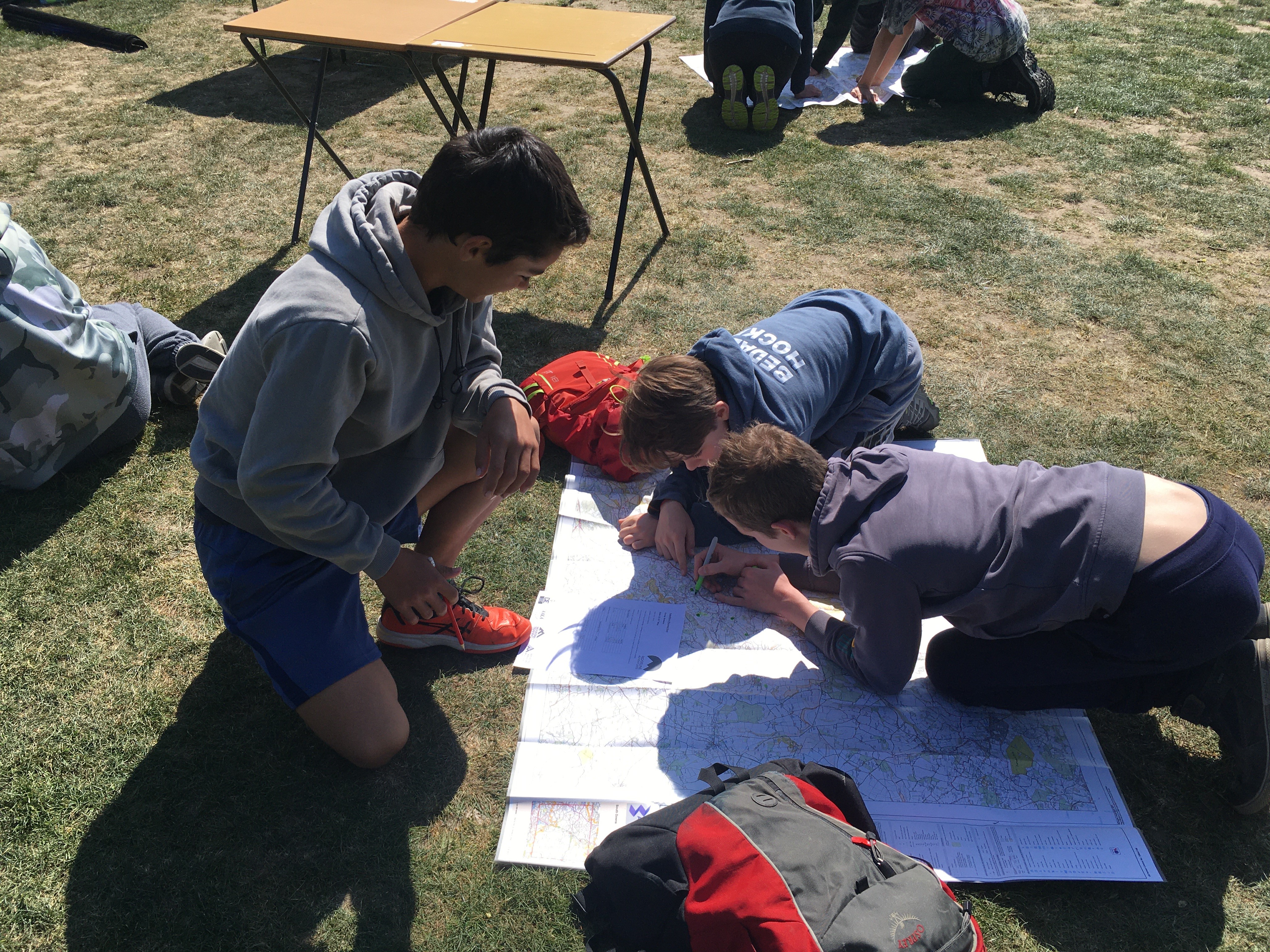
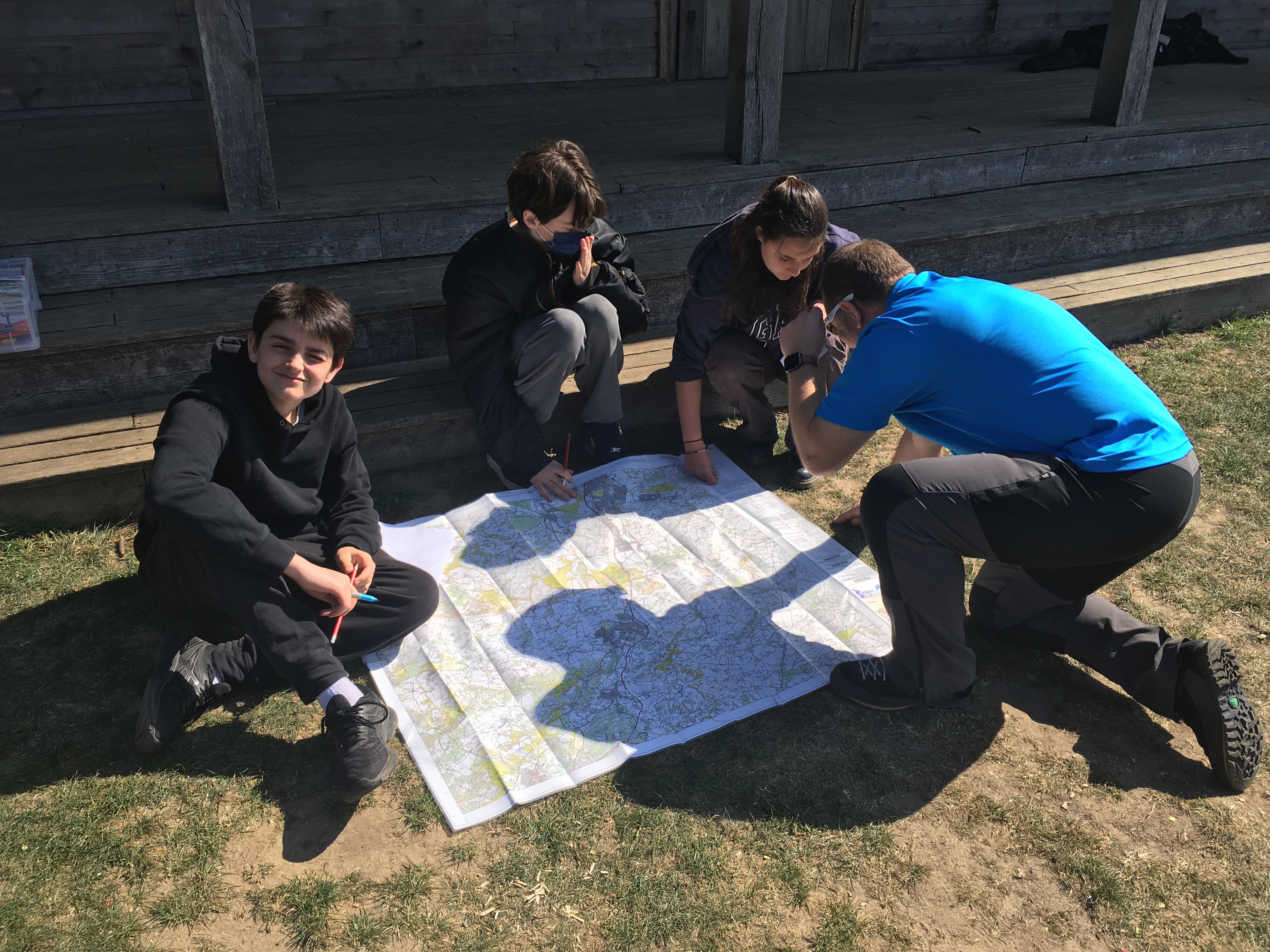
On Saturday, students took part in a range of team building activities at the Sam Banks Pavilion. Gordon Dale, Clive Burch, Paul Beauchamp and I were there to see Ridgeline lead the various sections, which saw the students put up tents in a fairly strong breeze, cooked lunch on Trangias, washed up (a skill that always needs perfecting!), discussed first aid scenarios, learnt to tie slings, planned the routes they will use on their Bronze qualifying weekend in three weeks’ time and learnt how to read maps of the local Hampshire countryside.
 
On Sunday, the students headed out for a walk in Steep Nature Reserve in five groups of five or six. An opportunity to explore the school’s picturesque surroundings (“I didn’t expect it to be so pretty,” were one student’s words; another said it was simply “stunning”), the day was also insightful. Students quickly learnt the importance of rucksacks rather than shoulder bags, and they stopped en route to explore first aid scenarios and navigate carefully. Group 4 particularly enjoyed meeting Magnus’ dogs on the Hangers!
 
The Block 3 students who took part in the weekend were attentive and enthusiastic throughout, and there were many memorable moments: Otto Scarlett’s delicious, and enormously popular pancakes; Dominic Rowell looking a little like a mummy as he wandered around covered in bandages after a fun first aid session; and Tilly Wall spontaneously commenting that their group leader from Ridgeline Adventures, Neil, was incredible and thanking him for a great day’s walk.
 
Thank you to everyone who made the weekend a success and I look forward to accompanying the students on an expedition very soon.

Students reflect on presenting their EPQs

By Jo Mayhook-Walker, Head of EAL and Extended Projects Coordinator

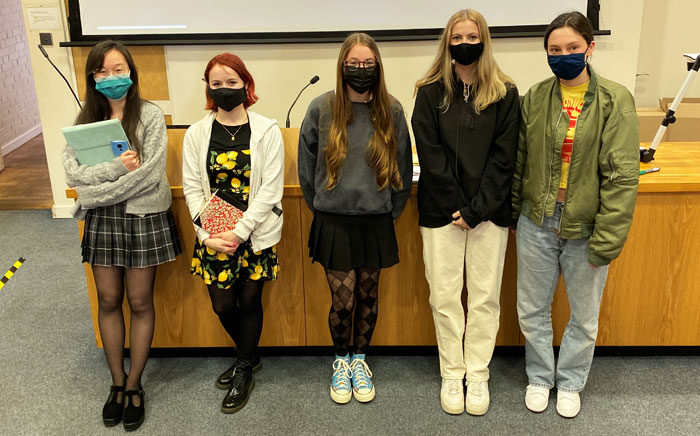
Last week, 18 Extended Project Qualification (EPQ) projects were presented to an audience made up of students and staff. For me, it was an educational and invigorating experience, but how was it for the students? This week, five students who gave presentations share their thoughts.

Nina Jones, 6.1

Last week I presented my EPQ, titled A Thoroughbred’s life, how dangerous is it really? The process of presenting was much more rewarding and less stressful than I had initially thought; I felt that it was an important experience for me in order to build my public speaking skills and conclude my project. Prior to writing my dissertation, I put in a lot of time to research, ensuring that I was confident in the topic. This allowed me to answer the questions with ease. Within my presentation, I talked about my inspiration for my project, how I completed my research, the development, the content, and finally, an evaluation. The evaluation in particular helped me see the strengths and weaknesses of the process and the project itself and taught me valuable skills such as time management and sticking to a word count. I found that the feedback which I received after presenting was very beneficial, and I hope that I can transfer these skills into diverse areas of my academic and work life.  

Jamie Loudon, 6.1

For my EPQ I decided to record and write a song. When I started, I was completely new to the process so I had to learn how to do everything. The first thing I had to do was choose a music production software. I did this by looking at reviews of lots of really good music software packages. I ended up picking a software called Ableton and I then learned how to use it using YouTube tutorials. I took what I learned and used it to write a song. I really enjoyed writing a song as I found it rewarding when I had a finished the song to be able to say I made it myself. Hearing people’s opinions of it after was also really nice. I found the presenting experience really fun because I got to show everyone what I had done. I found it fascinating listening to everyone else’s projects as there was a huge variety of topics covered. I was especially interested in the projects related to music, learning about the path their project took in comparison to mine.

Ben Bradberry, 6.1

For my EPQ project, I chose to focus on Singapore and how it achieved its importance in the modern world. I was inspired to do this having lived there for six years and noticing the differences to the UK. I found it frightening to be one of the first to give my presentation, but instantly felt more reassured as I got into the flow of it. I found the other presentations to be extremely interesting to listen to, but also valuable as a learning experience for myself as I could see how other people went about the process in comparison to how I had done so. Overall, it was an extremely worthwhile experience and I strongly encourage anyone considering an EPQ to pursue it.

Gemini Wang, 6.2

In last Wednesday’s EPQ presentation, 6.1 and 6.2 students presented their projects to an audience. In my group, there was a wide range of subjects from horse racing to time traveling. I was the first one to present in our group and although I was quite nervous before the presentation, from the moment I started talking about my project, I felt no stress at all. Talking to people about my interests and research was really enjoyable. At the end of each presentation, there was a chance to ask questions and the audience took this chance very well. They asked me interesting questions which challenged me as the presenter. Overall this presentation was a great opportunity for us all to share our research and listen to other people’s passions. It was also the moment when months of hard work finally paid off and I could see and hear that I had achieved my goals with my project.

Ernie Allesch-Taylor, 6.2

The opportunity to present an EPQ to Bedales staff and students was such a nice event to be a part of. What could have been a nerve-racking experience turned out to be a very good opportunity to share our projects. Despite differing topics, this enabled people from both Sixth Form year groups with ranging interests to showcase their passions. I for one thoroughly enjoyed the inclusive and welcoming atmosphere that everyone in the audience contributed to. Being able to ask in depth questions to my peers and having questions being asked to me about my project was a great way to properly engage with each individual projects. As well as this, being given the opportunity to ask for feedback after the presentations had ended was also a great way to learn how we could improve whilst also receiving positive praise.

‘Engaging’ Sixth Form Extended Projects

By Gordon Dale, Head of Sixth Form

Once again Bedales Sixth Form students have impressed us with their Extended Project Qualification (EPQ) submissions. These project topics are selected by the students based on their passions and interests, with the final submission being either a 5000-word dissertation or an artefact.

On Wednesday, we were treated to a smorgasboard of material presented with enthusiasm, humour and impressive depth of knowledge. Topics included the production of movie and play scripts, and music, where the students wrote and recorded original scores. Architecture was represented, as was art and fashion. Equally impressive were submissions covering economics, sustainability, social issues, animal welfare, genetics, time travel, historical figures and artificial intelligence; all engaged, educated and entertained the audience.

The students who have presented their EPQ this year, and their project titles, are listed below:

  • Ruben Alexander – The Middle Eastern Museum of Problem Solving and Beauty
  • Ernie Allesch-Taylor – To make a short film
  • Emilia Bansdale-Ward – Female Roles in Celtic Britain, with Specific Reference to Cartimandua and Boudicca
  • Ben Bradberry – What are the major factors that lead to Singapore being a dominant force in the Asia-Pacific Region?
  • Hugo Burnett-Armstrong – How did the media affect the Rise and Fall of Pablo Escobar?
  • Iris Campbell-Lange – 1, 2 A Play
  • Zazie Cazac – How can the fashion industry become more sustainable? (Group project)
  • Eloise Cooper – What is the difference between a religion and a cult?
  • Oskar de Aragues – How and why does architecture incorporate nature?
  • Monty de la Guerra – The History of the Circus
  • Freya Hannan-Mills – Creation of a Screenplay and a Website
  • Alice Hockey – Time Travel
  • Nina Jones – A Racehorse’s Life: how dangerous is it really?
  • Jamie Loudon – Writing and recording a song
  • Holly Marsden – How can the fashion industry become more sustainable? (Group project)
  • Molly Montagu – To design and build a sustainable treehouse
  • Isabella Montero – To write and record an EP
  • Anne Novak – Genes and Genomics
  • Roo Trim – Writing and recording an EP
  • Maddy Upton – To what extent is Bedales doing all that it can to reduce the environmental impact of their food waste?
  • Grace Vernor-Miles – The effects and dangers of different drugs on the teenager
  • Gemini Wang – To what extent should AI have rights?

Getting creative for DofE Award

By Julia Bevan, Teacher of English and DofE Manager

Despite the challenges they have faced due to COVID related restrictions, Bedalians have continued to impress with their efforts in completing the various sections of the Duke of Edinburgh (DofE) Award.
 
For the Volunteering section of the Bronze Award, Block 3 student Florence Pohlschmidt helped out at her mother’s art school in London, tidying and reorganising the studio sculpture, etching and drawing rooms. Florence also volunteered at her former primary school, Heathbrook, in their wildlife garden, clearing, cleaning and reorganising the school’s greenhouse.
 
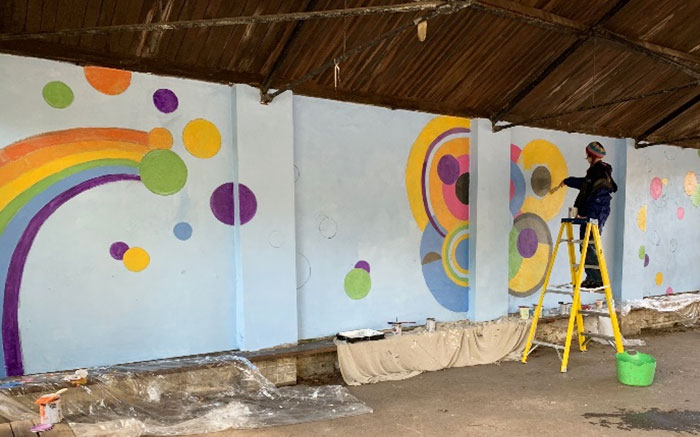
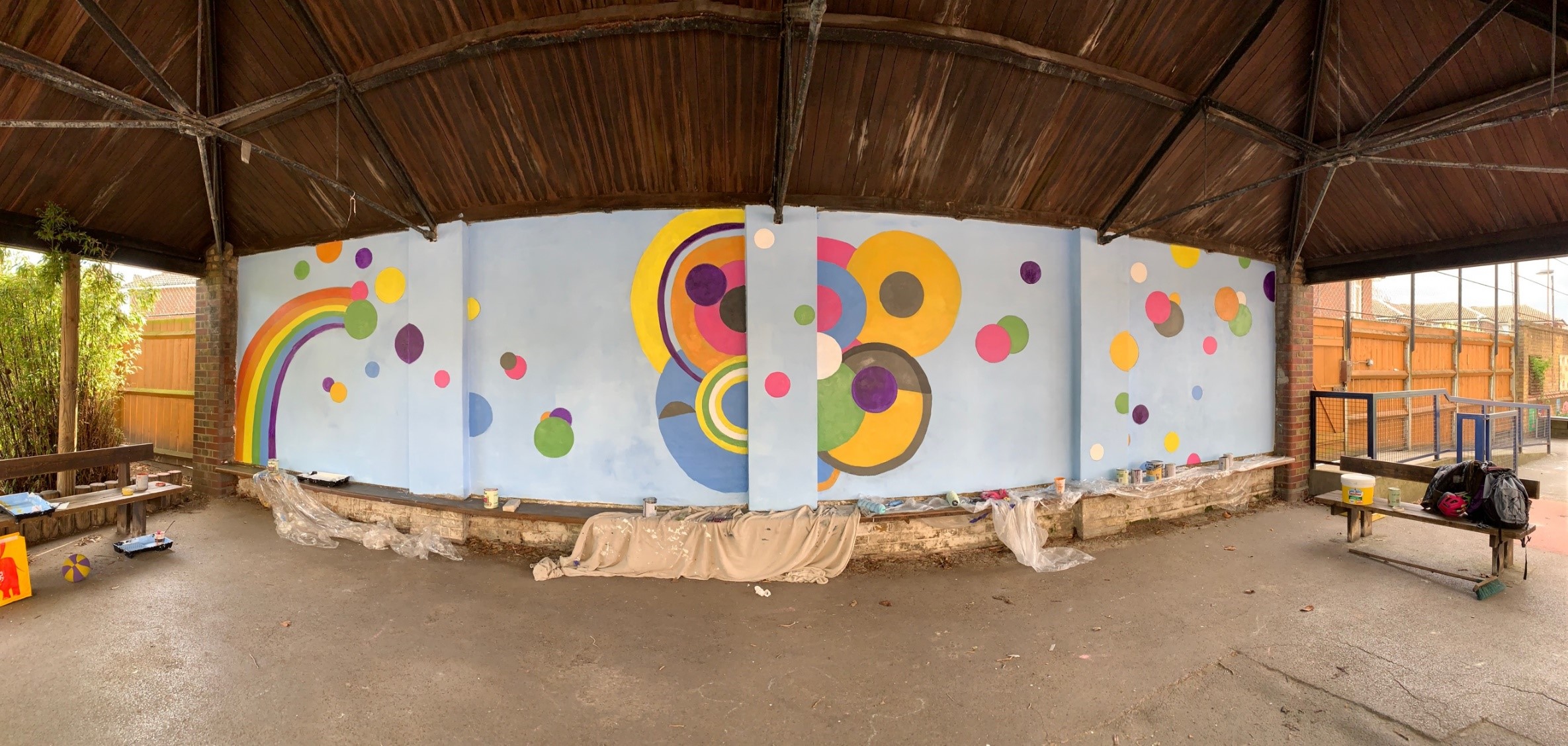
Inspired by a Wandsworth primary school who contacted her mother’s art school about the possibility of its students painting a rainbow mural to raise the pupils’ spirits after lockdown, Florence took the initiative to ask Heathbrook’s headteacher, Mr Ben Roberts, if she could continue to volunteer at the school by painting a large mural.
 
After Heathbrook gave her permission to paint a mural on the wall of an area known as ‘The Shed’, Florence decided – with the support of her art teacher – to produce a rainbow design in a nod to keyworkers, based on the work of artists Wassily Kandinsky and Sonia Delaunay.

The mural itself covers four 2.5 x 2.5 metre wall panels, which were prepared with two primers and a light blue base colour, before Florence scaled up her drawing and cut out templates for each section, drawing it on the wall in charcoal ready for painting. The process was supported by volunteers from Longbrook’s PTA.
 
Florence said: “I was so pleased to be able to offer to do this as part of my DofE Award, as it was also a way I could say thank you for everything my primary school has done for me. The final mural looks fantastic and I learnt so much from the project.”