Ullswater 2024 expedition report

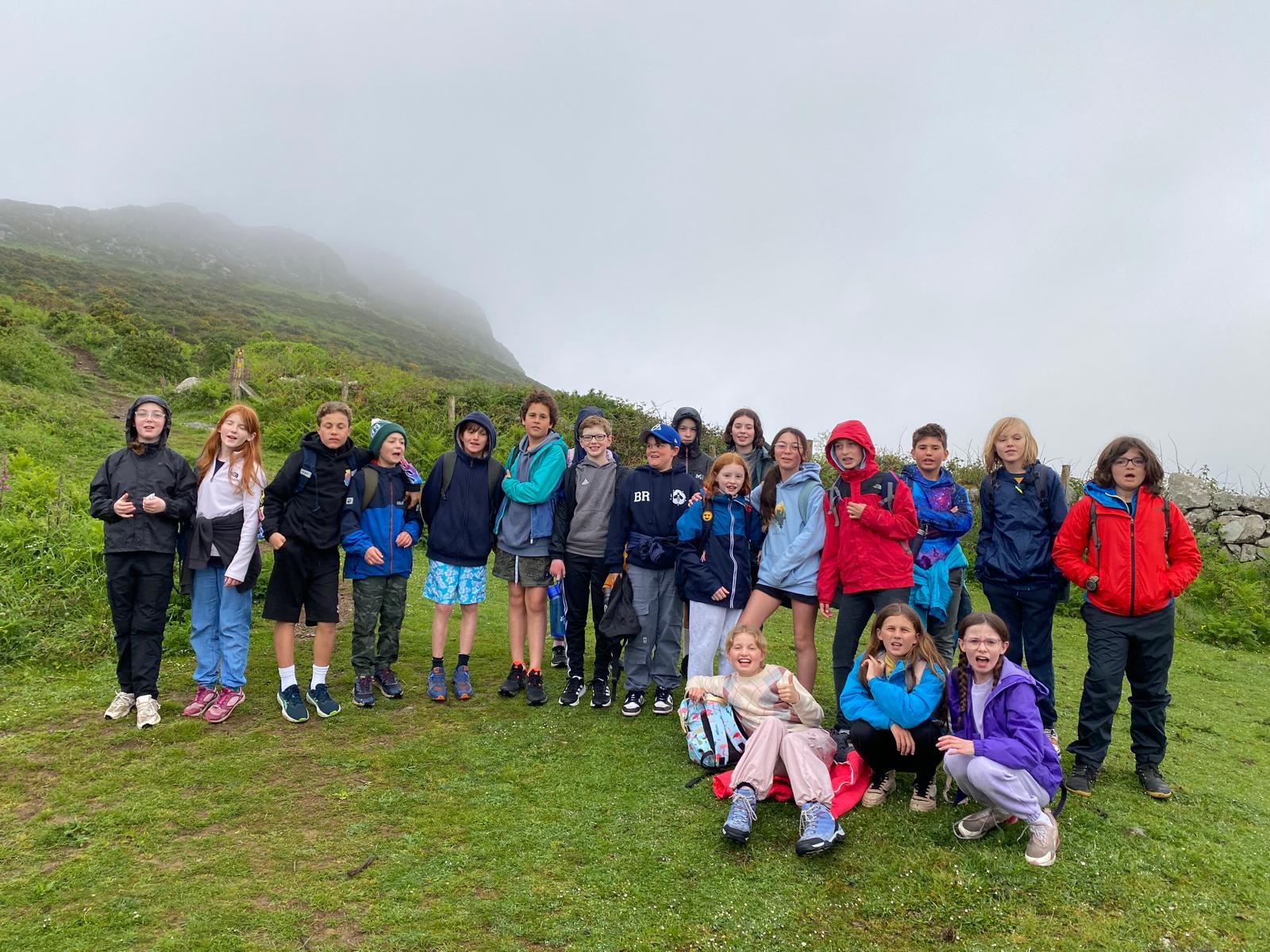
After a full-on day of in-school activities on Sunday 1 September, Block 3 (and the select band of both teachers and 6.2 Badley Mentors accompanying them this year) set off for the Lake District early Monday morning for the annual Block 3 induction trip.

Below are summaries from tutors about their exciting endeavours throughout the week.

Allen’s tutor group:

Our intrepid journey began with a row across the lake from the Outward Bound Centre to Sandwick. Despite a slow start, my previous-me rowing coach was pretty impressed. After a brief delay we set off up the mountain towards High Dodd. With a sigh of relief, we left our rucksacks behind after setting up tents at the campsite and progressed, with head torches prepared, to the top of Place Fell and our highest peak of 657 metres. Descending once more, we returned to our campsite and sleeping bags by 10pm.

Thursday morning dawned with the air full of mist and a moderately strong wind which grew as we descended once more on our return to the lake and Howtown. Our expedition ended with a power boat ride across the lake where a lunch was waiting for us at the centre.  

Ally’s tutor group:

The tutor group began Ullswater with a swim in the Ullswater lake, throwing themselves in (literally) to the first activity with no hesitation. It wasn’t long before our first walk up a Lake District hill started as our instructor sized us up for how capable we were. The group passed the test and gave the instructor an idea of how challenging the week should be.

The next day we prepped for our expedition and set off late morning with our heavy backpacks and food for the night. Our camping for the night was far in the distance at the top of the famous Helvellyn, by the glacial lake of Red Tarn. Despite calls of “there’s no way I’m getting up there”, the group chipped away little by little, reaching the top before the rain came in. Difficult conditions followed, with driving rain and wind testing the structures of the tents and tarpaulins that were set up.

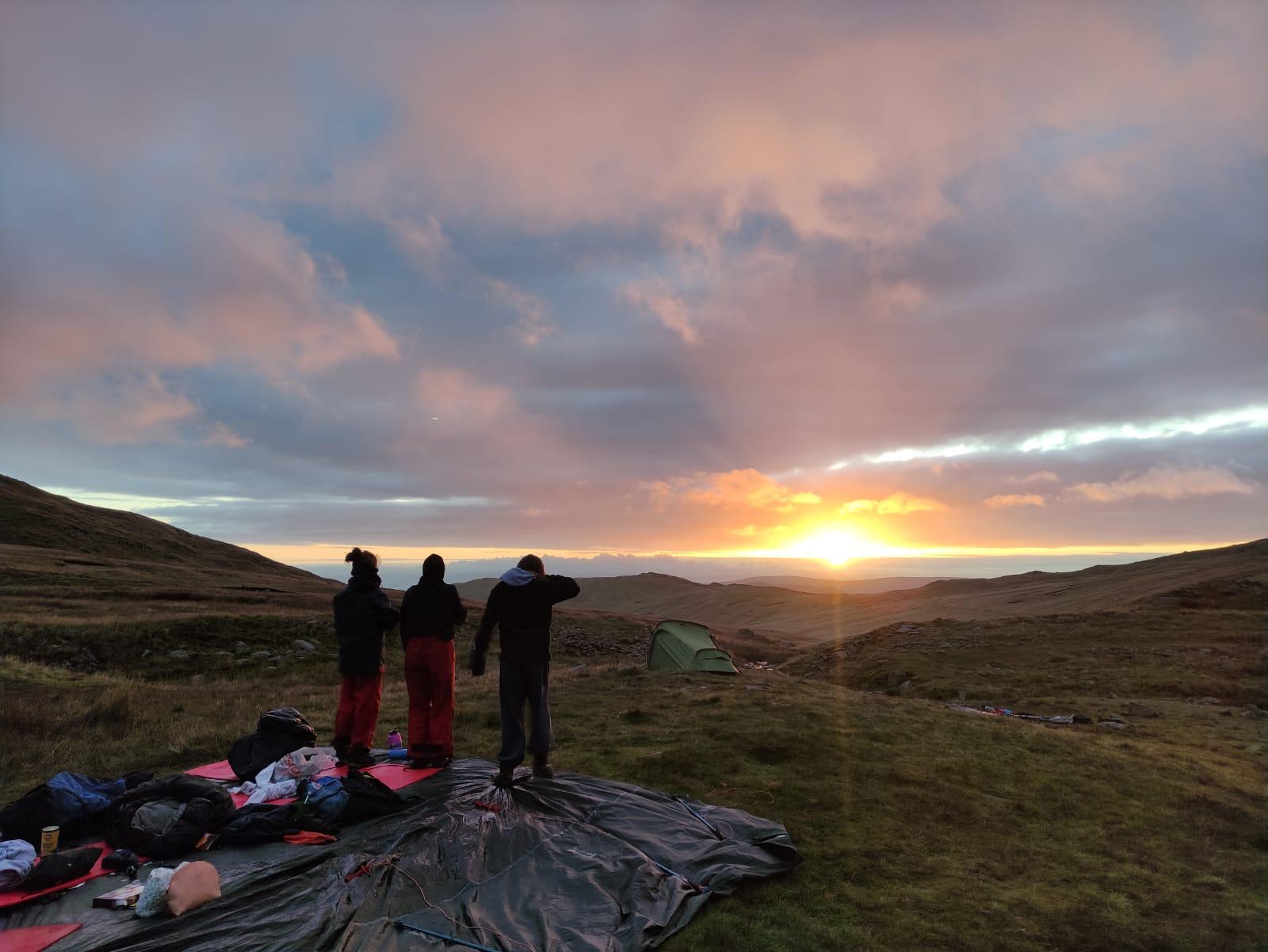
It was hard to know how much sleep we got, but we were greeted in the morning to an incredible sunrise. Getting back to the lake was no mean feat, as the group canoed two thirds of the lake back to the Outward Bound base. Some wall climbing in the evening prepared us for the rigours of the next day’s challenge of climbing Angle Tarn gorge, where we climbed near vertical waterfalls.

The group were amazing all week and really pushed their boundaries, working far out of their comfort zone. It was an experience they will never forget.

Chloe’s tutor group:

We began our expedition with canoeing across the lake, stopping to enjoy our lunch in the sunshine. Then we began our ascent up the mountain towards High Dodd, pitching our tents and enjoying our mac and cheese to warm us up before a (mostly) dry sleep.

We woke up to low clouds which we followed down the mountain, stopping to feed some ducklings before jumping on the power boat to return to the centre. 

Greg’s tutor group:

We packed our kit and headed off to row across Ullswater to Howtown. There, we set down our rucksacks and followed an orienteering course around Hallin Fell, The Coombs and the pretty little church of St Peter’s, Martindale, ending up at the pier ready to catch the last ferry to Pooley Bridge. After a quick ice cream, we hiked up to Heughscar Hill, passing the re-built Pooley Bridge itself that was damaged in the 2015 storms. After a couple of hours’ ascent we arrived as the light was fading to pitch our tents and tarps by a dry stone wall next to a pine plantation. We enjoyed peri peri chicken over our camping stoves followed by piping-hot chocolate drinks. This fortified us for a squally night beneath the stars under an ominous obsidian sky with the yellow lights of Penrith sparkling over to the northwest.

At 7am sharp we were up bright and surprisingly refreshed to sip tea and devour a full English breakfast, plus the salted caramel brownies we forgot to eat the previous night, before we began our six-kilometre descent back to Howtown and the waiting power boat that shuttled us over to the jetty, to which a path leads down from the Outward Bound Centre.

Harry’s tutor group:

After a brisk morning of cliff jumping into the fresh Ullswater depths, Team Outen set out on a five-kilometre canoe journey back towards the foot of Hallin Fell. With some questionable steering, yet some crafty teamwork, we endured the ripples from the steamer boats and made it to shore as a (mostly!) dry and strengthened unit. We set up camp in an intimate woodland patch watching over the lake, where plenty of stones were skimmed and lots of stories were shared. The well-earned ration packs felt like a gourmet feast after a long day, and the hot chocolates were the perfect nightcap for a restful night in the tents.

After a few more kilometres of canoeing on day two, Team Outen was gliding across Ullswater like seasoned pros. I’m sure the extra all day breakfast ration packs had something to do with it. The expedition culminated with a gorge scramble towards the top of Place Fell, where we all negotiated some tricky footing and some slippery pockets against the stream. A combined team effort of good communication, positive encouragement, and lots of committed spotting led to a huge sense of individual achievement for each of us.
Hayley and Liz’s group:

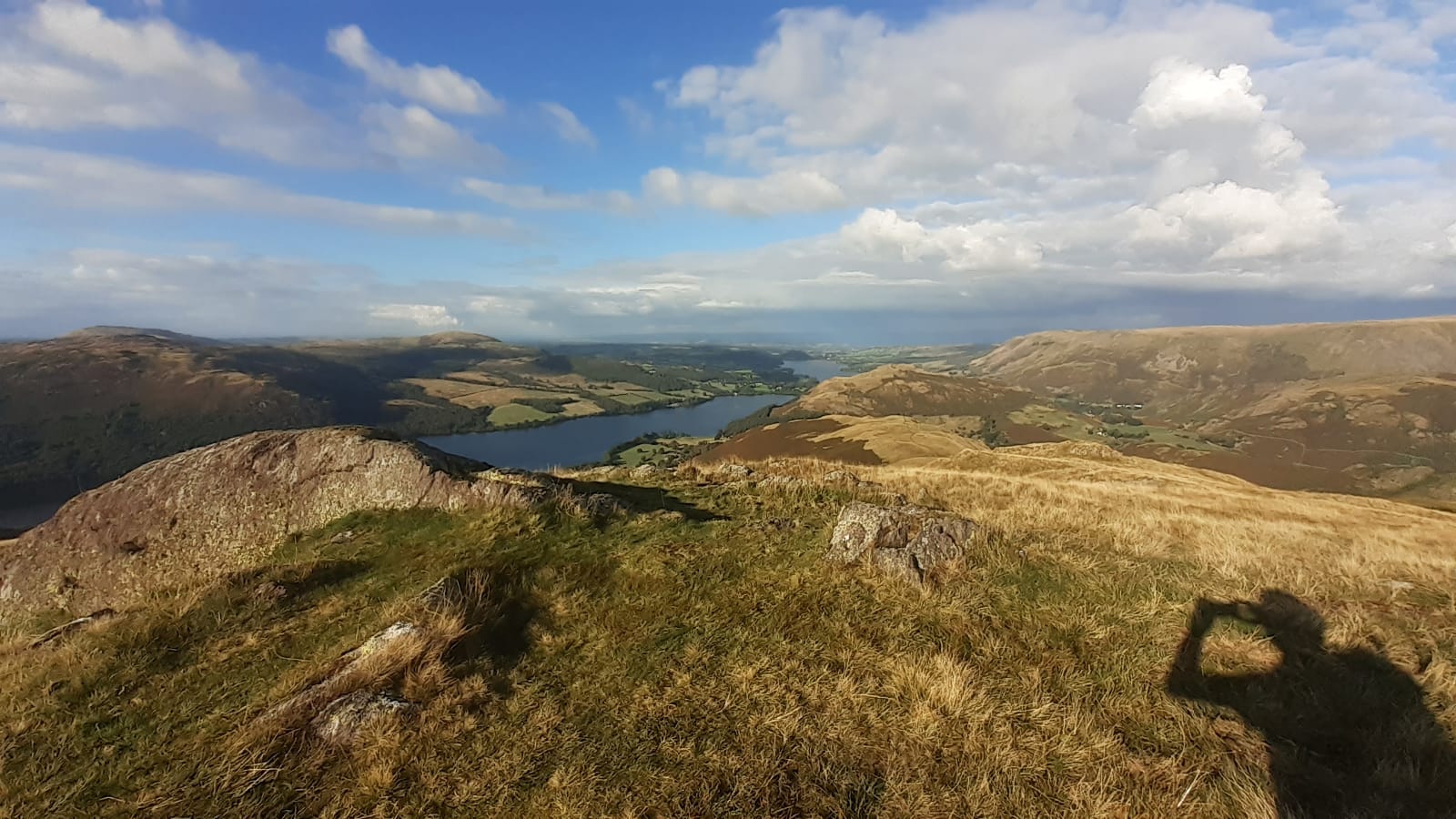
Our team took a minibus to the start of our expedition, loaded up with 12 willing explorers (including Claire) heavily laden with fully-packed rucksacks! The walk meandered up a woodland track at first, followed by a steep climb up to our campsite at Glenridding Dodd. Our team handled the climb with ease, surprising ourselves with our resilience and camaraderie! We set up camp with minimal fuss and cooked our supper in the wild before an evening climb up to Sheffield Pike.

The sun rose the following morning in a spectacular fashion across the lake, and we packed up camp to head down the mountain to Glenridding, with a pitstop for a warm cup of tea before we set sail in our rowing boat. After a slow start where we headed round in circles, we discovered our rowing skills and the team left the canoeists in our wake as we navigated along the lake back to the Outward Bound Centre. We returned weary but triumphant. We were so proud of ourselves as we really put ourselves outside our comfort zone, working together as a team to provide support for each other.

Lauren’s tutor group:

We rowed across the lake with Chris, followed by a long getting-to-know-everyone ascent. Then we pitched camp next to a freshly-harvested pine wood on the top of Heughscar Hill, sampled our tasty rations and slept under canvas.

Breakfast was followed by a gentle descent to Pooley Bridge, some ice creams and biscuits, and a cancelled steamer due to high winds turning into a minibus ride home.

Matt’s tutor group:

Team Findlay (aka Matt’s tutor group) headed out from our base at the Outward Bound Centre on Tuesday morning in canoes across Ullswater heading four kilometres northeast towards Pooley Bridge. Teamwork was essential as we learnt to control our canoes in groups of four in two canoes lashed together and then in pairs in solo canoes. Thankfully everyone remained dry as we prepared for our six-kilometre hike into the hills for our expedition overnight stop on Heughscar Hill. After appreciating the views of the Lake District to the West and the North Pennines to the East, the students pitched their bivvy shelters for their night under the cloud-obscured stars and then prepared their evening meal of warm in-the-bag rations. The appreciation of the food was mixed, especially the chocolate fudge brownie, but everyone went to bed in high spirits after a warming mug of hot chocolate, a camp fire game and stories of using the wilderness facilities – what you bring in, comes out with you!

The night was wet, but with well-pitched bivvies Team Findlay made it through to morning well rested and mostly dry, ready for the return journey. Some of us even made an early start to enjoy the sunrise, but we all set off early to get a few kilometres in before breakfast and the final push to Howtown for the last leg of our journey. As a group of twelve, Team Findlay had to row across Ullswater, learning how to do so in time to keep our movement forward and keep from going around in circles, but with the promise of ‘real’ food and a well-deserved shower we rose to the challenge!

As a group, Team Findlay displayed real heart, being compassionate and supportive, and they dug in deep, showing resilience and drive to work as a team to achieve their goals with a smile, even in the face of challenges, and every one of them shone brightly as individuals to create a fantastic team dynamic.

Vikki’s tutor group:

Our expedition started with a canoe trip from the Outward Bound Centre to Silver Bay. Ullswater was beautifully calm and we all thoroughly enjoyed being on the water. From Silver Bay we hiked up to Silver Point to find our camping spot in the forest overlooking the lake. We built our shelters and cooked supper before heading out on an evening walk, minus our heavy packs. The weather overnight was kind to us with only a little rain.

In the morning we walked from our campsite to Glenridding and caught a steamer to Howtown. We were meant to row from Howtown back to Outward Bound but the wind was too strong, so a powerboat came to pick us up.

Bedales Sixth Formers take on World Challenge in Morocco

Six adventurous 6.1 (Year 12) students headed to Morocco over May half term for a 10-day World Challenge expedition. It was an absolute pleasure to enjoy this adventure alongside such resilient, light-hearted and kind students.

It was, for all of us, a challenge on many levels. The travel, heat, physical activity, budget management, washing and sanitary facilities (or lack of) and management of our kit provided opportunities to problem solve and collaborate. We were, more often than not, away from access to data and technological entertainment, however, we recorded memories and quotes from the day in a diary and in the evening read out messages from home.

It was lovely to see what each individual student brought to the experience: Ciara had done her research and was great at letting us know about both the itinerary and the places we were visiting; DJ Gaby kept us entertained with music and humour; Miranda knows so much about everything, especially things science related – I had no idea that mules are infertile! Poppy sung her way up the mountain and teased us all; Niko (the mountain goat) drew some amazing caricatures and led the way on the hike; and Mila looked after us, showing a quiet leadership, making sure we were all ok and hydrated and generally being fantastic. I am sure, on reflection, that the students learned a great deal about each other and themselves.

Here, students and staff reflect on their experiences.
 
Community Initiative, by Ciara, 6.1

After a long day of travel and our first meal in Morocco, we had an earlier start than we are accustomed to. The day started with a four-hour bus trip filled with music, laughter and desert vistas, and we were overwhelmed by our first views of Ouarzazate. We were there for a community project and all expected it to be a little village but, in fact, we were in a city known as the Hollywood of North Africa.  

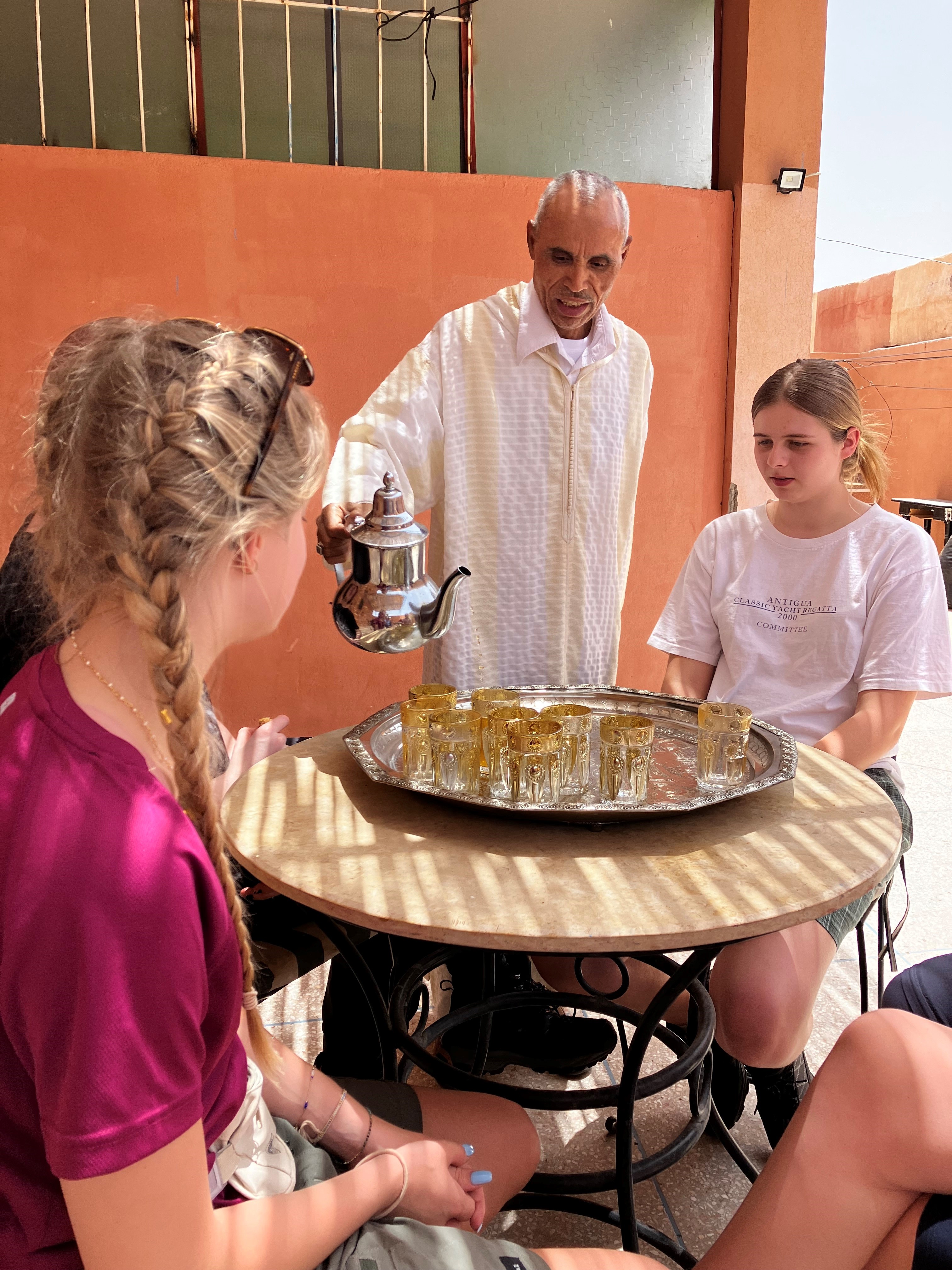
We met our host Hussain, an English teacher who welcomed us into his home. After some welcome mint tea and biscuits that looked too beautiful to eat, we applied our sunscreen and set off to explore the city. With Hussain as our guide, we started off by passing the school we would return to work at. Soon we arrived at the Cinema Museum Ouarzazate. Having confirmed it was in budget, we bought our tickets. We began to explore and were quickly fascinated by the detail and realism of these sets, despite being made of flimsy material. Within moments we were transported from the throne of Cleopatra to prison cells of Gladiator and to artefacts used in Lawrence of Arabia. Next, we headed across the road to Taourirt Kasbah, a historical fortified residence made from rammed earth and mud brick. We explored the little souk before heading to the supermarket for some well-earned ice creams. Back at the house and out of the sun, it was siesta time. We ended the day with some homecooked chicken tajine and more tea. We learned card games from one another and Hussain’s daughter, Yasmin, taught us how to write our names in Arabic. It was then time for some much-deserved sleep. 

The next morning, we again woke earlier than usual. We enjoyed some fresh bread and an array of toppings as fuel for the hard day ahead. We headed over to the school where we were met by the Headmistress and her son. With our hats on and the students in class, we started to garden, preparing the garden for rosemary and rose bushes. Lots of different people started to get involved and helped us, including the security guard and a French teacher. Making sure to constantly rehydrate and keep out of the beaming sun when we could, we made some progress. As a group we were treated to a mid-morning meal that consisted of French pastries and Moroccan delicacies such as Beghrir. Once the garden was prepped, a couple of us went down to the local garden shop and came back with a load of plants. Meanwhile, the remaining group members were given a tour of the school which has been set up to retrain young farmers who can no longer farm because of the lack of water over the past five years in trades such as welding, carpentry and electrical work. Getting back to work, we planted rosemary and roses and took a group photo to commemorate the day. It was very rewarding to see the difference we had made to the school environment once the plants were in the ground. We also purchased and fitted a long hose to ensure the garden was regularly watered. 


We later headed to the Higher Institute of Audiovisual and Cinema Professions and were toured around by one of their students. We saw all sorts of things, from their costume room to the prop weapons and nicely air-conditioned CGI room. We parted ways from our new friends and headed back to our temporary home for some lunch. That night, some of us made our way into the square where we heard music and explored another souk. After two amazing days we got some sleep in preparation for the next long day we had ahead of us.

Trek to the top of Mount Toubkal (the highest mountain in North Africa), by Alex Kerr, Deputy Head (Co-curricular & Operations)

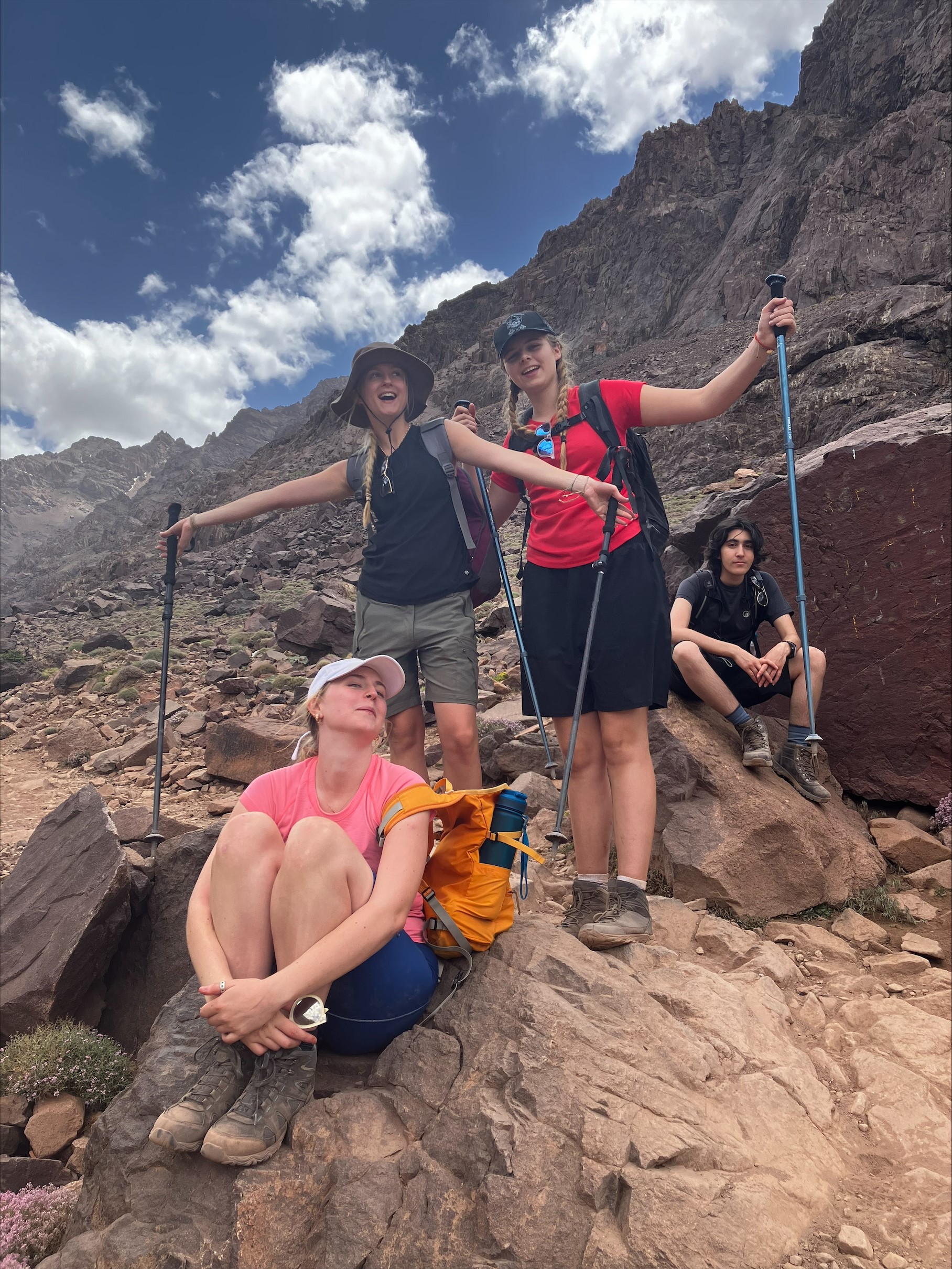
This, for me, was the part of the expedition I was quietly dreading. I quickly realised, as we drove up into the Atlas Mountains, that my weekly Poet’s Stone hike was no real preparation for what was ahead. The sheer scale of it was overwhelming. Our base camp Gite was in the village of Aremd, which is at 1900m above sea level – a fantastic setting for a base camp where we were treated to delicious Moroccan food. On trek day one, we did an acclimatisation hike of 8km and a 550m climb to the Tizi h’Mzik Pass. This was a useful activity in helping us to learn to regulate our walking pace carefully, drink properly and wear the correct protective equipment because it was very hot.

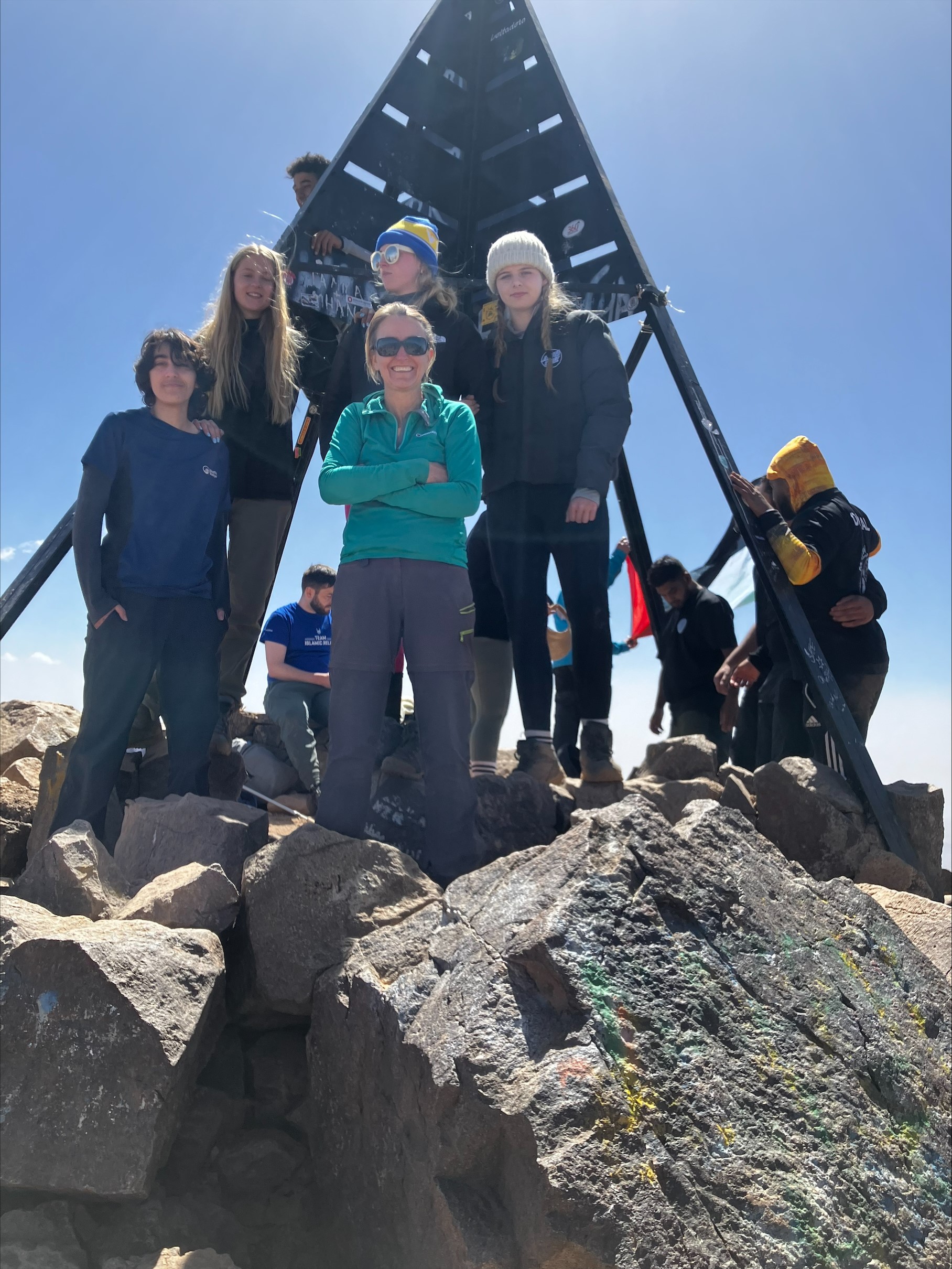
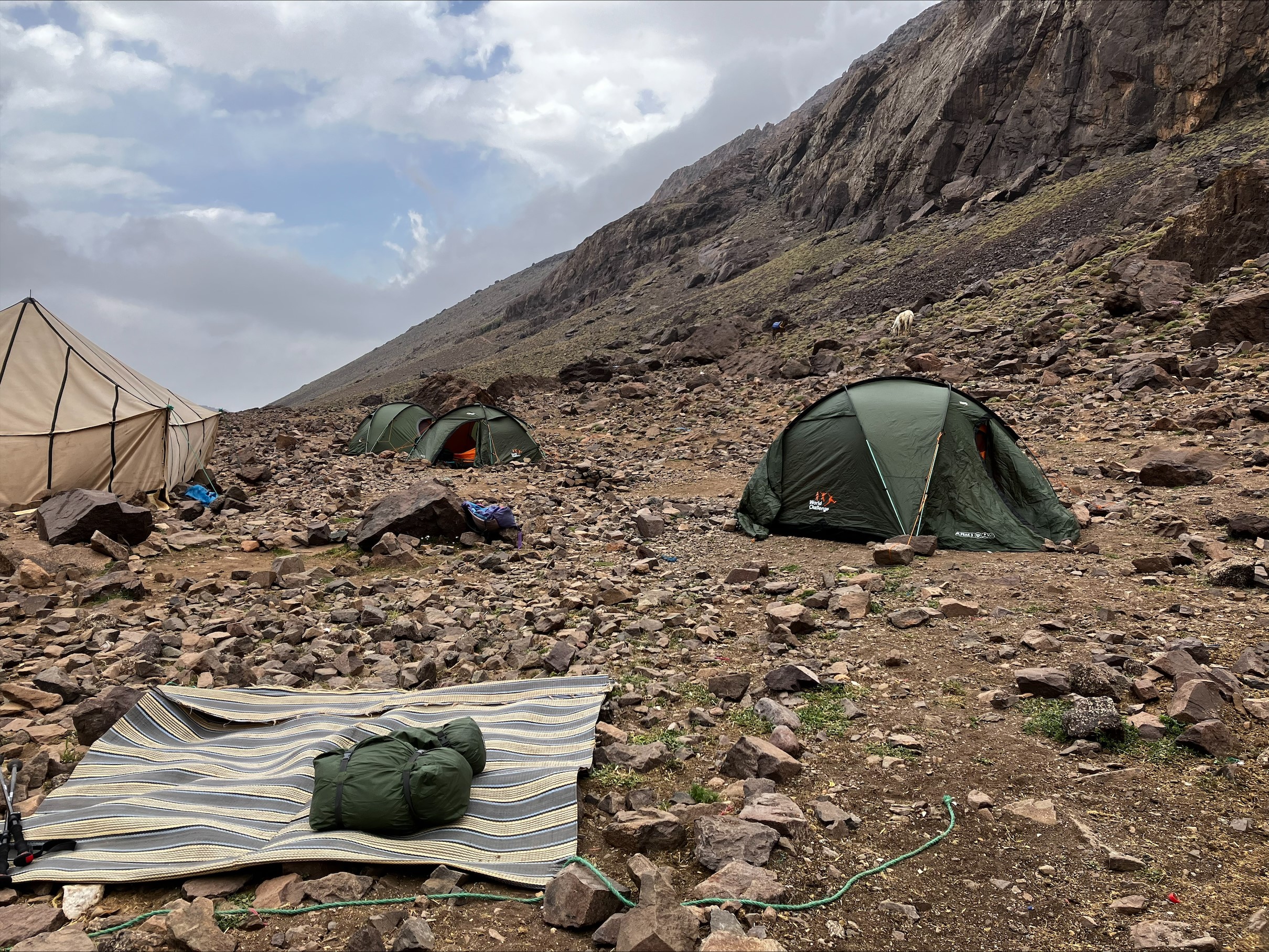
Day two was the start of the hike and this meant packing our overnight camping equipment onto mules and preparing for the hike to the mountain camp site. We climbed over 1000m taking seven hours in high temperatures. I know that we were all quietly thinking, “can I do this, is it possible?” This hike, in itself, was a real achievement. We were spurred on by Gaby and her speaker, listening to some banging tunes including Baddadan, which was a bit of a theme tune for the trip. We encouraged fellow hikers into a little dance and a smile as we passed each other on the path. We arrived at camp exhausted and faced with the task of erecting our tents in a field of rocks and dust, and exploring the toilet tent which was, in itself, a challenge (say no more). Over supper we discussed the plan for the following day – the hike to the top. Niko, Gaby, Mila and Poppy agreed to give the hike a go and we planned a 4.30am departure. Head torches charged; we went to bed. None of us slept especially well, but we got up, had an early hearty breakfast of porridge mixed with chocolate spread, and set off in the dark. We were very quickly met by a rock-face scramble which went on and on. We all felt nervous given the torch light visibility, so we took it slowly and encouraged each other to keep going. As we climbed, it became difficult to take deep breaths and we tired easily. On many occasions we stopped to talk through how we were feeling and motivated ourselves to walk to the next big rock or the next turn in the track. Gaby and Niko found the upward hike far easier than the rest of us, but we stuck together. We had some great laughs, told jokes, listened to music and kept morale high. At one point we all had a giggle at Poppy who said, “Alex, I’m not a walker”. It was emotional but we all reached the top, 4167m above sea level; it felt great. Unfortunately, we all knew that the next challenge was to walk back down to camp. Almost more difficult than walking up due to the loose rocks and scree. We needed to be very careful, and the hiking poles were essential at this stage. After the 10-hour round trip, we were starving on our arrival at camp and greeted by a lovely pasta and salad lunch, cooked by the Moroccan support team and served in the cosy camp tent. 


We returned on foot to Aremd and enjoyed a hot shower the following day. Never have we appreciated washing our hands with soap and warm water more. I think we all appreciate the everyday comforts that we take for granted a little more following this adventure! Well done to everyone; we couldn’t have done it without the mutual support that we shared. 

By Mila, 6.1

After the walk up Toubkal, we ended up in Marrakesh for two days, to explore the souks and the culture of the capital of Morocco. When we first arrived, we went straight to the souks and looked around to get a sense of what everyone was selling and the prices. We soon realised that before you can even look at something there would be the shop owner looking over your shoulder and making sure you like something. I think we all found this experience very exciting but also very overwhelming. There was everything from leather bags, spices, ceramics and rugs, to insane amounts of jewellery. When we decided to start buying, Poppy was an amazing barterer and got all of our prices reduced to almost half off or even below by saying, “I’m just a student, I don’t have that much money”. 
 
Later on, we decided to explore the square to look for somewhere to eat; it was quite overwhelming as there was music, prayer calls, monkeys on chains and cobra snakes everywhere, and all the venders were calling you to come and buy whatever rip off thing they were selling (they would even come up to you while you’re in the restaurants) There was also a range of smells from delicious food to the all the spices. Whilst we were they we mainly lived off of Tagines and couscous (which was delicious!)
 
The next day, we divided into two groups. One group was keen to return to the souks and buy some more goodies, the other, to soak up the culture in the city. First, we visited the Maison de la Photographie which was an amazing traditional Moroccan home converted into a photography museum with images dating back to the 1800s. We then visited Ben Youssef Madrasa, a historic Islamic school built in 1564–65 CE. This was a stunning example of architecture with delicately hand-carved walls and intricate tiles.
 
At lunch we all went to see the Mosque and the beautiful gardens and then half of us went to the spa, which was very much needed after the hike. We then went and explored the souks (the souks were a frequent destination). Our final meal was in a rooftop restaurant followed by Nutella crepes in the café next to our hotel. All in all a great visit to an amazing city.

Camps Week at Bedales Prep

The week before half term (20-24 May), the corridors of Bedales Prep were quiet as students and staff set off for Camps Week.

The annual occasion is very special for the Bedales Prep community as it fills students’ lives with memories and adventures that stay with them well beyond school. For some, it may be a first foray into being away from home, others may be building on the confidence from previous years and strengthening bonds with friends and staff to carry them forward, and for Block 2 (Year 8) it’s a poignant moment – a chance to be together capturing a moment in time with the friends and teachers met through their Prep School journey.

Students have had a chance to overcome challenges appearing in many forms; they’ve taken steps of independence and perhaps had a chance to help somebody and strengthen their bonds with those around them. Real world experiences, lasting memories and skills for life – that’s why we’re so passionate about Camps Week.

For the whole Prep School to venture out on Camps Week 2024 is unique to Bedales and fosters the meaningful community that already exists. Learning outside of the classroom, living together, enjoying numerous shared experiences and stepping outside of comfort zones are just a few things the students and staff experienced during Camps Week.

As Head of Bedales Prep, I visited most of the camps during the week, spanning from East Sussex to St Davids on the Pembrokeshire coast, Wales and Okehampton, Devon, and it was remarkable to see such positivity and warmth amongst the students and staff. I watched students climb high up a pole (securely fastened with safety harnesses) and leap to tackle a rugby tackle bag in mid-air, as well as observing them walking a series of obstacles 20 feet up. This was a challenge in itself, but some children decided to do it blindfolded, which was incredible; I even gave this a go myself! Climbing walls and surfing at St Davids, Wales, along with stand up paddleboarding, rock climbing, walks, kayaking, raft building and gorge scrambling were stand-out activities.
The sounds of positive praise and support echoing from their peers alongside the staff team was heartwarming to hear; the positive spirit in the Prep School was alive and kicking. I was disappointed not to make the trip to France to see Block 2 (Year 8), but there were only five days in the week! Receiving photos and feedback of their trip, I almost felt I was with them. A beautiful time for team building and reflection as they approach their final weeks at Bedales Prep.

I’d like to say a massive thank you to the incredible staff team who threw themselves into every activity and opportunity during the week. It’s a significant step for students, particularly those who have not yet experienced boarding, to say goodbye to their families and spend the week in new surroundings with staff acting ‘in loco parentis’. This is a testament to their love and dedication to our school.

Here are some of the children’s reflections on Camps Week.

Group 1 (Year 4)

Bea, Allegra, Tabitha and Jack said: On Monday, we took part in team building, had a pool party, made colour bursting t-shirts and had fun orienteering. The following day, we visited the Andrew Simpson Centre in Portsmouth, where we enjoyed kayaking, stand up paddle boarding, archery and climbing. Allegra’s favourite part of the week was pushing the teachers off the paddle boards and making a human pyramid on the boards!

On Wednesday, it was our first night away. We spent the morning playing laser tag in the forest and the afternoon canoeing, which had a scary spider called Dave on board. On Thursday, Bea was worried about crate stacking, but she conquered her fears and stacked 12. We also did low ropes and, in the afternoon, we went on a wildlife walk. Friday was home time. Iris exclaimed her favourite part was “EVERYTHING!”

Group 2 (Year 5)

Eleazar and Farhatinez said: When we arrived, it was beautiful weather. We ate our packed lunches on the grass in the sun before our first activities. We were told which dorm we were in and who we were sharing a room with.  Before bed, the amazing Marie did a spectacular performance of an original story based in Hindleap Warren, complete with a dog named Timmy.

In the evenings after supper, we took part in a challenge called ‘the golden toothbrush’. Our rooms had to be extremely neatly presented and we also performed plays, stories and songs, and even put on a volleyball match to wow the judges. 

On Tuesday and Wednesday, it was rainy. Every group did all of the activities, but at different times. Some of our favourites were the pentagon, leap of faith, axe throwing and obstacles (which were very muddy and wet, especially in the small, dark tunnels). 

For the first two and a half days, we were in activity groups, but from Wednesday afternoon onwards, we all came together to make one big group. Our first activity as a big group was forest adventure where we scared off drop-bears, walked through streams and took part in a game of Hindleap & Seek, as well as the Mud Olympics, which included swimming through muddy water. We ended the day with an incredible movie night, and we were allowed seconds of popcorn!
On Thursday, we did built shelters (with a ‘storm’) and got to do some fire lighting and map reading/orienteering. In the evening, we finished off the day with a campfire, hot chocolate and treats. 

We are very happy that we came here. 

Group 3 (Year 6)

We have enjoyed a wonderful few days on the beautiful coastline of Pembrokeshire. Our accommodation had stunning sea views, the weather was very kind to us, and we were surrounded by various fauna and flora. All our activities were fun, challenging and set in picturesque locations – coasteering, kayaking, surfing, rock climbing, abseiling, coastline walks and standup paddle boarding.

Our teachers told us that they were impressed by our positive ‘can do’ attitude, as many of us faced and conquered fears, and showed each other compassion and kindness.  By the end of the week we were all tired but most certainly happy!

Block 1 (Year 7)

Our Camps Week was epic! When we arrived, we dumped our bags in dorms. Next, we dove straight into activities. Half of us did rock climbing and axe throwing, and the others did high ropes.

 We faced an amazing walk of 13km where we saw frogs, snakes and a few horses as we climbed up to the second highest point in the southwest of England. It was hard, but we felt very proud of ourselves at the end.

After slipping and sliding, we were onto day three. Gorge scrambling was a great experience. We climbed up waterfalls, jumped off rocks and slid down rapids.

Thursday was lake day, which consisted of raft building, canoeing, kayaking and shivering. Getting the teachers wet was great fun and we played loads of games on the water, one being sliding down an upside-down canoe into the water facing forward. Although some of us were cold, it was so worth it! During raft building we enjoyed pushing in barrels and collecting the planks, but when we got in, a few knots were loose. On the last day we did some high ropes, axe throwing and rock climbing, and then we happily drove home.

Block 2 (Year 8)

On Monday, we woke up bright and early to get on the road to Portsmouth Harbour. The ferry crossing gave us time talk to everyone and connect before going on the trip. When we arrived in France, it was super exciting to see how good the dorms were. We saw a lovely sunset on the beach and played a big game of tag.
On Tuesday, the sand sailing was so fun and the market was a great experience. Many of us bought something speaking in complete French!

After discovering the wonders of the streets of Le Mont St Michel, the next day we took to the bay and were guided through rivers and sinking sand. It was fun to chat to each other on the walk – we feel closer as a year group after this trip.

On Thursday, we went to an adventure park where there was a variety of things to do. It was one of the highlights of the trip! We also learned a lot about the D-Day Landings in Arromanches, where we watched a very moving 360-cinema film, which made us feel very reflective.

Volunteer tutoring with less advantaged pupils

By Rob Reynolds, Action Tutoring Volunteer, and Director of External Relations, Bedales School

In my role overseeing partnerships at Bedales School (an independent coeducational boarding school), I was keen to explore additional ways we could respond to the COVID pandemic in supporting young people. The school already had in place successful partnerships: we worked with a local primary school, providing additional classroom space for them to keep their bubbles apart, and providing a willing workforce and materials to improve the outdoor landscape. We have an ongoing collaboration with a local state academy on a variety of academic projects including hosting a ‘Question Time’ event with our East Hampshire Member of Parliament, students and head teachers which was switched to online delivery this year, and collaborating on Teacher Assessed Grades. Early in the pandemic, our Catering Manager introduced a food delivery service for vulnerable people in the local community, sourcing and delivering essential food supplies. We even offered a library service to give people access to fresh reading material.

Having heard in November 2020 of the launch of the Government’s National Tutoring Programme (NTP) to support disadvantaged pupils to recover from the educational disruption caused by COVID, I decided to research tutoring options. Even before the crisis, disadvantaged pupils were, on average, already 18 months behind their non-disadvantaged peers by the end of secondary school. Projections suggest school closures will widen this gap further; many of the factors that feed into this inequality have been made much worse by the pandemic. For months while schools were closed, children and young people did not have equal access to learning and, for many, the structure and spaces that support their development and wellbeing suddenly disappeared.

I registered as a volunteer with Action Tutoring, selected as a Tuition Partner for the NTP. Action Tutoring is a national education charity supporting pupils to achieve a meaningful level of academic attainment, helping them to progress to further education, employment or training. Specifically, their focus is on improving the grades of individual pupils: for the first half of the 2019/20 school year, Action Tutoring pupils made an average of 12% progress from their initial assessment, sat at the start of their programme, to their progress assessment six months later.

Although I am not in a teaching role at Bedales with responsibility for communications, alumni relations, partnerships, the Duke of Edinburgh Award and oversight of marketing and fundraising, I was keen to put my maths degree to good use by making a contribution, and also testing out this method of online tutoring as a possible route for other members of the Bedales community to contribute. In my early working life I was a naval instructor officer teaching maths to trainee engineers. I subsequently completed the training provided by Action Tutoring where I met (online) a variety of other volunteers including undergraduates, accountants, and serving and retired teachers. Training included a familiarisation with Action Tutoring’s chosen virtual learning platform, Vedamo, safeguarding training and of course, undergoing the necessary Disclosure and Barring Service (DBS) checks to work with young people.

Prior to the pandemic, Action Tutoring operated in specific geographical areas of the country where they had identified the greatest need for learning support and were well positioned to be able to pivot to online tutoring which enabled them to reach more schools and young people. Action Tutoring’s latest impact report which covers the period at the start of the pandemic highlights that in autumn 2020 it had over 80 online programmes underway, as well as delivering face to face. With the school closures in early 2021, the charity was able to quickly adapt its provision so that over 130 schools had online programmes up and running in a matter of weeks, providing tutoring support to pupils whilst they were at home.

Having completed all my checks, I was keen to get underway and was quickly allocated a state school in Chester supporting students taking GCSE Maths. Action Tutoring has developed the necessary resources to ensure a consistent quality of tutoring, which helped me familiarise myself with the curriculum and dust off any maths cobwebs. They also provided a local coordinator to act as the liaison point with the school and to work with the teachers to supervise the actual tutoring sessions which took place online at school, but after school had officially finished. In my case, that meant a weekly commitment tutoring two Year 11 students initially for an hour on Fridays from 3–4 pm, which was then increased to 1.5 hours.

Once the initial cohort of students had finished their GCSE Maths, I was then put to work with Year 10 pupils. The significant disruption for students and schools over the last 18 months encouraged Action Tutoring and the school to see how else they could support their pupils and a couple of catch-up Saturday morning virtual sessions were introduced from pupils’ homes, under the supervision of their parents.

I found the whole experience extremely rewarding. There were certainly challenges. It was difficult to establish rapport and really help the young people if they struggled with their own motivation to be doing extra maths outside lessons! The time seemed to fly by in sessions, and we also had to cope with connection difficulties, but I always took the view that these young people were going to benefit by actually doing maths during these periods rather than something else. We persevered, and by the time the programme finished for the Summer holidays, I felt the pupils were responding well and benefiting from the experience of this extra maths support. I think they appreciated that there were people out there who wanted to supplement their school work with their regular teachers to help them achieve their full potential. Seeing the young people benefit from this extra time and effort also gave me my own sense of achievement.

In terms of the funding of the NTP, Action Tutoring charges schools a fee for the cost of running its programmes, which is heavily subsidised by its own fundraising. Last academic year, the schools receiving the tutoring service contributed 25% of the cost of the programme, with the remainder covered by government funding through the NTP. Volunteers like myself are unpaid but Action Tutoring clearly has expenses such as developing teaching resources, running the virtual learning platform, staffing, and volunteer on-boarding.

Action Tutoring specialises in providing maths and English support at GCSE and primary levels. If you feel able to help, I thoroughly recommend it and you can find out more on their website here: https://actiontutoring.org.uk/. The whole process of volunteering is pretty smooth and you will soon be set to work helping hopefully keen young pupils. And for those of us who are not regular teachers, it gives us a taste of how rewarding and enjoyable educating others can be.

Spring is in the air in Outdoor Work

By Andrew Martin, Head of Outdoor Work

The change in the weather has really brought the farm to life, which is so wonderful to see. Last week our ‘spring’ flock of Southdown and Southdown X Jacob sheep started to lamb. As I write this we have 10 adorable little black lambs running around; we are just waiting on our three Southdowns (Sammi, Saoirse and Sophie), as well as our two Herdwicks, to deliver!

Our two sows, Little Pig and Bessie, didn’t want to miss out on the action either. They have been crossed with a British Saddleback (Basil). Between the two girls they farrowed 18 beautiful little black pigs, each with a white belt around their shoulders.

Running a school farm is a unique and rewarding job. Connecting students to the land and working with the animals is mostly a joy. Showing students across all three schools around the farm is one of my favourite things to do. Finding the balance between education and farming, whilst keeping animal welfare at the heart of everything we do, is a constant thing and something I believe we do very well here. We are not a petting farm nor do we want to be one. We want to educate students about food, farming and the environment, and how they are all linked.

Last weekend was a very strange one. It was probably the first time we felt that fine balance becoming a little unstable.  A combination of new arrivals, shining sun, schools reopening and the prospect of some return to normality, saw – to use a fashionable word – unprecedented numbers of visitors at the Black Barn.

When you have a large number of young, excited children, ramblers, dog walkers and picnickers, the tranquillity of giving birth very quickly disappears and the animals get stressed. This was very evident for a period of time. Everyone thinks their child and dog is safe, but to a sheep every dog is a wolf. Standing chatting beside a very pregnant sheep while dipping into some hummus may sound idyllic, but I’m confident the sheep wouldn’t agree. Likewise noisy children around little piglets and farrowing sows causes distress, resulting in squashed piglets and anxious mums.

So, although I don’t want to sound like a grumpy farmer, maybe this is a timely reminder about the countryside code. It is such a wonderful time of year and being able to experience nature so closely is so very special. Let’s try to remember the animals and their needs, alongside our own, human wants.

For all the latest updates from Bedales Outdoor Work, make sure you’re following us on Instagram and Twitter.

Product Design students collaborate with OB architect Patrick Lewis

By Alisia Leach, 6.1

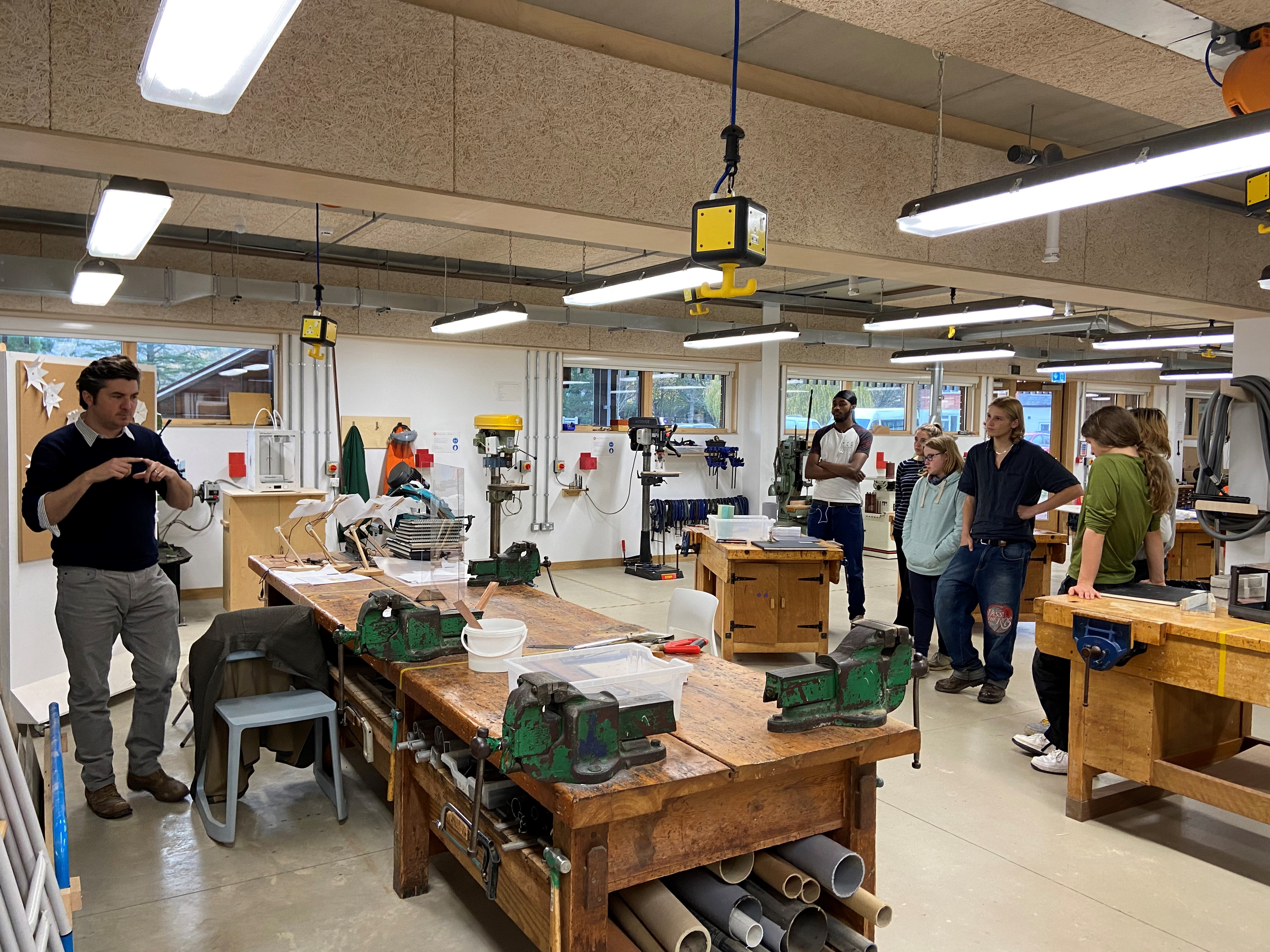
This half term 6.1 Product Design students started a new architecture based project to design a new stand-alone learning space situated somewhere on the school site. In the first lesson of the project we were introduced to the OB architect Patrick Lewis, who has his own architecture practice in London under the same name. The project was kick started in collaboration with Patrick to offer an authentic, professional and objective perspective. Alex McNaughton launched our project alongside Patrick via an online video conference where they set out the constraints of the task and allocated each of us a prominent historical designer and two driving materials to focus our research on and to use as inspiration for our designs and concepts.

We then had a couple of weeks to research and build up a designer profile and a location and need analysis of our building. I personally have been allocated the Italian designer Aldo Rossi, so I built up a detailed profile of his him by looking at his most iconic works, his design philosophy and his influence upon others. My two driving materials are acrylic and fibre reinforced resin, so I spent a few lessons experimenting with my materials and working out possible ways of incorporating them into my building. I also concluded that I wanted my building to be located in the Dunannie orchard and for it to be a sensory room. Last week Patrick was able to come into school to have a one-to-one COVID-safe critique with each of us where we presented him with our research, showed him our initial material investigations and discussed some early design intentions.

In my one-to-one crit I expressed the fact that I wasn’t really sure how to incorporate the primary shapes of Aldo Rossi’s design style into my design as I didn’t want my building to simply be a cube. Patrick suggested that as I am pursuing a sensory room, I could create for example, five separate cylinders to each explore a different sense. He also helped me to come up with ways I could incorporate the senses into the design of the building such as for sight, peep holes at different levels focusing on prominent details of the surroundings, whereas otherwise I may have just used the furniture to turn it into a sensory space.

It was overall really beneficial to get someone else’s perspective and I think we can all agree that Patrick has helped us to begin to bring our projects together and we will all enjoy the final critique after Christmas where we will get to exhibit our final models and projects. We are looking forward to seeing where the project will take us for the next few weeks.

Long range sponsored cycle for FitzRoy

By Rob Reynolds, Director of External Relations, Bedales

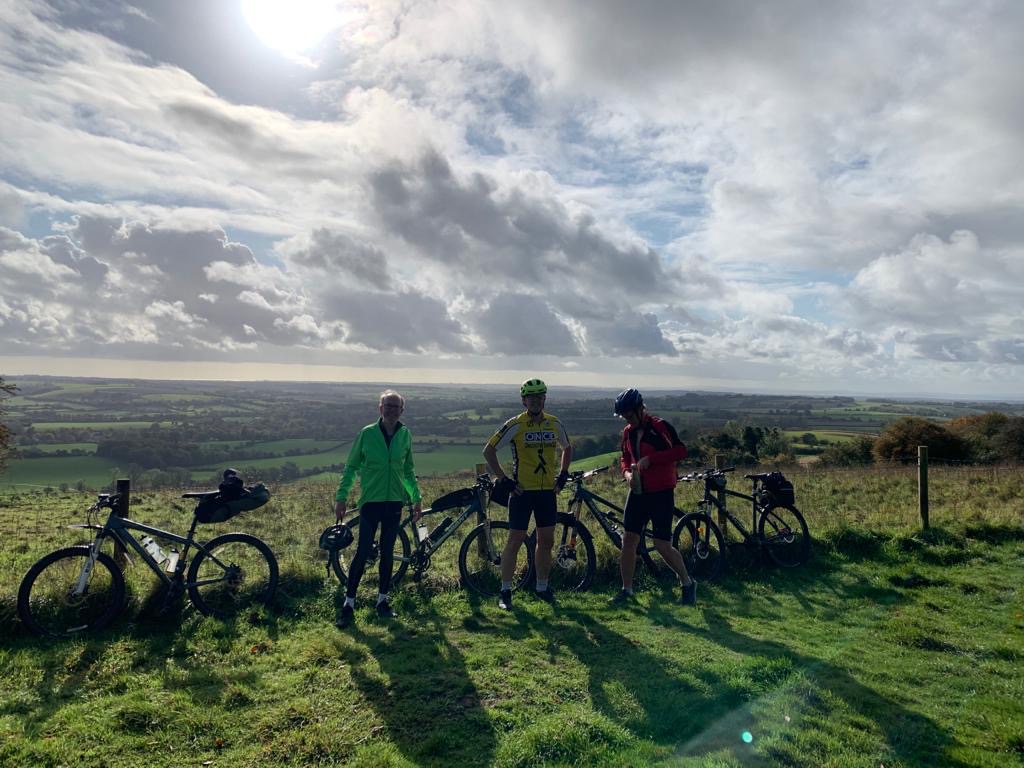
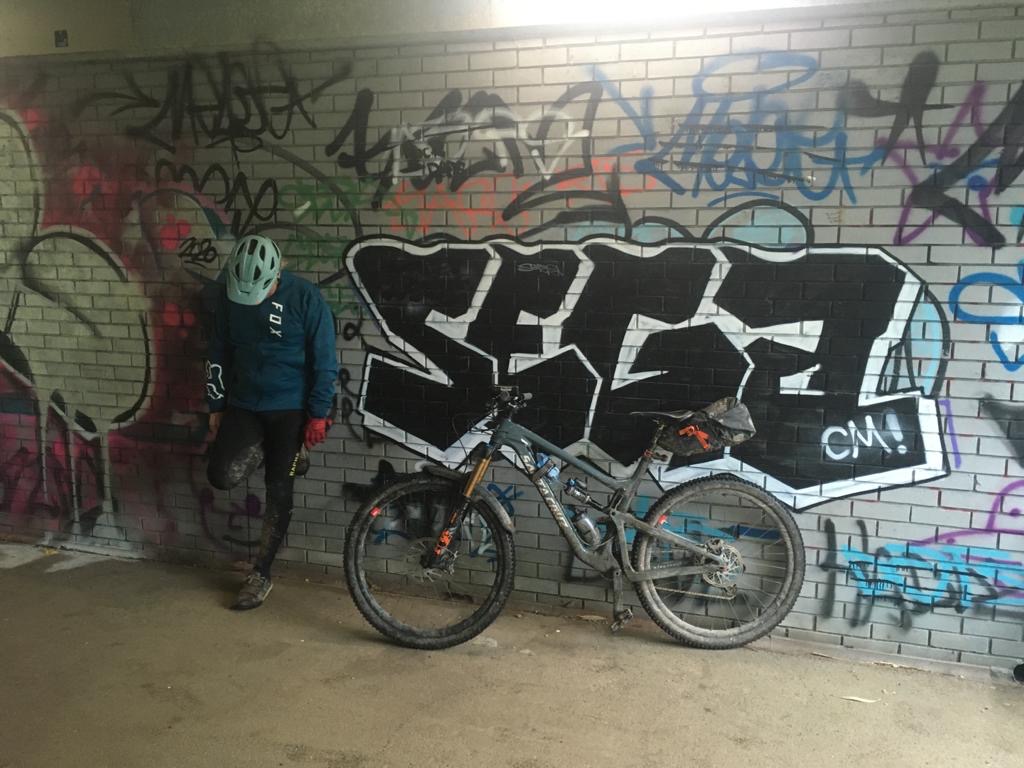
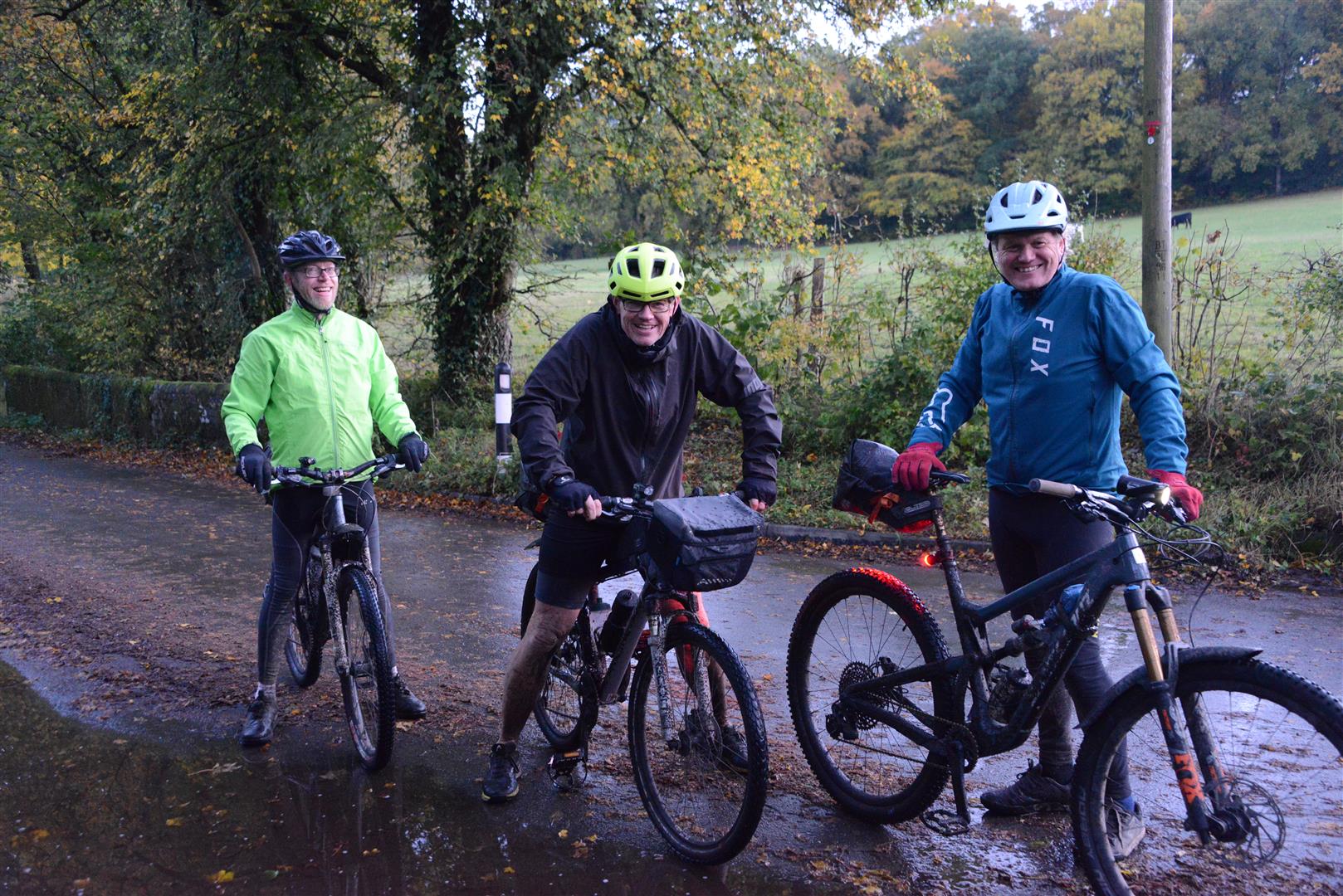
In a light-headed moment at the Harrow pub in Steep last month, Al McConville (Director of Learning & Innovation) and I decided to cycle the King Alfred’s Way as a half-term cycling trip in support of FitzRoy’s ‘Around the World’ challenge.

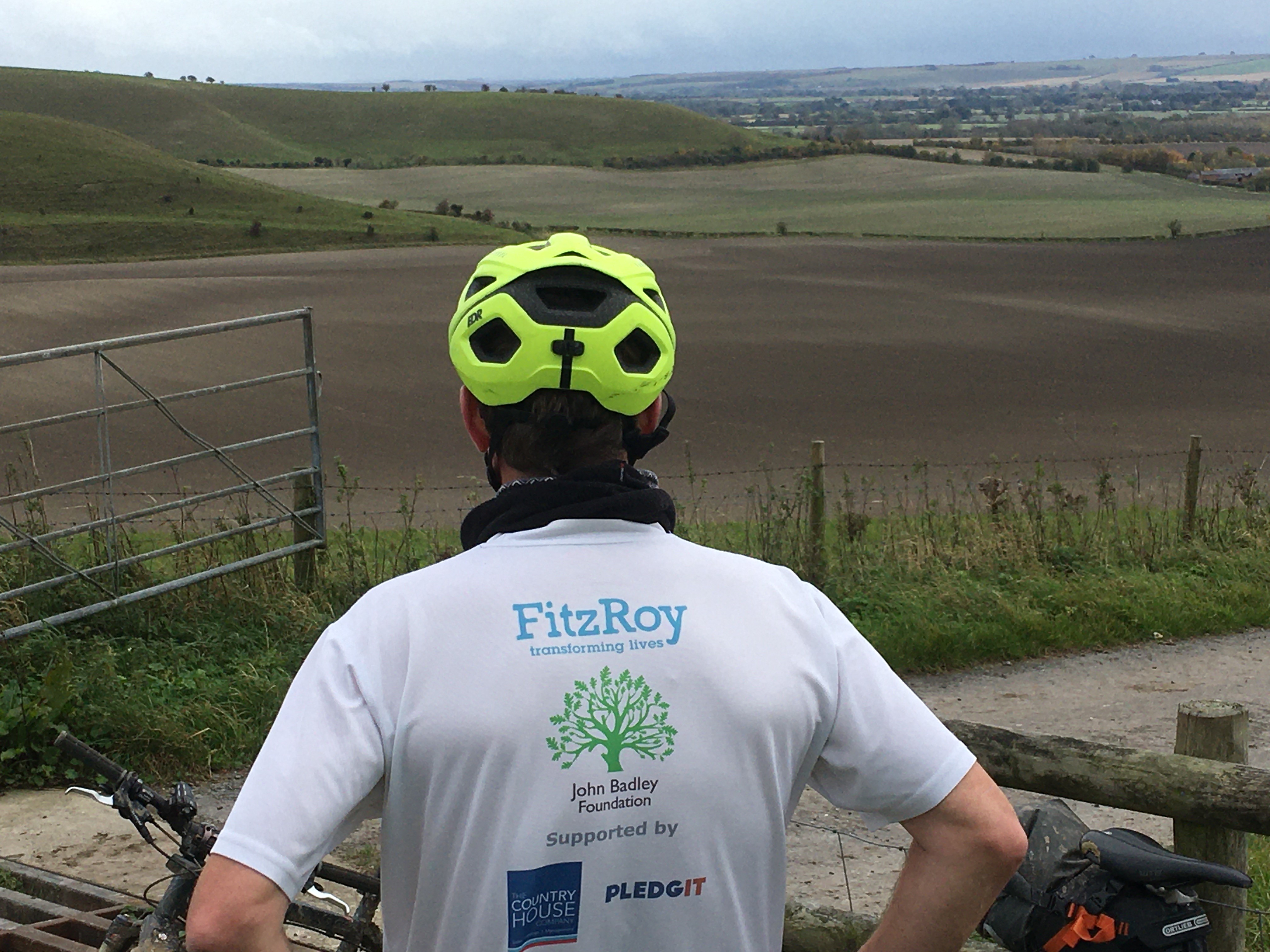
A national charity based in Petersfield, FitzRoy is transforming lives every day by supporting people with learning disabilities and autism to do the simple things that make a real difference to their everyday life. Its vision is a society where people are treated as equals, regardless of their disability. Bedales has been supporting FitzRoy through fundraising and student volunteers at their Rural Skills project at the Sustainability Centre near East Meon. Members of FitzRoy’s ‘Love4Life’ programme (a dating and friendship project) have also enjoyed attending the Bedales Rock Show for the last two years.

So our decision was made and we signed up on the FitzRoy fundraising website. Thinking ‘rule of six’ we also reached out to some of our fellow enthusiasts to recruit some additional riders. Step forward Bedales parent Paul Cooper who brought a wealth of mountain biking knowledge and experience, plus my brother Tim, a teacher at Dauntsey’s, who agreed to join us for the first couple of days.

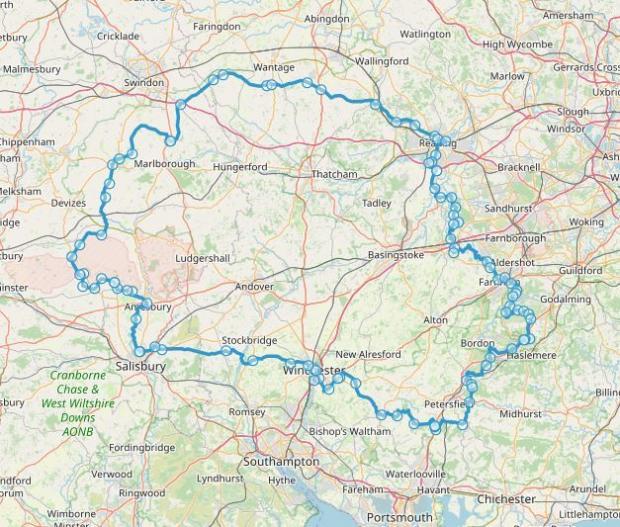
Detailed planning was then necessary to work out the route on this newly created off-road 350 km cycle. We decided to break up the journey into four full days of cycling and three nights. It being the end of October, we quickly decided to seek a roof over our heads rather than camp overnight, so maps were pored over to locate suitable hostelries with rooms.

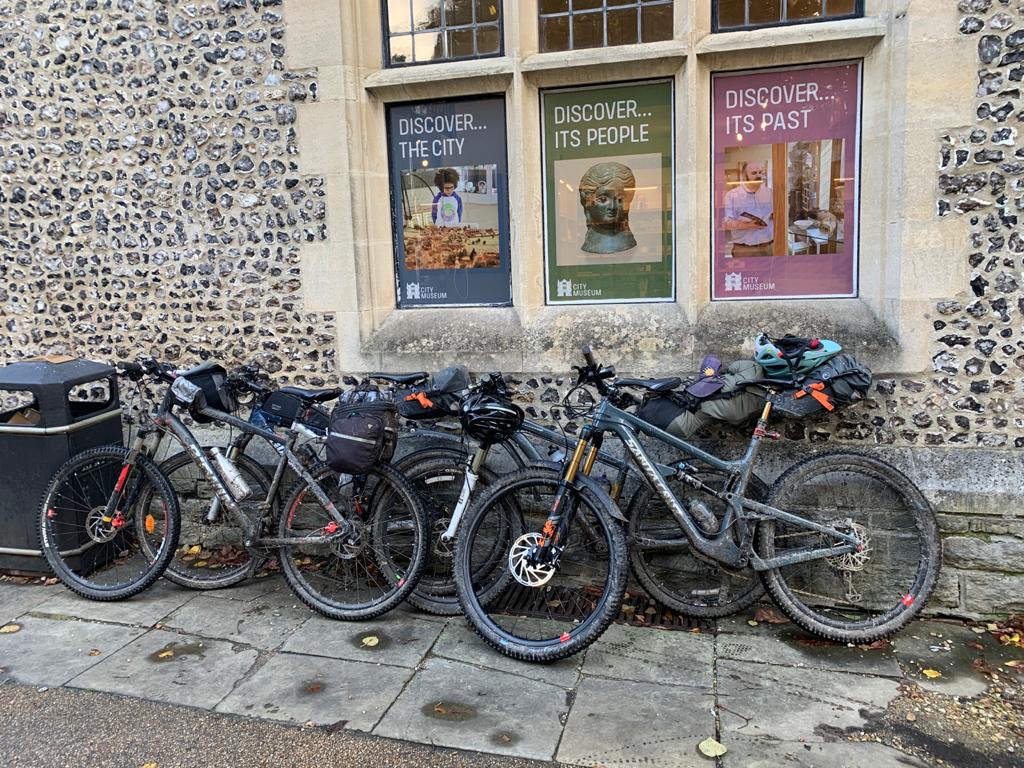
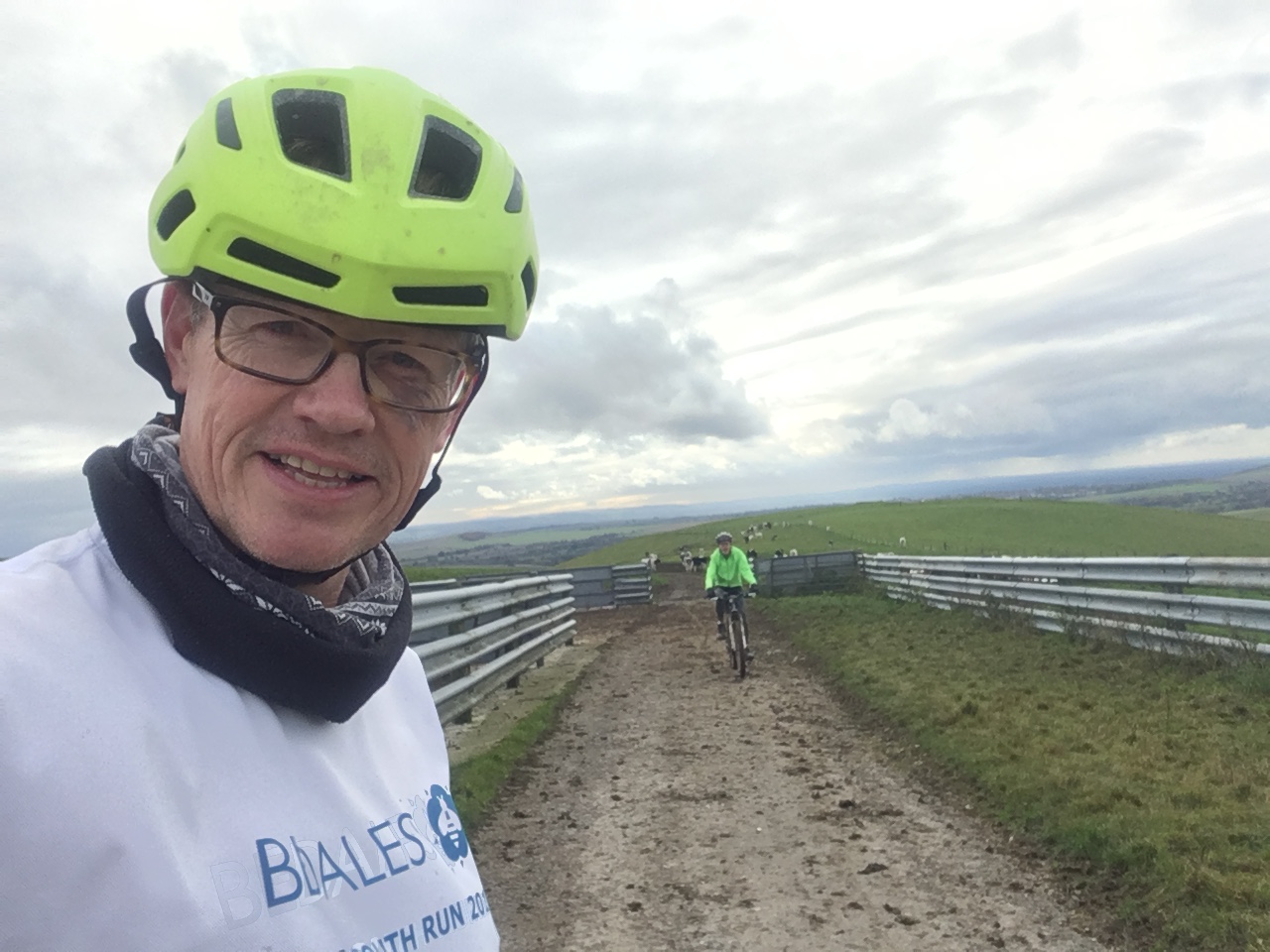
With some final tweaks to bikes and bags (we were unsupported, carrying all our kit), the first day arrived. Fuelled by porridge, the four of us met outside Petersfield Station and set off in a broadly westerly direction. Paul kindly agreed to act as navigator, and was equipped with the appropriate technology. Cycling up Butser Hill was a rude awakening and a taste of things to come. Saving grace was the relative warmth and sunshine. We cycled along the South Downs Way to Winchester, passing Exton and its vineyard. Our initial target was a lunch stop in the precinct of Winchester Cathedral before heading onward to Salisbury.

We arrived at our first overnight stop after a hard full day of cycling – the very welcome Premier Inn in North Salisbury, with bath, all-inclusive meals and comfortable bed!

The subsequent days followed a similar pattern. Tim peeled off on day two after we crossed Salisbury Plain (chased by a very speedy tank), when we passed near to Dauntsey’s (near Devizes). Our northerly stint finished in the countryside close to Swindon at the Rose & Crown, Ashbury. By this stage, bodies were aching and the sun setting. Much of day three was spent on the Ridgeway trail, described as ‘Britain’s oldest road’, heading east, and included an abrupt end to the quiet and relative bleakness when we passed through the centre of Reading and then the Madejski (football) Stadium.

The New Inn in Heckfield provided a much needed overnight stop for more baths, bike washing and maintenance, and rest. With the clocks changing overnight, we had to leave before breakfast in the knowledge that bacon butties awaited us at a friend’s house en route in Farnham (thank you Kate).

As we headed south from the Devil’s Punchbowl back towards Steep, Paul called his friend Tim who quickly created a welcome committee of friendly Bedales parents (with Maike, James, and beer) as we pedalled into Steep.

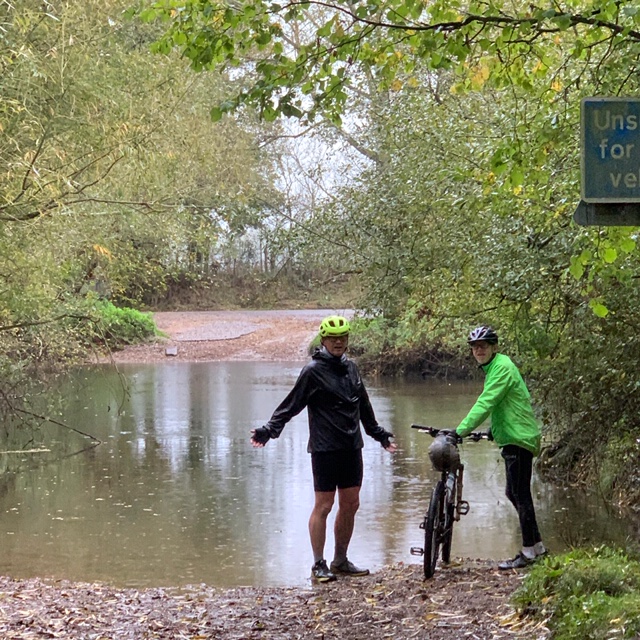
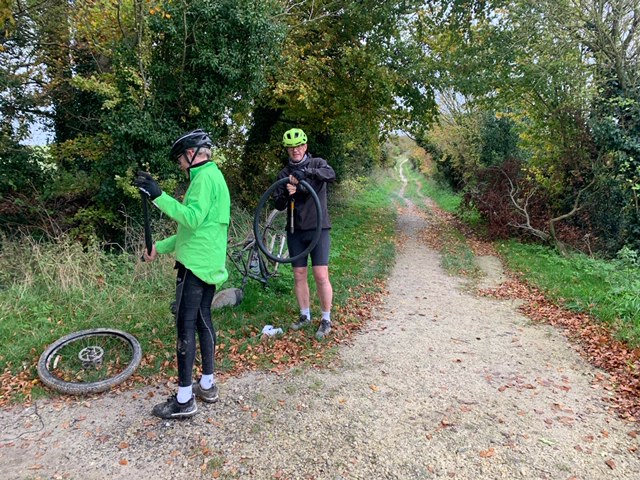
During our trip, we coped with numerous falls (the ground was very muddy and slippery in places), punctures (approx eight between us), a broken chain (which we managed to fix with the assistance of two friendly members of the Oxford University Cycling Club), flooded paths, and typical October weather (the Saturday was particularly wet and windy with reports of fallen trees in the South). Al and I quickly realised that we would have been struggling without Paul keeping us literally on the right track. 

We passed many beautiful and historic sights. As Cycling UK’s website puts it: “Immerse yourself in 10,000 years of history by riding this 350 km loop around historic Wessex, the Anglo-Saxon kingdom of Alfred the Great. The route starts and ends in Winchester where Alfred is buried, and connects iconic monuments including Stonehenge, Avebury stone circle, Iron Age hill forts, Farnham Castle, and Winchester and Salisbury Cathedrals.”

So far we have raised £1,737 (including Gift Aid) – thank you to all our supporters. There is still an opportunity to sponsor our efforts and help FitzRoy (please click here). As FitzRoy explains: “It has never been more important for us to support people with learning disabilities and autism – whether it’s the iPad that helps someone connect with their loved ones, the sensory garden that provides a calming outdoor space, or our Love4Life dating and friendship programme that proves that everyone can find love – every penny you raise will make a difference and help us to transform lives.”

If you would like to join in and help by adding some miles of your own to the total – there are still 13 days to go and there is a massive 6,190 miles to cover. You can add your mileage by joining our Bedales team – there’s more information here.

Finally, if you are interested in finding our more about the King Alfred’s Way off-road cycle route, it featured in last Saturday’s Guardian (see here) and the route website is here.

Having now almost recovered from our endeavours, Al, Paul, Tim and I have tentatively started exploring (virtually) other off-road cycling routes ready for the next one….more about that anon.

Block 3 experiment with comparative poetry

By Julia Bevan, Teacher of English

My Block 3 students have been practising writing poems using extended metaphors.

In class, we read The Beach by William Hart-Smith, Winter Morning by Roger McGough and In a Station of the Metro by Ezra Pound to inspire us, observing that none of the poems used full rhyme or a particular rhythm; instead, they’re constructed using one long sentence.

Students then worked together in small teams groups, looking at a range of images – a skiing scene, traffic on a motorway, a mountain top and a red London bus – and coming up with a number of metaphors and similes to describe aspects of the picture (mountain tops as “Stegosaurus spines” in the skiing scene, for example).

Next, they were asked to turn their collective notes into a descriptive sentence that uses at least one metaphor, then turn that into a poem.

Continue reading

‘Fascinating’ 6.2 Music bridging course

By Annia Grey, 6.2

Having studied the German late Romantic and Modernist movements outside of our exam curriculum, we have left the 6.2 bridging course feeling enriched by this introduction to some extremely poignant and beautiful works.

As Doug commented when talking about Strauss’ final trio and duet in Der Rosenkavalier, it has been a true ‘palette cleanse’ studying these composers, especially following the rather heavy curricular garlic bread of Wagner’s Ring Cycle.

We were collectively moved by the gorgeous quintet in his Die Meistersinger and were left feeling surprised that Wagner could produce something so lyrical, cantabile and moving, having been exposed to his denser works as part of our Pre-U course. This was a highlight for me, Johnny and Bella.

For those whose interests lie more in more instrumental works, a favourite arose in the shape of Mahler’s 8th Symphony and Stravinski’s Firebird for Sampson, Jamie and Mary. The gradual build-up of the instrumentation in the Firebird made for an epic finale for a ballet.

Continue reading

Historic Digital Rock Show closes unique term

Eb8rB27XYAcVd6E

By Neil Hornsby, Head of Contemporary Music

The Bedales Rock Show went digital yesterday as the 18th edition of this great Bedales event was streamed around the world on YouTube.

Whilst this Digital Rock Show was unlike any other, it still bore the same hallmarks that have made the show such a part of the fabric of Bedales in recent years – incredible songwriting, amazingly talented students and a LOT of painstaking hard work!

As well as all of the spectacular performances, a special mention must go to the amazing production team featuring the brilliant editing skills of Sam Coleman, August Janklow and Joe Wilson, along with the ridiculously professional mixing skills of Jake Scot and George Vaux.

The 17-song show was pulled together from more than 500 individual audio and video recordings sent in from students in three continents, and due to the time difference, was worked on literally 24 hours a day for the final four weeks of term.

Continue reading