By Dylan Hui and Sage Bidwell, 6.2
Last weekend saw the most recent iteration of the annual 6.2 Physics trip to Geneva, Switzerland, to visit CERN and the Large Hardon Collider (LHC). The trip began on Thursday 18 January, when we travelled to Geneva with Physics teachers Tobias Hardy, Allen Shone and Sarah Newnham. The journey went smoothly – although before we had left Geneva Airport, we had already left a passport on the plane and lost a suitcase (which was not in the itinerary!) We made our way to the Eden Hotel and got to explore the city for the first time.
On Friday, we had the chance to visit the UN Building in Geneva. We had an amazing tour guide, Lisa, who was a part-time interpreter working for the UN. She showed us around the different conference rooms in person and we had the opportunity to ask questions. Lisa was pleasantly surprised by our knowledge about politics and international relations (especially Allen’s!) In the evening, we took a stroll down the lakeside to the Old Town and explored the architecture of Geneva. To finish off the evening, we went to the Holy Cow burger restaurant, which was delicious, and finally we all sat in the lobby playing cards and sharing stories.
Saturday morning was an early one, since we had to make it to CERN in time for a 9am workshop. In the workshop we made our own cloud chambers and investigated background radiation, enhancing our previous knowledge of particle physics. It was very interesting to experience first-hand how these experiments changed particle physics, and we had the opportunity to speak to an expert who works at CERN. We then had a few hours of free time to wander around the CERN museum before embarking on our tour of the site.
We visited the main control centre of the LHC and saw how each component of the collider works. We then visited ALICE, another integral part of the LHC, focused on examining primordial matter. To finish the evening, we dined at Chez Ma Cousine, where most of us ate half a chicken accompanied by chips, salad and a hearty pint of Genevan beer.
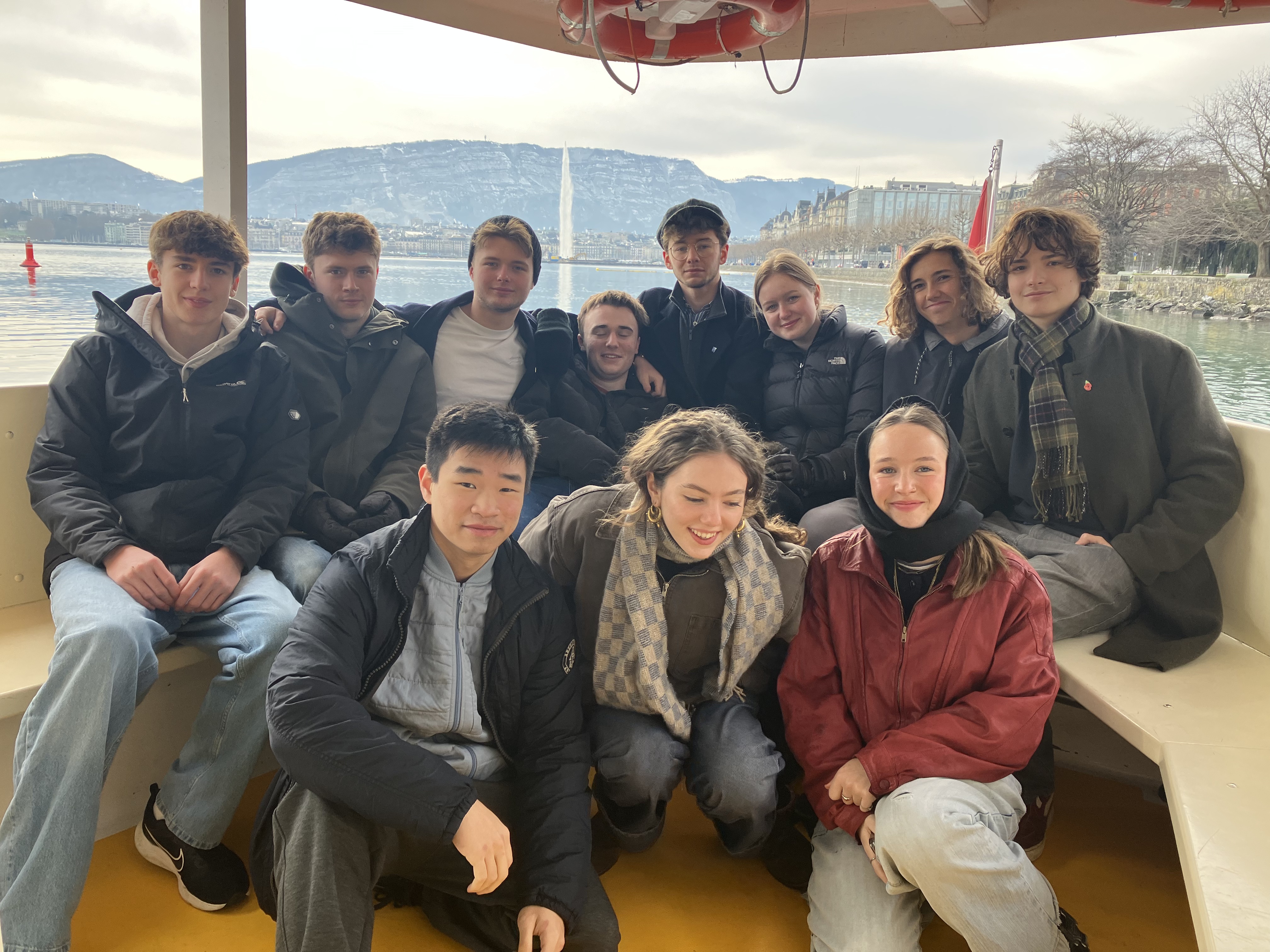
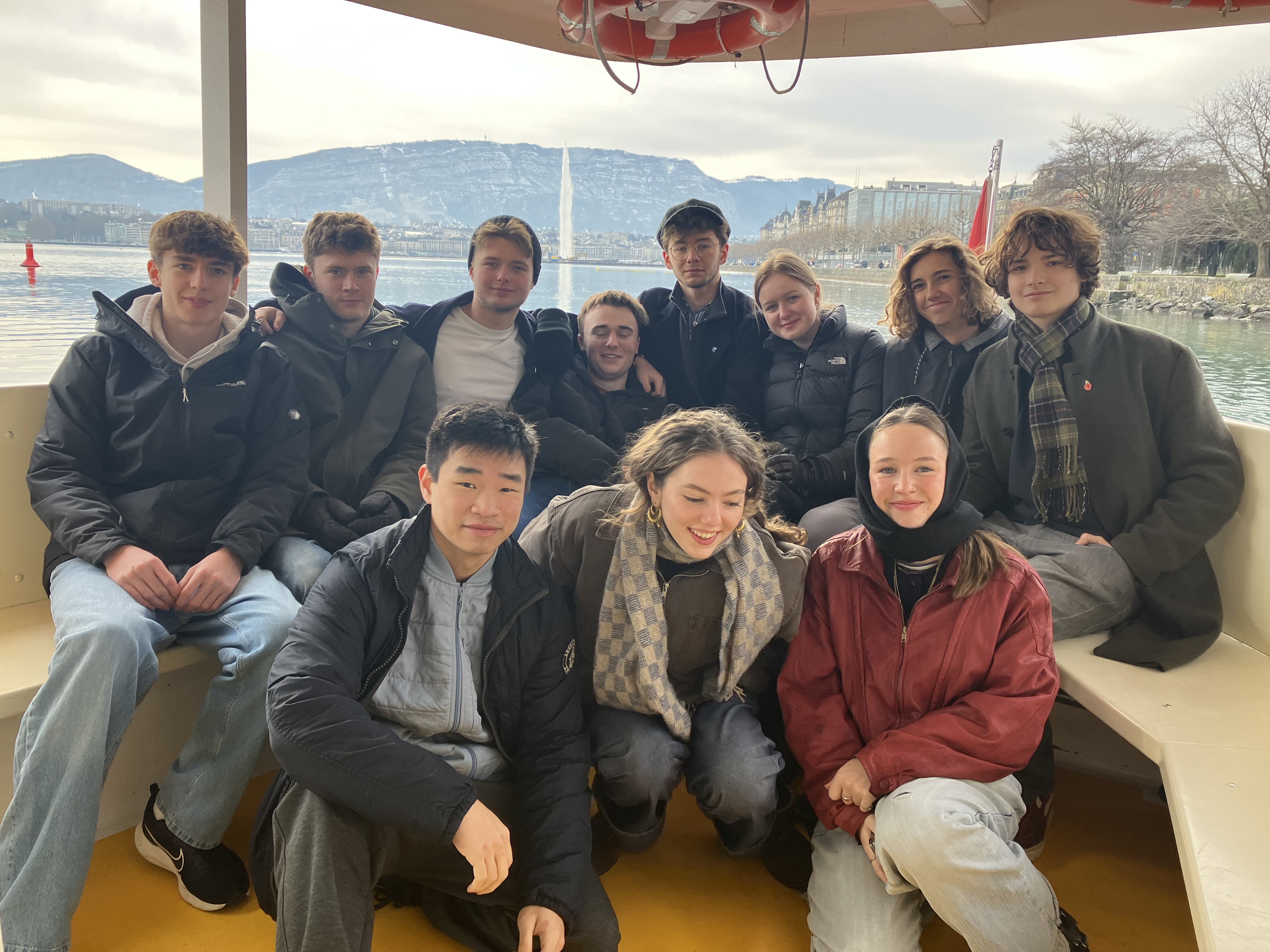
The next day, before we returned home, a few of us had time to hop onto a water taxi on the lake. We got to see the Jet d’Eau fountain, an impressive 140m tall fountain which has become one of the city’s most famous landmarks. We also enjoyed the view of the Alps and Mont Blanc before flying home, safe and sound, albeit with a bit of turbulence from Storm Isha.
Thank you to Tobias, Allen and Sarah for running this trip for us, and making it such a joyful and educational experience. We all thoroughly enjoyed it and will be remember it forever.






 Bedales School Blog
You must be logged in to post a comment.