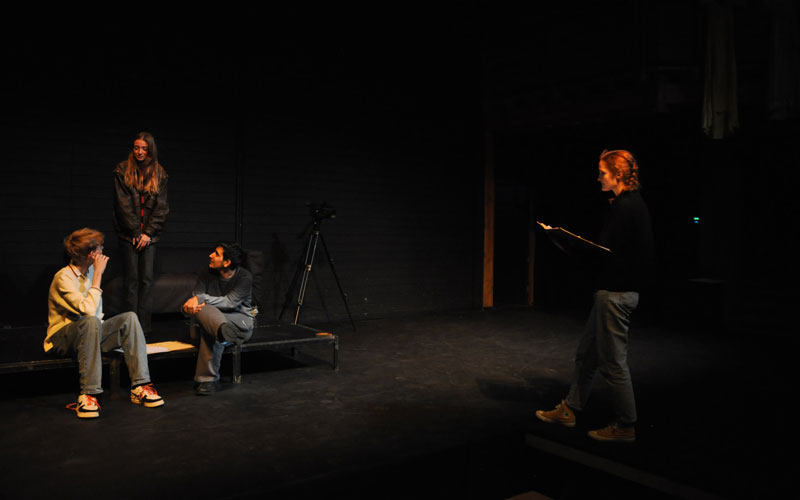
Sixth Form Show celebrates 25 years of Bedales Theatre

By Hayley Cole, Head of Drama
Photo by Beau Brentnall, 6.2

This year marks 25 years since the opening of the Bedales Olivier Theatre. To celebrate, we wanted to pay homage to some of the original work staged there. As the first piece performed at the Theatre was My Mother Said I Never Should by Charlotte Keatley, directed by a female student, we decided to invite a female Old Bedalian and professional in the field back to Bedales to direct a feminist play this term for the Sixth Form Show.

Evangeline Cullingworth has worked with the department as a practitioner over the last few years and assisted all year groups in academic and co-curricular performance projects. It is an honour to invite her back as our external director this term and we are excited to share this year’s Sixth Form Show, Image of an Unknown Woman by Elinor Cook, with you on 12 and 13 October (book tickets here).

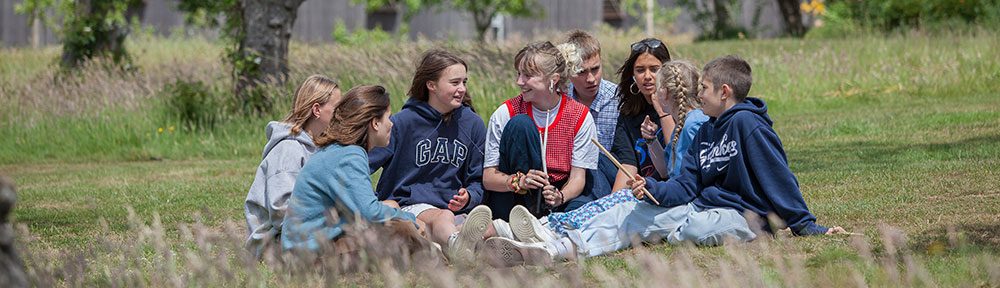
6.2 student and Theatre Don Aryana Taheri Murphy recently interviewed Evangeline and cast member Beau Brentnall photographed the rehearsal session. Read Aryana’s interview below.

By Aryana Taheri Murphy, 6.2 and Theatre Don

Evangeline joined Bedales in 2011, where she studied A Levels in Drama, Music and English. She went on to study Theatre at NYU Tisch and completed an MA in residence at the Orange Tree Theatre. She has worked at the Hampstead Theatre, Lyric Hammersmith and Royal Opera House training under Katie Mitchell. She is especially interested in community engagement and increasing access to opera, after working on RhineGold with Birmingham Opera company.

Evangeline was attracted to Bedales for the quality of the work, both academic and artistic, as well as the vast number of opportunities and how respected the arts are within the school. She had always been interested in drama since a young child, however, after joining Bedales she became more dedicated and serious about a career in the industry. She explained that by working towards her A Levels and being involved with the Sixth Form Show, she was able to learn from the “high level of production quality” and the “incredible experience” of being a part of the Theatre. One memory she shared from her Sixth Form Show performance was smashing a watermelon (with a sponge soaked in stage blood) with a hammer and it splattering all over her clothes and face, to create the effect that she was smashing someone’s head in. She recalled the shock from the audience and her feeling of being completely out of her comfort zone but also her excitement of the experience.   

This year Evangeline is directing Image of an Unknown Young Women. She explained how she attended a workshop several years ago when the play was first published and found that it stuck with her for its exploration of the impact of social media. She further explained how the play seemed more relevant now, as the only way we have been able to connect for the past two years is through phones. It made her look differently towards the piece, as 2020-2021 has been a time where “social media meets activism”.
Uniting the world to tackle climate change

By Abi Wharton, Head of Geography, Global Perspectives and Politics

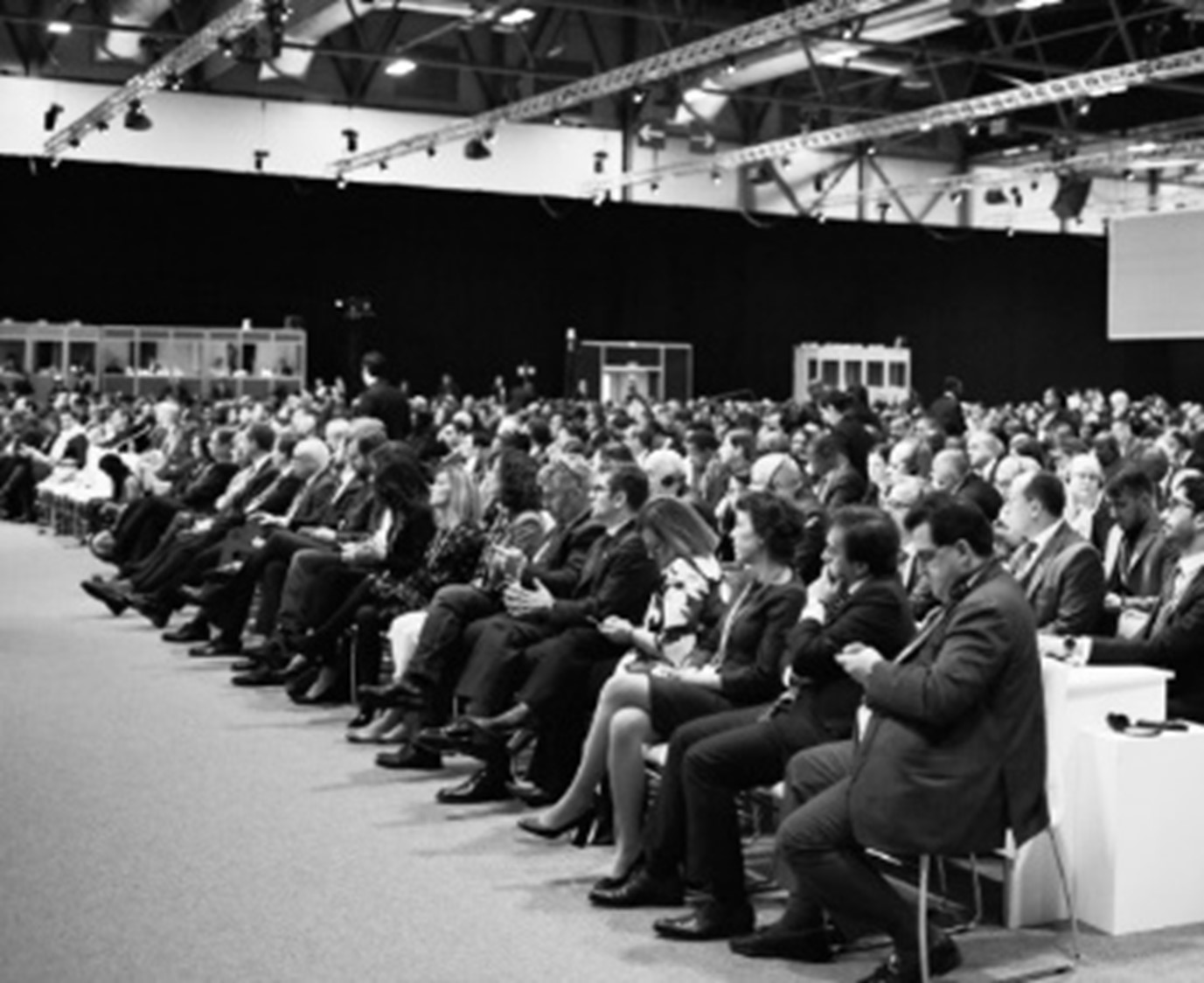
The UK will host the 26th UN Climate Change Conference of the Parties (COP26) in Glasgow on 31 October – 12 November 2021. The aim of this conference is to bring the world together to accelerate action towards the goals of the Paris Agreement and the UN Framework Convention on Climate Change.

As Alok Sharma, the COP President-Designate states: “The COVID-19 pandemic has brought devastation to millions around the world, disrupting many parts of the global economy. But climate change has continued, and it ultimately threatens life on earth. As countries begin to recover from the Coronavirus pandemic, we must take the historic opportunity to tackle climate change at the same time – to build back better, and greener. And we must. To keep the temperature of the planet under control – limiting its increase to 1.5 degrees – the science dictates that by the second half of the century, we should be producing less carbon than we take out of the atmosphere. This is what reaching ‘net zero’ means. The journey is already underway. Despite the pandemic, the direction of travel is changing. Around 70% of the world economy is now covered by net zero targets, up from less than 30% when the UK took on the Presidency of COP26. The world is moving towards a low carbon future.”

These aims must clearly be considered at a personal, local and national level to be successful globally. We are rightly very proud of our Bedales student body who are all too aware of the impact previous generations have had on the environment, and their responsibility to do more, and quickly, to protect the planet. Across the curriculum, students are conducting innovative academic research to prepare them to be the change makers of the future. Geography BAC students study a bespoke module on climate change unlike any other course at this level in the UK, and the Block 3 collaborative project between Philosophy, Religion and Ethics (PRE) and Geography focuses on ‘Who made my clothes?’, tackling globalisation, the winners and losers of a globalised economy, and the ethical implications of business practices on people and the environment. In Pre-U Global Perspectives students have chosen to research topics such as ‘The effect of COVID-19 on consumerism’ and ‘Is sustainability in the fashion industry sustainable?’ In tandem with this, students from across the year groups continue to be involved in a range of activities to raise awareness about the urgent need to do more.

As a prelude to the global conference taking place in Glasgow, East Hampshire MP Damian Hinds, in conjunction with East Hampshire District Council, has organised a local climate conference focusing on the action that can be taken locally to accelerate decarbonisation. The conference, which will involve Bedales students, will take place on Friday 8 October at The Maltings in Alton, to which everyone is invited. More information can be found on Damian Hinds’ website here and tickets can be booked here.

‘Enriching’ human rights conference

By Maya Muller, 6.2

On 21 September, Bedales students had the opportunity to attend the Stand Up Free and Equal Conference, which due to COVID was held virtually in the SLT. It was not only an enriching experience, but one that provided us with transformative insight on how to not only not be racist, but to be actively anti-racist.

The conference included speakers such as Lee Lawrence, author of The Louder I Sing; artist and educator Linett Kamala; student activist Sophie Kabangu; retired headteacher and educational consultant Tom Wilson; and eight-year-old Nylah Abitimo-Jones.

Lee shared his tragic yet inspiring story on how he witnessed the almost fatal shooting of his mother in his own home by a white police officer. His moving speech stressed the importance of restorative justice, and how the road to fighting racism should include conversation and understanding rather than just objective punishment. He provided us with valuable insight on how to best communicate our unconscious biases, and how to work on re-configuring our perceptions and attitudes on race. He stated that “injustice perpetuates because there is a misunderstanding of what racism means…racism is not simply prejudice, racism is prejudice plus power”. The idea of racism being fundamentally rooted in a power imbalance is one that can be observed in his own, real life experience of having the police exploit their power over his family.

Nylah presented her powerful poem, Black, and her young age did not stop her from delivering a moving and inspiring performance. She celebrated the beauty of her own culture, as well as rejecting Eurocentric beauty standards and bringing to light the micro-aggressions of having people, for example, constantly touch her hair. It was an evocative speech that allowed us to realise that even at such a young age, she had been forced to mature to a level where she must be aware of people treating her differently for her race.

The speeches were both informative and empowering, and allowed for us as students to really immerse ourselves in the process of simply listening to the experiences of the speakers, and to learn and recognise our own privilege and biases.

Celebrating European Day of Languages

By Tristan Wilson, Head of Modern Languages

Sunday 26 September marks the 20th European Day of Languages – a celebration of the linguistic and cultural diversity of Europe – and to mark the occasion, the @bedaleslanguages Instagram account will be running competitions for Bedales students. 

Europe’s linguistic and cultural diversity is quite remarkable. I still remember the Eurostar opening its first service between Waterloo and Paris when I was in my teens, and it transformed everything. Whereas up until then France had been a faraway place requiring a flight, a lengthy ferry ride, or a hovercraft ride (cancelled at the whim of the weather), you could now get on a train and be surrounded by anothe rlanguage within a couple of hours. From Paris or Brussels you could be surrounded by other languages still, within another hour or two of a connecting train. On a three-day trip from London to Moscow by rail you are exposed to English, French, Flemish, German, Polish, Belorussian and Russian.

In the era of COVID, many of these opportunities for travel have diminished due to the headache-inducing formalities and costs of proving your freedom from infection. Nevertheless, foreign languages are so much closer to us islanders than they used to be. Gone are the days of bringing back VHS tapes from the continent that only played in grainy black and white. Through online streaming platforms to language apps, languages are now fully accessible. Language and culture are so heavily intertwined that to celebrate linguistic diversity is to celebrate cultural diversity. If the whole of Europe spoke English, what would the effect be on European culture? Would we get such visible cultural differences between France and Italy, say? With free movement, the greatest markers of national boundaries are languages.

Brexit, as well as French and German A Level uptake in freefall on a national level, reductions in the numbers of European language undergraduates, and a lack of recognition of the importance of languages all point to a crisis in language learning. Sadly languages are often seen purely as a bonus commodity, a pathway to business opportunities that can be circumnavigated with English – but languages are so much more than that. The Day of European Languages is an opportunity to celebrate the diversity of geographical Europe (not the political Europe), something which a lack of free and easy travel to Europe for pleasure could lead us to forget, were it not for the internet.

‘Enlightening’ Round Square International Conference

By Ben Bradberry, 6.2

Over the past week, I have been joined by three other students in virtually attending the Round Square International Conference. This is an annual conference held with the goal of engaging students in prominent social issues that will effect the world they grow up in, with this year being focused on the topic of ‘Blue Skies and Brave Conversations’. Over the course of four days, we learnt about topics ranging from ethical leadership to the variety of identities that are attributed to people.
 
The conference was made up of three main sections. Each day, student delegates met with representatives of other school to discuss how our schools address the issues being discussed by each days topic. While this was happening, there were also cultural performance from schools or short documentaries to broaden the perspectives of students. From here, we went on to watch a discussion between keynote speakers, where they were questioned by students on how they view the various topics of discussion. Lastly, we joined other schools in smaller Zoom meetings so that individual students could voice their opinions on what was discussed and engage in a productive conversation on how we can improve the world we live in.
 
Ultimately, it has been an immensely enlightening experience as I personally have learned far more than I could ever have expected to. The goal of these conferences is to innovate how students learn, and I’m sure that the other delegates from Bedales can confirm that this year’s conference has succeeded. From learning about how other cultures operate to the way the world should run, we have all taken a lot from the past week and have gained an equal number of ideas to think about.

The ethics of buying a smartphone

By Clare Jarmy, Acting Deputy Head (Academic)

In Jaw this week, I spoke about the ethics of buying smartphones. Having recently broken my own phone, I described the dilemma I faced when I came to replacing it. I talked about an event I attended here at Bedales a few years ago, where former Head of BBC News James Harding explained that most of the cobalt found in lithium-ion batteries – the rechargeable batteries found in all smartphones – is mined in the Democratic Republic of the Congo (DRC), where men, women and children endure dangerous and unhealthy conditions to source the element for mobile devices. This essentially means that quite a lot of us carry around with us in our pockets something that is the product of child labour.
 
All of this had left me wondering how I can work in a school, and care for some people’s children, whilst ignoring the plight of others. That, in turn, got me thinking about an excellent book I’ve read – The Life You Can Save by Peter Singer – which argues that although we can often feel helpless to solve global issues, we actually have a moral obligation to do something, and we should really be thinking of these global problems as our problems. If we wouldn’t think twice about rescuing a child drowning in a pond immediately in front of us, why are we reluctant to do our bit to help children in danger several thousand miles away? For me, it felt disingenuous to live a life based around caring for children, whilst ignoring other children, just because they’re far away.
 
I also touched upon other important issues to consider, such as the sustainability of resources used to produce smartphones, and widespread concerns about the working conditions and pay of those producing them. Use of smartphones has risen exponentially over the last few years, and as they become a staple of everyday life and use continues to rise, the ethical impact of what we do with smartphones will become more significant.
 
I asked students to consider the ethical weight of their smart phone. What are they carrying in their pocket? What is the moral dilemma they should face when they think about replacing their smartphone? What can they do? Addressing the advantages and disadvantages of each, I presented a range of options, from keeping a particular handset for longer than the original contract or buying a reconditioned, second-hand phone, to buying a phone from an ethical brand, such as Freephone or Teracube, who work to ensure fairer supply chains, use recycled materials, and pay fair wages.
 
We are a long way from a perfect solution, but I hope my talk has encouraged students to start thinking about these issues and, when they next come to replace their smartphone, consider the ethical weight of the phone they choose. As for me? For Christmas, I’m going to ask for my iPhone to be repaired.

Block 3 adventure

By Greg Clarke, Teacher of Maths and Block 3 Tutor

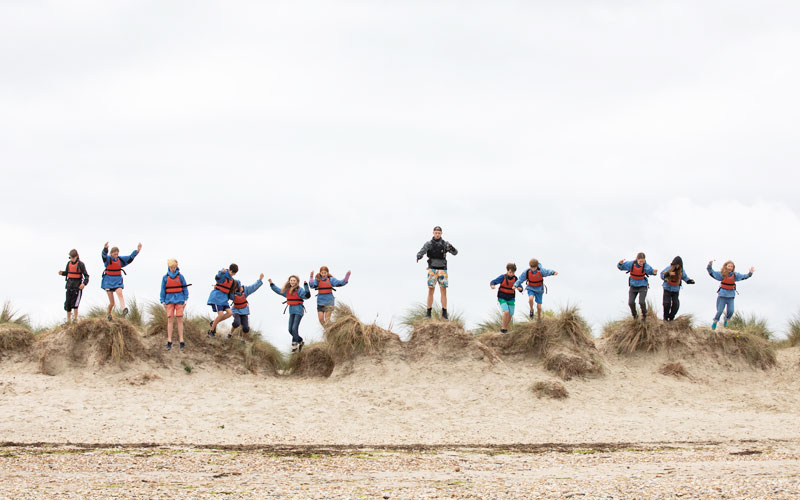
This year’s intake of Block 3 – plus their form tutors and Head of Transition Clive Burch – spent last week at Cobnor Activities Centre on Chichester Harbour in West Sussex. The week is designed to assimilate the students as they settle into Bedales, with camping, an expedition, and a range of outdoor pursuits – plus plenty of card games, snacking and UNO – helping everybody enjoy the bracing coastal air, reacquaint with old friends after the summer and find lots of new friends with whom to enjoy the next few years at Bedales.

At various times in the week every group enjoyed kayaking, canoeing and sailing around the bay in a Hawk, working as a team to launch their craft from the little jetty. We also built rafts to race one another in, crafted from wooden posts and plastic barrels lashed together with ropes knotted into bowlines and half-hitches. I’ll leave you to imagine how sturdy one or two of those rafts were.

For landlubbers there was archery with the instructor who had a keen interest in history, aeroball (think of vertical basketball on a trampoline inside a cage, if you can), and practice at all the camping skills necessary for the expedition: pitching a tent; lighting a stove; cooking pasta in a mess tin; bending tent pegs; and packing a rucksack.

The expedition was a tough two days’ worth of hiking along the South Downs Way, in what turned out to be glorious sunshine that lifted spirits, drained sunscreen supplies and provided vital vitamin D for sustained walking. On my night at the campsite at Cocking, folk from the RAF entertained us all with several flypasts and stunts in their Chinook, and I feasted upon a gourmet pasta pesto (topped with parmesan) prepared by a team of Block 3 chefs.

After a lot of fun, by Friday afternoon there ensued a frantic all-hands-on-deck clean up and pack up to leave Cobnor looking miraculously even tidier than when we arrived. A big well done to everybody for surviving the rollercoaster up-and-South-Downs experience that was Cobnor 2021.

See photos from the Block 3 induction trip to Cobnor here.

New Academic Dons announced

By Clare Jarmy, Acting Deputy Head (Academic)

Congratulations to this year’s Academic Dons, who were announced last week.

Dons are student leaders, associated with academic departments and other important areas of the school, such as the Library and Theatre. As student spokespeople for a department, Dons represent the student body’s views to the relevant Head of Department, as well as offer subject specific help and advice to younger students at the senior school.

It is a genuine delight for us to see so many students showing such energy and enthusiasm for the different areas of school life, and we thank them in advance for the work they will do with teachers in supporting the academic life of the school.

The full list of this year’s Dons is as follows:

  • Art – Georgie De Boulay
  • Biology – Nina Jones
  • Business Studies – Maria Timokhina
  • Chemistry – Isabella McGrath
  • Classics – Annie Lawes
  • Dance – Mathilda Douglas
  • Design (Product) – Oskar De Aragues
  • Digital Game Design/Maths – Raef McNaughten
  • Drama – Jessica Asamoa
  • Economics – Harry Hornsby
  • English – Maya Muller
  • Fashion Design – Phoebs Esdaile
  • French – Alisia Leach
  • Geography – Fleur Donovan
  • Global Awareness – Sacha Weisz Brassay
  • History – Taragh Melwani
  • Library – Anton Lucas
  • Maths – Annabelle Snell
  • Music – Tiger Braun-White
  • Music (Contemporary) – Monty Bland
  • Outdoor Work – Lila Levingston
  • Photography – Poppy Kingsley-Pallant
  • Physics – Hux Green
  • Politics – Thomas Figgins
  • Philosophy, Religion and Ethics – Amos Wollen
  • Psychology – Lily Brough
  • Round Square – Amelia Smith, Ben Bradberry, Nina Solovieva
  • Spanish – Anna Sukhikh
  • Sport – Shanklin MacKillop-Hall
  • Theatre (Crew and Wardrobe) – Caelan Edward and Aria Taheri Murphy
  • 3i – Zakhar Gabriadze

New academic year, new Drama productions

By Hayley Cole, Head of Drama

We have started the year with two exciting opportunities for the students and have been auditioning this week for the Whole School Show and the Sixth Form Show. The new Block 3 students were particularly brave and auditioned before they left for Cobnor!

We have started the year with two exciting opportunities for the students and have been auditioning this week for the Whole School Show and the Sixth Form Show. The new Block 3 students were particularly brave and auditioned before they left for Cobnor!

Jessica Asamoa, Drama Scholar and Drama Don, said of her experiences of auditioning for both productions: “On Tuesday evening, many students across the blocks auditioned for the Whole School Show, as well as some of the 6.1s and 6.2s who also auditioned for the Sixth Form Show. Auditioning is always a good experience to have and a fantastic skill to develop because it helps with confidence. It was also great to do an audition in a friendly and welcoming environment: everyone was very respectful and kind to each other so we were all able to present ourselves in the best light that we could. 

In the sixth form audition, we worked on some drama exercises. We were looking at how we can become more aware of those around us. This was very useful and I think most of the sixth formers who auditioned were able to gain more insight into how they focus their attention while performing. 

For the whole school audition, we worked on freeze frames and tableaux in groups. We were given a line of a poem as a stimulus and then had to create our freeze frames/ tableaux inspired by this. It was great to do some choral work and everyone had a lot of fun with it: there was a lot of laughter and smiles.

All in all, I think any audition that ends with people feeling excited, happy and comfortable is a successful one and I am looking forward to seeing how these projects develop.”

John Locke Institute Summer School

By Eben Macdonald, 6.1 and Academic Scholar

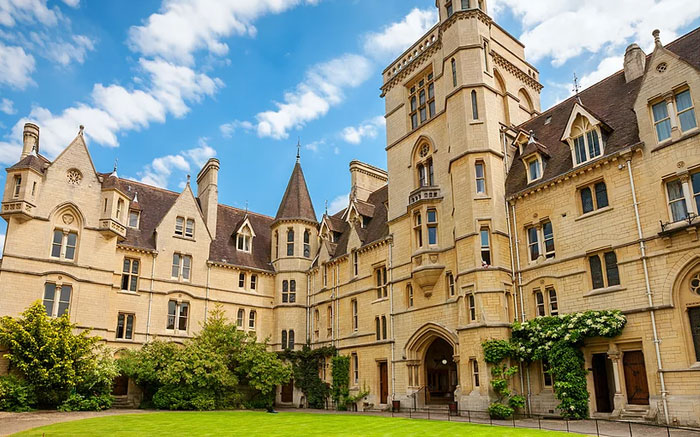
Over the summer holidays, I had the privilege of attending the John Locke Institute Summer School at Balliol College, Oxford, to study an academic course in Philosophy, Politics and Economics (PPE). Competition for a place on the summer schools is intense, and to be considered for a place, we had to write a resumé and attend an interview (via Zoom, of course), where we were asked to articulate our most controversial idea and defend it against the interviewer, who challenged us rigorously.

At the summer school, we were put into small groups and our day consisted of three kinds of lessons: seminars, which were lessons with professors, in our groups; lectures delivered by professors, which all groups attended together; and critical response precepts, where we discussed recent lectures in our groups.

We enjoyed the presence of some fascinating people – Bryan Caplan, Professor of Economics at George Mason University; David Schmidt and Cate Johnson, two world-renowned experimental economists; John Filling, Doctor of Philosophy at King’s College, Cambridge; and Jamie Whyte, a philosophy PhD and former leader of ACT New Zealand. We even got to meet the former Prime Minister of Australia, Tony Abbot!

The faculty never failed to give exciting and, often, provocative lectures. I really enjoyed discussing them with the intellectually vibrant student body.  

At the end of the course, we went to the Oxford Union to be subjected to Bryan Caplan’s Ideological Turing Test – where we’d have to argue for or against a certain proposition, regardless of our actual position on it, and if the student body believed we were genuinely arguing our true position, we’d have shown we were able to accurately represent a view which we had not necessarily agreed with. 

The summer school was a life-changing experience for me and I urge people to register next year.