Farewell Janie

At the end of September, our long-serving Head of Admissions, Janie Jarman, leaves Bedales after 21 years of unstinting service to the School. Annette McCormack has taken up the reins as the new Director of Admissions and she is already enjoying getting out and about meeting members of our community. 

We are so grateful for everything Janie has done and given to the School. As one former colleague said: “Her knowledge of the place extends to its very roots – she believes in it and that shows when she is talking to any and everyone.” Janie will always be a special member of the Bedales community and a friend to so many colleagues, parents and students.  

Staff and BPA reps recently thanked Janie and presented her with gifts at a gathering in the Sixth Form Social Space. Read the leaving speech for Janie given by Rob Reynolds, Director of External Relations, below.

I feel humbled that I am the one to talk about someone who has had such a profound impact on the lives of so many people. I will try and do justice to the huge impact Janie has had on this place.  

Some of you will know I like numbers and when you look at admissions numbers, they are staggering.  

During her time, Janie has overseen the recruitment of over 3,000 students to our three schools. To recruit that many new students means managing more than 15,000 enquiring families and organising at least 100 open mornings.  

During this period, Janie has been wise counsel to all the heads she has seen come and go across the three schools – Keith Budge, Magnus Bashaarat, Chris Sanderson, Jonny Cully, Penny Watkins, Jane Grubb, Sarah Webster, Katie Potter, Jo Webbern, Victoria Homewood and the current trio of Will, Colin and Fiona.  

Janie has been the face of this School for over 20 years. In Olympic cycles, that would have seen Janie compete in 6 games in Athens, Beijing, London, Rio, Tokyo and most recently at Paris.   

When we decided to broaden admissions internationally, it was Janie who travelled the world to find the right students – leaping on planes to attend recruitment fairs. I’ve counted up 13 countries: China, Singapore, Malaysia, Hong Kong, France, Monaco, Jersey, Switzerland, Spain, Turkey, Dubai, Norway and the US. 

In recent years, Janie oversaw admissions through the COVID pandemic, ensuring no reduction in the numbers and the right calibre of student continued to join us. 

Since we launched the John Badley Foundation, Janie has helped to transform the lives of 37 young people on full bursaries helping them navigate their way through the school. When Russia invaded Ukraine, it was Janie who quickly helped 10 displaced young Ukrainians to join our school on fully funded places. 

Of course, behind every number there is a human story. 

This is what how one of the parents responded to the offer of a place:  

“This opportunity has brought immense relief to our lives. Finally I can breathe out and begin planning for our future with renewed optimism. The magnitude of this gesture is truly awe-inspiring, and I am overwhelmed with gratitude…The joy and excitement that my children are feeling cannot be put into words…For the first time in a long time, I feel absolutely lucky and happy.”   

Now I don’t normally turn to the Daily Telegraph for inspiration but I would like to quote from an article it published about the rudeness and arrogance of school admissions offices.  

“Admissions never answer the phone.” 

“The admissions office was so unfriendly I immediately struck it off my list of possibles.” 

“When I called admissions to ask a few questions, I was told: ‘I have absolutely no idea, nobody tells me anything.” 

The article likens independent school admissions staff to bouncers at a premium night club or a GP’s receptionist on the Monday morning after Christmas. 

The piece then changes tack, saying, and I quote:

“There is beauty to celebrate in the world of admissions.”  

It goes on to hand out a few gold stars or to continue the Olympics analogy, gold medals – including this one: 

“The registrar at Bedales really understands the word ‘empathy’ and cares hugely about each visitor: she should be mentioned as exceptional.” 

‘Empathy’ and ‘exceptional’ – to add to those descriptions of Janie, I turned to some former Heads and governors. 

One governor said she is “emollient and adaptable”. 

I had to look the first one up. Emollient means “attempting to avoid confrontation or anger; calming or conciliatory”. 

Maybe that’s one side of Janie?! 

He went on to explain that Janie provides that reassurance to so many parents who might be apprehensive, or sceptical or even too straightlaced to accept that Bedales can and does actually work. And that sometimes Janie has had to put right the damage done by others, be that an unusually-dressed tour guide, a disgruntled parent or a gruff colleague. 

This showed through in research we conducted with parents who chose to go elsewhere, but still chose to tell us and I quote: 

“I thought Janie was brilliant, really warm and helpful”  

“Janie is incredibly communicative – nothing was lacking” 

A former deputy who left us to take up a headship said of Janie: 

“When I started at Bedales, Janie was already known as the doyenne of schools’ admissions and offered a model of warmth and engagement that other schools sought to emulate. That persists to this day. Her knowledge of the place extends to its very roots – she believes in it and that shows when she is talking to any and everyone. She has the uncanny knack of making all sorts of people (and at Bedales you really do meet all sorts) feel that they are welcome and part of things even before they cross the threshold. If admissions teams have people who capture even a small fraction of her subtlety and warmth, they are lucky indeed.” 

Another former Head said: 

“Janie always puts everyone before herself. She is totally devoted to Bedales and its ethos. She personifies John Badley’s founding motto ‘Work of Each for Weal of All’. She is a walking, or in Janie’s case, running Debretts and if Janie doesn’t know someone they aren’t worth knowing!” 

Only Janie comes to work on a Monday morning having been chatting to the Queen of the Netherlands or a former US president over the weekend. 

Another previous Head talked of Janie’s intricate knowledge of each individual student’s background and her intuitive understanding of their needs; the occasional look she’d give said Head when she thought he was going down the wrong path (head slightly tilted, pause in speaking); and her characteristic jog across the Orchard to try and cram so much in her overpacked day. 

Many staff at Bedales change responsibilities, moving around to find the right role for themselves and to become a part of the school. Janie started as part-time Music Administrator, then Registrar at Dunhurst and progressed to lead admissions for the Whole School….. and has also become Hampshire’s go-to pre-eminent estate agent. 

Janie – you are a true Olympian in the world of admissions, a multiple gold medal winner. We will miss you and we are so grateful for everything you have done for us. THANK YOU. You will always be a special member of the Bedales community and a friend to so many colleagues, parents and students; and we insist that you come back regularly.  

Please raise a glass for the emollient, empathetic, warm, intuitive, adaptable, amazing, encyclopedic, running who’s who, the exceptional Janie.   
Ullswater 2024 expedition report

After a full-on day of in-school activities on Sunday 1 September, Block 3 (and the select band of both teachers and 6.2 Badley Mentors accompanying them this year) set off for the Lake District early Monday morning for the annual Block 3 induction trip.

Below are summaries from tutors about their exciting endeavours throughout the week.

Allen’s tutor group:

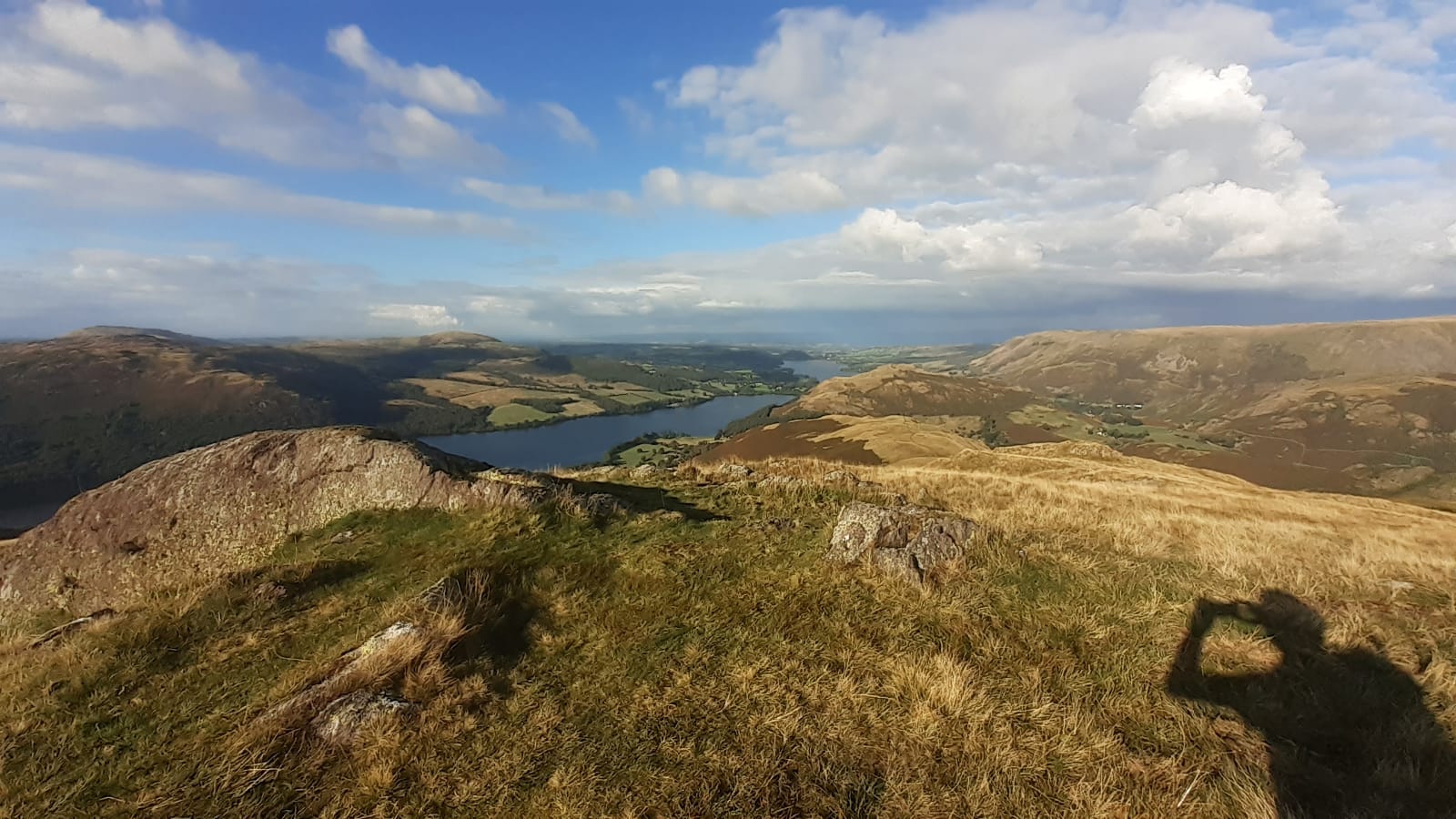
Our intrepid journey began with a row across the lake from the Outward Bound Centre to Sandwick. Despite a slow start, my previous-me rowing coach was pretty impressed. After a brief delay we set off up the mountain towards High Dodd. With a sigh of relief, we left our rucksacks behind after setting up tents at the campsite and progressed, with head torches prepared, to the top of Place Fell and our highest peak of 657 metres. Descending once more, we returned to our campsite and sleeping bags by 10pm.

Thursday morning dawned with the air full of mist and a moderately strong wind which grew as we descended once more on our return to the lake and Howtown. Our expedition ended with a power boat ride across the lake where a lunch was waiting for us at the centre.  

Ally’s tutor group:

The tutor group began Ullswater with a swim in the Ullswater lake, throwing themselves in (literally) to the first activity with no hesitation. It wasn’t long before our first walk up a Lake District hill started as our instructor sized us up for how capable we were. The group passed the test and gave the instructor an idea of how challenging the week should be.

The next day we prepped for our expedition and set off late morning with our heavy backpacks and food for the night. Our camping for the night was far in the distance at the top of the famous Helvellyn, by the glacial lake of Red Tarn. Despite calls of “there’s no way I’m getting up there”, the group chipped away little by little, reaching the top before the rain came in. Difficult conditions followed, with driving rain and wind testing the structures of the tents and tarpaulins that were set up.

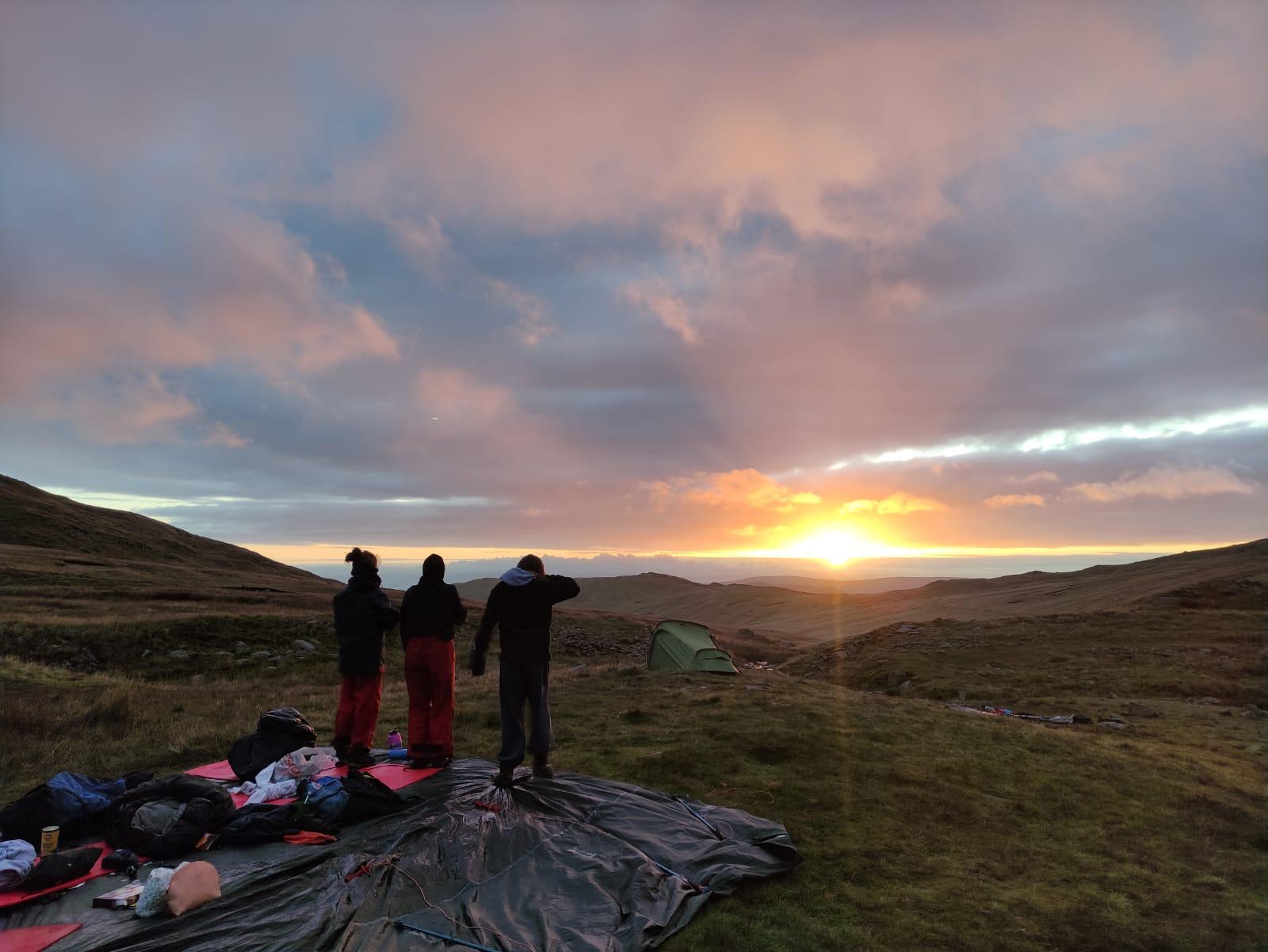
It was hard to know how much sleep we got, but we were greeted in the morning to an incredible sunrise. Getting back to the lake was no mean feat, as the group canoed two thirds of the lake back to the Outward Bound base. Some wall climbing in the evening prepared us for the rigours of the next day’s challenge of climbing Angle Tarn gorge, where we climbed near vertical waterfalls.

The group were amazing all week and really pushed their boundaries, working far out of their comfort zone. It was an experience they will never forget.

Chloe’s tutor group:

We began our expedition with canoeing across the lake, stopping to enjoy our lunch in the sunshine. Then we began our ascent up the mountain towards High Dodd, pitching our tents and enjoying our mac and cheese to warm us up before a (mostly) dry sleep.

We woke up to low clouds which we followed down the mountain, stopping to feed some ducklings before jumping on the power boat to return to the centre. 

Greg’s tutor group:

We packed our kit and headed off to row across Ullswater to Howtown. There, we set down our rucksacks and followed an orienteering course around Hallin Fell, The Coombs and the pretty little church of St Peter’s, Martindale, ending up at the pier ready to catch the last ferry to Pooley Bridge. After a quick ice cream, we hiked up to Heughscar Hill, passing the re-built Pooley Bridge itself that was damaged in the 2015 storms. After a couple of hours’ ascent we arrived as the light was fading to pitch our tents and tarps by a dry stone wall next to a pine plantation. We enjoyed peri peri chicken over our camping stoves followed by piping-hot chocolate drinks. This fortified us for a squally night beneath the stars under an ominous obsidian sky with the yellow lights of Penrith sparkling over to the northwest.

At 7am sharp we were up bright and surprisingly refreshed to sip tea and devour a full English breakfast, plus the salted caramel brownies we forgot to eat the previous night, before we began our six-kilometre descent back to Howtown and the waiting power boat that shuttled us over to the jetty, to which a path leads down from the Outward Bound Centre.

Harry’s tutor group:

After a brisk morning of cliff jumping into the fresh Ullswater depths, Team Outen set out on a five-kilometre canoe journey back towards the foot of Hallin Fell. With some questionable steering, yet some crafty teamwork, we endured the ripples from the steamer boats and made it to shore as a (mostly!) dry and strengthened unit. We set up camp in an intimate woodland patch watching over the lake, where plenty of stones were skimmed and lots of stories were shared. The well-earned ration packs felt like a gourmet feast after a long day, and the hot chocolates were the perfect nightcap for a restful night in the tents.

After a few more kilometres of canoeing on day two, Team Outen was gliding across Ullswater like seasoned pros. I’m sure the extra all day breakfast ration packs had something to do with it. The expedition culminated with a gorge scramble towards the top of Place Fell, where we all negotiated some tricky footing and some slippery pockets against the stream. A combined team effort of good communication, positive encouragement, and lots of committed spotting led to a huge sense of individual achievement for each of us.

Hayley and Liz’s group:

Our team took a minibus to the start of our expedition, loaded up with 12 willing explorers (including Claire) heavily laden with fully-packed rucksacks! The walk meandered up a woodland track at first, followed by a steep climb up to our campsite at Glenridding Dodd. Our team handled the climb with ease, surprising ourselves with our resilience and camaraderie! We set up camp with minimal fuss and cooked our supper in the wild before an evening climb up to Sheffield Pike.

The sun rose the following morning in a spectacular fashion across the lake, and we packed up camp to head down the mountain to Glenridding, with a pitstop for a warm cup of tea before we set sail in our rowing boat. After a slow start where we headed round in circles, we discovered our rowing skills and the team left the canoeists in our wake as we navigated along the lake back to the Outward Bound Centre. We returned weary but triumphant. We were so proud of ourselves as we really put ourselves outside our comfort zone, working together as a team to provide support for each other.

Lauren’s tutor group:

We rowed across the lake with Chris, followed by a long getting-to-know-everyone ascent. Then we pitched camp next to a freshly-harvested pine wood on the top of Heughscar Hill, sampled our tasty rations and slept under canvas.

Breakfast was followed by a gentle descent to Pooley Bridge, some ice creams and biscuits, and a cancelled steamer due to high winds turning into a minibus ride home.

Matt’s tutor group:

Team Findlay (aka Matt’s tutor group) headed out from our base at the Outward Bound Centre on Tuesday morning in canoes across Ullswater heading four kilometres northeast towards Pooley Bridge. Teamwork was essential as we learnt to control our canoes in groups of four in two canoes lashed together and then in pairs in solo canoes. Thankfully everyone remained dry as we prepared for our six-kilometre hike into the hills for our expedition overnight stop on Heughscar Hill. After appreciating the views of the Lake District to the West and the North Pennines to the East, the students pitched their bivvy shelters for their night under the cloud-obscured stars and then prepared their evening meal of warm in-the-bag rations. The appreciation of the food was mixed, especially the chocolate fudge brownie, but everyone went to bed in high spirits after a warming mug of hot chocolate, a camp fire game and stories of using the wilderness facilities – what you bring in, comes out with you!

The night was wet, but with well-pitched bivvies Team Findlay made it through to morning well rested and mostly dry, ready for the return journey. Some of us even made an early start to enjoy the sunrise, but we all set off early to get a few kilometres in before breakfast and the final push to Howtown for the last leg of our journey. As a group of twelve, Team Findlay had to row across Ullswater, learning how to do so in time to keep our movement forward and keep from going around in circles, but with the promise of ‘real’ food and a well-deserved shower we rose to the challenge!

As a group, Team Findlay displayed real heart, being compassionate and supportive, and they dug in deep, showing resilience and drive to work as a team to achieve their goals with a smile, even in the face of challenges, and every one of them shone brightly as individuals to create a fantastic team dynamic.

Vikki’s tutor group:

Our expedition started with a canoe trip from the Outward Bound Centre to Silver Bay. Ullswater was beautifully calm and we all thoroughly enjoyed being on the water. From Silver Bay we hiked up to Silver Point to find our camping spot in the forest overlooking the lake. We built our shelters and cooked supper before heading out on an evening walk, minus our heavy packs. The weather overnight was kind to us with only a little rain.

In the morning we walked from our campsite to Glenridding and caught a steamer to Howtown. We were meant to row from Howtown back to Outward Bound but the wind was too strong, so a powerboat came to pick us up.

Bedales Sixth Formers take on World Challenge in Morocco

Six adventurous 6.1 (Year 12) students headed to Morocco over May half term for a 10-day World Challenge expedition. It was an absolute pleasure to enjoy this adventure alongside such resilient, light-hearted and kind students.

It was, for all of us, a challenge on many levels. The travel, heat, physical activity, budget management, washing and sanitary facilities (or lack of) and management of our kit provided opportunities to problem solve and collaborate. We were, more often than not, away from access to data and technological entertainment, however, we recorded memories and quotes from the day in a diary and in the evening read out messages from home.

It was lovely to see what each individual student brought to the experience: Ciara had done her research and was great at letting us know about both the itinerary and the places we were visiting; DJ Gaby kept us entertained with music and humour; Miranda knows so much about everything, especially things science related – I had no idea that mules are infertile! Poppy sung her way up the mountain and teased us all; Niko (the mountain goat) drew some amazing caricatures and led the way on the hike; and Mila looked after us, showing a quiet leadership, making sure we were all ok and hydrated and generally being fantastic. I am sure, on reflection, that the students learned a great deal about each other and themselves.

Here, students and staff reflect on their experiences.
 
Community Initiative, by Ciara, 6.1

After a long day of travel and our first meal in Morocco, we had an earlier start than we are accustomed to. The day started with a four-hour bus trip filled with music, laughter and desert vistas, and we were overwhelmed by our first views of Ouarzazate. We were there for a community project and all expected it to be a little village but, in fact, we were in a city known as the Hollywood of North Africa.  

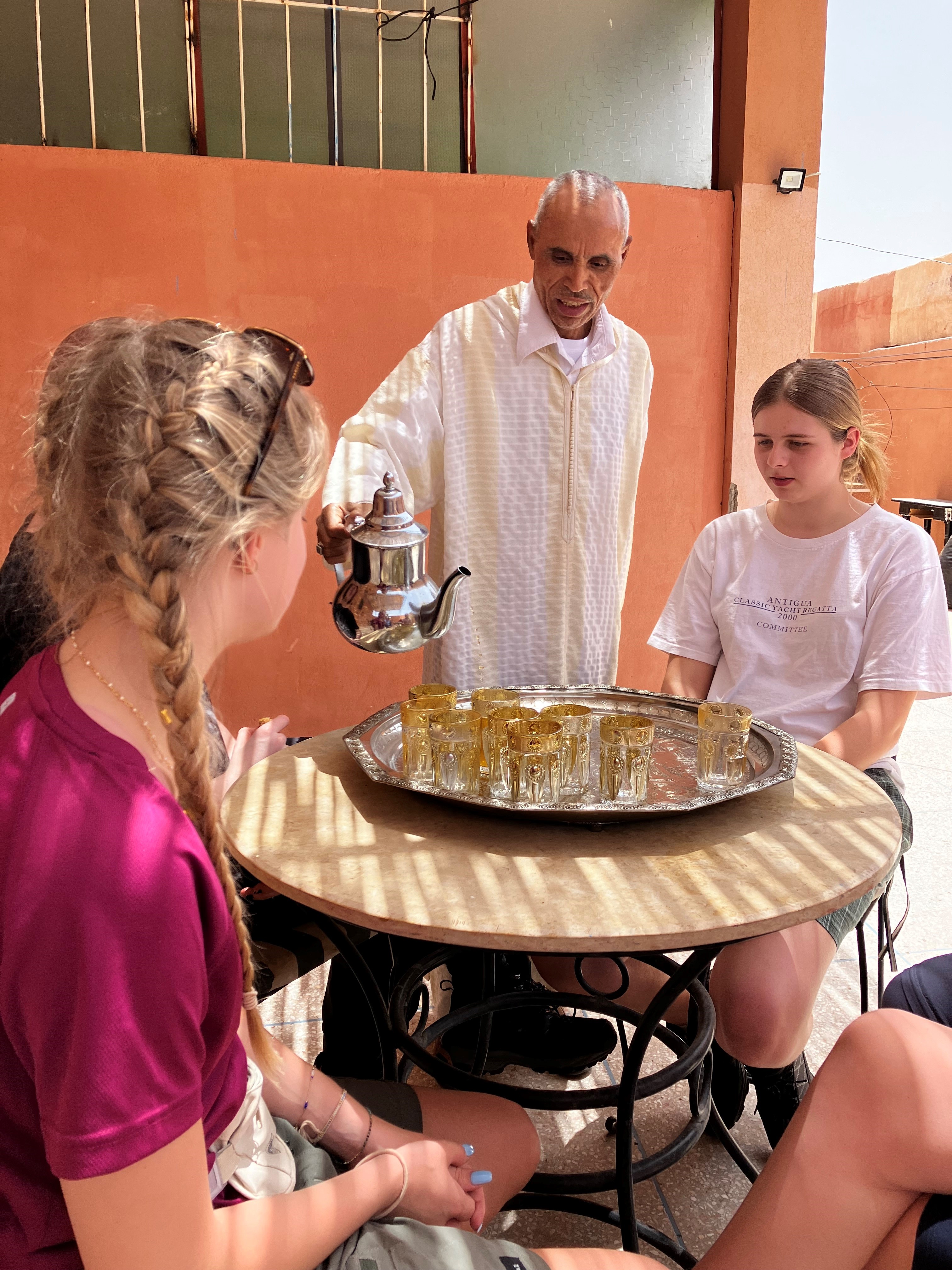
We met our host Hussain, an English teacher who welcomed us into his home. After some welcome mint tea and biscuits that looked too beautiful to eat, we applied our sunscreen and set off to explore the city. With Hussain as our guide, we started off by passing the school we would return to work at. Soon we arrived at the Cinema Museum Ouarzazate. Having confirmed it was in budget, we bought our tickets. We began to explore and were quickly fascinated by the detail and realism of these sets, despite being made of flimsy material. Within moments we were transported from the throne of Cleopatra to prison cells of Gladiator and to artefacts used in Lawrence of Arabia. Next, we headed across the road to Taourirt Kasbah, a historical fortified residence made from rammed earth and mud brick. We explored the little souk before heading to the supermarket for some well-earned ice creams. Back at the house and out of the sun, it was siesta time. We ended the day with some homecooked chicken tajine and more tea. We learned card games from one another and Hussain’s daughter, Yasmin, taught us how to write our names in Arabic. It was then time for some much-deserved sleep. 

The next morning, we again woke earlier than usual. We enjoyed some fresh bread and an array of toppings as fuel for the hard day ahead. We headed over to the school where we were met by the Headmistress and her son. With our hats on and the students in class, we started to garden, preparing the garden for rosemary and rose bushes. Lots of different people started to get involved and helped us, including the security guard and a French teacher. Making sure to constantly rehydrate and keep out of the beaming sun when we could, we made some progress. As a group we were treated to a mid-morning meal that consisted of French pastries and Moroccan delicacies such as Beghrir. Once the garden was prepped, a couple of us went down to the local garden shop and came back with a load of plants. Meanwhile, the remaining group members were given a tour of the school which has been set up to retrain young farmers who can no longer farm because of the lack of water over the past five years in trades such as welding, carpentry and electrical work. Getting back to work, we planted rosemary and roses and took a group photo to commemorate the day. It was very rewarding to see the difference we had made to the school environment once the plants were in the ground. We also purchased and fitted a long hose to ensure the garden was regularly watered. 


We later headed to the Higher Institute of Audiovisual and Cinema Professions and were toured around by one of their students. We saw all sorts of things, from their costume room to the prop weapons and nicely air-conditioned CGI room. We parted ways from our new friends and headed back to our temporary home for some lunch. That night, some of us made our way into the square where we heard music and explored another souk. After two amazing days we got some sleep in preparation for the next long day we had ahead of us.

Trek to the top of Mount Toubkal (the highest mountain in North Africa), by Alex Kerr, Deputy Head (Co-curricular & Operations)

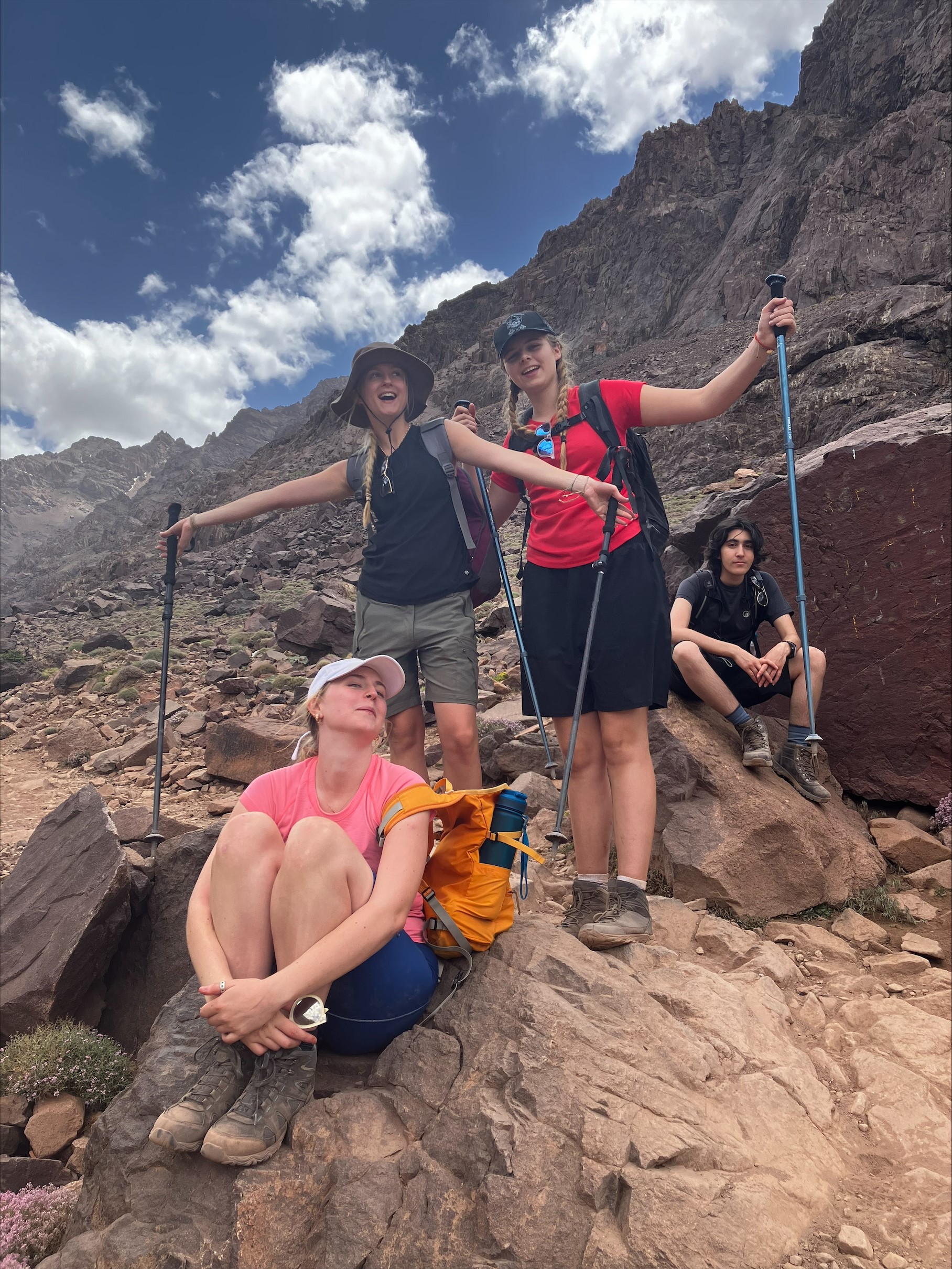
This, for me, was the part of the expedition I was quietly dreading. I quickly realised, as we drove up into the Atlas Mountains, that my weekly Poet’s Stone hike was no real preparation for what was ahead. The sheer scale of it was overwhelming. Our base camp Gite was in the village of Aremd, which is at 1900m above sea level – a fantastic setting for a base camp where we were treated to delicious Moroccan food. On trek day one, we did an acclimatisation hike of 8km and a 550m climb to the Tizi h’Mzik Pass. This was a useful activity in helping us to learn to regulate our walking pace carefully, drink properly and wear the correct protective equipment because it was very hot.

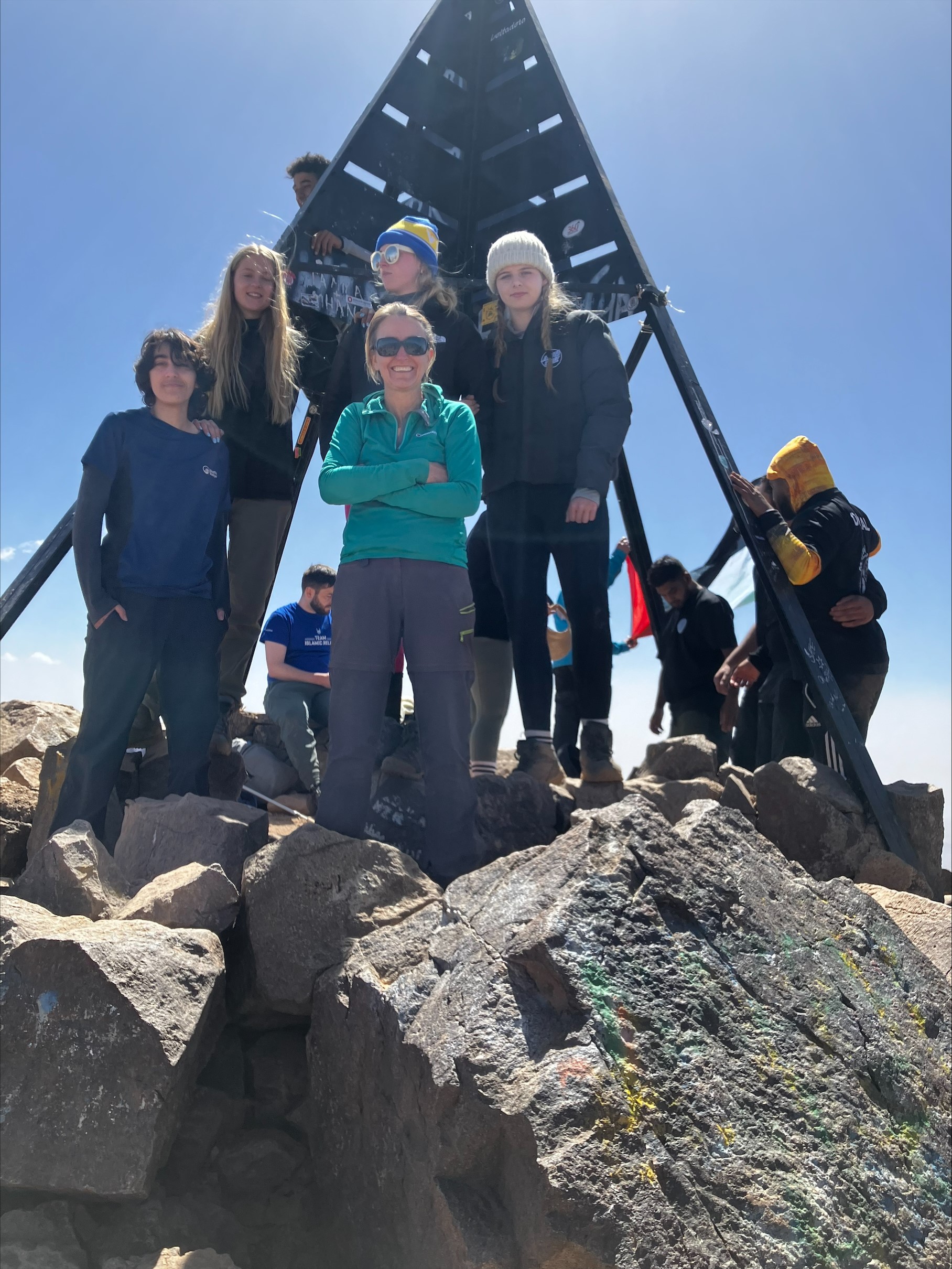
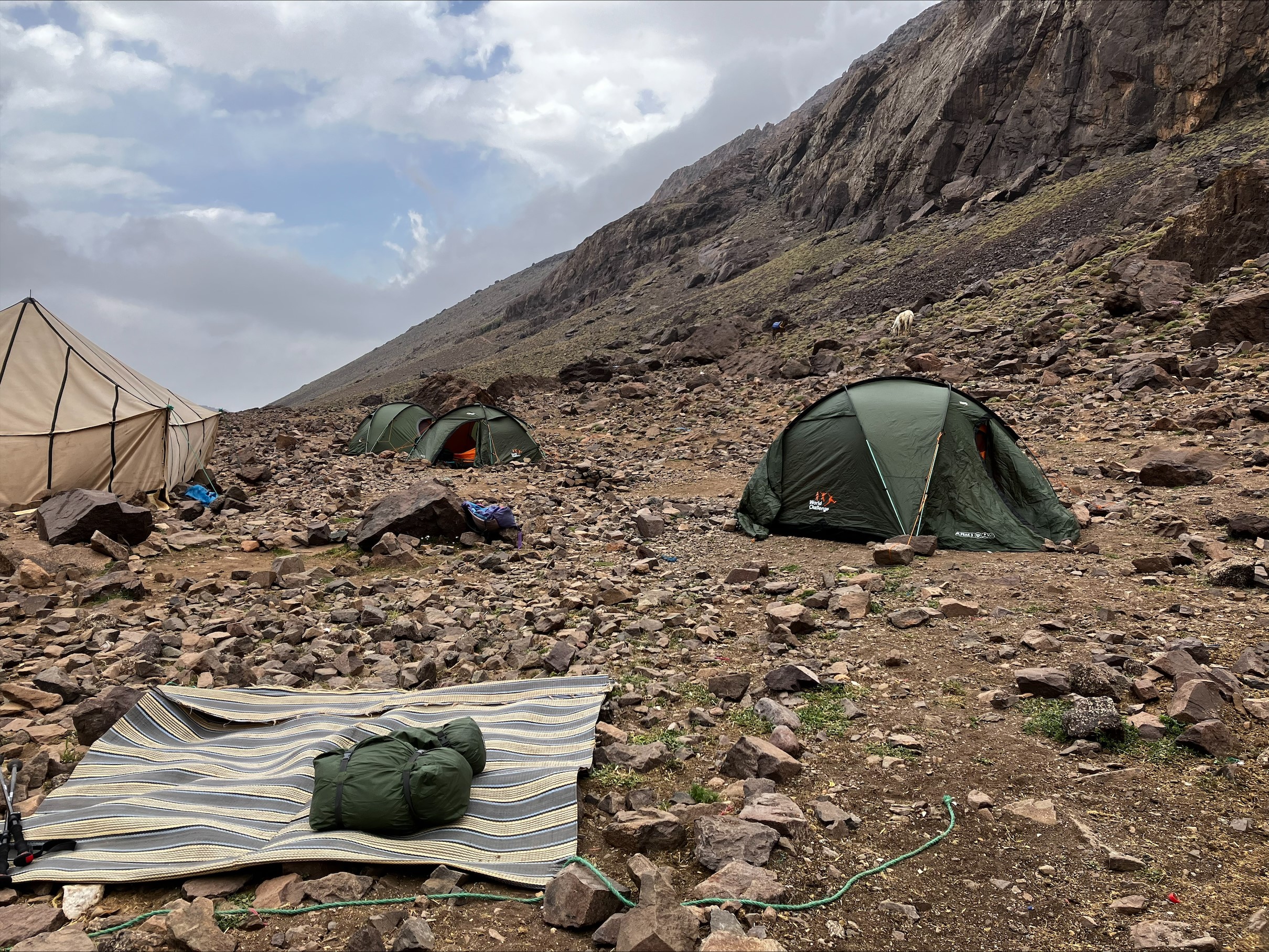
Day two was the start of the hike and this meant packing our overnight camping equipment onto mules and preparing for the hike to the mountain camp site. We climbed over 1000m taking seven hours in high temperatures. I know that we were all quietly thinking, “can I do this, is it possible?” This hike, in itself, was a real achievement. We were spurred on by Gaby and her speaker, listening to some banging tunes including Baddadan, which was a bit of a theme tune for the trip. We encouraged fellow hikers into a little dance and a smile as we passed each other on the path. We arrived at camp exhausted and faced with the task of erecting our tents in a field of rocks and dust, and exploring the toilet tent which was, in itself, a challenge (say no more). Over supper we discussed the plan for the following day – the hike to the top. Niko, Gaby, Mila and Poppy agreed to give the hike a go and we planned a 4.30am departure. Head torches charged; we went to bed. None of us slept especially well, but we got up, had an early hearty breakfast of porridge mixed with chocolate spread, and set off in the dark. We were very quickly met by a rock-face scramble which went on and on. We all felt nervous given the torch light visibility, so we took it slowly and encouraged each other to keep going. As we climbed, it became difficult to take deep breaths and we tired easily. On many occasions we stopped to talk through how we were feeling and motivated ourselves to walk to the next big rock or the next turn in the track. Gaby and Niko found the upward hike far easier than the rest of us, but we stuck together. We had some great laughs, told jokes, listened to music and kept morale high. At one point we all had a giggle at Poppy who said, “Alex, I’m not a walker”. It was emotional but we all reached the top, 4167m above sea level; it felt great. Unfortunately, we all knew that the next challenge was to walk back down to camp. Almost more difficult than walking up due to the loose rocks and scree. We needed to be very careful, and the hiking poles were essential at this stage. After the 10-hour round trip, we were starving on our arrival at camp and greeted by a lovely pasta and salad lunch, cooked by the Moroccan support team and served in the cosy camp tent. 


We returned on foot to Aremd and enjoyed a hot shower the following day. Never have we appreciated washing our hands with soap and warm water more. I think we all appreciate the everyday comforts that we take for granted a little more following this adventure! Well done to everyone; we couldn’t have done it without the mutual support that we shared. 

By Mila, 6.1

After the walk up Toubkal, we ended up in Marrakesh for two days, to explore the souks and the culture of the capital of Morocco. When we first arrived, we went straight to the souks and looked around to get a sense of what everyone was selling and the prices. We soon realised that before you can even look at something there would be the shop owner looking over your shoulder and making sure you like something. I think we all found this experience very exciting but also very overwhelming. There was everything from leather bags, spices, ceramics and rugs, to insane amounts of jewellery. When we decided to start buying, Poppy was an amazing barterer and got all of our prices reduced to almost half off or even below by saying, “I’m just a student, I don’t have that much money”. 
 
Later on, we decided to explore the square to look for somewhere to eat; it was quite overwhelming as there was music, prayer calls, monkeys on chains and cobra snakes everywhere, and all the venders were calling you to come and buy whatever rip off thing they were selling (they would even come up to you while you’re in the restaurants) There was also a range of smells from delicious food to the all the spices. Whilst we were they we mainly lived off of Tagines and couscous (which was delicious!)
 
The next day, we divided into two groups. One group was keen to return to the souks and buy some more goodies, the other, to soak up the culture in the city. First, we visited the Maison de la Photographie which was an amazing traditional Moroccan home converted into a photography museum with images dating back to the 1800s. We then visited Ben Youssef Madrasa, a historic Islamic school built in 1564–65 CE. This was a stunning example of architecture with delicately hand-carved walls and intricate tiles.
 
At lunch we all went to see the Mosque and the beautiful gardens and then half of us went to the spa, which was very much needed after the hike. We then went and explored the souks (the souks were a frequent destination). Our final meal was in a rooftop restaurant followed by Nutella crepes in the café next to our hotel. All in all a great visit to an amazing city.

Camps Week at Bedales Prep

The week before half term (20-24 May), the corridors of Bedales Prep were quiet as students and staff set off for Camps Week.

The annual occasion is very special for the Bedales Prep community as it fills students’ lives with memories and adventures that stay with them well beyond school. For some, it may be a first foray into being away from home, others may be building on the confidence from previous years and strengthening bonds with friends and staff to carry them forward, and for Block 2 (Year 8) it’s a poignant moment – a chance to be together capturing a moment in time with the friends and teachers met through their Prep School journey.

Students have had a chance to overcome challenges appearing in many forms; they’ve taken steps of independence and perhaps had a chance to help somebody and strengthen their bonds with those around them. Real world experiences, lasting memories and skills for life – that’s why we’re so passionate about Camps Week.

For the whole Prep School to venture out on Camps Week 2024 is unique to Bedales and fosters the meaningful community that already exists. Learning outside of the classroom, living together, enjoying numerous shared experiences and stepping outside of comfort zones are just a few things the students and staff experienced during Camps Week.

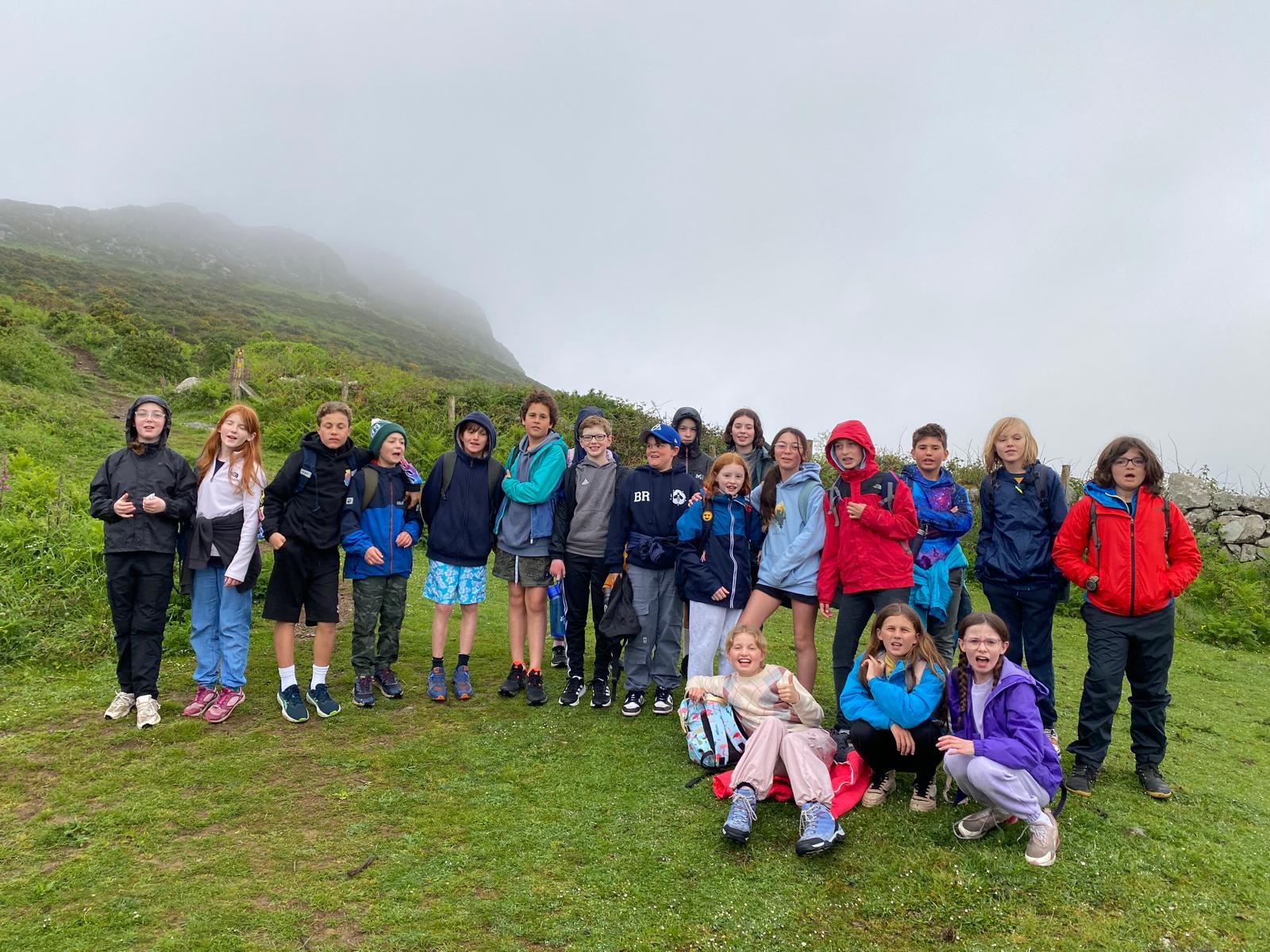
As Head of Bedales Prep, I visited most of the camps during the week, spanning from East Sussex to St Davids on the Pembrokeshire coast, Wales and Okehampton, Devon, and it was remarkable to see such positivity and warmth amongst the students and staff. I watched students climb high up a pole (securely fastened with safety harnesses) and leap to tackle a rugby tackle bag in mid-air, as well as observing them walking a series of obstacles 20 feet up. This was a challenge in itself, but some children decided to do it blindfolded, which was incredible; I even gave this a go myself! Climbing walls and surfing at St Davids, Wales, along with stand up paddleboarding, rock climbing, walks, kayaking, raft building and gorge scrambling were stand-out activities.

The sounds of positive praise and support echoing from their peers alongside the staff team was heartwarming to hear; the positive spirit in the Prep School was alive and kicking. I was disappointed not to make the trip to France to see Block 2 (Year 8), but there were only five days in the week! Receiving photos and feedback of their trip, I almost felt I was with them. A beautiful time for team building and reflection as they approach their final weeks at Bedales Prep.

I’d like to say a massive thank you to the incredible staff team who threw themselves into every activity and opportunity during the week. It’s a significant step for students, particularly those who have not yet experienced boarding, to say goodbye to their families and spend the week in new surroundings with staff acting ‘in loco parentis’. This is a testament to their love and dedication to our school.

Here are some of the children’s reflections on Camps Week.

Group 1 (Year 4)

Bea, Allegra, Tabitha and Jack said: On Monday, we took part in team building, had a pool party, made colour bursting t-shirts and had fun orienteering. The following day, we visited the Andrew Simpson Centre in Portsmouth, where we enjoyed kayaking, stand up paddle boarding, archery and climbing. Allegra’s favourite part of the week was pushing the teachers off the paddle boards and making a human pyramid on the boards!

On Wednesday, it was our first night away. We spent the morning playing laser tag in the forest and the afternoon canoeing, which had a scary spider called Dave on board. On Thursday, Bea was worried about crate stacking, but she conquered her fears and stacked 12. We also did low ropes and, in the afternoon, we went on a wildlife walk. Friday was home time. Iris exclaimed her favourite part was “EVERYTHING!”

Group 2 (Year 5)

Eleazar and Farhatinez said: When we arrived, it was beautiful weather. We ate our packed lunches on the grass in the sun before our first activities. We were told which dorm we were in and who we were sharing a room with.  Before bed, the amazing Marie did a spectacular performance of an original story based in Hindleap Warren, complete with a dog named Timmy.

In the evenings after supper, we took part in a challenge called ‘the golden toothbrush’. Our rooms had to be extremely neatly presented and we also performed plays, stories and songs, and even put on a volleyball match to wow the judges. 

On Tuesday and Wednesday, it was rainy. Every group did all of the activities, but at different times. Some of our favourites were the pentagon, leap of faith, axe throwing and obstacles (which were very muddy and wet, especially in the small, dark tunnels). 

For the first two and a half days, we were in activity groups, but from Wednesday afternoon onwards, we all came together to make one big group. Our first activity as a big group was forest adventure where we scared off drop-bears, walked through streams and took part in a game of Hindleap & Seek, as well as the Mud Olympics, which included swimming through muddy water. We ended the day with an incredible movie night, and we were allowed seconds of popcorn!

On Thursday, we did built shelters (with a ‘storm’) and got to do some fire lighting and map reading/orienteering. In the evening, we finished off the day with a campfire, hot chocolate and treats. 

We are very happy that we came here. 

Group 3 (Year 6)

We have enjoyed a wonderful few days on the beautiful coastline of Pembrokeshire. Our accommodation had stunning sea views, the weather was very kind to us, and we were surrounded by various fauna and flora. All our activities were fun, challenging and set in picturesque locations – coasteering, kayaking, surfing, rock climbing, abseiling, coastline walks and standup paddle boarding.

Our teachers told us that they were impressed by our positive ‘can do’ attitude, as many of us faced and conquered fears, and showed each other compassion and kindness.  By the end of the week we were all tired but most certainly happy!

Block 1 (Year 7)

Our Camps Week was epic! When we arrived, we dumped our bags in dorms. Next, we dove straight into activities. Half of us did rock climbing and axe throwing, and the others did high ropes.

 We faced an amazing walk of 13km where we saw frogs, snakes and a few horses as we climbed up to the second highest point in the southwest of England. It was hard, but we felt very proud of ourselves at the end.

After slipping and sliding, we were onto day three. Gorge scrambling was a great experience. We climbed up waterfalls, jumped off rocks and slid down rapids.

Thursday was lake day, which consisted of raft building, canoeing, kayaking and shivering. Getting the teachers wet was great fun and we played loads of games on the water, one being sliding down an upside-down canoe into the water facing forward. Although some of us were cold, it was so worth it! During raft building we enjoyed pushing in barrels and collecting the planks, but when we got in, a few knots were loose. On the last day we did some high ropes, axe throwing and rock climbing, and then we happily drove home.

Block 2 (Year 8)

On Monday, we woke up bright and early to get on the road to Portsmouth Harbour. The ferry crossing gave us time talk to everyone and connect before going on the trip. When we arrived in France, it was super exciting to see how good the dorms were. We saw a lovely sunset on the beach and played a big game of tag.

On Tuesday, the sand sailing was so fun and the market was a great experience. Many of us bought something speaking in complete French!

After discovering the wonders of the streets of Le Mont St Michel, the next day we took to the bay and were guided through rivers and sinking sand. It was fun to chat to each other on the walk – we feel closer as a year group after this trip.

On Thursday, we went to an adventure park where there was a variety of things to do. It was one of the highlights of the trip! We also learned a lot about the D-Day Landings in Arromanches, where we watched a very moving 360-cinema film, which made us feel very reflective.

Enquiry-based learning in practice

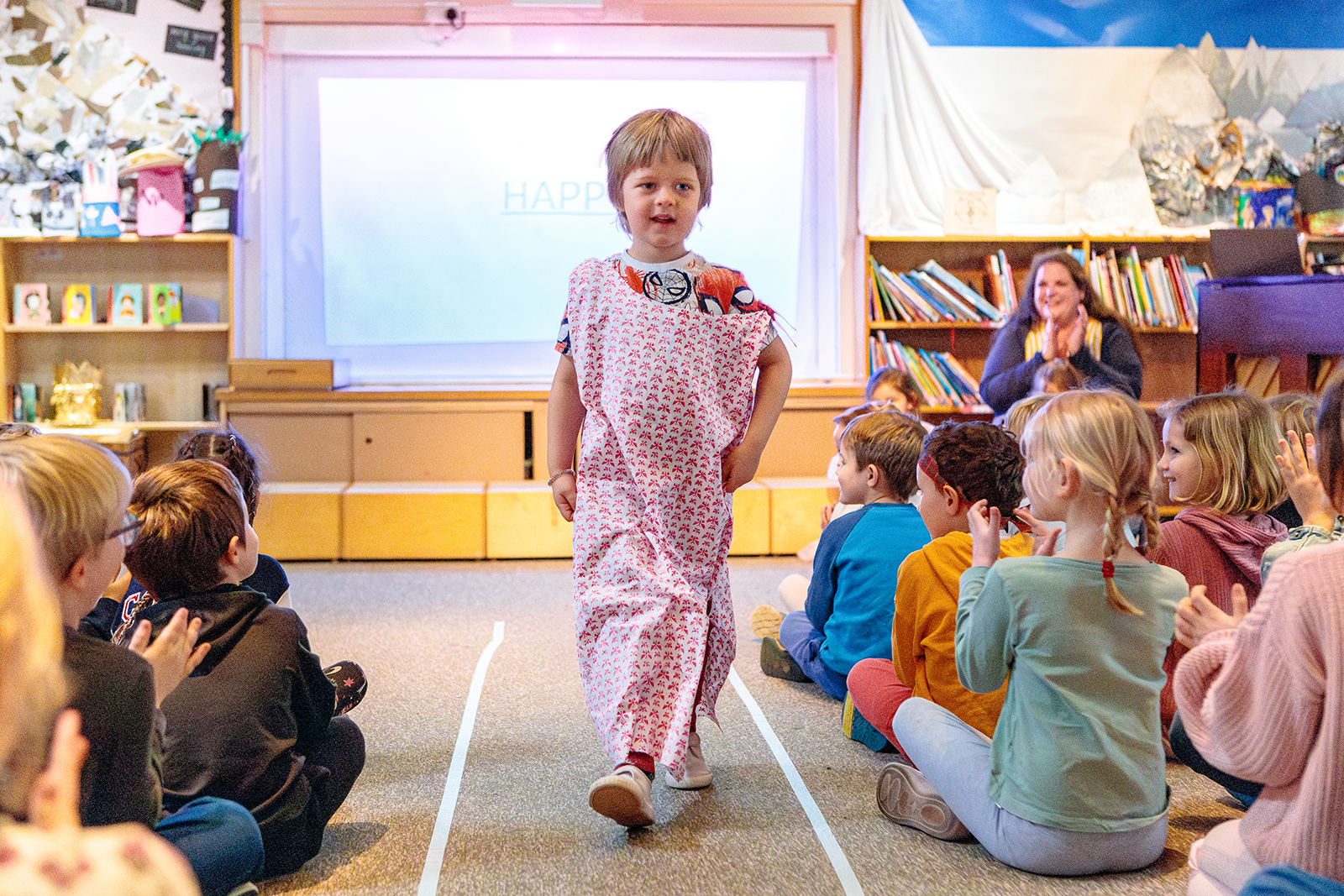
The Spring term concluded with a fabulous display of hard work from our Reception class, who transformed the library into a catwalk as they showcased the vibrant and creative party clothes they had impressively designed, cut and sewed themselves. 
 
The children had been inspired to make the outfits while exploring a learning enquiry about cultures, celebrations, and festivals, which saw them investigate party traditions, games, and cuisines. As the investigation broached the clothes people wear to parties, they asked if they could learn to use a sewing machine to make their own party clothes.

In preparation for making the clothes, the children looked through the school costume wardrobe and found a selection of fabrics and outfits they particularly liked, before designing an outfit they’d like to wear, with waistcoats, dresses and capes all popular choices. Finally, they used a sewing machine to stitch their garments together, carefully coordinating the foot pedal and guiding the fabric. 
 
At the fashion show, every child struck a pose down the runway in their handmade outfits as the rest of the school watched and cheered. It was a joy to witness just how proud the class were of their efforts, and to see everyone applauding them so supportively. After modelling their creations, the children celebrated with a well-deserved party back in their classroom, complete with delicious cupcakes they’d made for the occasion.

Reception’s fashion show is just one example of the impact of enquiry-based learning, which encourages children to extend their knowledge and understanding by exploring questions, problems, and scenarios. In contrast with traditional approaches such as rote learning, where students are recipients of information presented for memorisation, enquiry-led learning enables children to be active participants in the learning process, fostering coveted skills such as curiosity, creativity, and adaptability. 

We tailor the approach for every stage of the Pre-prep, so while all year groups start with the same broad enquiry, they explore it from different angles. With the cultures, celebrations and learning enquiry, for example, Nursery children delved into the topic of cultures around the world through magic carpet rides to a variety of countries across the globe. Students in Year 3, on the other hand, undertook a more in-depth investigation by deep-diving into Japanese culture, exploring the language, food and different art forms, before independently choosing one aspect to practise in preparation for a presentation to parents. 

Our approach ensures that children’s curiosity is nurtured in a way that is both age-appropriate and challenging, supporting them to develop a love of learning that will last a lifetime.

New life on the farm

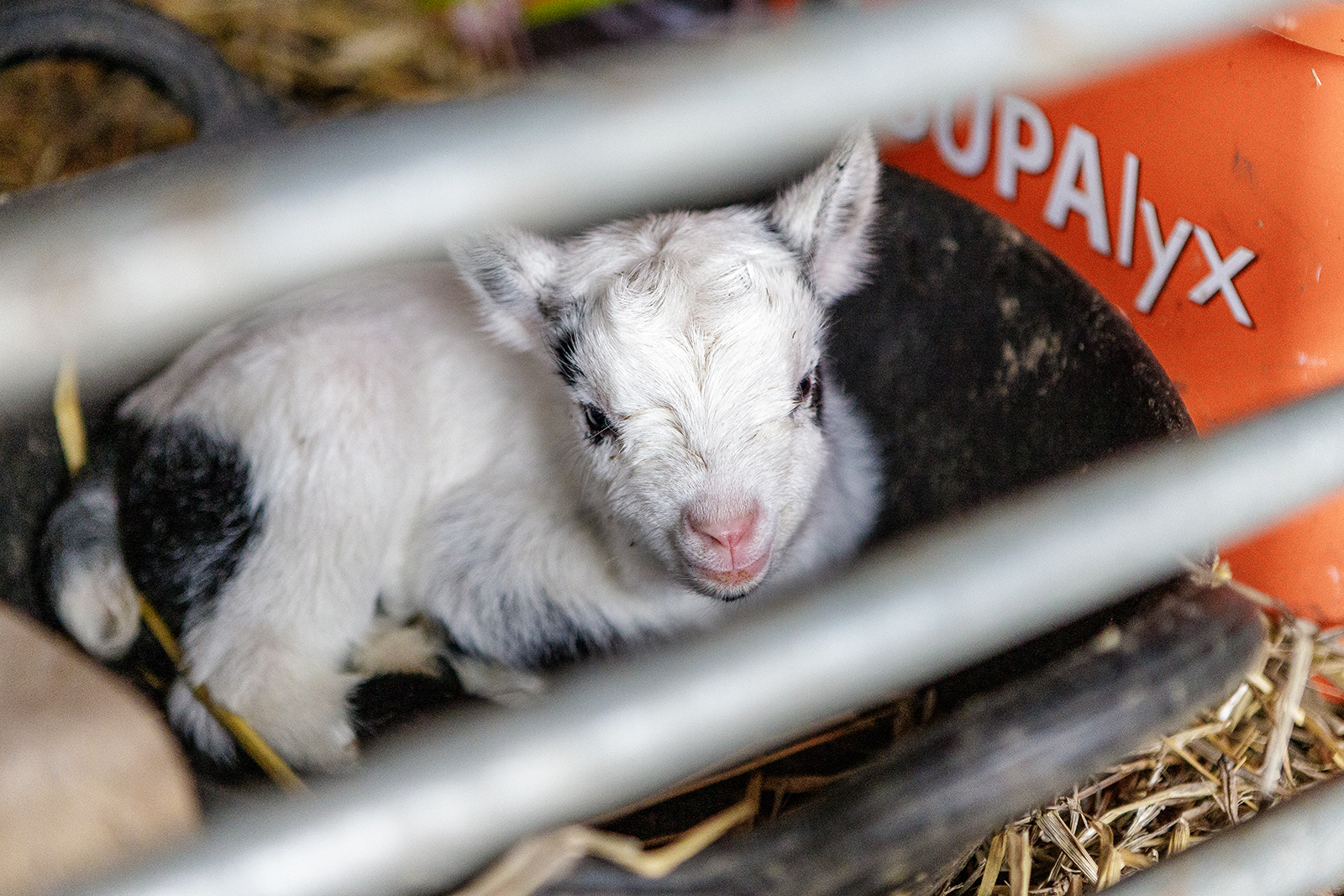
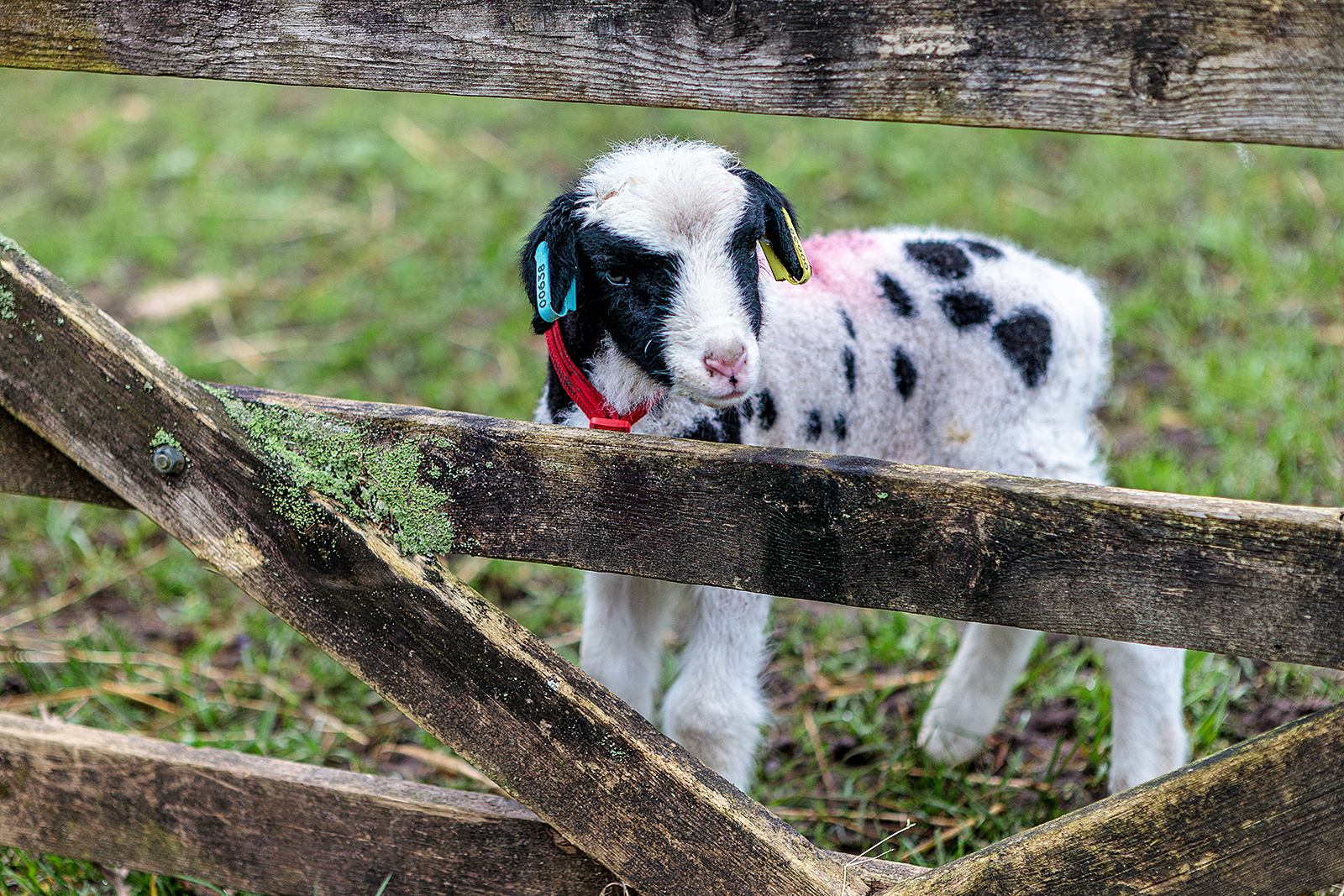
The working farm at Bedales is a fundamental and much-loved part of school life, offering learning opportunities for students at every stage of their learning journey, from Pre-prep to Senior. The Spring term always brings a flurry of activity to the farm and this year has been no different, with lambing season in full swing and five new piglets from our Berkshire sow, Bessie. Not to be outdone, our Pygmy goats have also been awaiting new arrivals of their own – and the first of three sets of twins made their entrance into the world on Easter Sunday!

With the farm only a short walk away from the Pre-prep, children always love visiting the farm to see the animals. More than just fun outings, these visits are experiences that nurture children’s budding knowledge, bringing their learning to life in an engaging and memorable way.

This term, the arrival of new life on the farm has given the children the opportunity to observe lifecycle stages of lambs and piglets first-hand. They’ve noticed developmental changes at each visit, and heard from staff at the farm how postnatal mothers tend to their young and how human helpers, at the farm support them. They’ve helped feed them, watched them being weighed, and observed as the animals have outgrown their initial home in the farm’s ‘maternity suite’ (otherwise known as the Black Barn) and moved out into the field (lambs) or woods (piglets). Direct observation like this helps to make abstract concepts more concrete in the minds of our students, so they can develop an understanding of the natural world. 

The farm also adds an extra dimension to the students’ learning enquiries. Students investigating habitats as part of their enquiry on the endangered snow leopard in the first half of the term observed the real-world habitats of animals on the farm, comparing it to the habitats of not only snow leopards, but other animals. Other students, who wrote their own haikus about nature in the second half of the term, were inspired by seasonal changes, including those on the farm. 

While opportunities to get involved in animal husbandry increase as students progress through the school, children at the Pre-prep have an early introduction through activities like incubating hen’s eggs, as Year 2 did earlier this term. The students observed the journey from embryonic development to hatching, giving them insight into the care and responsibility needed to nurture life (and laying the foundation for future involvement in activities like lambing!)
 
Outdoor learning plays a key role in our distinctive educational ethos, which can be traced back to Bedales’ founding, when Outdoor Work was introduced as a core curriculum offering. Over 130 years later, it remains integral to our holistic approach. The embodiment of ‘hand’ in Badley’s belief in educating ‘head, hand and heart’, outdoor learning provides clear benefits for every aspects of a child’s development – intellectual, creative, emotional, social and physical. 

Poignant and insightful trip to WWI battlefields

By Clive Burch, Head of Block 3

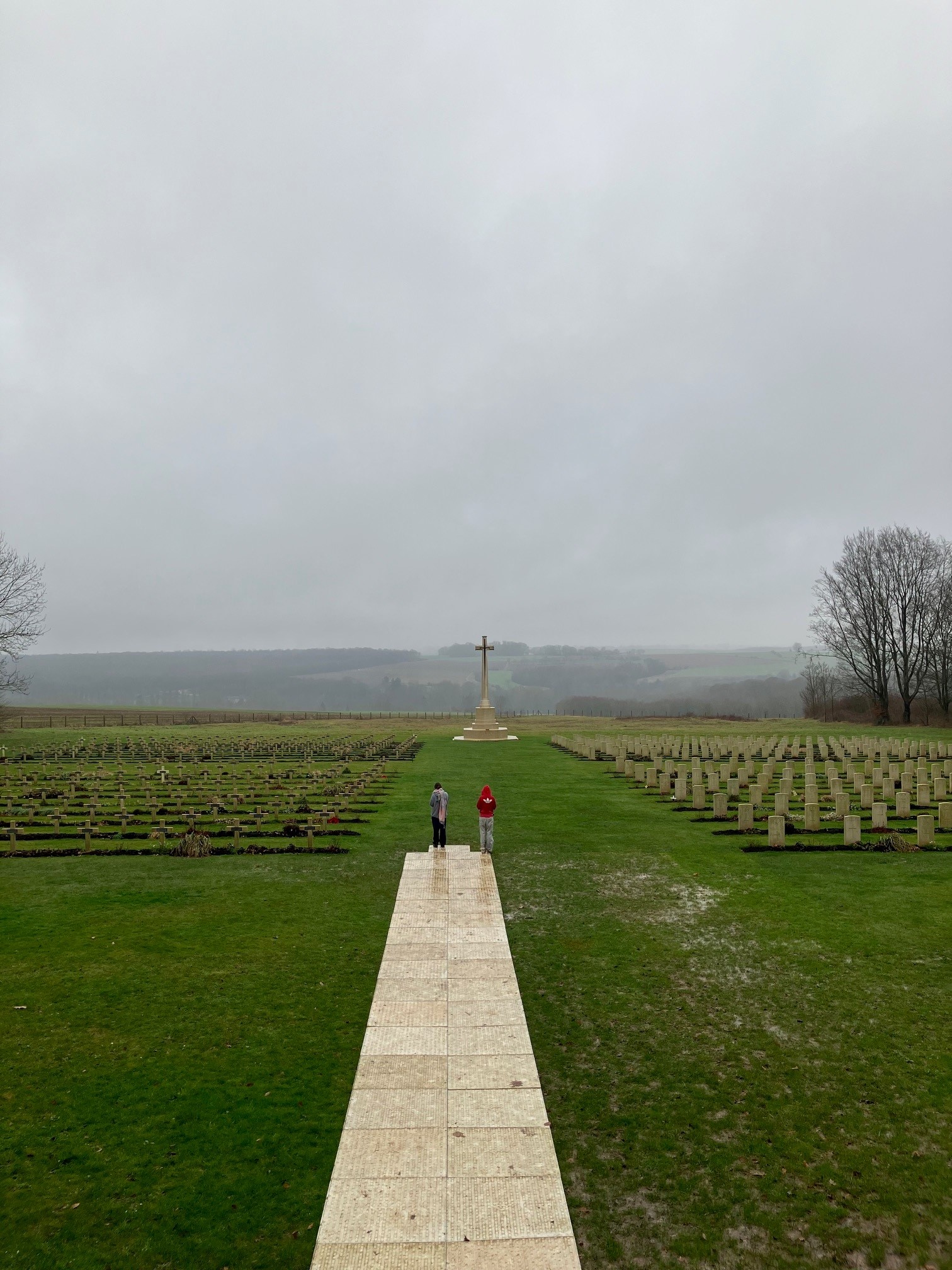
This week, Block 3 students have been Belgium and France to visit the historic battlefields which are a stark reminder of the impact of war, as the resting place for hundreds of thousands of servicemen who were killed in combat in World War I. Having focused on the war, anthroposphere, conflict and ethics in their humanities subjects this term, the trip gave students an opportunity to reflect on the historical, cultural and ethical aspects of their studies. 

On the first day, students visited Essex Farm, which famously moved John McCrae to write the poem In Flanders Fields while stationed there in 1915. They also visited Tyne Cot, the largest Commonwealth war cemetery in the world in terms of burials, and Langemark, where nearly 24,917 German servicemen are buried. Ending the day at Menin Gate, which bears the names of over 54,000 servicemen whose graves are not known, Felix Albizua and Alice Rawlence laid a remembrance wreath on behalf of Bedales.

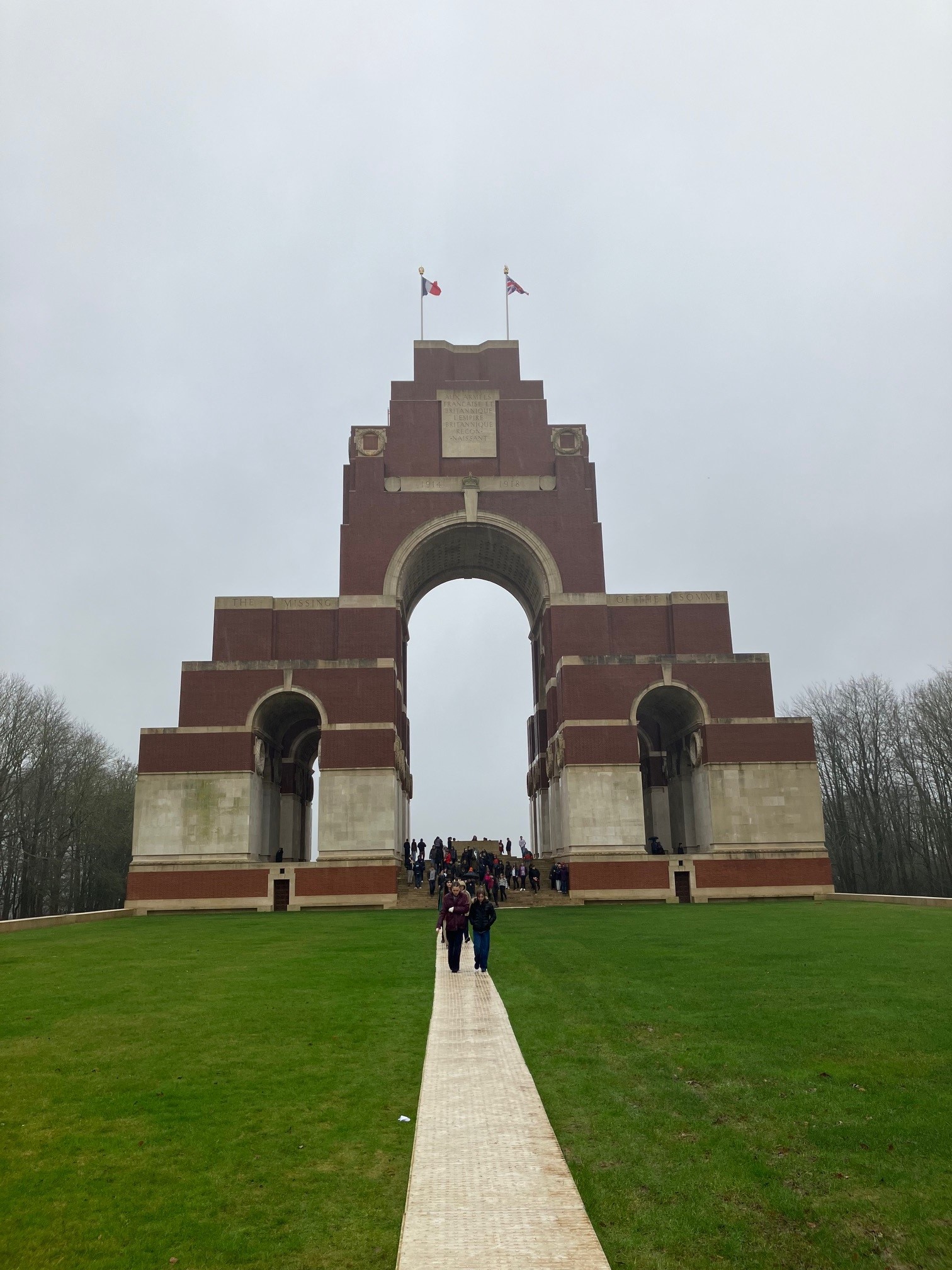
The following day, students visited Vimy Ridge, where the four divisions of the Canadian Corps fought side by side in the Battle of Arras in 1917, and the 36,000 Canadian servicemen who lost their lives in World War I are commemorated. They then visited the Somme, taking in Beaumont Hamel, Newfoundland Park, the Thiepval Monument and Lochnagar Crater. The Battle of the Somme was one of the largest and bloodiest battles of the war, with over 57,000 casualties on the first day, and over 150,000 British troops buried in the battlefields. The Thiepval Monument bears the name of over 72,000 servicemen of the United Kingdom and South African forces who died in the Somme before March 1918 and have no known grave.

After a cold and damp day which concluded the trip, we made an eagerly awaited stop at a chocolate shop, conscious that the weather, fatigue and discomfort was a mere fraction of that experienced by those who fought on the battlefields over 100 years ago. 

See more photos from the trip below.

Relocating to Petersfield

The view from the Poet's Stone in Steep, near Petersfield, Hampshire
The view from the Poet’s Stone in Steep, near Petersfield, Hampshire

By Helen Martin, Freelance Writer

In 1900 John Badley moved his school, Bedales, from Lindfield, near Haywards Heath, to a small village called Steep, just outside Petersfield in Hampshire. It’s easy to see why the school is still here, over 125 years later. Surrounded by the stunning hills and woodlands of the South Downs, yet only 60 miles from London, the Petersfield area is a fantastic place to call home.  

Location is one of the area’s main selling points 

“For families looking to move out of town into the country, the area is highly desirable,” says local estate agent, Claudia Hunt of the Country House Company. “You have all the benefits of living in the country without any of the disadvantages, including excellent schools, reliable broadband and fast, efficient transport links.” 

Heathrow and Gatwick airports and London are within an hour’s drive. Guildford, Chichester, Portsmouth, Winchester and the Wittering beaches are within half an hour. The Petersfield to Waterloo train takes just over an hour. 

In Petersfield itself there is the Heath Pond and playground, a huge variety of baby, toddler and children’s clubs, lido, leisure centre, yoga studio, Waitrose, M&S, two doctors’ surgeries, a community hospital and a centre of complementary medicine

Queen Elizabeth Country Park is located a few miles further south. There you’ll find mountain bike trails, an assault course, adventure play area, dog agility course and weekly parkrun. The surrounding countryside is filled with walks of varying difficulty, including the South Downs Way, Serpent Trail, Hanger’s Way and Shipwright’s Way. There are plenty of bridleways too for getting out in the fresh air on foot, bike and horseback.  

The area is well served by historic country pubs 

The Hawkley Inn in Hawkley, The Harrow in Steep, The Queen’s Head in Sheet, The Thomas Lord in West Meon and The White Horse in Prior’s Dean (locally known as The Pub With No Name), all serve fantastic food in cosy, fire-lit surroundings (The Pub with No Name in particular has lots of safe, outside space for children).  

A little further afield is the Long Barn in Alresford: an elegant gift shop and café. In Petersfield itself there is Annie Jones for French cuisine and cocktails, Restaurant Six for Mediterranean food and   

Lemongrass for Thai. For coffee we have Madeleine’s Kitchen or The Natural Food Deli.

Steep punches well above its weight for such a small village 

There is an eight-court floodlit tennis club with adjoining cricket ground (both of which host children’s sessions). To the north of the village is the Poet’s Stone, dedicated to local poet Edward Thomas, which rewards a sharp climb with stunning views of the South Downs. Nearby is the famous Edward Barnsley Workshop, where the eponymous Barnsley made the furniture that would see him become one of the most significant figures in the Arts and Crafts movement (Barnsley himself was a former Bedales student and made the furniture for the Bedales Memorial Library, widely regarded as one of the UK’s finest examples of Arts and Crafts architecture). 

Sir Alec Guinness was perhaps Steep’s most famous resident, and the legacy he left for a film society ensures a regular film club continues to run in the village hall. For live performance, Bedales’ own arts events programme offers a diverse selection, ranging from visiting drama and dance practitioners, musicians (the National Youth Jazz Orchestra and Hackney Colliery Band are repeat visitors) and talks (in recent years we’ve welcomed the former Poet Laureate Simon Armitage, geneticist, author and broadcaster Adam Rutherford, and award-winning actress and Old Bedalian Minnie Driver, to name a few), as well as homegrown student productions.  

Small wonder the local property market is thriving 

“The property market is holding firm despite the roller coaster of Brexit, elections, weather and the pandemic,” says Claudia. “Supply remains low and demand is high, and it is likely that this demand will increase as we move through spring into the summer season and as families get organised for the start of the new school year in September.” 

For families looking for schools, Bedales Senior, Prep and Pre-prep are significant draws. Bedales’ approach encourages intellectual ambition, creative thinking and independent learning – vital requirements for further education and beyond – and they start developing these skills early with the youngest children as they progress through Bedales Pre-prep and Prep Schools. As the Good Schools Guide says: “This is a wonderful place to develop a strong sense of self, stretch minds, develop a love of learning and make lifelong friends.” 

“The delight of moving to the country is that the stress is taken out of constantly being in the car,“ adds Bedales Head of Admissions Janie Jarman. “The daily school-run is so much less pressured when everyone’s surrounded by fresh air and green fields. And with all the extra-curricular activities taking place in school, there is more family time at home.” 

When it comes to finding that family home, Claudia has some very sound advice. “Because time is precious and the logistics of settling in to a new school and new area can be significant, consider a rental property initially before committing to something more permanent to allow yourself time to better understand the local market and to give yourself options.” 

As John Badley himself might have said: keep an open mind.  

History BAC trip to Berlin

By Agnes Bathurst, Block 5

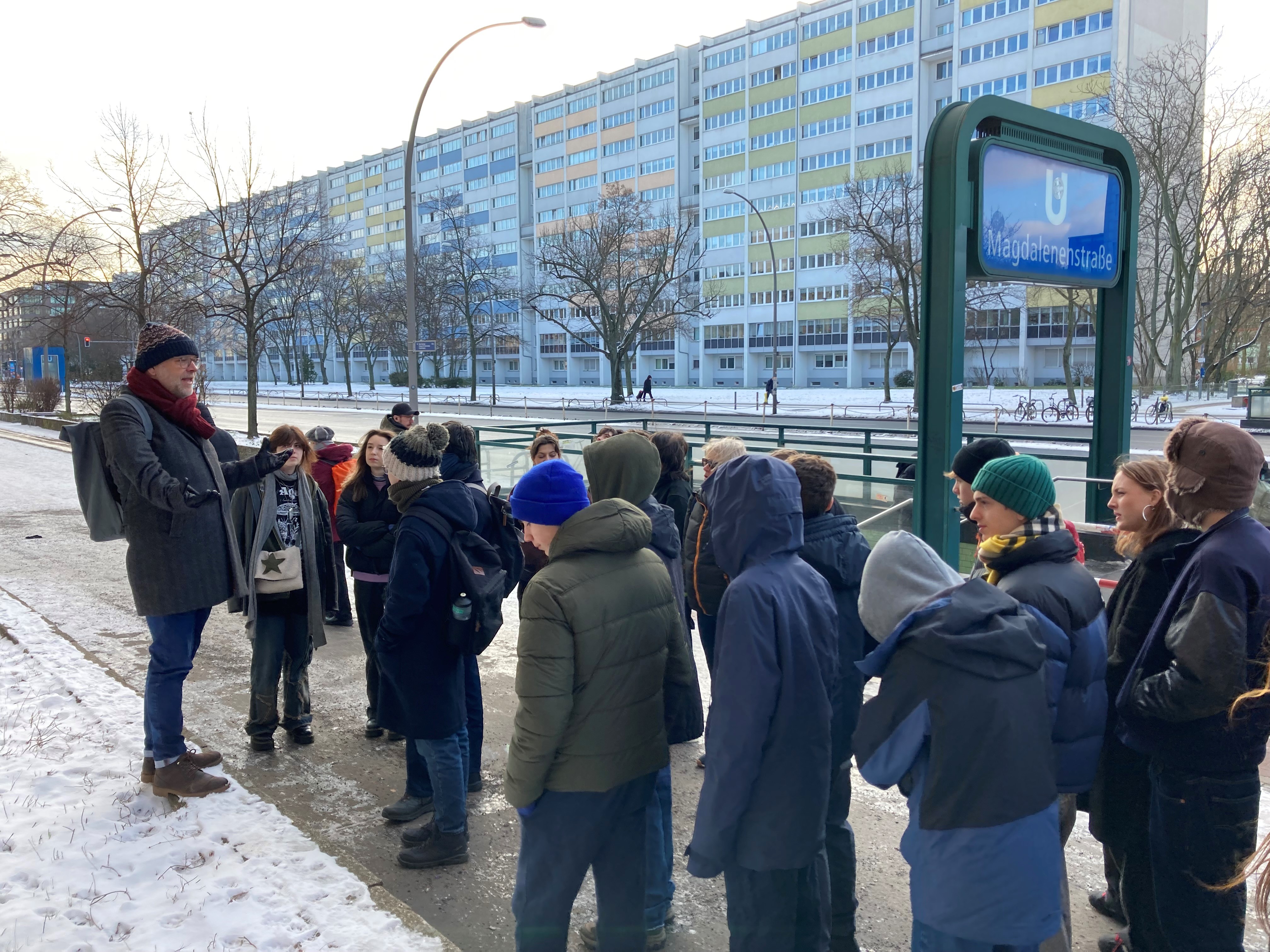
The Block 5 History trip to Berlin was a fantastic experience, jam packed with museum visits and tours. We had an early start on Thursday morning to fly to Berlin and as we arrived, we were greeted with lots of snow.

Despite the weather, we went on a walking tour of the city’s sights and walked through the famous Brandenburg Gate – one of Germany’s best-known landmarks, which dates back to the 1700s, and is now considered a symbol of German reunification – and visited more of the city’s famous monuments. In the evening, we went to the DDR Museum, where we found out about East Germany and how it used to be. 

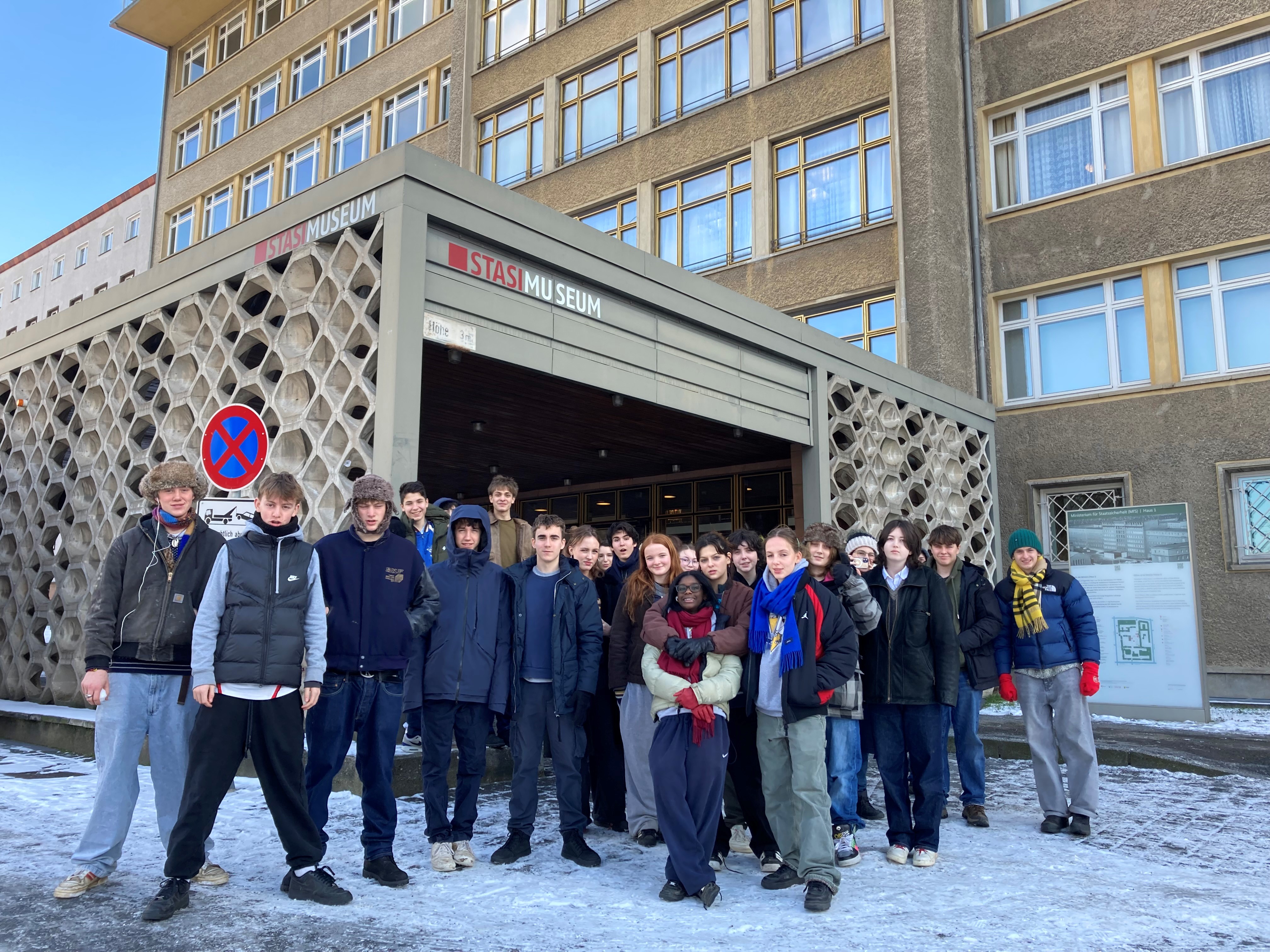
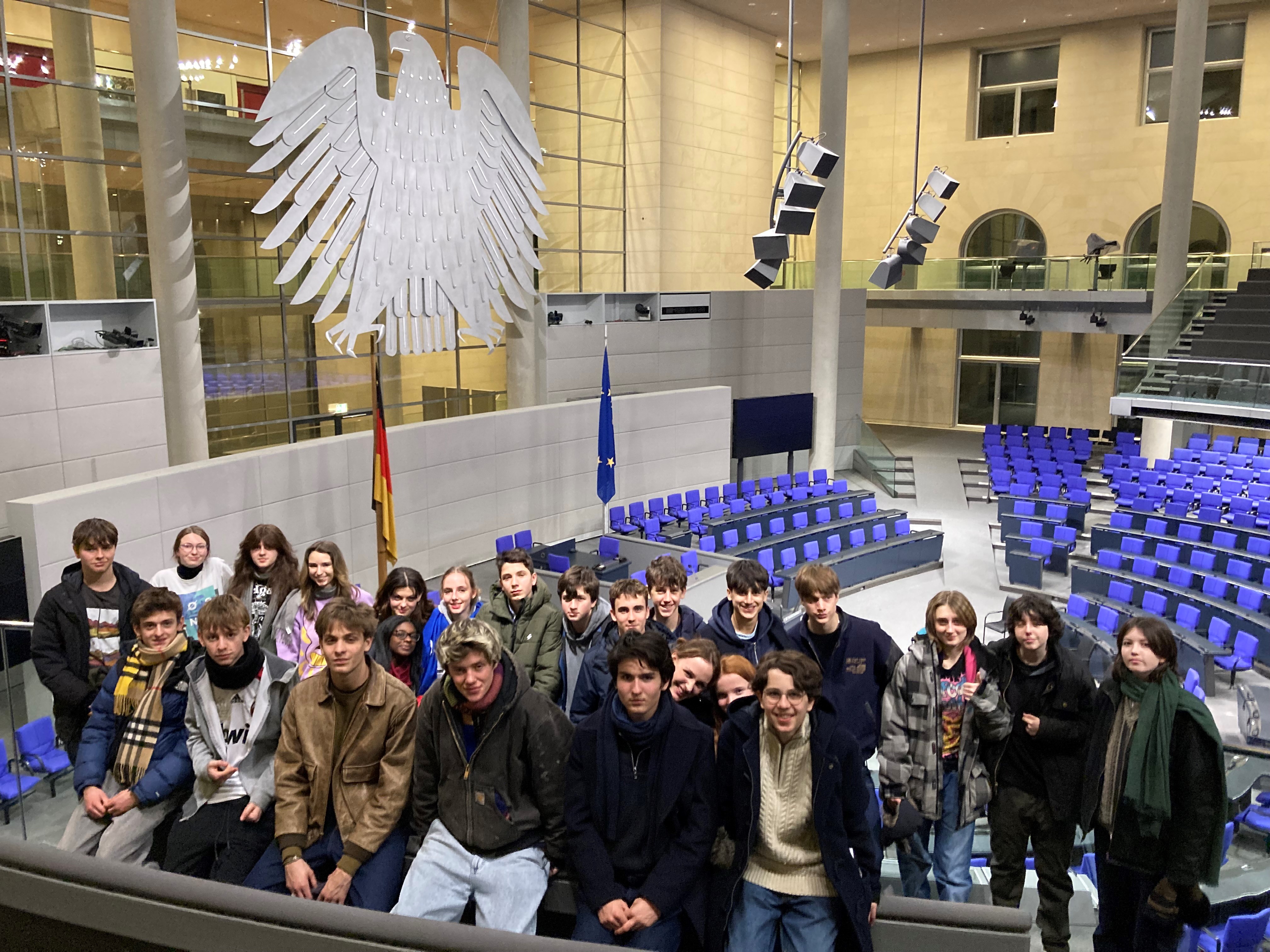
On Friday, we travelled by the U-Bahn and our first stop was the Stasi Museum, where we gained an understanding of the former political system in East Germany and the control they exerted on the population. The Berlin Wall was next on our list, and we viewed it from a watch tower. My favourite pat was going down to a nuclear fall-out bunker that was never used – it was very creepy! We went on a guided tour of the Reichstag, and seeing all the old graffiti from the Russian soldiers in 1945 – still preserved – was fascinating.

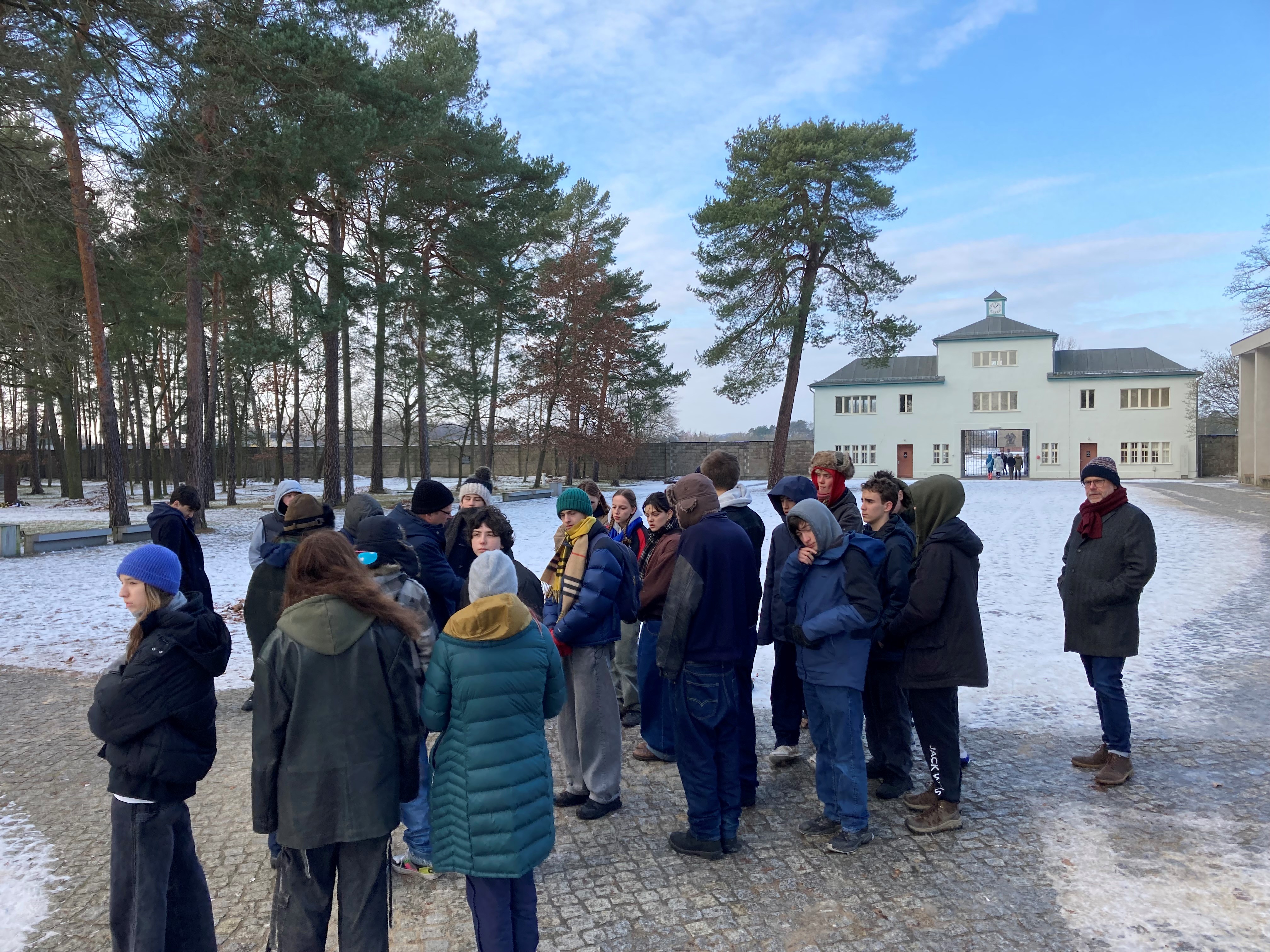
On Saturday, we had another early morning start and got straight on the coach to the Wannsee Conference House, where we learnt all about the meeting that actioned the Final Solution. We were there on 20 January – exactly 82 years since that terrible decision. We then took the coach to the Sachsenhausen concentration camp and learnt about its historical significance. This was one of the most affecting parts of the trip – visiting the site where prisoners of the Nazi regime were subjected to horrifying conditions and treatment.

On our final day of the trip, we also visited the Topography of Terror, which was built on the former Gestapo headquarters. The trip was hugely educational, and I enjoyed every bit of it. I learnt so much about Berlin’s culture and its complex history.

6.2 Physics trip to CERN, Geneva

By Dylan Hui and Sage Bidwell, 6.2

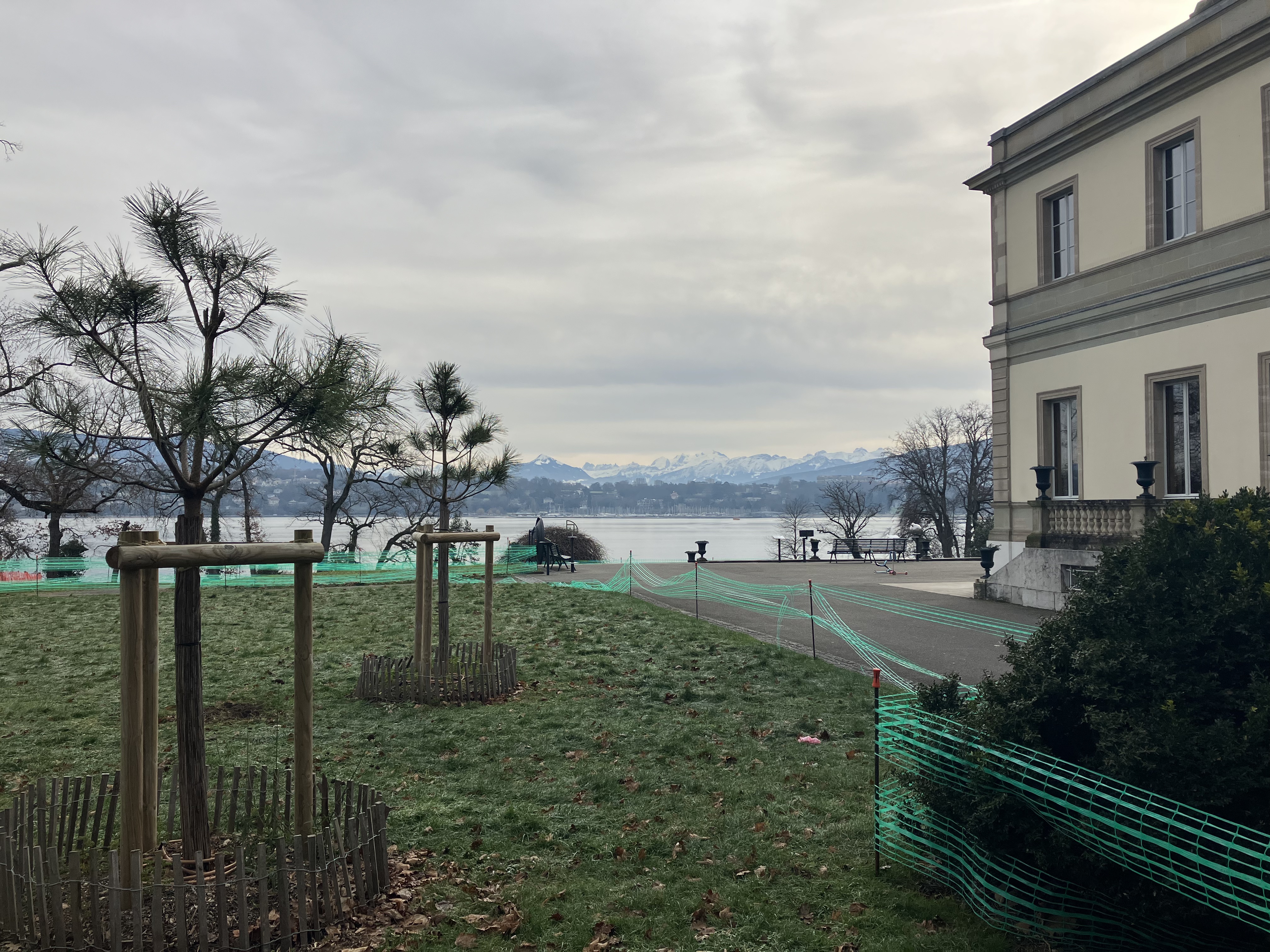
Last weekend saw the most recent iteration of the annual 6.2 Physics trip to Geneva, Switzerland, to visit CERN and the Large Hardon Collider (LHC). The trip began on Thursday 18 January, when we travelled to Geneva with Physics teachers Tobias Hardy, Allen Shone and Sarah Newnham. The journey went smoothly – although before we had left Geneva Airport, we had already left a passport on the plane and lost a suitcase (which was not in the itinerary!) We made our way to the Eden Hotel and got to explore the city for the first time.

On Friday, we had the chance to visit the UN Building in Geneva. We had an amazing tour guide, Lisa, who was a part-time interpreter working for the UN. She showed us around the different conference rooms in person and we had the opportunity to ask questions. Lisa was pleasantly surprised by our knowledge about politics and international relations (especially Allen’s!) In the evening, we took a stroll down the lakeside to the Old Town and explored the architecture of Geneva. To finish off the evening, we went to the Holy Cow burger restaurant, which was delicious, and finally we all sat in the lobby playing cards and sharing stories.

Saturday morning was an early one, since we had to make it to CERN in time for a 9am workshop. In the workshop we made our own cloud chambers and investigated background radiation, enhancing our previous knowledge of particle physics. It was very interesting to experience first-hand how these experiments changed particle physics, and we had the opportunity to speak to an expert who works at CERN. We then had a few hours of free time to wander around the CERN museum before embarking on our tour of the site.

We visited the main control centre of the LHC and saw how each component of the collider works. We then visited ALICE, another integral part of the LHC, focused on examining primordial matter. To finish the evening, we dined at Chez Ma Cousine, where most of us ate half a chicken accompanied by chips, salad and a hearty pint of Genevan beer. 

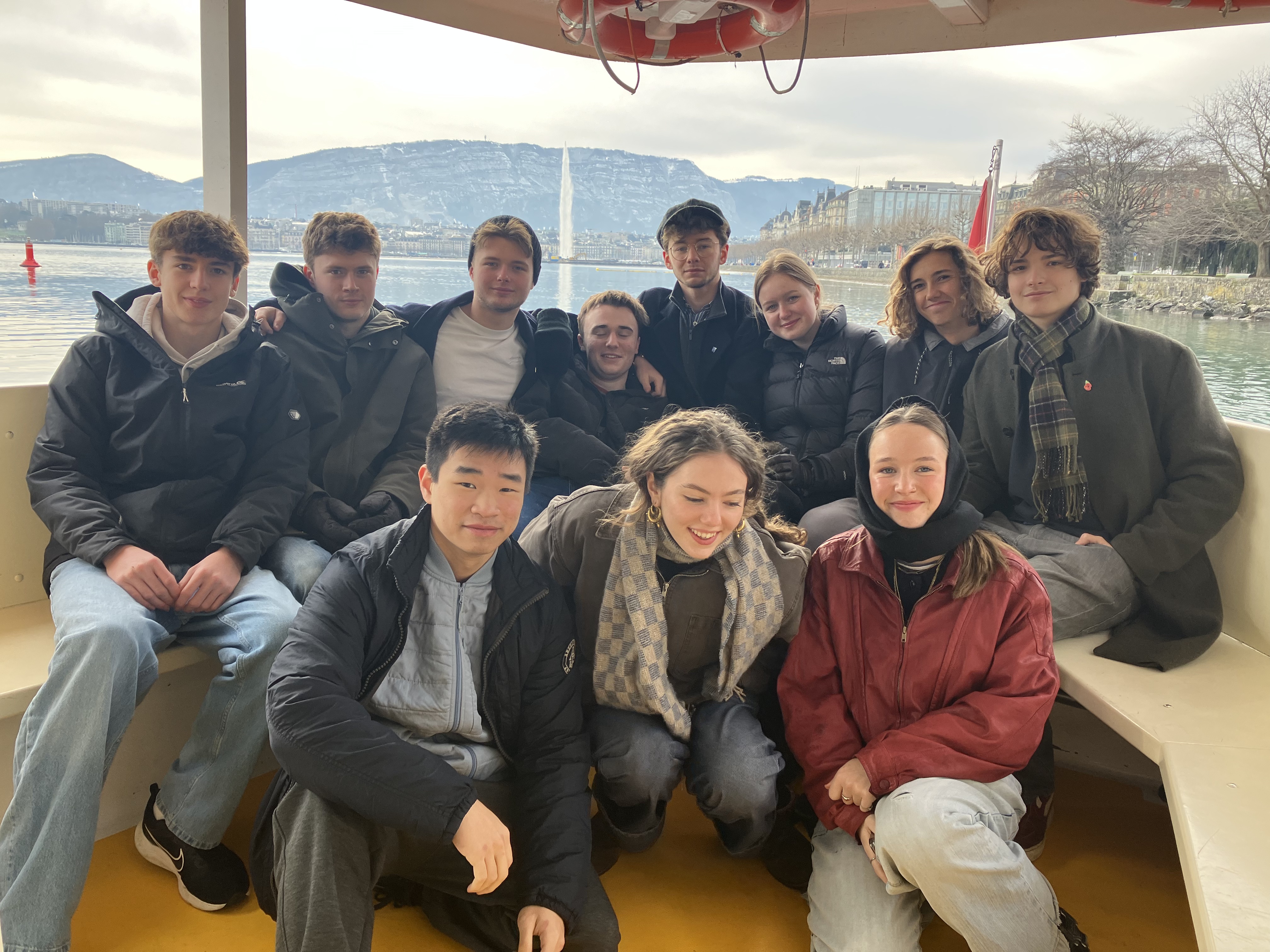
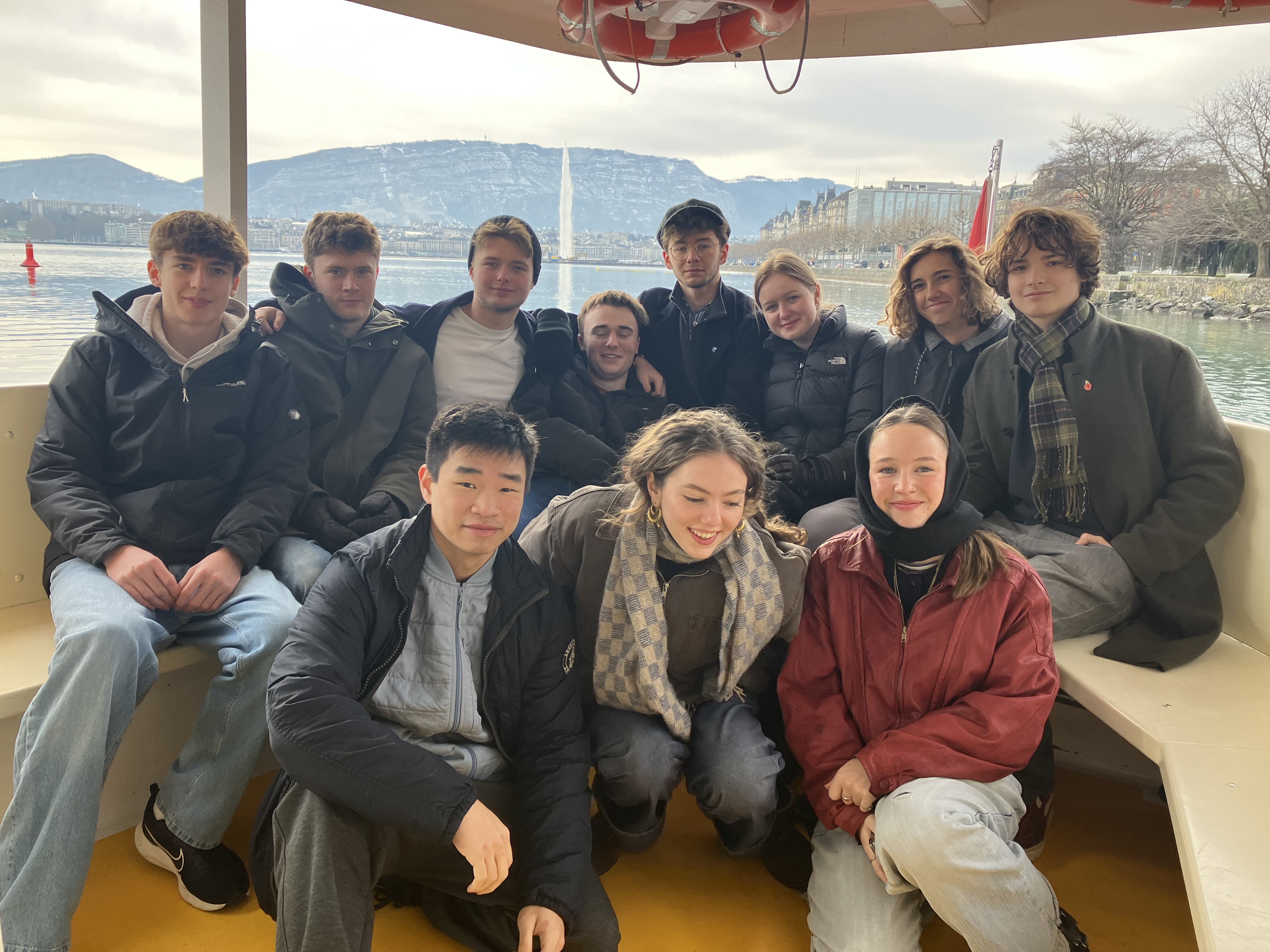
The next day, before we returned home, a few of us had time to hop onto a water taxi on the lake. We got to see the Jet d’Eau fountain, an impressive 140m tall fountain which has become one of the city’s most famous landmarks. We also enjoyed the view of the Alps and Mont Blanc before flying home, safe and sound, albeit with a bit of turbulence from Storm Isha.

Thank you to Tobias, Allen and Sarah for running this trip for us, and making it such a joyful and educational experience. We all thoroughly enjoyed it and will be remember it forever.