By Julia Bevan, Teacher of English and DofE Manager
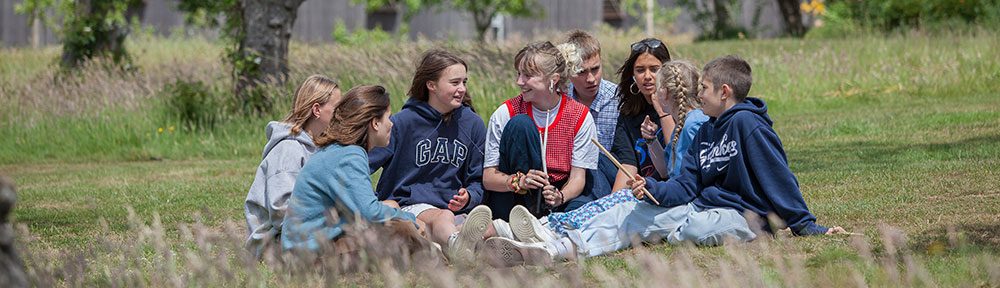
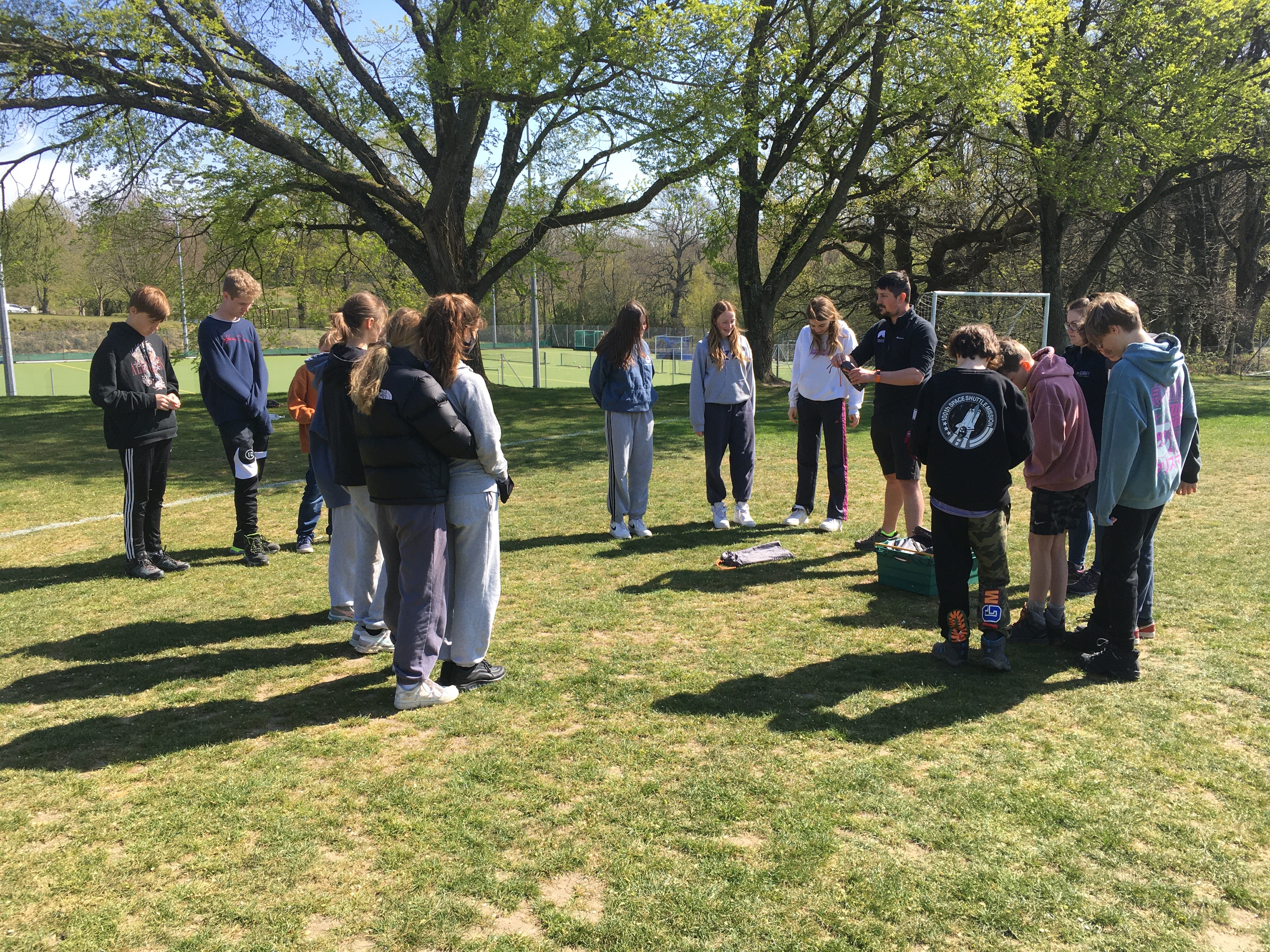
Last weekend we were joined by Isaac Walker and his team from outdoor education provider Ridgeline Adventures, who ran a successful Duke of Edinburgh (DofE) training weekend in the sunshine for Bedales students undertaking their Bronze Award.
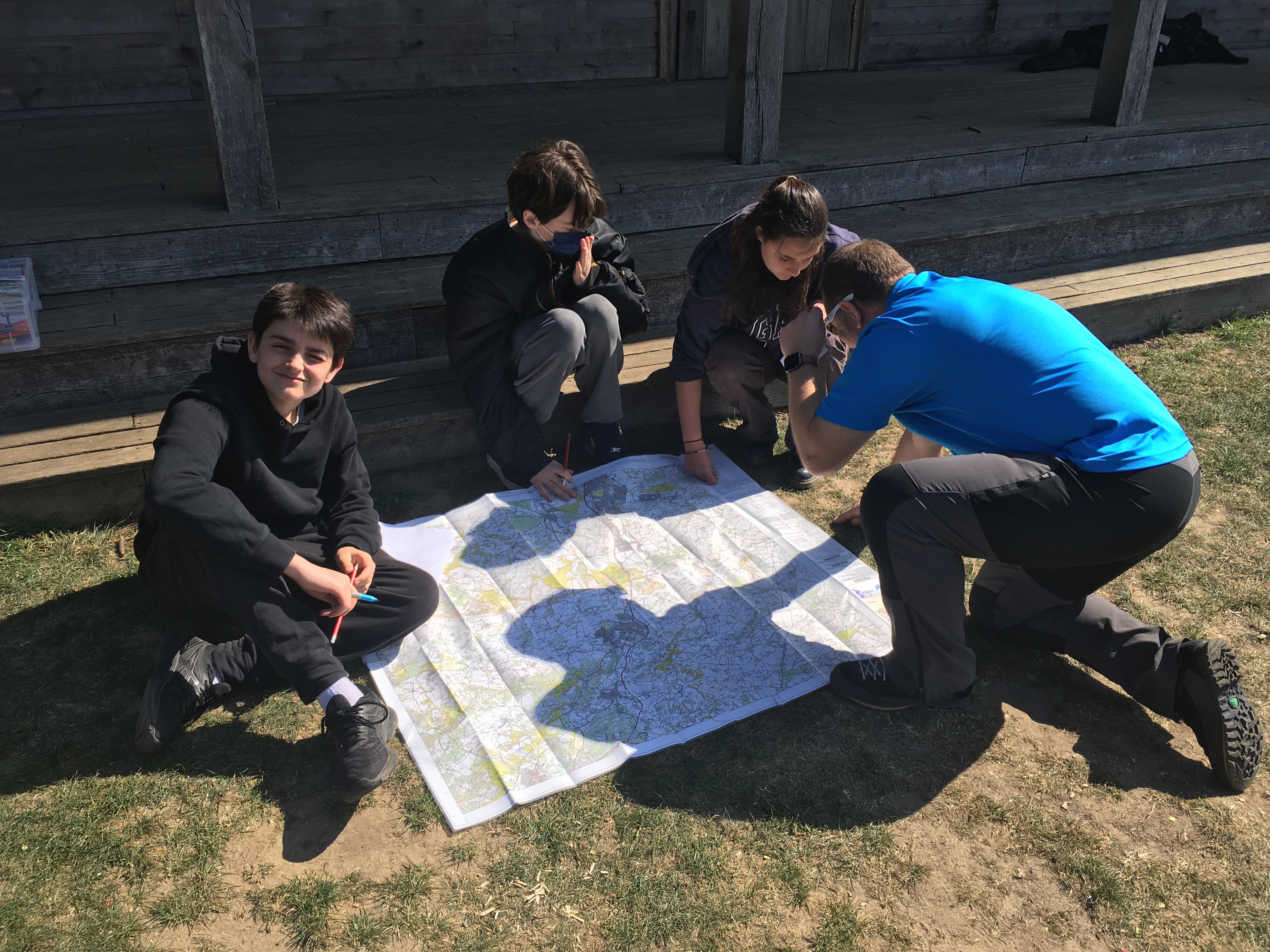
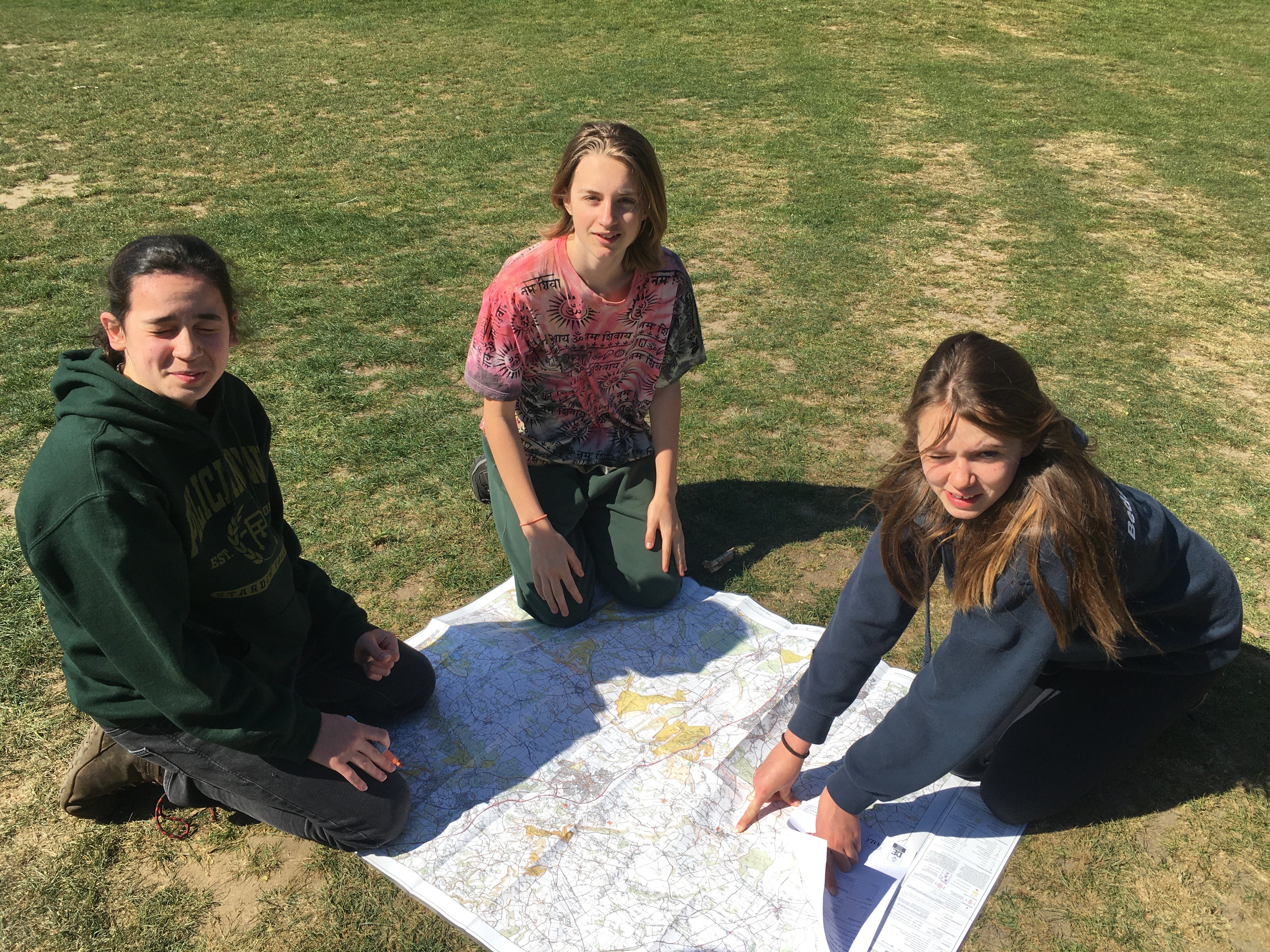
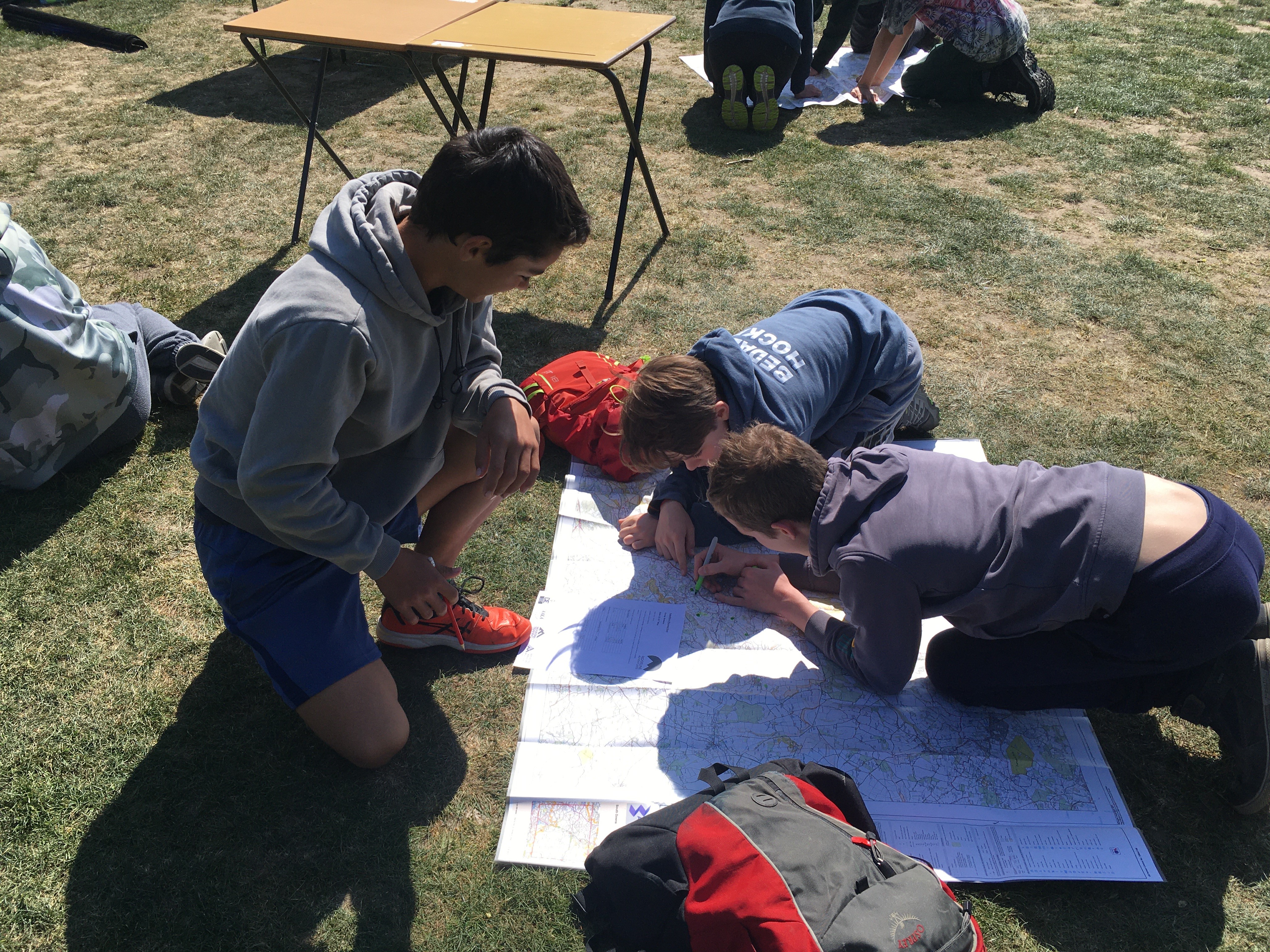
On Saturday, students took part in a range of team building activities at the Sam Banks Pavilion. Gordon Dale, Clive Burch, Paul Beauchamp and I were there to see Ridgeline lead the various sections, which saw the students put up tents in a fairly strong breeze, cooked lunch on Trangias, washed up (a skill that always needs perfecting!), discussed first aid scenarios, learnt to tie slings, planned the routes they will use on their Bronze qualifying weekend in three weeks’ time and learnt how to read maps of the local Hampshire countryside.
On Sunday, the students headed out for a walk in Steep Nature Reserve in five groups of five or six. An opportunity to explore the school’s picturesque surroundings (“I didn’t expect it to be so pretty,” were one student’s words; another said it was simply “stunning”), the day was also insightful. Students quickly learnt the importance of rucksacks rather than shoulder bags, and they stopped en route to explore first aid scenarios and navigate carefully. Group 4 particularly enjoyed meeting Magnus’ dogs on the Hangers!
The Block 3 students who took part in the weekend were attentive and enthusiastic throughout, and there were many memorable moments: Otto Scarlett’s delicious, and enormously popular pancakes; Dominic Rowell looking a little like a mummy as he wandered around covered in bandages after a fun first aid session; and Tilly Wall spontaneously commenting that their group leader from Ridgeline Adventures, Neil, was incredible and thanking him for a great day’s walk.
Thank you to everyone who made the weekend a success and I look forward to accompanying the students on an expedition very soon.
By Julia Bevan, Teacher of English and DofE Manager
Despite the challenges they have faced due to COVID related restrictions, Bedalians have continued to impress with their efforts in completing the various sections of the Duke of Edinburgh (DofE) Award.
For the Volunteering section of the Bronze Award, Block 3 student Florence Pohlschmidt helped out at her mother’s art school in London, tidying and reorganising the studio sculpture, etching and drawing rooms. Florence also volunteered at her former primary school, Heathbrook, in their wildlife garden, clearing, cleaning and reorganising the school’s greenhouse.
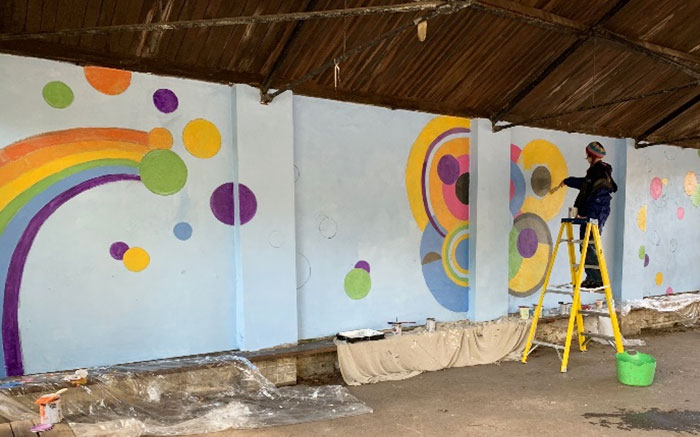
Inspired by a Wandsworth primary school who contacted her mother’s art school about the possibility of its students painting a rainbow mural to raise the pupils’ spirits after lockdown, Florence took the initiative to ask Heathbrook’s headteacher, Mr Ben Roberts, if she could continue to volunteer at the school by painting a large mural.
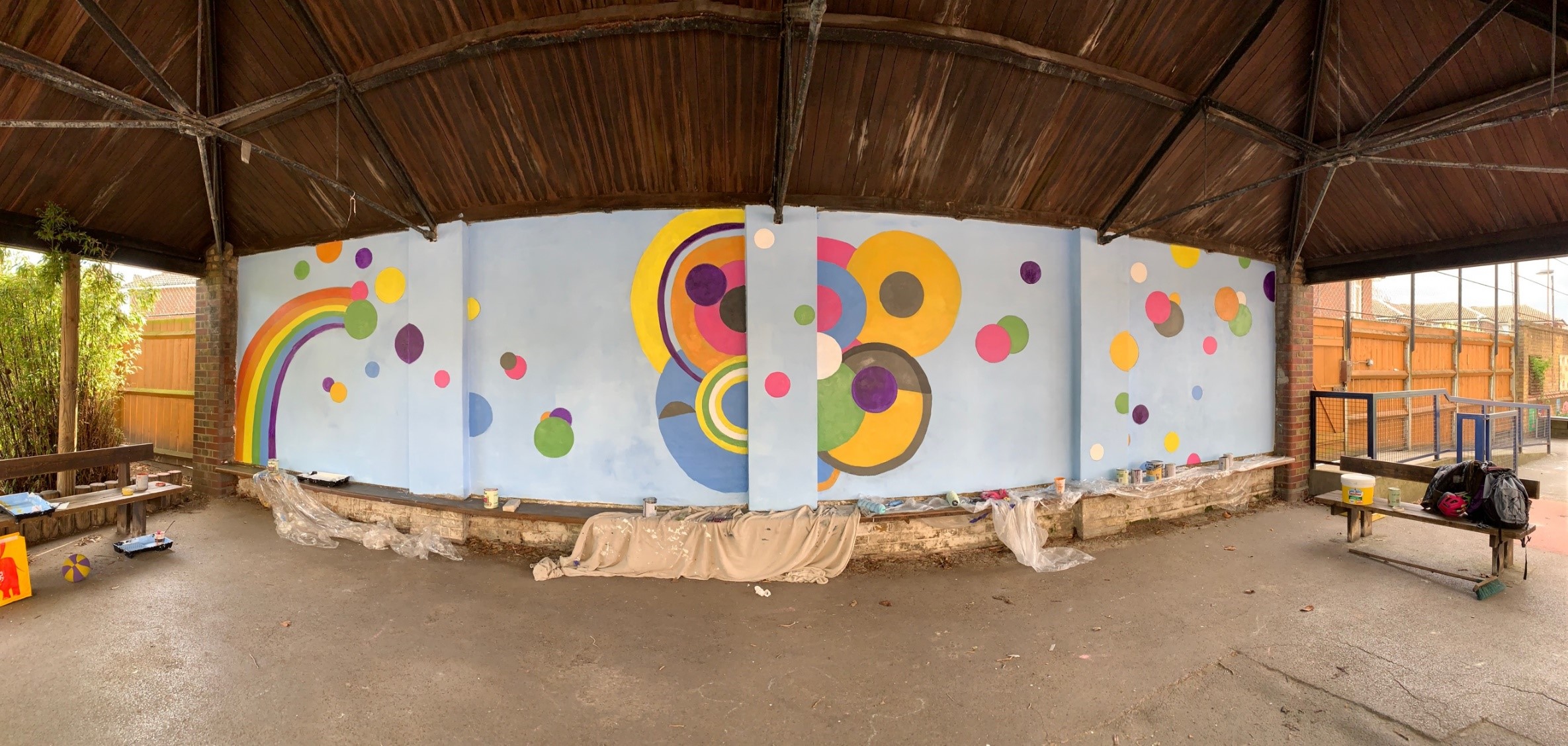
After Heathbrook gave her permission to paint a mural on the wall of an area known as ‘The Shed’, Florence decided – with the support of her art teacher – to produce a rainbow design in a nod to keyworkers, based on the work of artists Wassily Kandinsky and Sonia Delaunay.
The mural itself covers four 2.5 x 2.5 metre wall panels, which were prepared with two primers and a light blue base colour, before Florence scaled up her drawing and cut out templates for each section, drawing it on the wall in charcoal ready for painting. The process was supported by volunteers from Longbrook’s PTA.
Florence said: “I was so pleased to be able to offer to do this as part of my DofE Award, as it was also a way I could say thank you for everything my primary school has done for me. The final mural looks fantastic and I learnt so much from the project.”
Block 3 have been studying Ernest Hemingway’s novella The Old Man and The Sea in their English composition lessons this term, which has led to all sorts of fishy descriptions and discoveries. Last week they tried a form of poetic composition which involves taking lines from the text and rearranging them to create a poem.
Everyone had called him The Champion He always thought of the sea as la mar The strange light the sun made on the water He loved green turtles and hawksbill with their elegance and speed He was happy feeling the gentle pulling and then he felt something hard and unbelievably heavy He held the line against his back and watched its slant in the water I love and respect you very much. He is a great fish and i must convince him They are our brothers and are like flying fish I hate cramp. It is a treachery of one’s own body. ‘I’ll kill him though, ‘Now is when I must prove it.’ – Nicky, Block 3
The Human Fish
Fish, I love you and respect you very much You let the female fish always feed first. You are good, play jokes and love one another Take some rest fish Chew it well and get all the juices
Fish, I love you and respect you very much But through my treachery, My big fish, I will kill you dead before the day is over
It was the saddest thing I ever saw The female made a wild and panic stricken fight. Still, through my treachery, I love you and respect you very much – Jake, Block 3
La Mar
In the dark the old man could feel the morning coming, The boat moved slowly through the dark water, He was sorry for the birds, The small delicate dark terns, Always flying and looking and never finding, The birds have a harder life than we do – he thought, Why did they make birds so delicate and fine, When the ocean can be so cruel? She is kind and very beautiful, Yet, She can be so cruel, It comes so suddenly and such birds that fly, Dipping and hunting, Their small sad voices are made to delicately for la mar, But – he thought, She gives or withholds favours, And if she did wicked things, It was because she could not help them, – Shoshana, Block 3
This poetic composition exercise is something that you can do with any text and which produces a very wide variety of outcomes. I thought you might like to have a go yourself, maybe with your family, so here are some instructions:
Choose a novel or short story that you love or know well to work with.
Choose 10-15 phrases or short sentences and write them down. The tricky bit is to not think too much but to trust your instincts and choose lines that ‘speak’ to you. You could also experiment with choosing lines at random.
The quotations you’ve chosen may well have some sort of shared theme. You could use the theme as the title of the poem or you might choose one of the lines to be the title.
Re-arrange the quotes into some sort of order that makes most sense. Try not to think too hard but go with what feels right.
You might need to leave out one or two of your original choices but try to include them all if you can.
You might need to alter the grammar of some of your quotations slightly to help it make sense.
Read it through again and again and make any alterations it needs each time.
I’ve also recorded creative writing sessions which anyone can use which can be found here: Description, Home, Poetry and Speech.
By Julia Bevan, Teacher of English and DofE Manager
While we are in lockdown, it is trickier than usual for students to complete the Duke of Edinburgh (DofE) Award, but I am pleased to see that so many of them remain committed to completing the various sections of the programme despite the circumstances we find ourselves in.
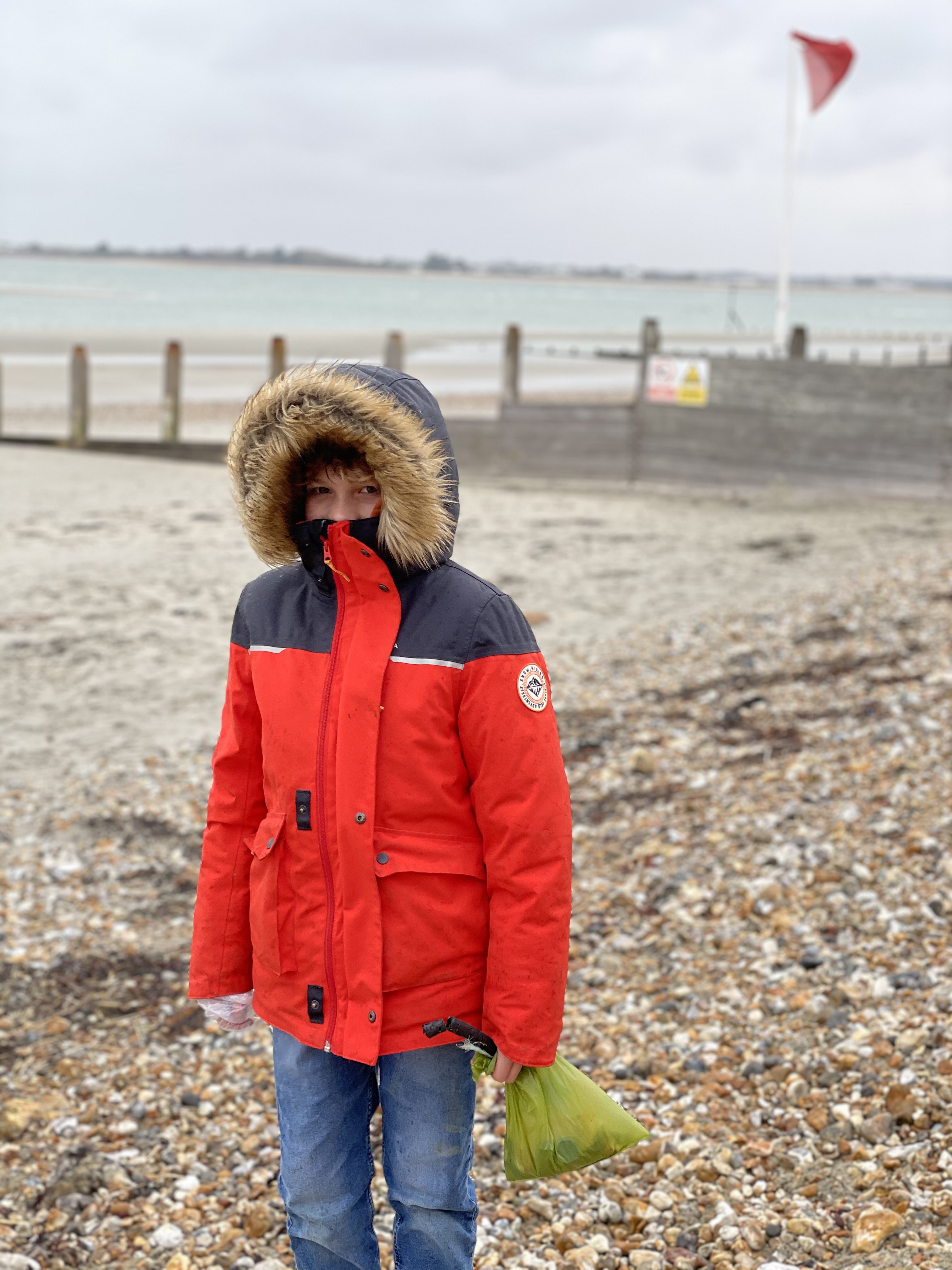
For the Volunteering section of the Bronze Award, Block 3 student Mo Griffiths wrote to West Wittering Estate to request permission to do some litter picking on West Wittering beach. They were very happy for Mo to litter pick at the beach and, as well as giving Mo a quick safety briefing before he set off, offered to lend him a litter picker. Mo wore gloves for the activity and chose to focus on picking up small pieces of plastic which don’t decompose and can stick around indefinitely, causing problems for marine ecosystems.
I look forward to seeing more students’ contributions to their DofE Award in the coming weeks.
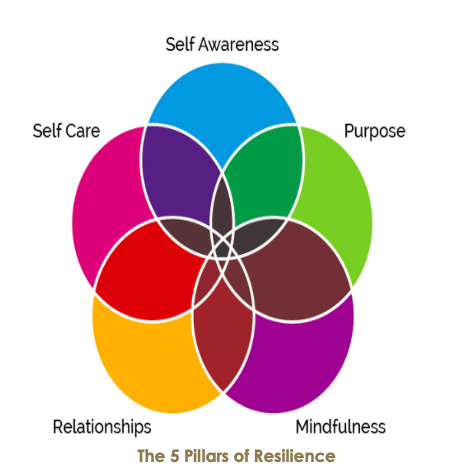
In Wellbeing, we are taking the opportunity during online learning to delve into the practical strategies that we should all have in order to cultivate a resilient spirit. Resilience is at the heart of wellbeing. Over the coming weeks, Blocks 3-5 will be focusing on practising the five pillars of resilience; fostering healthy emotional and mental health strategies for life; learning to manage the uncomfortable and struggles in life; mindfulness practice; and connection and support.
All five pillars of resilience are crucial, but in the coming weeks we will focus on developing self-awareness, self-care and mindfulness practice in our Wellbeing sessions. This week, Bedalians have produced a ‘Wellness Jar’ detailing the activities they are going to do on a daily and weekly basis (plus emergencies and treats) in order to be resilient, thus developing healthy emotional and mental health for life. Have a look at my Wellness Jar below. Students have been asked to share the contents of the Wellness Jar with their loved ones.
Additional strategies for fostering resilience discussed in our Wellbeing lessons have included the importance of keeping routines going – including 9-10 hours of sleep, meal times, exercise, play, cognitively stimulating activities, work and relaxation – so that days have rhythm and structure and are not spent inactive. Endless time without structure, meaning and purpose is unhealthy for the body and mind.
There are a number of resources available for parents and teenagers for mental/emotional health issues. Young Minds has a free helpline for parents (0808 802 5544, available 9.30am-4pm, Monday to Friday), as well as a useful website. Helpful information can also be found on the Royal College of Psychiatrists website. Young people can access support from helplines, text lines and online chat services at any time – Childline (0800 1111), Young Minds Crisis Messenger (text YM to 85258) and the Mix (0808 808 4994).
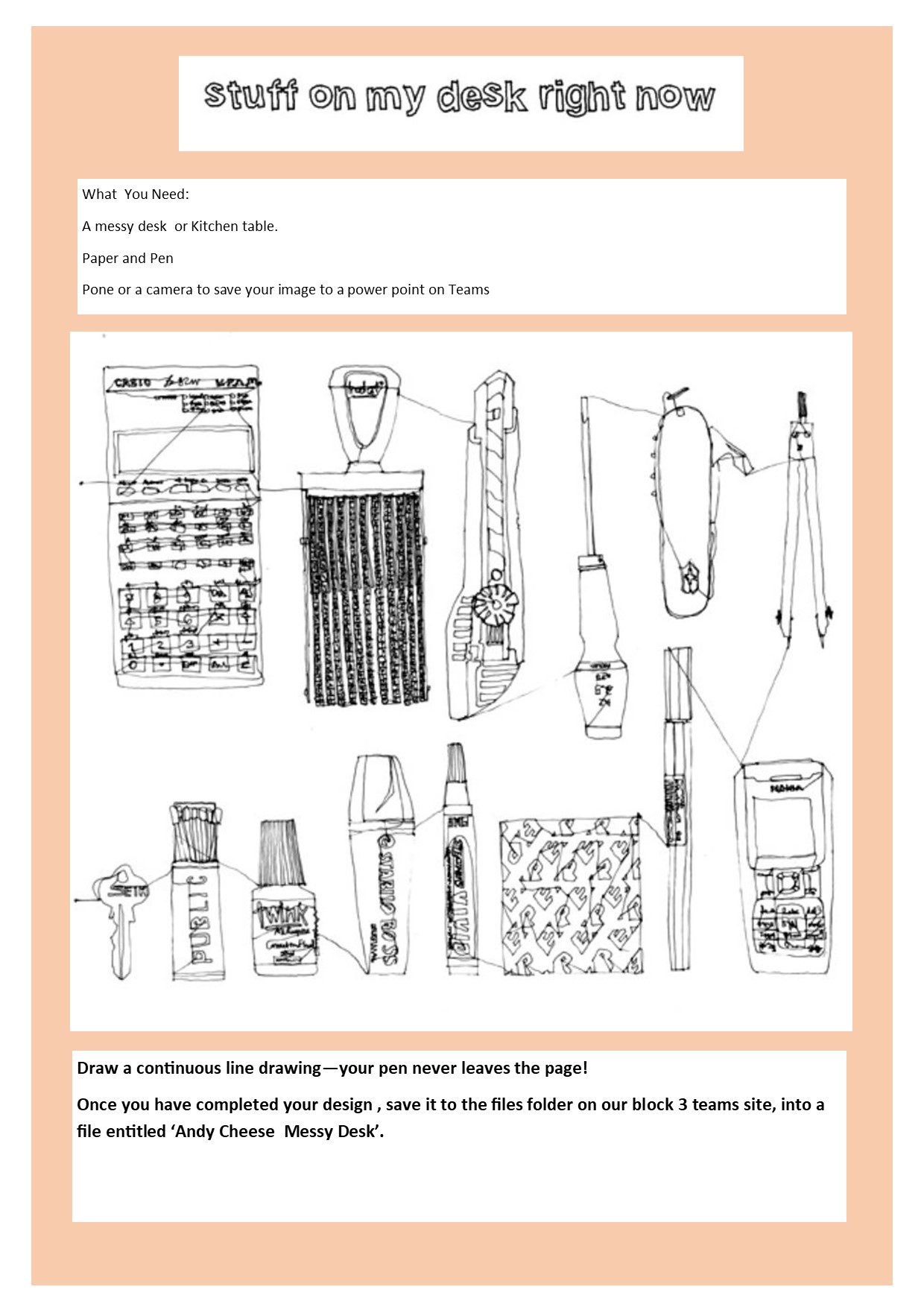
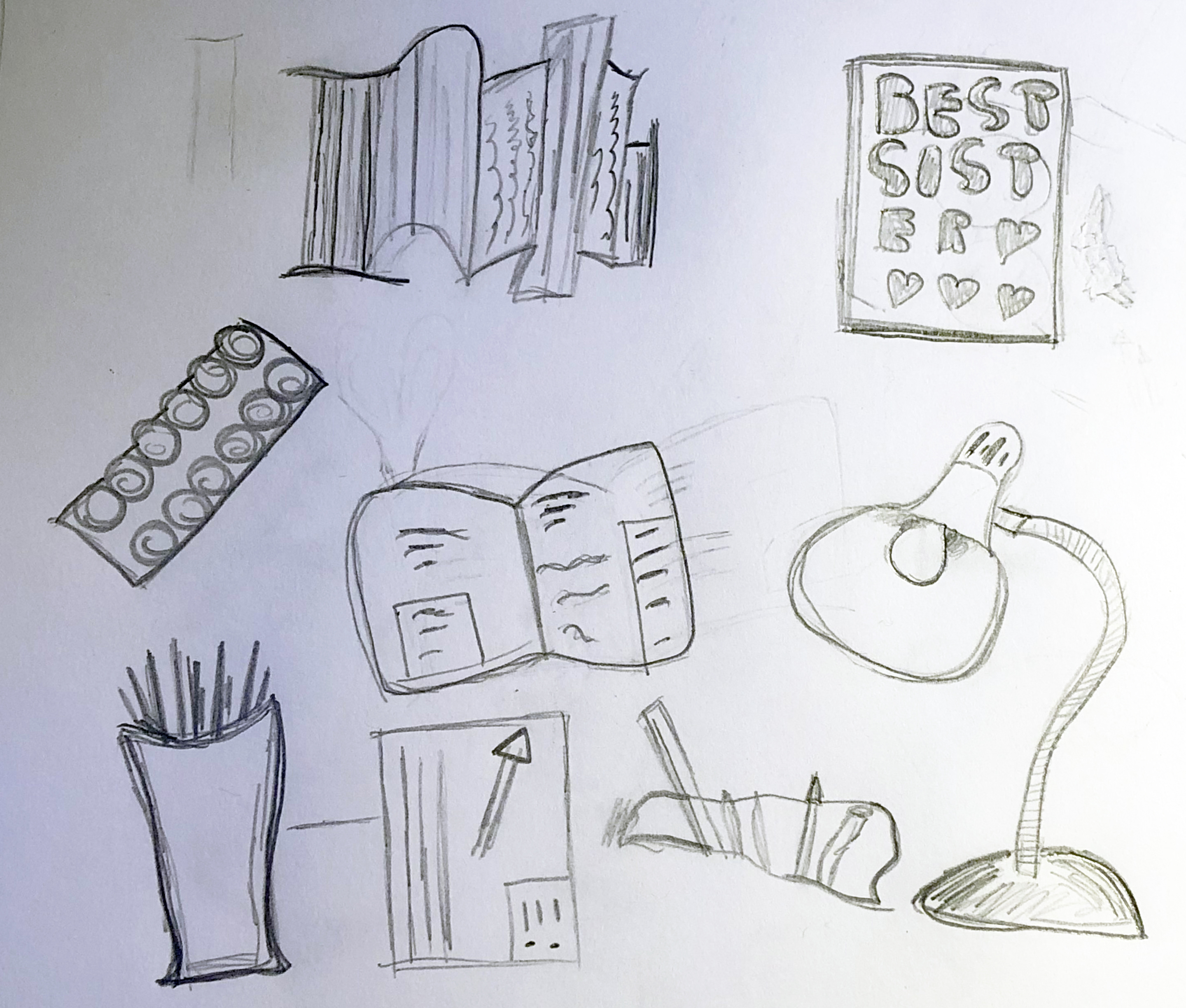
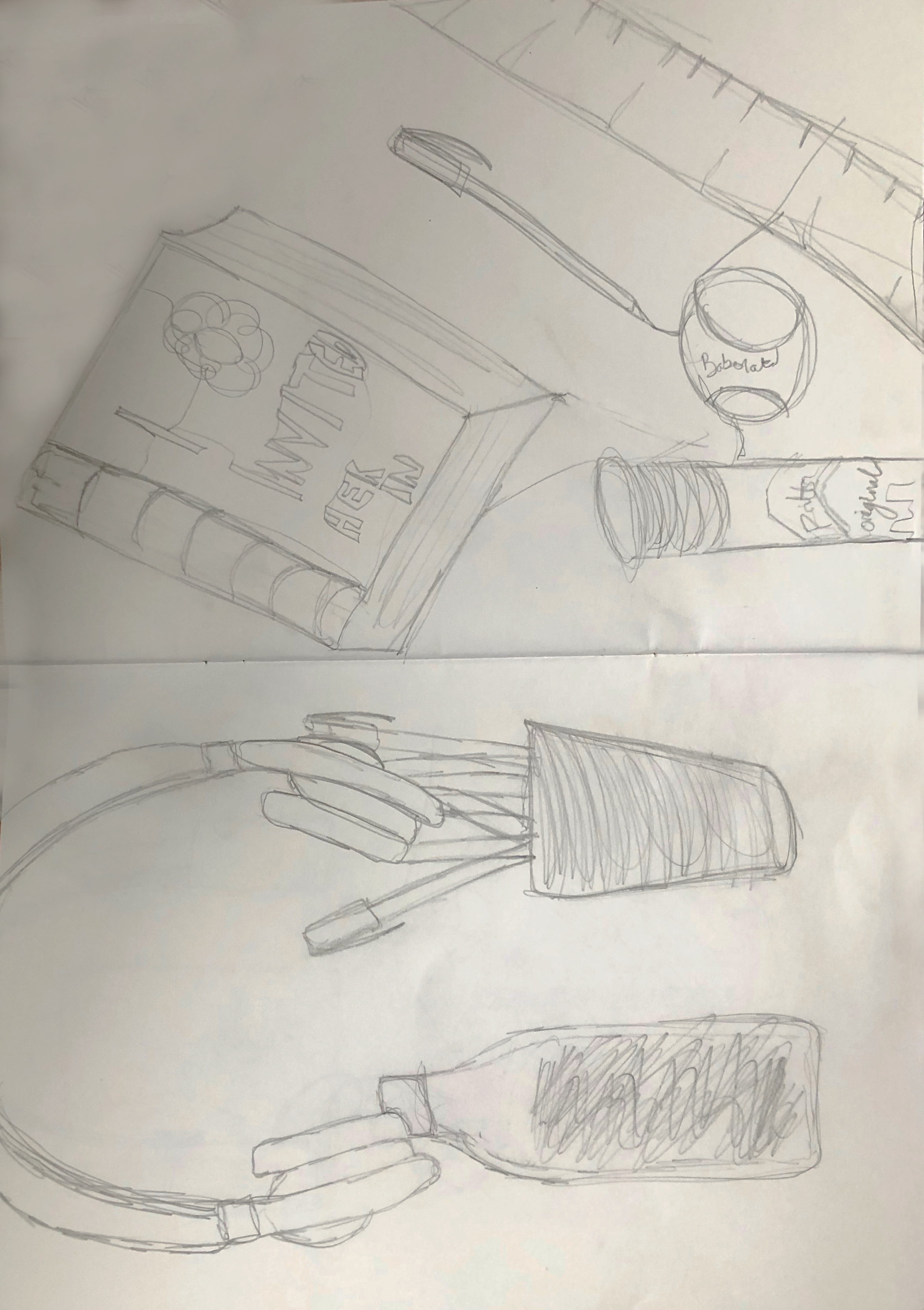
Block 3 started their online Art lessons last week with a continuous line drawing exercise entitled ‘Messy Desk’. For this task, I asked students to draw a messy desk or kichen table, ensuring their pencil never left the paper. The students really enjoyed trying out this technique and produced some great drawings.
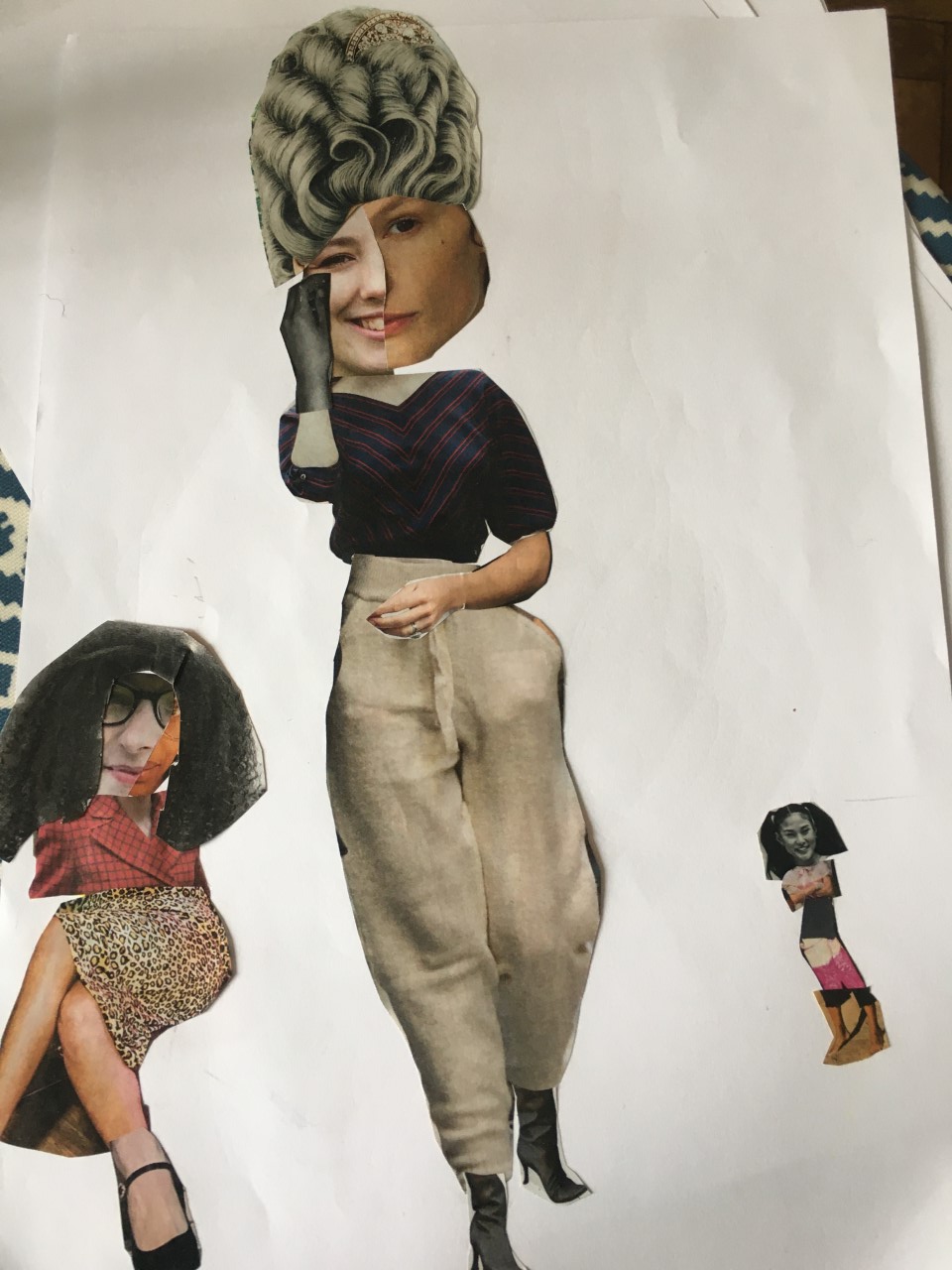
This week, we moved on to ‘exquisite corpse’, a method which was very popular in the early twentieth century with Surrealist poets and visual artists, who worked collectively to assemble words or images into a collage. I asked students to use this method themselves to make a three-part montage. They had a lot of fun putting these together and the results are really striking.
This half term Block 3 have been using their English composition lessons to read and write poetry about nature and the seasons. Naturally, John Keats’ To Autumn proved an inspiration for many with phrases that everyone half knows, even if only from the Mr Kipling advert! We’ve also read Seamus Heaney’s Personal Helicon,in which he muses on the way that nature creates and reflects artistic inspiration and helps us to know ourselves better.
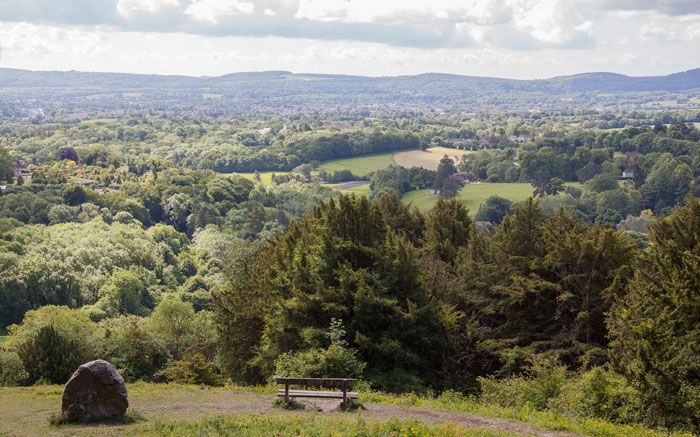
Our local favourite is Edward Thomas, who many Block 3 students know from visits to The Poet’s Stone – a hop, skip, and very steep trek up Shoulder of Mutton Hill. The poems But these things also and The penny whistle evoke the landscape around Bedales and students gained a clearer insight into the subtlety of nature writing from the detailed imagery Thomas uses.
I’ve been really impressed with the poems that the Block 3 students wrote in response. You can read a selection below:
Autumn is the soft dying days when the light fades into mysterious night; Autumn is the cold seeping into your cheeks making them go a rosy pink; Autumn is the sharpness of the cold in your lungs and the chilly nip of the crisp air; Autumn is the cosy afternoons by the fire and the musty November smell; Autumn is the silence in the sky; Autumn is the path from summer and the bridge to winter.
— Posy
The autumn came that year, too fast, too soon. The rolling winds whipped in from the west. And all that was in light, shadow overtook. The late summer fruits lay rotting in the fields, As if summer itself had forgotten them. More harvests failed with every looming day, As the thunderclouds crowded low, drenching the ground.
Where there should have been leaves, golden and red, There was the black rot of decay. Where the autumn grass once would have lain, Bear rock, earth and mud had overtaken.
— Jake
Standing tall, silent, sturdy, They loom above you, The pines are straight and thin, They have stood for tens, hundreds of years.
Needles drop, crunch underfoot and rot, Branches fall only to be replaced many years later, Squirrels hop from tree to tree, escaping from some unknown.
— Xander
Winter is coming Winter is coming thick and fast The earth is getting hard and frosty The sun has hidden behind a cloud And you may be thinking what is happening And I tell you Winter is coming It doesn’t matter what you think It doesn’t matter what you do Winter is always coming. When the leave stand strong Then Winter is just around the bend. When the hedgehogs are curled up in their dens And the rivers are freezing up The wind blows hard on my face And I know Winter is coming.
— Jack
The trees shiver naked in the blowing wind, The cool rush of a fresh breeze, Leaves scattered across the floor, With little wellies splashing
The winter bounds stick to the paths With the mud rushing on Nowhere is safe from the weather Not even the warmth.
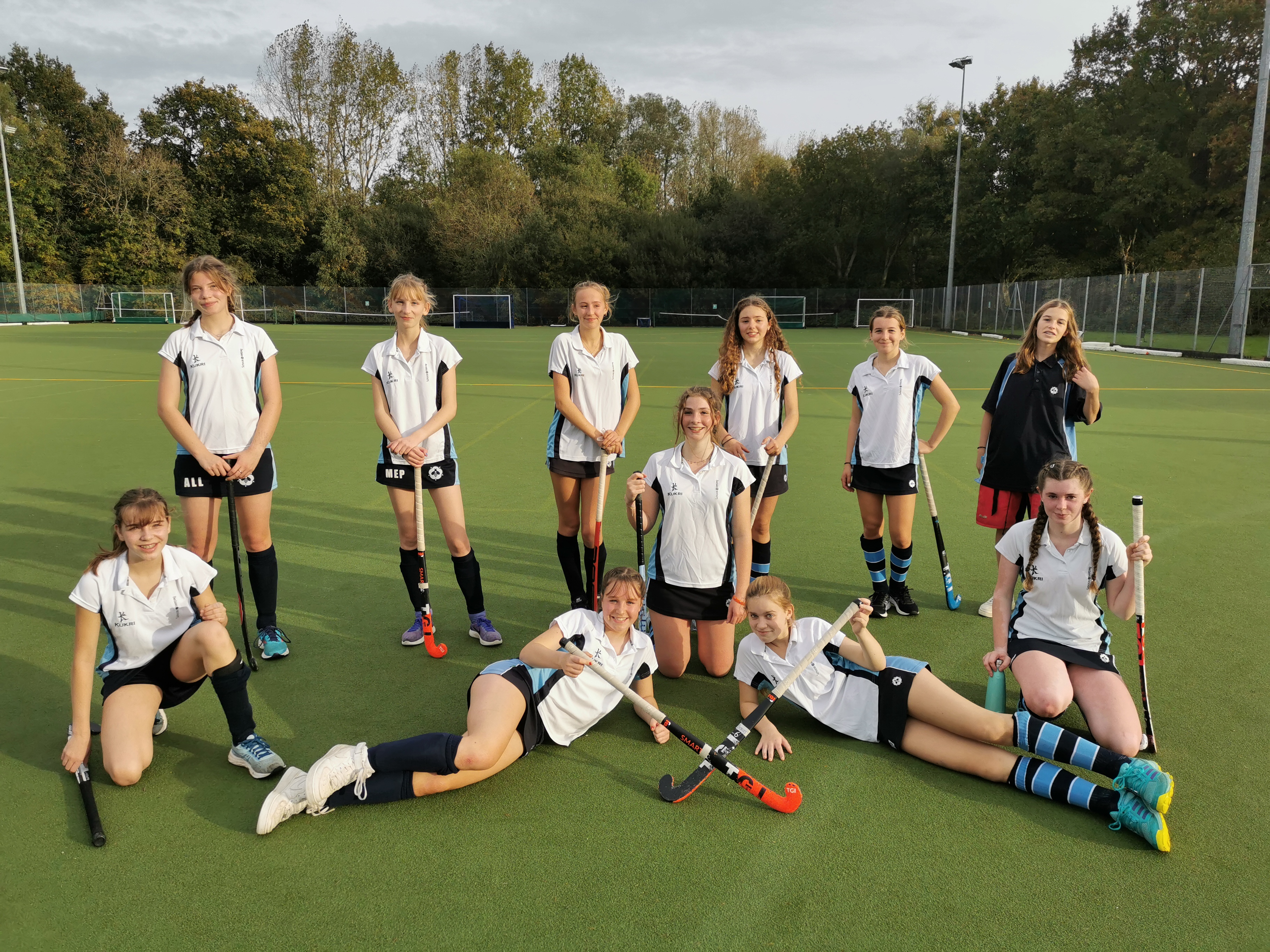
Wednesday was the first competitive hockey fixture of the season with the Block 3 side (pictured above) taking on Block 4. Both sides had started to show some good improvement during their training sessions, so this game arrived at a perfect time and the girls did not disappoint.
A competitive game in the best sense of the word saw both teams play with attacking intent and impressive levels of intensity, but ultimately it was the Block 4s’ ability to retain more possession and a better understanding of their team structure that saw them home as deserved winners. However, a re-match is in the pipeline, and with more exposure to the 11-a-side version of the game, it is likely that the Block 3s will pose an increasing level of challenge.
As the nights draw in and we all remember the reason for the winter festivals that feature lots of fire and warmth, it’s time for the English department to spread some cheer, as we did at the Block 3 Fireside Night last Friday. This is an evening event, at which students and staff are invited to perform memorised poetry, stories and songs in the great hall of the Bedales Dining Room, lit only by fire from the enormous fireplace and a few candles. As it is difficult to photograph an event held in near total darkness, it must retain its mystery, but here is what it’s all about…
The students had been asked to think about life without phones, TVs and electricity, and what homegrown entertainment would look like without those things. Before the Fireside Night, Bedales English teachers had shared their own feelings about performance and how nerve-wracking it generally is. I had also been to the Block 3 assembly to reassure students that no one would be looking for perfection in this kind of performance, and remind them that we all need to forget what we see on our screens everyday, as it is not a fair representation of a live performance.
So, with the fire crackling and candles twinkling, students arrived at a dark hall last Friday to recreate the kind of entertainment enjoyed by our ancestors. Julia started the evening with a haunting rendition of Where the Boats Go by Robert Lewis Stevenson and then introduced her students: Ivan reciting a Robert Frost poem called Nothing Gold Can Stay and Grace with Babysitting by Gillian Clarke.
The bravery of these first performances was a wonderful catalyst for the others. Later on – having decided they were brave enough – others from Julia’s class also performed: Freya, with Anne Hathaway by Carol Ann Duffy and Lotty, who chose a powerful poem about Greta Thumberg. Our special guest, Clive, spoke the words of an ’80s rock ballad, making them far more profound in the process, and was, of course, cheered to the rafters.
Mary-Liz’s stand-out performances were from Caspar with Do Not Go Gentle by Dylan Thomas, which was impressive in its sophistication, and Seb, who confidently gave us two contrasting poems – one about death and a comic piece written by himself. As head of department, David might be expected to give the most impressive performance of all but, with terrible irony, his carefully rehearsed speech from Hamlet (in which the title character muses on the excellence of human-kind) flew out of his head. Thankfully, his students made up for his memory loss with faultless performances including raucous group singing from Bay, Leo and Kit.
Louise’s rendition of The Raven was followed by some keen performances from her class. Eliza performed Leisure by WH Davis, fully exploring the poignancy of the poem through her interpretation; Sienna gave a powerful version of one of her favourite poems, A Day by Emily Dickenson with confidence and poise; Hendrix lifted our spirits with his confident performance of the amusing poem, The Little Turtle by Vachel Lindsay and Alex approached the task with his signature confidence and performed his poem to great applause.
My own class was represented by Shoshana and Xander, both performing classics of the nonsense genre, The Jabberwocky and The Jumblies which provided welcome relief, I’m sure, after my own version of Jolene, a song I might not have performed quite as well as Dolly Parton herself, though not for want of practice. Jen’s classes were last with honourable mention going in particular to Oscar and his hilarious performance of My New Pet and Roan’s stirring and dramatic version of Dulce et Decorum est.
The evening was rounded off with a soulful Let it Be from Zeb, accompanying himself on acoustic guitar which gave us all a wonderful atmosphere to go out on.
Please do take the opportunity to ask students about their experience of the Fireside Night – they were an amazing and appreciative audience and deserve praise for this as well as their bravery in performing.
My Block 3 students have been practising writing poems using extended metaphors.
In class, we read The Beach by William Hart-Smith, Winter Morning by Roger McGough and In a Station of the Metro by Ezra Pound to inspire us, observing that none of the poems used full rhyme or a particular rhythm; instead, they’re constructed using one long sentence.
Students then worked together in small teams groups, looking at a range of images – a skiing scene, traffic on a motorway, a mountain top and a red London bus – and coming up with a number of metaphors and similes to describe aspects of the picture (mountain tops as “Stegosaurus spines” in the skiing scene, for example).
Next, they were asked to turn their collective notes into a descriptive sentence that uses at least one metaphor, then turn that into a poem.








 Bedales School Blog
You must be logged in to post a comment.