Poignant and insightful trip to WWI battlefields

By Clive Burch, Head of Block 3

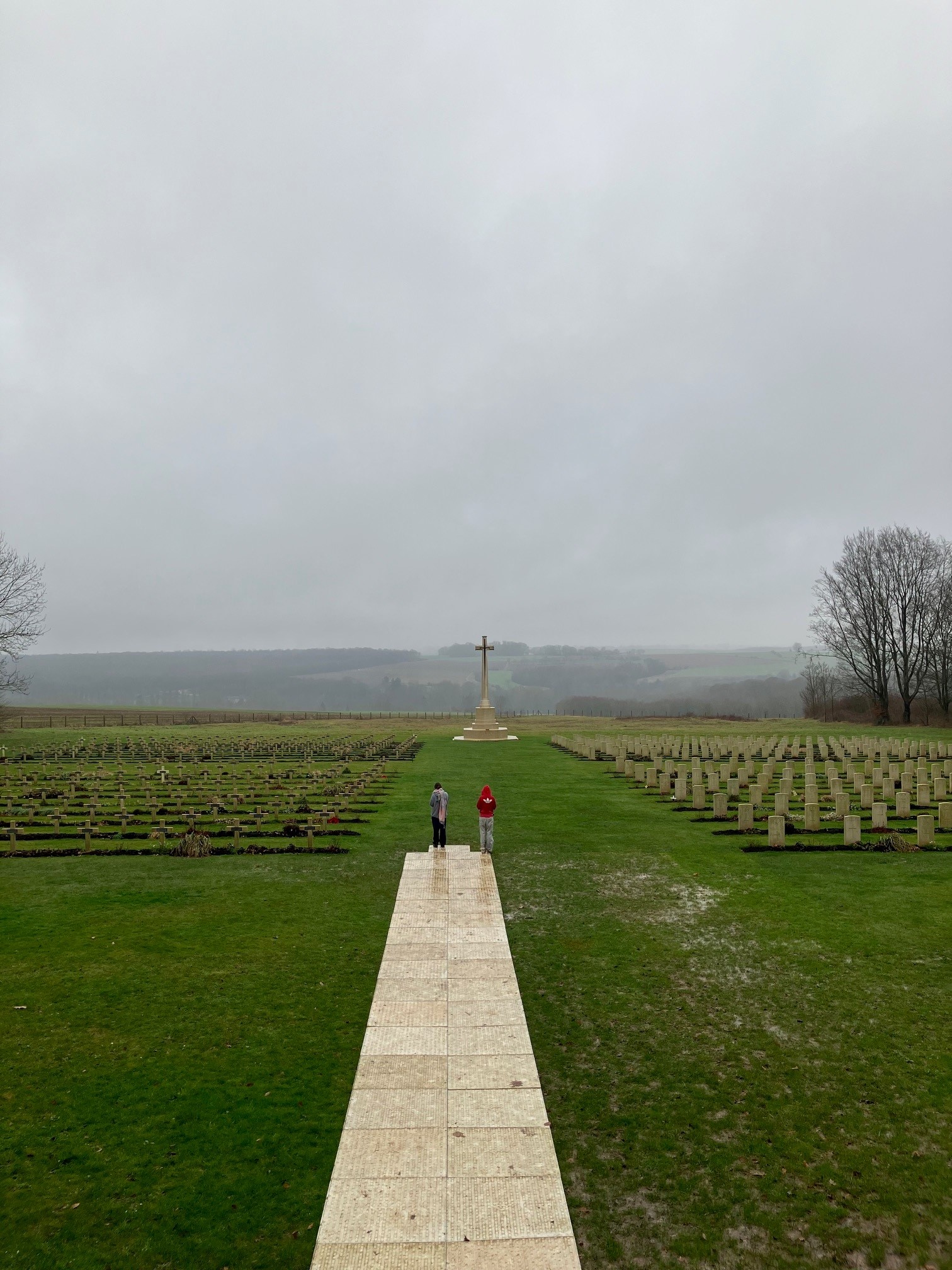
This week, Block 3 students have been Belgium and France to visit the historic battlefields which are a stark reminder of the impact of war, as the resting place for hundreds of thousands of servicemen who were killed in combat in World War I. Having focused on the war, anthroposphere, conflict and ethics in their humanities subjects this term, the trip gave students an opportunity to reflect on the historical, cultural and ethical aspects of their studies. 

On the first day, students visited Essex Farm, which famously moved John McCrae to write the poem In Flanders Fields while stationed there in 1915. They also visited Tyne Cot, the largest Commonwealth war cemetery in the world in terms of burials, and Langemark, where nearly 24,917 German servicemen are buried. Ending the day at Menin Gate, which bears the names of over 54,000 servicemen whose graves are not known, Felix Albizua and Alice Rawlence laid a remembrance wreath on behalf of Bedales.

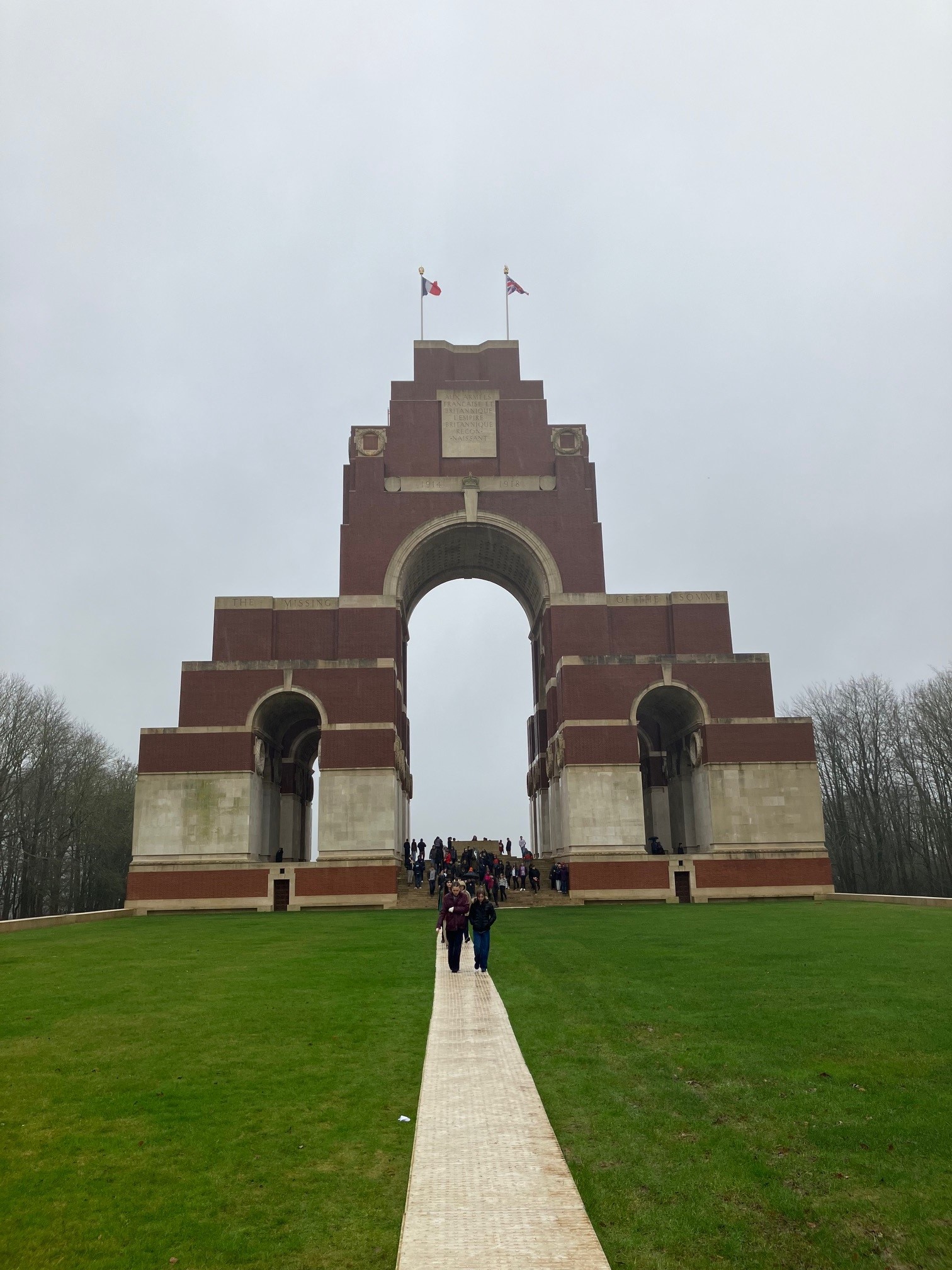
The following day, students visited Vimy Ridge, where the four divisions of the Canadian Corps fought side by side in the Battle of Arras in 1917, and the 36,000 Canadian servicemen who lost their lives in World War I are commemorated. They then visited the Somme, taking in Beaumont Hamel, Newfoundland Park, the Thiepval Monument and Lochnagar Crater. The Battle of the Somme was one of the largest and bloodiest battles of the war, with over 57,000 casualties on the first day, and over 150,000 British troops buried in the battlefields. The Thiepval Monument bears the name of over 72,000 servicemen of the United Kingdom and South African forces who died in the Somme before March 1918 and have no known grave.

After a cold and damp day which concluded the trip, we made an eagerly awaited stop at a chocolate shop, conscious that the weather, fatigue and discomfort was a mere fraction of that experienced by those who fought on the battlefields over 100 years ago. 

See more photos from the trip below.

Creative responses to philosophical ideas

By Josh Block, Head of Philosophy and Religious Studies

One of the key aspects of philosophy is the emphasis on having an open mind and being willing to engage with and sometimes embrace a wide range of new and perplexing ideas. As Aristotle put it: “It is the mark of an educated mind to be able to entertain a thought without accepting it.”

On this basis, the Block 5 Philosophy, Religi and Ethics (PRE) students are a highly educated lot indeed! This year so far they have encountered thinkers from Plato to Turing, the existence of no world to many worlds, and their reality not being real at all. To say nothing of the ever-topical question of whether AI is about to take over the human race! They have embraced all of this with enthusiasm and the well known Bedalian desire for more, and not necessarily simple, answers.

As part of their BAC assessment the students produced creative responses to a chosen aspect of the areas they had studied. They could choose their topic, media, focus and conclusions with complete freedom – or at least perceived freedom as there was inevitably a mark scheme which had to be followed! But all of this was met with passion and skill; the range of ideas was inspiring, and the means of execution nothing short of mind-blowing.

As nothing I type will actually do the work justice, I will allow as the phrase goes ‘an image to speak a thousand words’. Cast your eye over the images, and if you happen to be the parent or guardian of one of the students involved, please congratulate them and if they haven’t already, ask them to help you entertain new thoughts!

What a week for Utopian thinking…

By Clare Jarmy, Head of Able, Gifted & Talented, Oxbridge, Academic Scholars & PRE

The Utopia Project is the longest-established part of the Bedales Assessed Course in Philosophy, Religion and Ethics (PRE) and, as PRE is one of the oldest BACs, it is therefore one of the best established BAC modules. These have been new, different times in which to think about society and utopia, and I am sure that these events will colour how we see the project in the future.

On Wednesday afternoon, Block 5 presented their Utopias to their teachers, and to each other, in an Expo in the Library. Every year, I am impressed with the sophistication of students’ work. The project, for most students, fosters independence in a wholly new way. The Utopia Project is effectively a blank sheet of paper for students to formulate a vision for a perfect world. It is structured for them, and they have to refer to five key texts, but their Utopias can end up being utterly different.

Continue reading