This week, Block 3 students have been Belgium and France to visit the historic battlefields which are a stark reminder of the impact of war, as the resting place for hundreds of thousands of servicemen who were killed in combat in World War I. Having focused on the war, anthroposphere, conflict and ethics in their humanities subjects this term, the trip gave students an opportunity to reflect on the historical, cultural and ethical aspects of their studies.
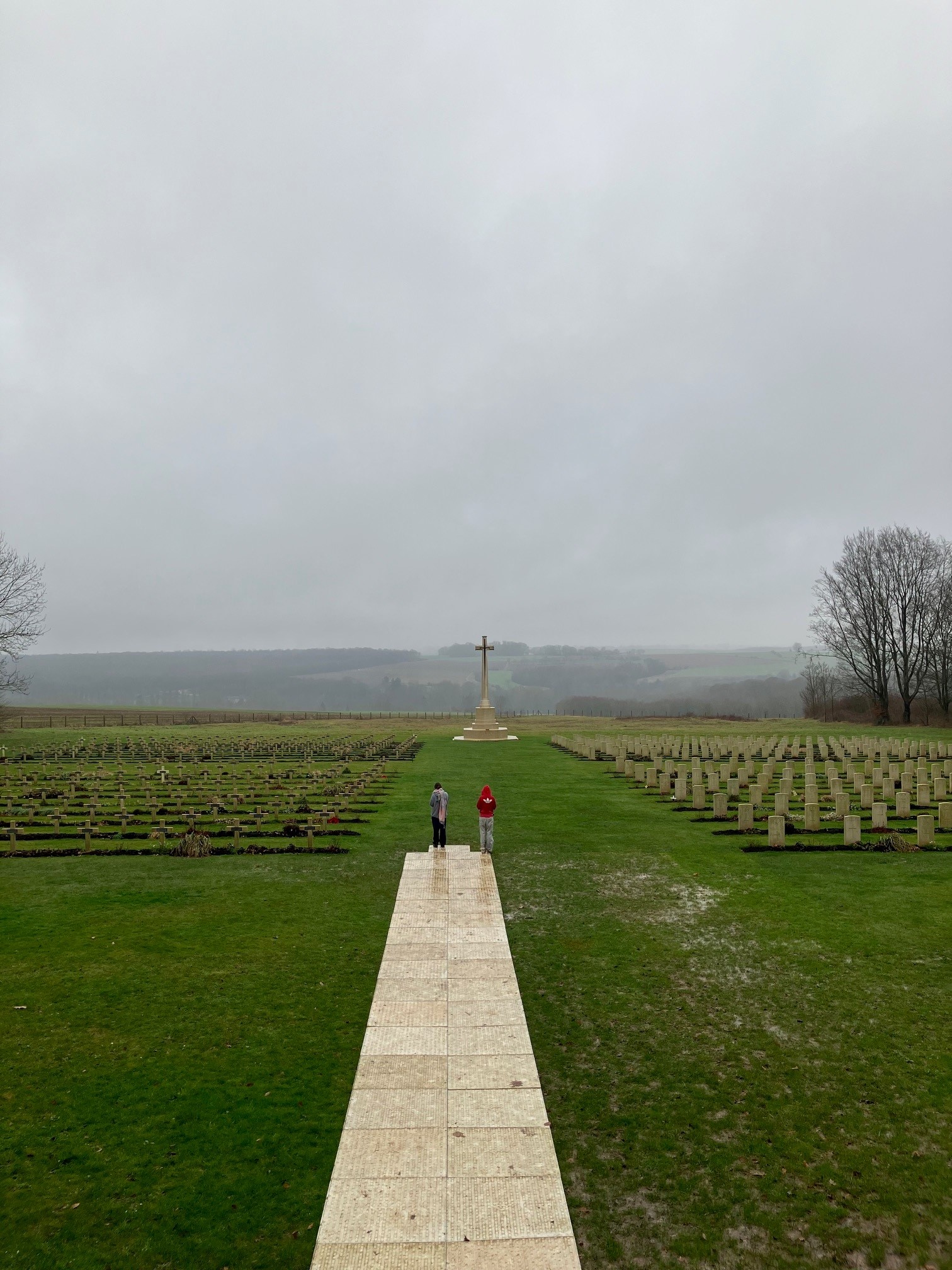
On the first day, students visited Essex Farm, which famously moved John McCrae to write the poem In Flanders Fields while stationed there in 1915. They also visited Tyne Cot, the largest Commonwealth war cemetery in the world in terms of burials, and Langemark, where nearly 24,917 German servicemen are buried. Ending the day at Menin Gate, which bears the names of over 54,000 servicemen whose graves are not known, Felix Albizua and Alice Rawlence laid a remembrance wreath on behalf of Bedales.
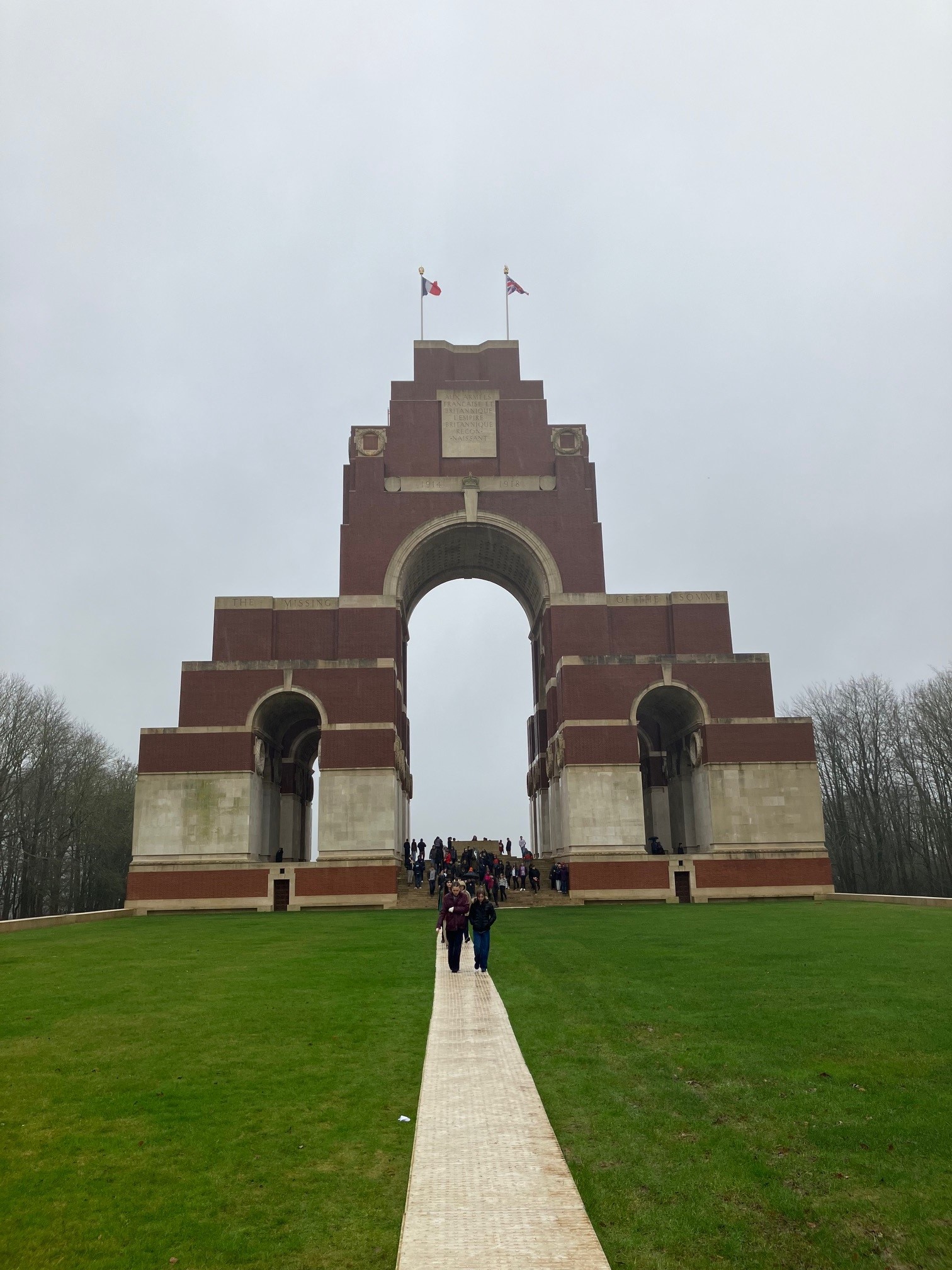
The following day, students visited Vimy Ridge, where the four divisions of the Canadian Corps fought side by side in the Battle of Arras in 1917, and the 36,000 Canadian servicemen who lost their lives in World War I are commemorated. They then visited the Somme, taking in Beaumont Hamel, Newfoundland Park, the Thiepval Monument and Lochnagar Crater. The Battle of the Somme was one of the largest and bloodiest battles of the war, with over 57,000 casualties on the first day, and over 150,000 British troops buried in the battlefields. The Thiepval Monument bears the name of over 72,000 servicemen of the United Kingdom and South African forces who died in the Somme before March 1918 and have no known grave.
After a cold and damp day which concluded the trip, we made an eagerly awaited stop at a chocolate shop, conscious that the weather, fatigue and discomfort was a mere fraction of that experienced by those who fought on the battlefields over 100 years ago.
Coming to the end of this first week back at school, Ullswater seems not only a long way away but also a long time ago. However, while it is still relatively fresh in the collective memory (and before I sound too much like the opening of a space opera), I wanted to pause to reflect upon what has been achieved by Block 3 as a year group already this year.
Knowing everything they need to know for their return to school in a day was always going to be a stretch, but getting familiar with the school systems, our expectations, additional offerings, subject areas (if not individual classrooms) and the school grounds was a good start.
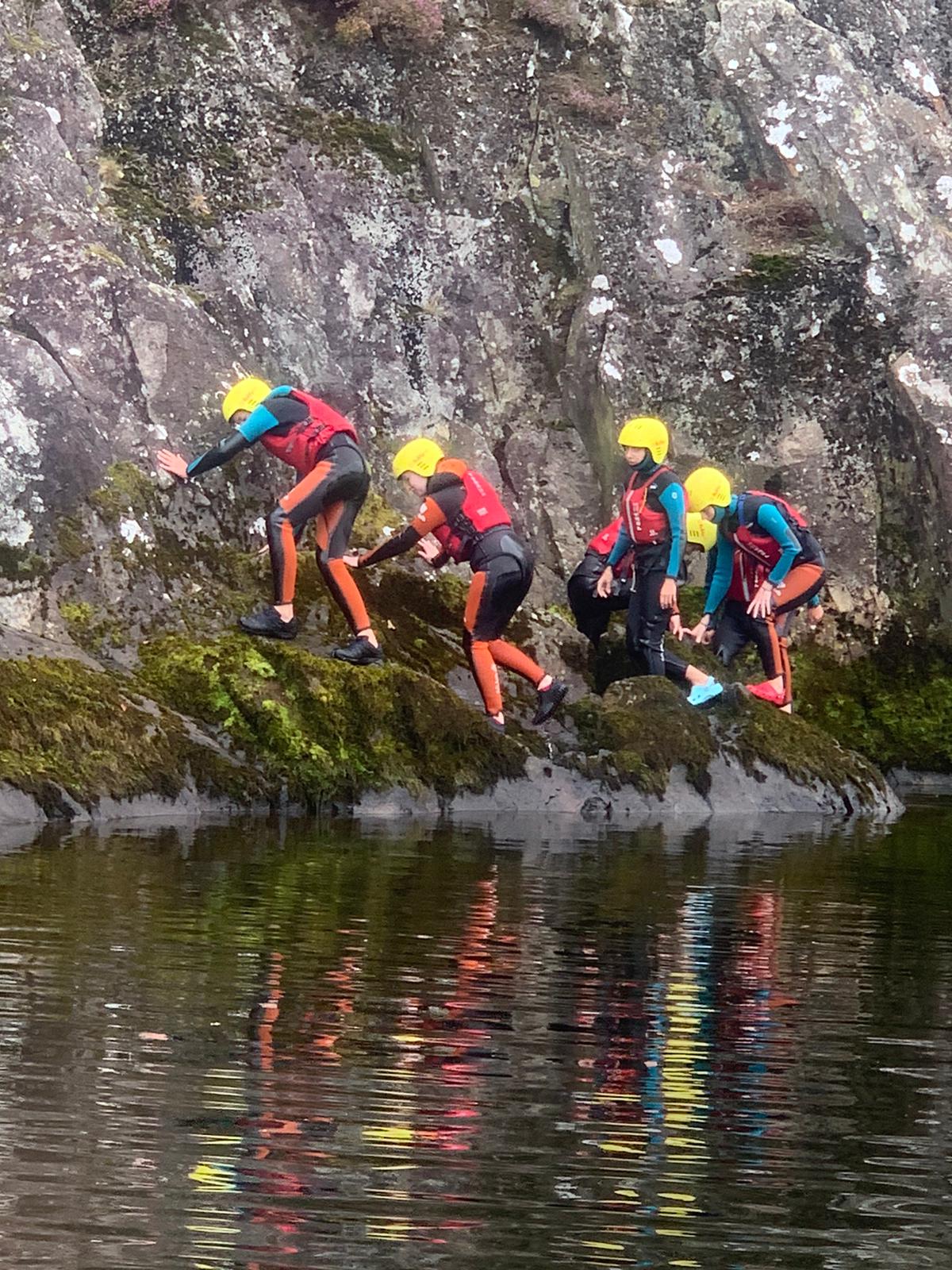
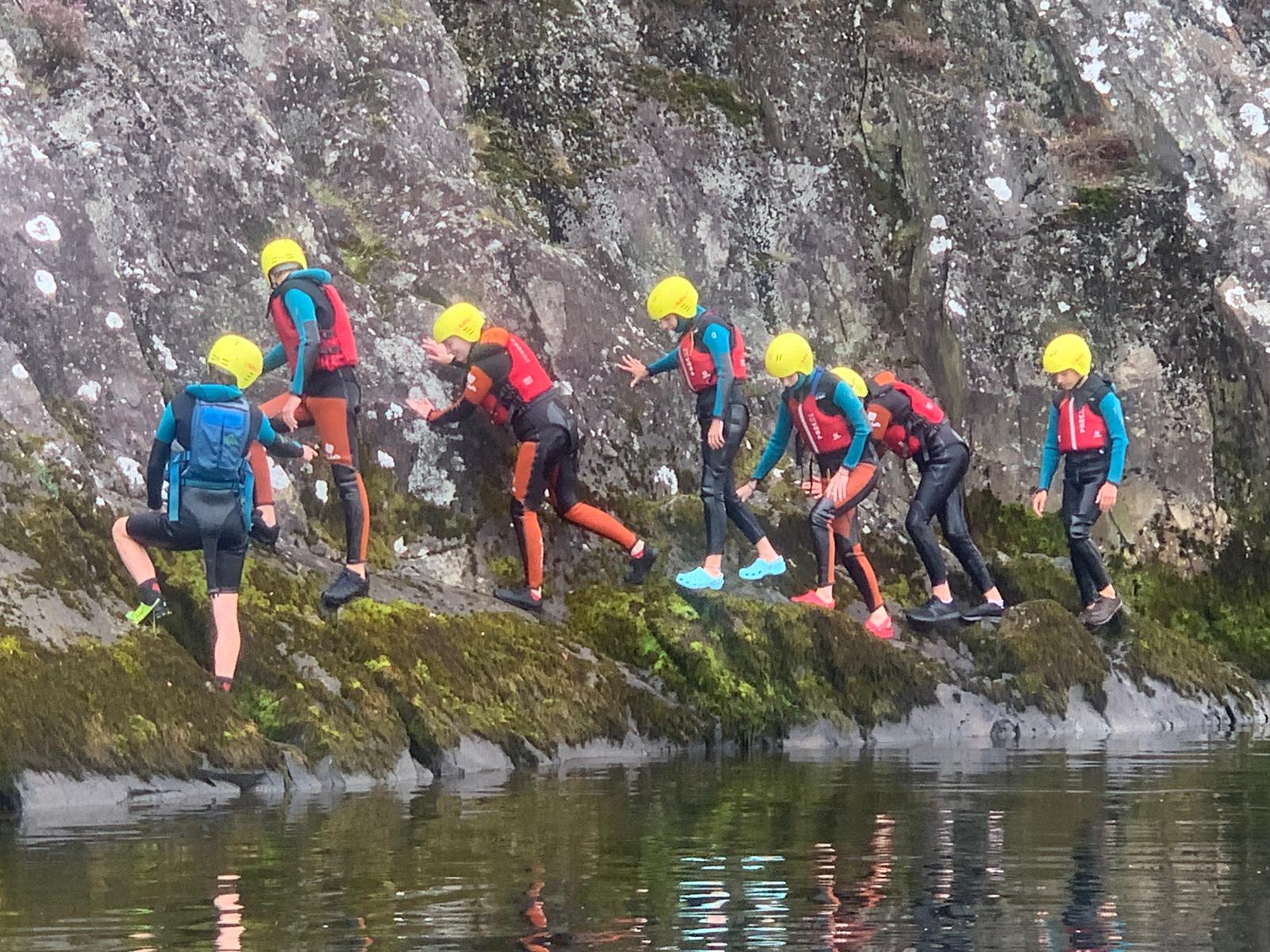
Then taking them away from all of this and placing them out of their comfort zone in the Lake District to do something they may not ordinarily do was a true test of character, which they passed with flying colours. There were some ambitious expeditions undertaken (one including a keen headteacher) and some mini adventures enjoyed. I certainly felt like I was part of a familiar fellowship when I joined a group for a gorge walk which culminated in a cliff jump. The whole group ended up doing this, much to my pride and joy.
Here, Block 3 student Maya reflects on the trip.
By Maya Tazi, Block 3
Ullswater was rich in life lessons, sometimes learned the hard way! Some moments were very fun, like the gorge scrambling, with its rushing current and beautiful views, or cliff jumping, which required the courage to jump in what felt like a frozen lake. Other parts were more challenging, like the dorm life, compromise with my roommates and organising turns to shower.
A big part of it was about teamwork; as a tutor group, we had to learn to work together as a team by learning coordination while rowing for hours, or working towards the same goals when hiking up a mountain or setting up camp for the night. Secrets were shared, laughs exchanged, tired groans echoed and friendships formed. Thank you to everyone who made the trip possible.
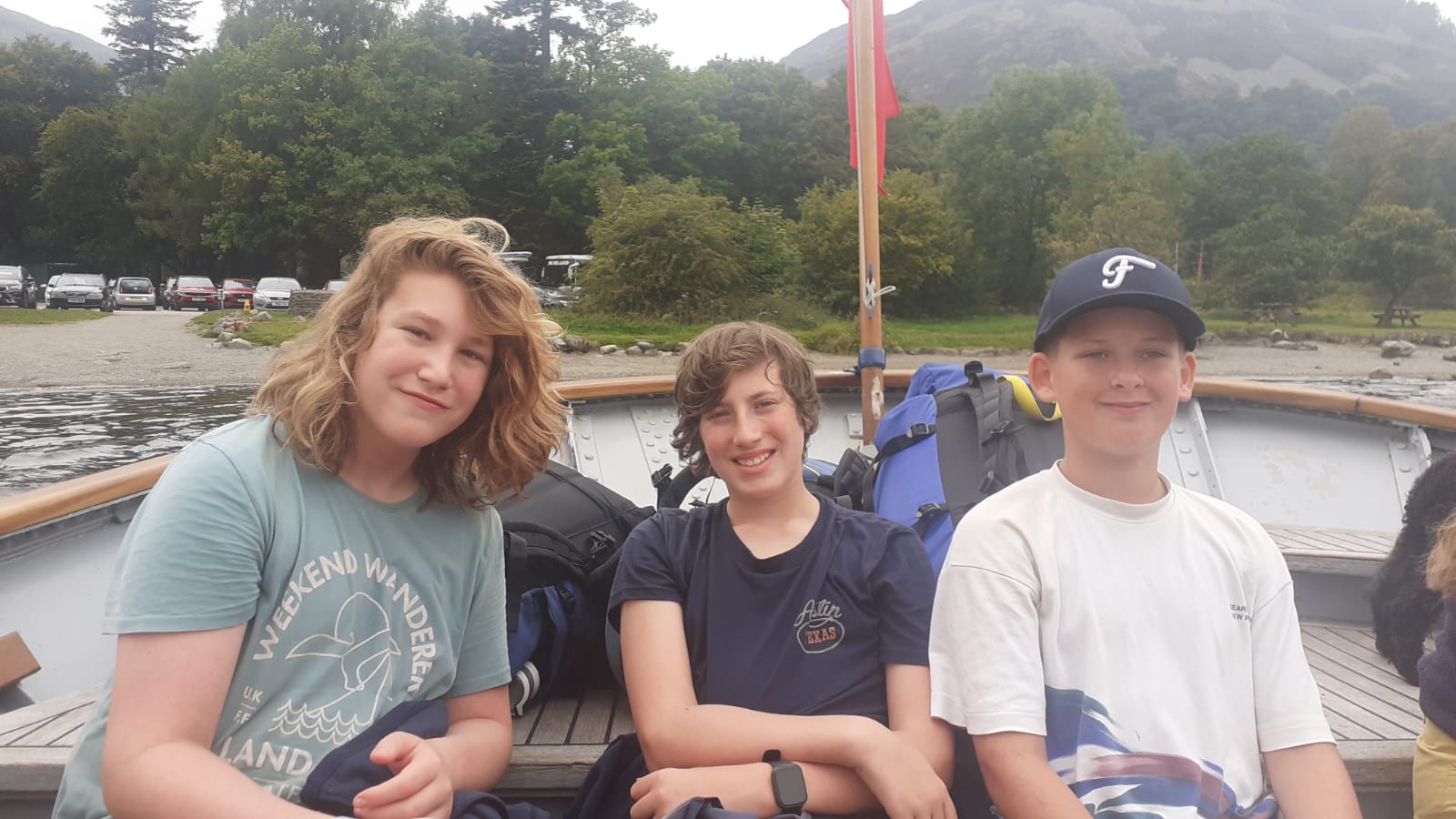
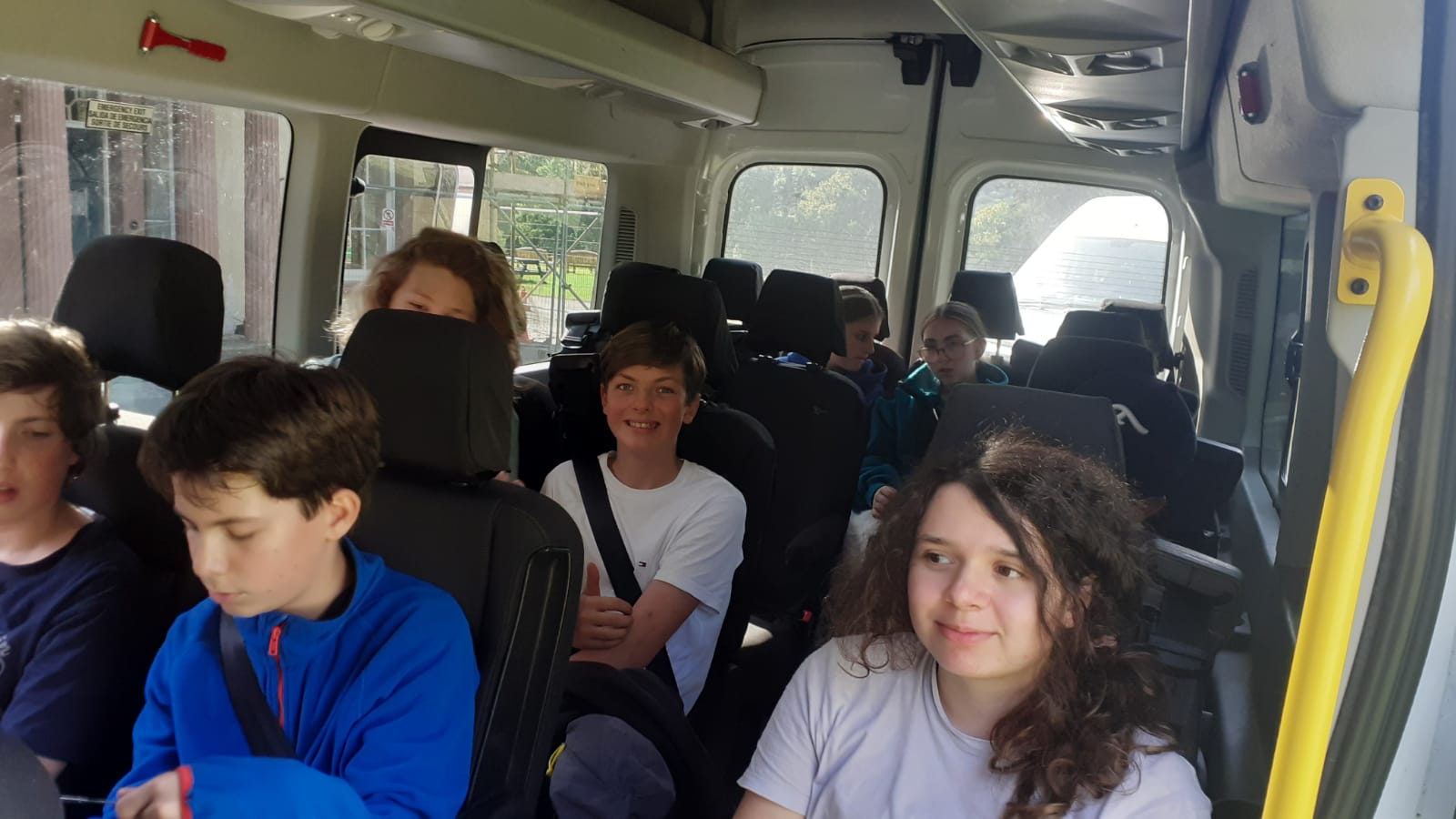
Following last week’s on-site induction, Block 3 students visited Ullswater this week, where they took part in a five-day multi-activity experience with their tutors.
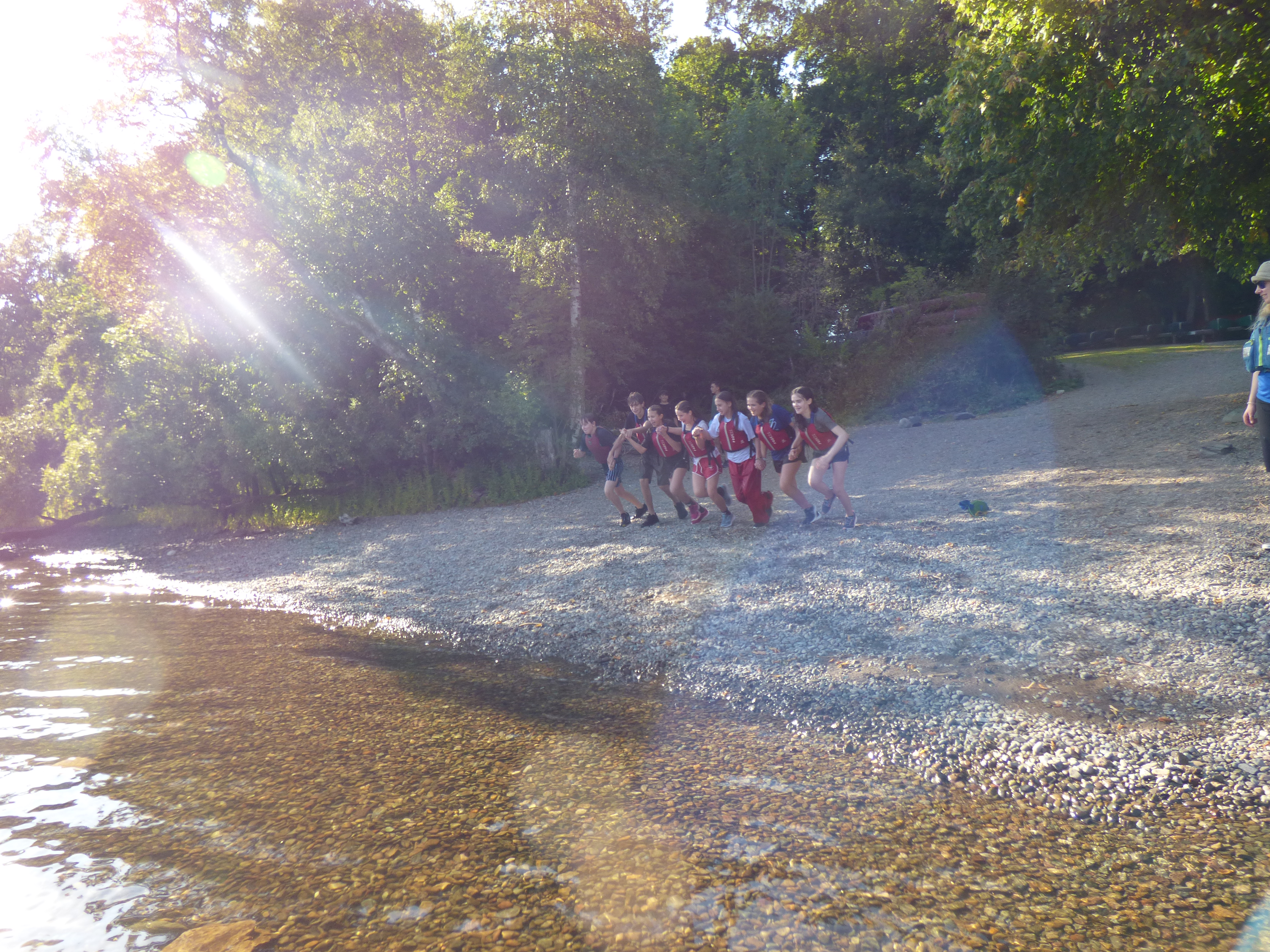
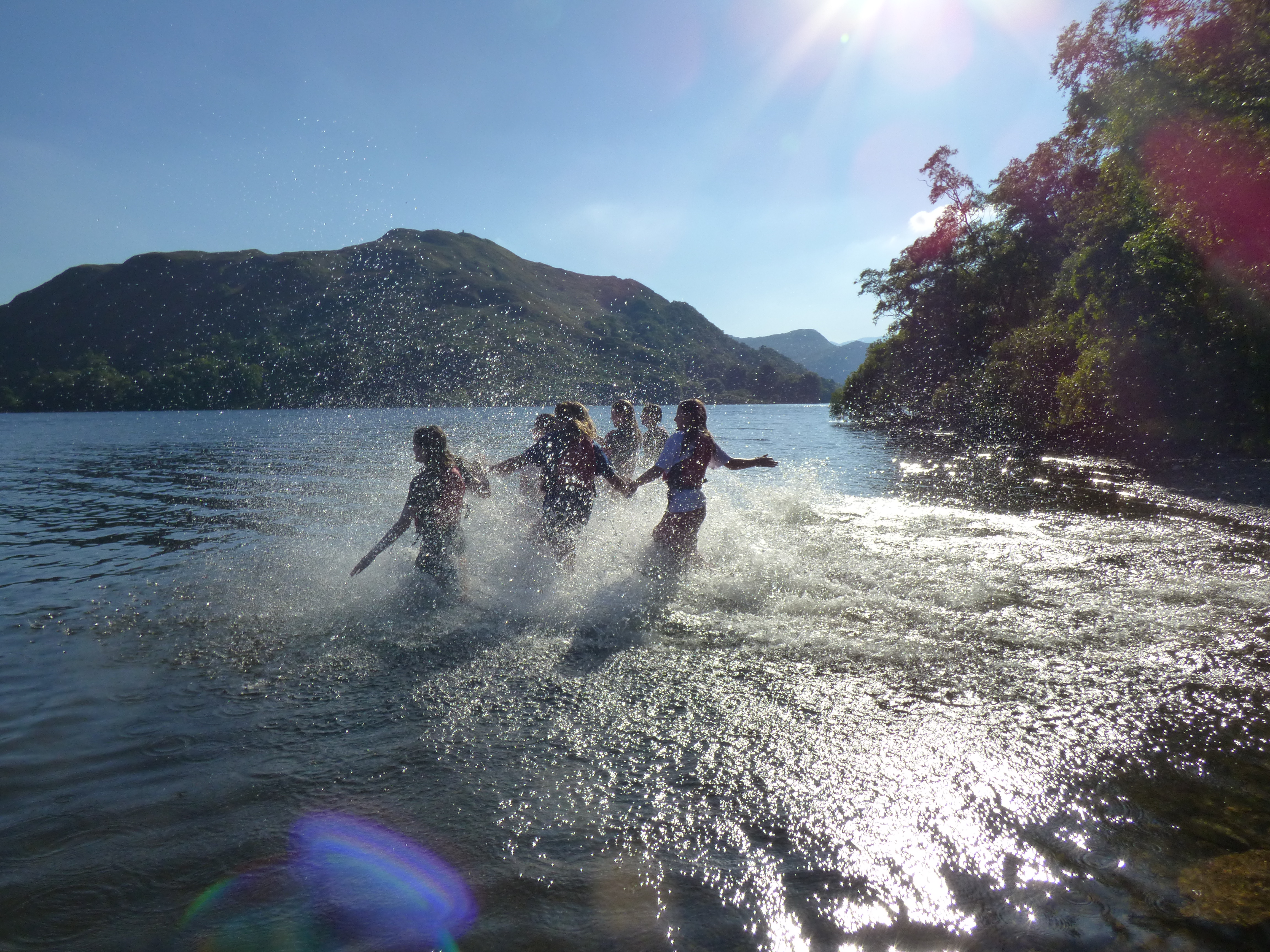
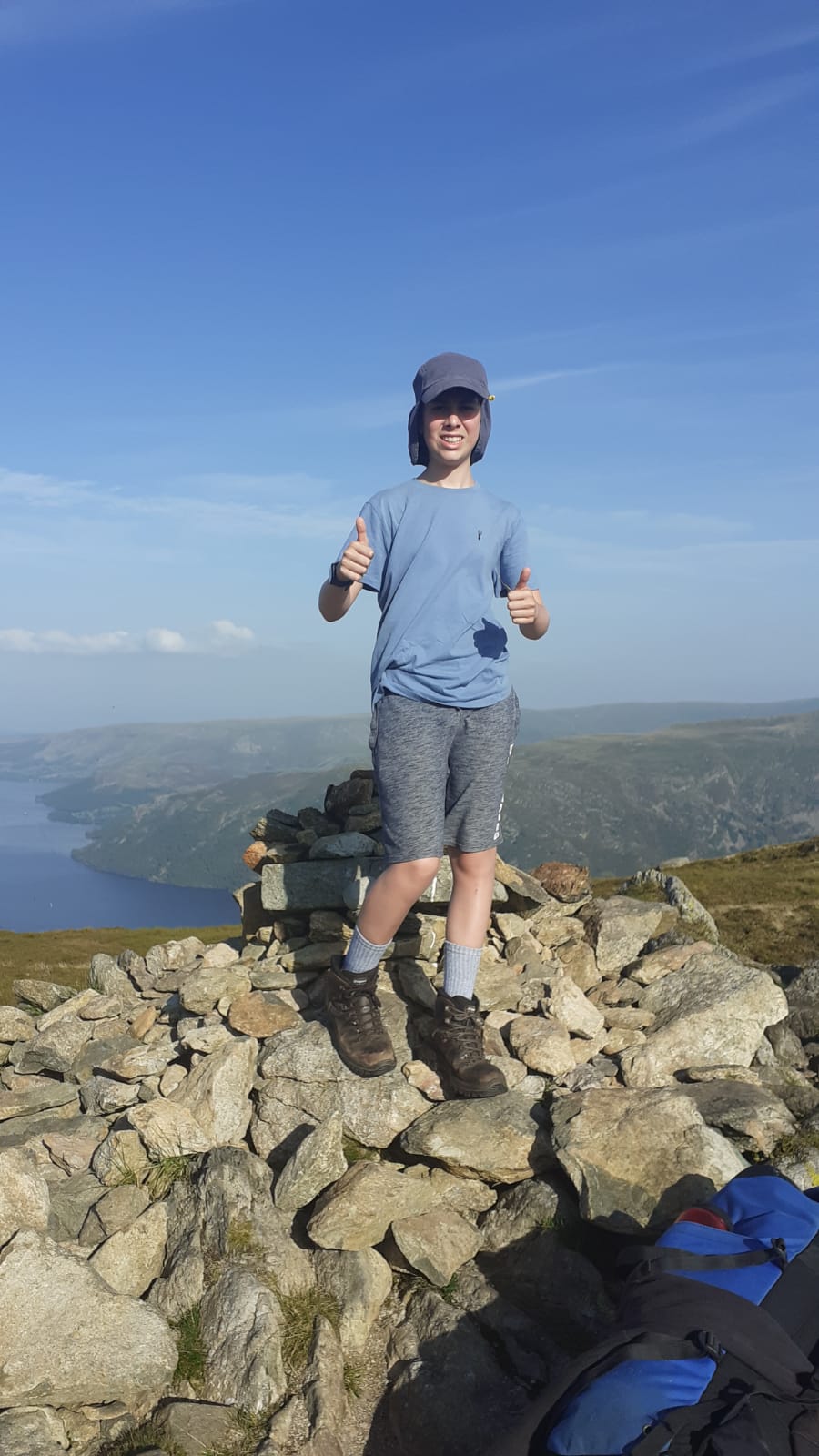
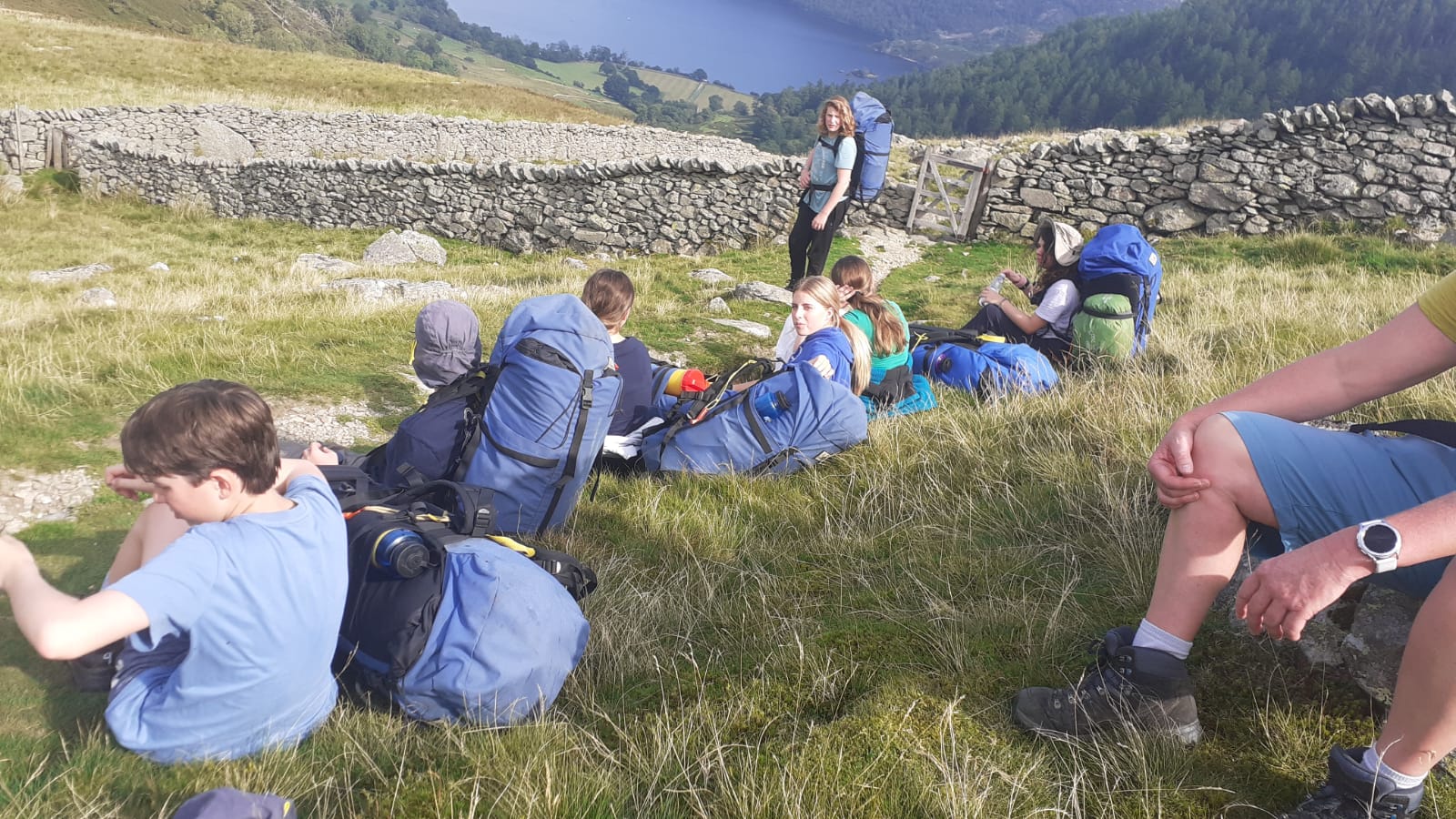
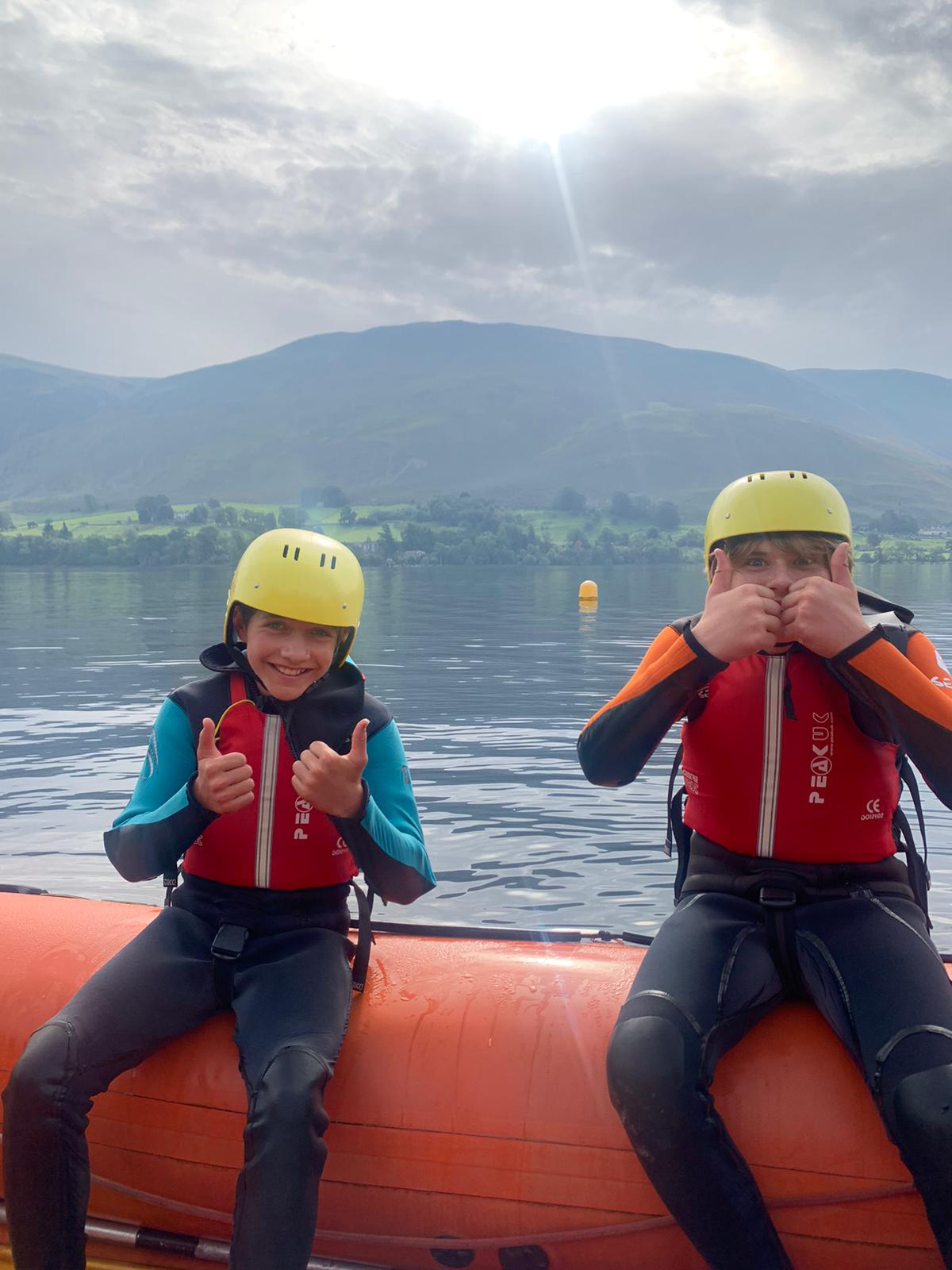
As well as trying their hand at activities such as gorge scrambling, rock climbing, abseiling, hiking, canoeing, kayaking and rowing, students completed a two-day expedition in the Lake District, before returning to Bedales on Friday afternoon.
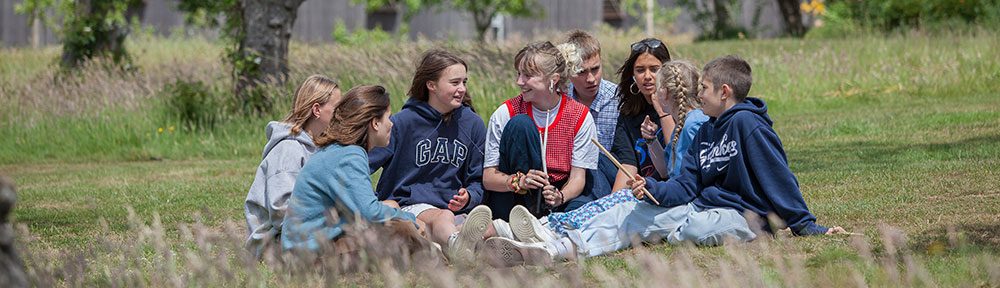
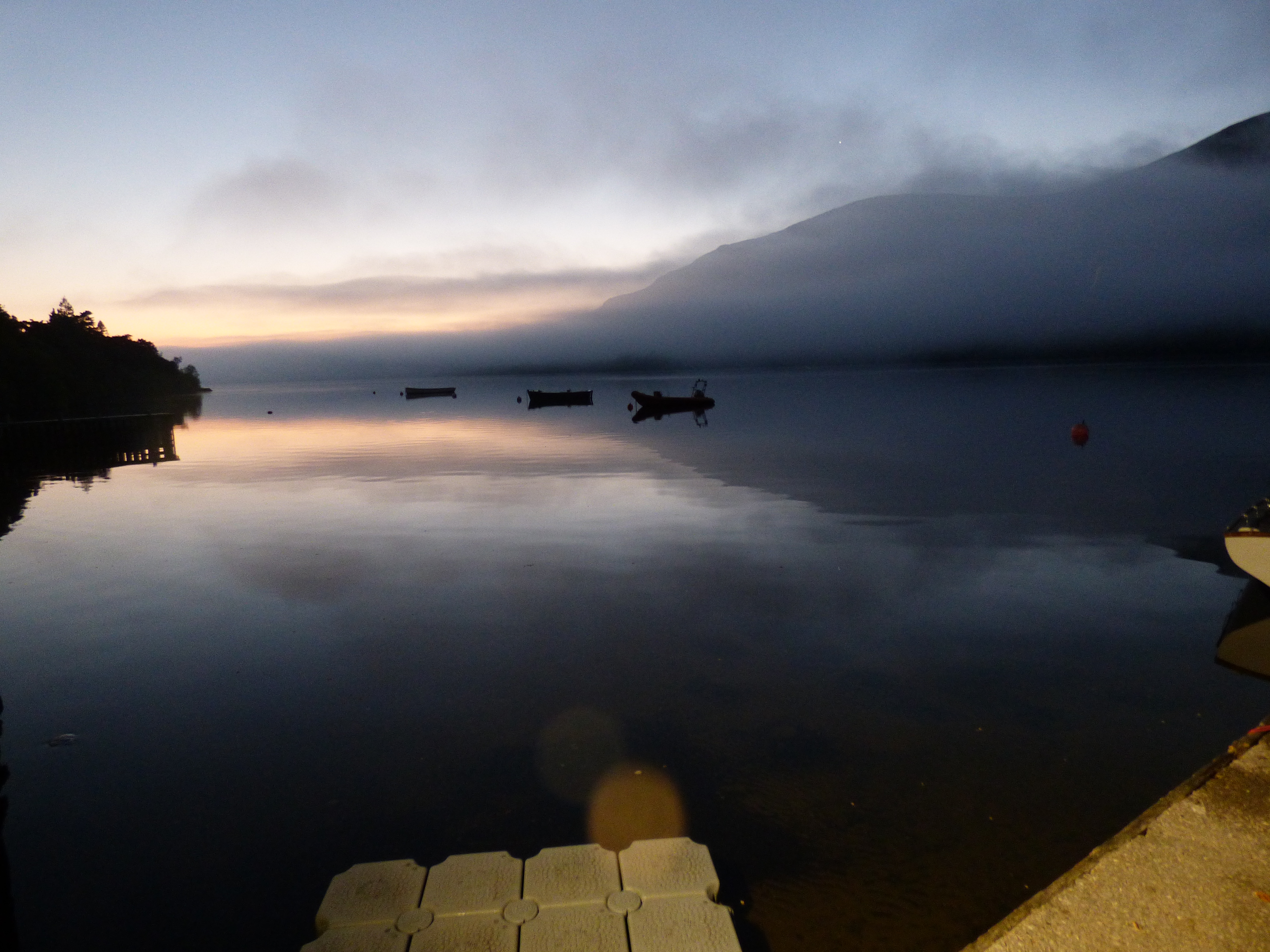
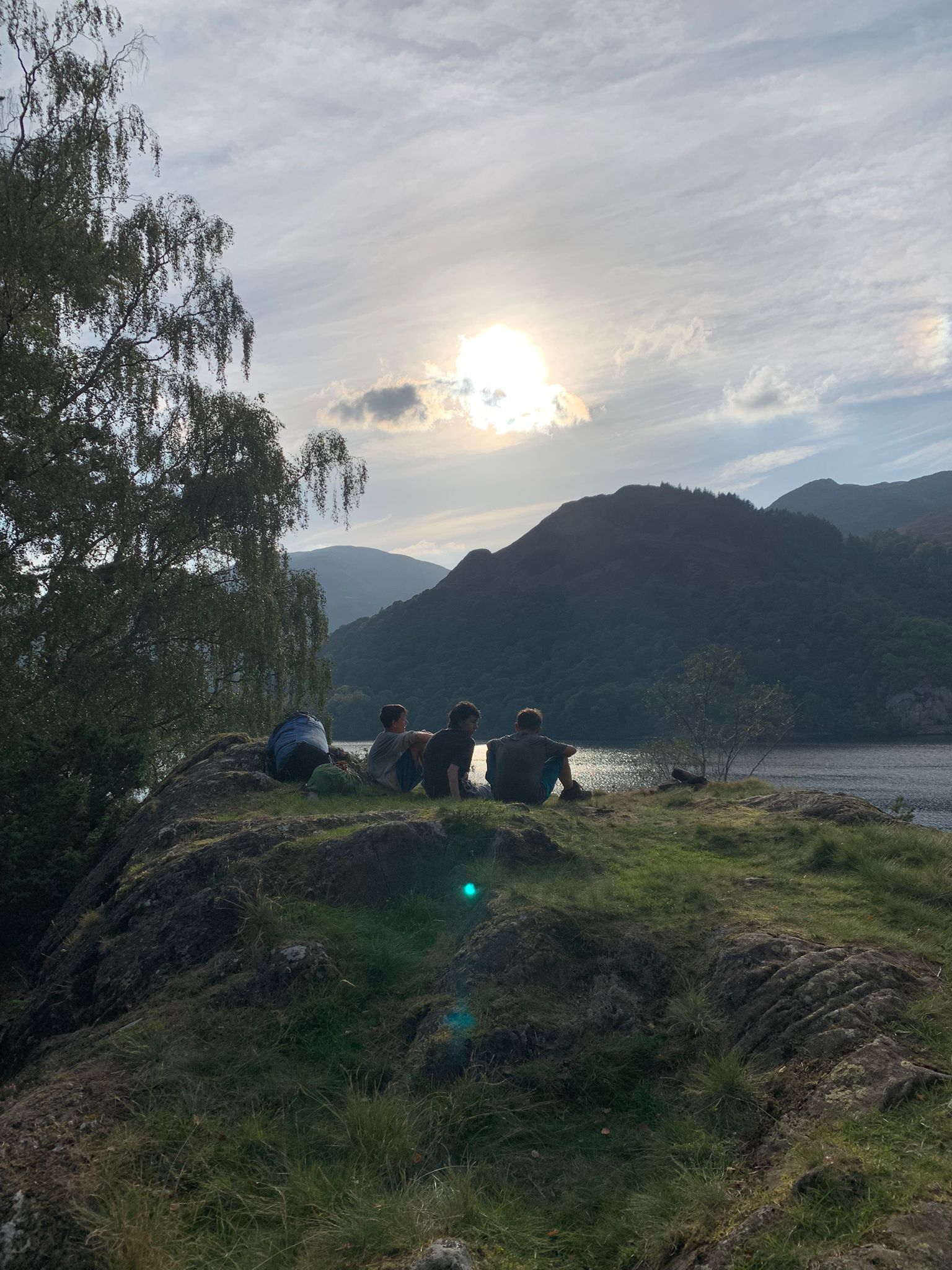
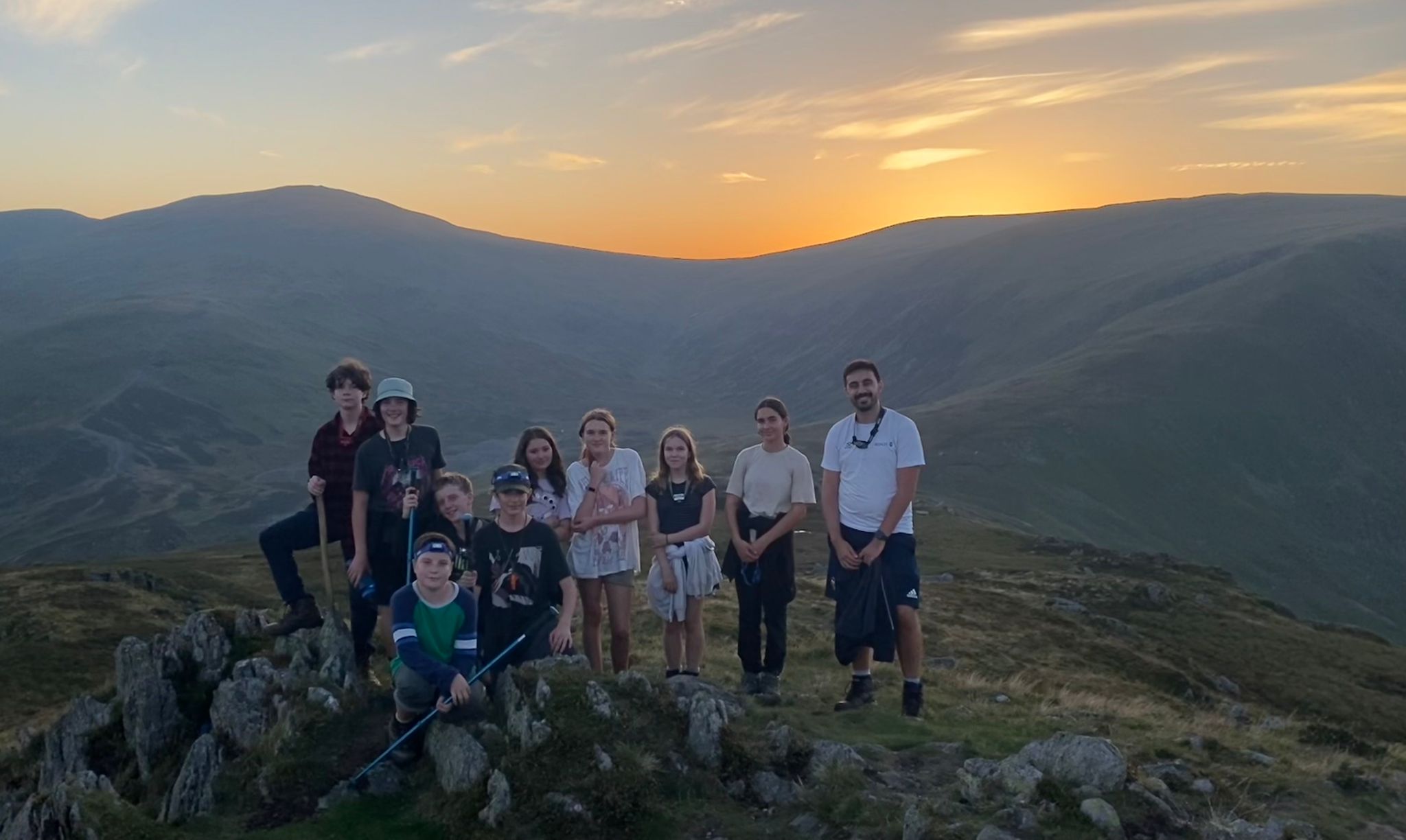
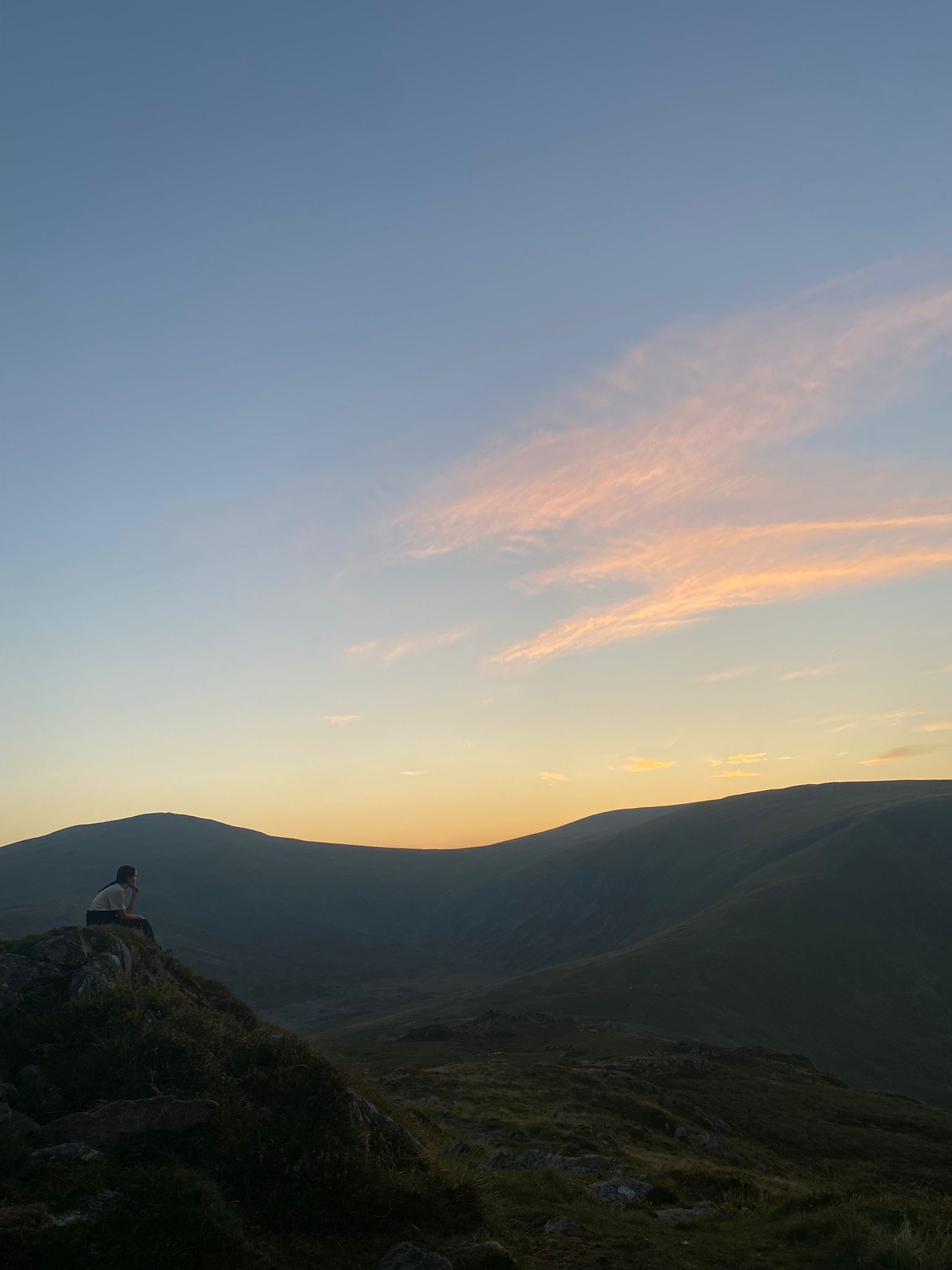
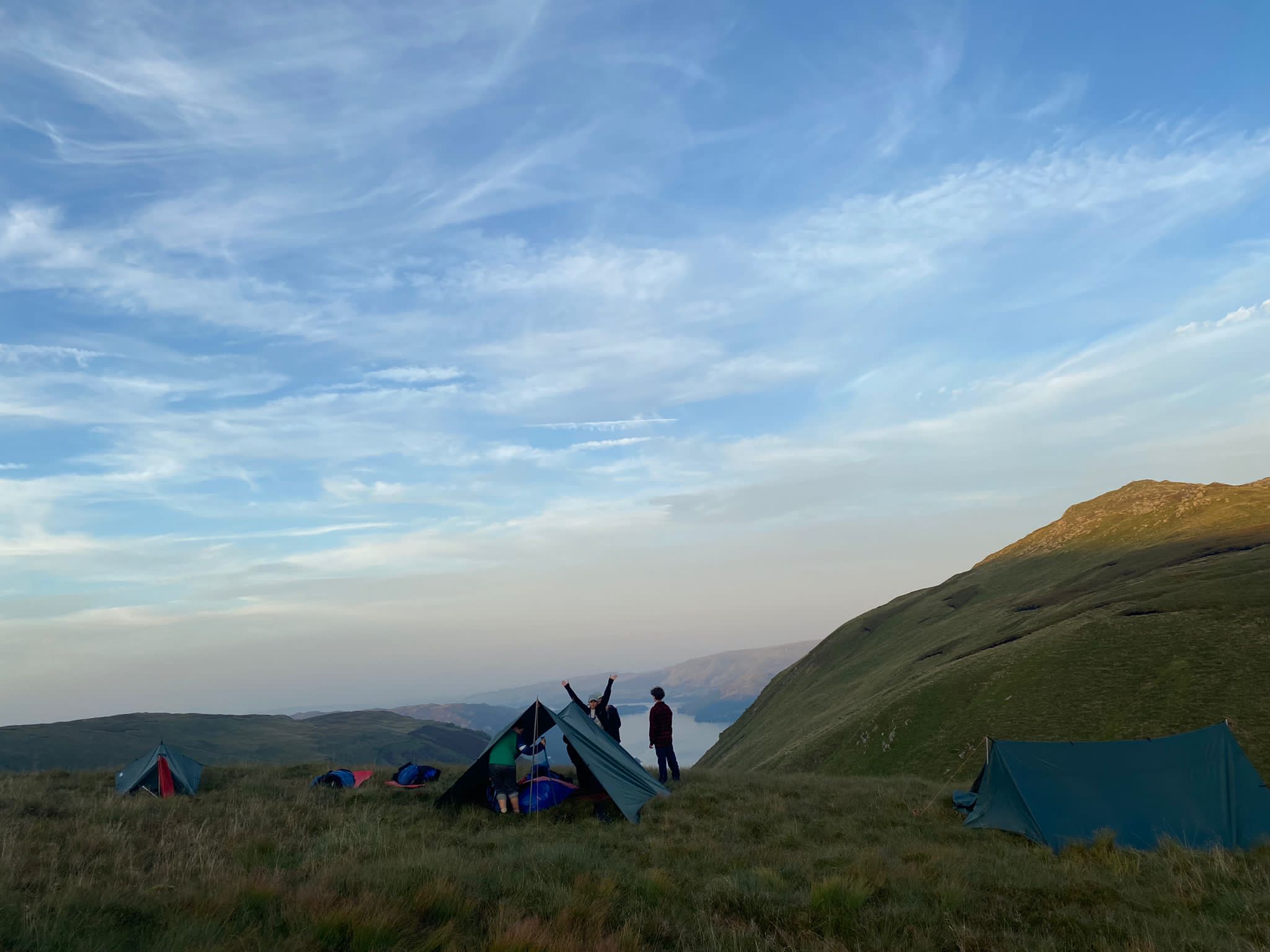
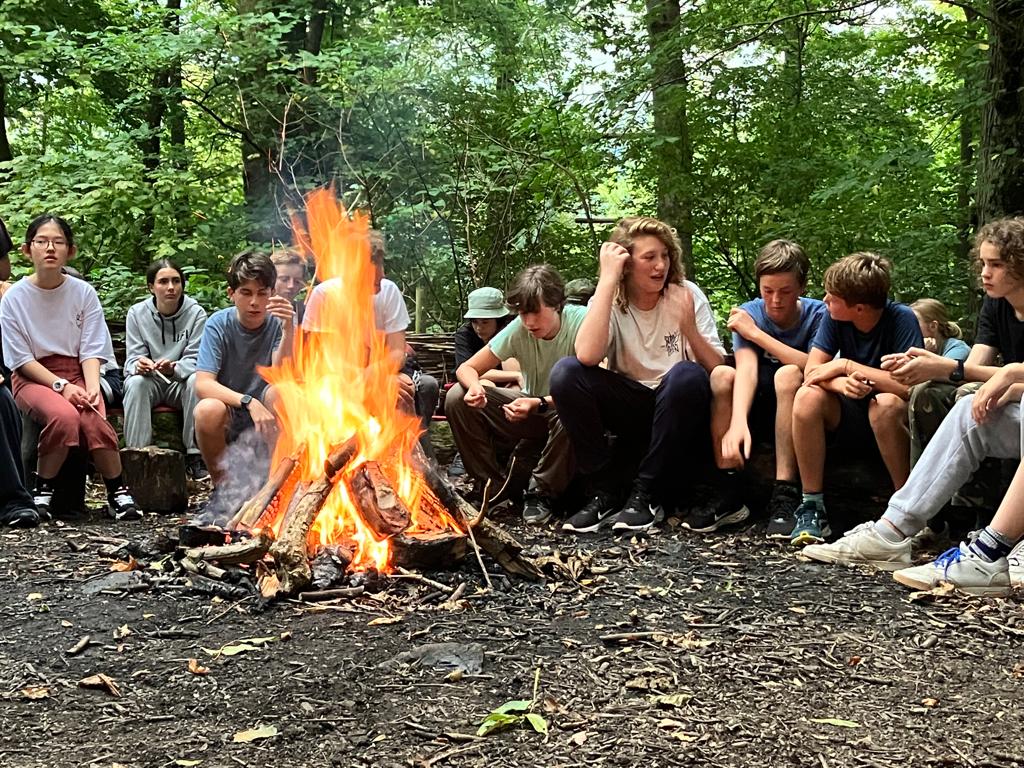
On Wednesday evening students climbed a mountain peak to reach their wild campsite in the Ullswater valley (pictured above). See more photos from the Ullswater trip below:
By Clare Jarmy, Assistant Head (Learning & Development)
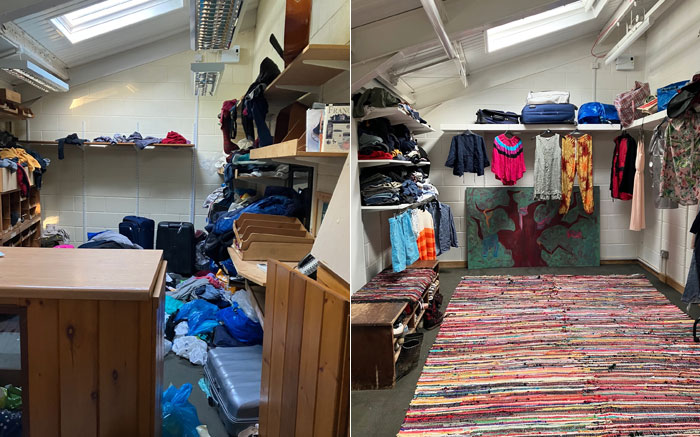
When, in September, we walked into what had been the Swap Shop (pictured on the left), I think all our hearts sank. It was a total mess. The shop had closed suddenly at the beginning of the first COVID lockdown, and it was our job to resurrect it.
Understandably, it had become a place where lots of lost property had been put, and amongst donations of clothes, other stuff had crept in: school books; stationery; lost DofE equipment; towels; broken electronics; suitcases. All the ephemerata of boarding life!
Everyone in Block 3 has worked on this project and on Parents’ Day, we were able to welcome our first visitors to the transformed shop (pictured above, on the right). The Free Shop will continue to run next year, and will be a good opportunity for those doing community service at Bedales. Student volunteers and donations always welcome!
Phoebe Cake: When we started the project, the Free Shop was known as the Swap Shop and it was originally intended for clothing swapping, trading, and possibly buying. We got into the shop and continued cleaning the insides and sorting clothing, and halfway through this process we decided that the shop should be called the Free Shop. We were inspired by hearing of another shop that was coming from a place of generosity and giving rather than swapping. But how do we keep up inventory? We are hoping for donations – but this is only possible with help from the community.
Henry Driver and Noah Huston: Our contribution to the Free Shop was primarily communicating with the Design team, and painting and putting up the shelves. We started off the term by deciding what shelves we were going to be using by collaborating with students from the other group. Then we helped paint the shelves, put up the shelves, and organise the hangers. Design Technician Emile Gailly was a key part of the project. From creating the shelves to helping put them up and re-upholstering furniture for the store, Emile was a needed cog in our very rusty machine. But through all of the ups and downs of the project we came out with a workable shop that would be able provide clothes for the people who needed it.
Olly Westwood and Guy Cumming: This term in the Free Shop, we have been assembling the shelves in preparation to open in time for Parents’ Day; thanks to Design Technician Emile for helping us put them up in his free time. We fully repainted the shelves, and arranged for the walls to be repainted, too, to give the shop a fresh look.
Aidan Casey: I helped the Free Shop by emailing a member of staff to ask how much funding we would have access to so we could plan what we would do with our first problem – the carpet. As the carpet was stained, we spoke to Facilities who suggested two solutions: clean the carpet to see if that would get rid of the stains, or buy a whole new carpet. We later decide that as it was over our budget to buy a new carpet, we would clean it, and were glad to find that after cleaning the stain was gone.
Tommy Hornsby: I worked with others to talk to Facilities about cleaning the carpet. They did such a great job once it was done, as at the start the carpet had many stains. After the preparations, in the last week we got the clothes into the shop and organised ready for the opening on Parents’ Day.
Paige Winstone: We created an ethical order form to establish whether any items we needed to purchase for the shop were ethical or not. In our form we questioned the ethics of the product so that if we did buy something, we would be able to make sure that the product fit with the Free Shop’s ethics. We had questions like ‘where was it made?’ and ‘who made it?’ We wanted to make sure that we got something that didn’t harm the environment, people, or animals. We couldn’t replace the carpet that was already there, so we decided to buy a rug and put it over top of it. Clare and I started looking for an ethically produced rug. We found one which, although it was from India, it was ethically made by women who were treated well with a good pay. It was also made from old scraps of fabric. It was reasonably priced, so we bought it with some of the £650 funding we received from the Bedales Parents’ Association (BPA). Now it looks great in the Free Shop and brings a lovely pop of colour to the room.
Jack Laing and Iris Oliver: Throughout the renovation of the Free Shop we painted and put up shelves, cleaned the carpet, bought a new ethical rug, organised clothes and accessories, collected, cleaned and fixed clothes rails, fixed and renovated a shoe bench, and much more. We worked together using our Projects lessons and extra time (a special shoutout to Arthur Searby for his hard work in Badley Times!) along with Clare Jarmy, Matt Meyer and Mungo Winkley, Emile Gailly and the Facilities team to put it all together.
Jamie Bolton: I helped re-upholster the leather shoe bench, where we had to ask Emile Gailly, Design Tutor Technician, for materials and tools to modernise the bench, but also keep its history there.
Platon Lesnevskiy: I helped put up all the shelves up and spoke to Facilities to arrange for the carpet to be cleaned. We carried clothing donations from Boys’ Flat to the Free Shop, sorted the clothes and shelved them ready for Parents’ Day.
Aidan Casey: The final job was moving the donated clothing back to the Free Shop from Boys’ Flat and sort them, ready to go onto the shelves. This did take a bit longer than expected as a lot of the stuff was mixed up and we had to find pairing shoes!
Harry Burnell-Nugent: Working on the Free Shop made me think about the bigger picture of the world and the immense importance of today’s issues. Fast fashion is real, it is bad for the environment, and it is affecting how the world is run. We need to stop this and shops like this are the way forward.
Leggy Vale: My experience with the free shop was mind opening; I learnt some things I would have never been interested in without this experience. We worked together as a team and had some great times. I have got to know many people and have seen what life is like without the true privilege many people at our school experience.
This year, Bedales parent Don Amstad kindly inaugurated and funded what will be an annual Bedales Politics & Global Perspectives Essay Prize. In February, students in two categories – Blocks and Sixth Form – were invited to write a 1,500 word essay with the title ‘If I was Prime Minister for a day…’
Read the essays submitted by Blocks students below.
Guy Cumming, Block 3
Dear reader,
The United Kingdom right now is in some parts a critical state, so if I were Prime Minister for the day, I would do many things to try and help not only our country – but also the rest of the UK. We are facing a political and economic crisis, and politics in the commons is slowing actual work down, we need a government that has all of parliament’s confidence.
To tackle this issue, I would first set out a plan to form a political party that consists of previous politicians from the Conservative party, Labour, SNP, Green party, Liberal Democrats etc (like a coalition government). This will ensure that future decisions represent the UK rather than just the ideas of a few politicians that share the same views (not just right-wing or liberal ideology). Political views being constantly exchanged in parliament is not good for any of us.
If we look at the value of our currency (Great British Pound), inflation has risen by approximately 115.35% since 2000 (according to a Consumer Price Index calculator) which is over 40% higher than the U.S dollar. The pound needs a commodity traded like oil (oil is traded with the US dollar) at the London Stock Exchange to keep it stable. The U.S may have taken over as the dominant currency since the end of the war, but with China (the largest importer of oil globally) now buying oil from Saudi Arabia in Chinese Yuan, the UK has a chance to join the race to be a major competitor of global trade as it seems trade is now less central.
Right now, we have a big problem with immigration, thousands cross the channel each year costing us billions of pounds. Immigration across the channel also costs thousands of lives when people should be able to seek safe refuge. Deportation to Rwanda was a huge mistake by the Conservatives, it uses a lot of taxpayer’s money inefficiently and in my opinion isn’t morally right. Really, we need a deal with the EU to return immigrants if it is safe to do so and if they are refugees then they should be given aid across Europe – not sent away.
Strikes from unions are creating delays and chaos for some people’s daily lives, so we need to make a fair deal with the Unions that are both fair for the workers and possible for the government and for companies to fund. This deal will secure fair pay and allow people to have access to a fully functional rail service and the NHS. It will increase numbers of staff in essential services and help level-up salaries.
Also, we need to stop UK based companies from exploiting tax loopholes by registering overseas – so that all these ideas can be funded for, as the last thing we want is a pile of national debt. This will also include putting limits on how much electricity can be sold for to prevent our privatised energy companies bankrupting households. Construction developers will also be taxed to fund local communities and upgrade old roads near new large developments, this should create a massive improvement of infrastructure.
Furthermore, I would decrease corporation tax for the least valuable companies to 15% to increase economic growth and retain the rate of 25% for the better off companies. This should make new startups more profitable allowing them to have lower prices, meaning more purchases will be made with startups making the public pay less for some goods. This chain effect of course will not apply to customers who stay loyal to more valuable big brands.
Our GDP is – 0.6% (the lowest in the G7 according to parliament), we need growth in our economy now.
To boost the UK economy, I would create a new trade deal with the economic centre of the world – the US. The North of England and Scotland would benefit from this because they are currently a large exporter of high-quality meats, therefore it is vital we get a deal with low export and import tax. Whereas in southern England companies in the tech industry and digital trade would benefit from this too. One of five exports from the Midlands go to the US – that’s 20% of trade so we must take advantage of that with a new deal. We also need to get the deal with the EU finished because right now we are facing unsustainable trade costs and issues.
Adding on to trade deals, the UK economy has great potential in the sector of green energy, so we need to take the lead in sustainable energies globally. Right now, the UK is investing in research and development of high-tech nuclear fusion experiments, but that is not enough if we are to go net carbon-neutral by 2050. We need to understand the full potential of green fuels such as hydrogen; hydrogen can tackle our problem of electric vehicle charging times and lack of infrastructure. Solar energy is clearly not the most efficient energy source for our British Isles, which is why it is important new methods are noted. One way in which we can become the leading nation for green energy globally is by becoming a home to manufacturing of electric and hydrogen vehicles. This will provide new well-paying jobs and will make the purchase of new vehicles lower due to the absence of import tax, however our government will still gain the advantage of tax collecting from vehicles being exported to foreign countries.
Also on the topic of the environment, we need to start inviting leaders from world leading companies to COP meetings if we are to get anywhere. The governments around the world can’t solve the climate crisis alone, they need the help from the companies that effect it. And the ones that make the real deals in the trade world – the companies that effect our lives more than any government can. We need to convince companies that they benefit from going green too, otherwise they won’t agree to our proposals; green energy must still be profitable enough for them. The last thing we want is green technology collapsing global economies, we need to make it a swift transition for corporations.
We should feel safe when moving around our country, and that’s why I think that tackling crime should be on our high-priority list. Countless stories of crime have been from young offenders in recent years, so we need to make sure every generation has access to safe education to avoid going down the route of crime. We also need to crack down on the illegal weapons that are being imported without detection and make more weapons that could be used offensively illegal. We know the impact that guns have around the world, but we have overlooked the problem of knife crime in the UK for decades.
NATO and the world have let Ukraine down. The organization established after World War Two has failed in its main goal – to end the threat of war from the Russian (previously USSR). So why have we decided not to react just because the victim country was not a member of NATO, we still have a duty regardless of the victim. Infact, we haven’t even invited Ukraine despite being the neighbouring country of Russia. Had this deal been made, we could have secured peace in our world. Global leaders are letting us all down, and that is why if I was prime minister for the day, I would reform NATO to serve its purpose. NATO must stop corruption of governments worldwide that lead others to war.
On top of that, the UK is not doing enough to help reach the UN’s global goals, nor are our neighbouring countries and that is why we need to encourage ourselves and others to meet those goals. At current rates, 574 million people will still be living in poverty in 2030 (according to the UN foundation) which will be about 7% of the population. We cannot just except the extreme difficulties of others, we need to take action and give aid. The UN’s goals must be prioritized by our nation because believe me they will help us a lot in the long run; the goals will make our planet a much better place.
It is only a matter of time until we will face a climate, economic and political catastrophe. My day as prime minister would be much more than setting out a plan for Britian, it would be about trying to bring the world together, to help others. I do truly believe that our generation can help solve these global and national issues that we are facing today. We need to take the opportunity and leap towards a better future for our country and others.
Thank you for your time,
Guy C.
Arthur Dove, Block 4
If I had the honour of serving as Britain’s prime minister for a day, I would take executive action to establish ‘A National Bank’. This bank would function almost like any other private corporation, in that it would accumulate its funds from people making voluntary deposits and wouldn’t rely heavily on funding from taxation or government borrowing. However, unlike many major private entities, the bank’s sole goal wouldn’t be profit maximisation: in fact, it would consciously forgo the generation of a profit margin, to finance generous interest rates for both depositors and borrowers and make investments in home seekers and small entrepreneurs with little collateral. I believe that this project has the opportunity to correct major economic and geographical disparities in the UK.
It’s vitally important for the economy that banks lend – it’s what greases the wheels of the economic system and helps benefit the most vulnerable in society. A study by Ajay Chhibber found that the amount of credit available to the private sector is one of the most important determinants of how effective economic growth is at reducing poverty. Another by Mathjis van Dijk found that the creation of ‘liquidity’ – money which can be lent out – strongly correlates with the rate of economic growth.
Right now, however, financial institutions lack interest in certain parts of the UK. This is best demonstrated by the fact that throughout the country, there are huge disparities in how businesses are set up and thrive the most. For example, government statistics indicate that London is far and away the most entrepreneurial part of the UK, with 1,452 businesses per 10,000 people. Meanwhile, the North-East of Britain trails the rest of the country substantially in last place, with only 704 businesses per 10,000 people. However, other historically deprived parts of the country, like Wales, Scotland and Northern Ireland massively trail the UK average of 1,014 businesses per 10,000 people. While this could be the result of many different factors – like the number of educated workers available and the quality of local infrastructure – loans by banks are a crucial variable. Without loans, businesses can’t take risks, hire new people, expand, or purchase new assets. The main reason why banks are often unwilling to give out loans to smaller businesses is to do with risk – smaller businesses are less stable, less profitable and their futures are more uncertain. For the sake of safeguarding their own profits, banks refuse to invest in the smaller entrepreneurs, and stick with more established firms.
The idea I am proposing would help bring an end to this dynamic, however. A government-owned bank would invest in businesses and home-seekers, with a focus on deprived parts of the country to actually achieve the task of ‘levelling-up’. Since its primary focus would not be profit-maximisation, not only would the bank willingly invest in these very people, but they would be offered very generous interest rates.
There is real-world evidence that this policy would work to increase peoples’ living conditions and make them better off. Brazil established a system of government run banks which did just this. Studies have found that the investments they made helped create and grow businesses, which in turn raised wages.
However, unlike Brazil’s banks, this one in Britain would not be subsidised significantly by government borrowing or government spending. Instead, it would accumulate its money just like all other banks do – through offering interest rates on savings accounts, in order to attract depositors, whose money is then invested. You could say that it would be much more efficient for the government to simply fund the bank in these ways, so a greater quantity of loans could be made. However, this would put a considerable economic burden on the government, which would divert investment from elsewhere, or lead to higher debt and higher taxes. These, in turn, would harm the economy, and reduce the advantages of the National Bank. When debt exceeds 90% of GDP, the country’s economic growth rate begins to radically decline afterwards. Since Britain’s debt is 85% of GDP, we can’t afford significantly more government spending without damaging the economy. At the same time, the economic harm brought by raising taxes would massively exceed the benefits of the revenue being raised. Adam Michel did a survey of the literature and discovered that this notion is popular among empirical findings; in fact, it is not uncommon for studies to find that the amount of money lost in GDP due to tax hikes is far greater than the amount of government revenue raised (often by a ratio of between 2 and 3).
Besides, the Bank operating like a private business wouldn’t prevent it from successfully accumulating funds. This is because it would be operating on a not-for-profit basis, meaning all surplus money would be spent on reducing borrowers’ interest rates, or increasing depositors’ interest rates. Because of this, it is likely that depositing in the National Bank would be far more profitable than with any other Bank.
Another reason why it would receive plenty of deposits is because it would be government-owned. People tend to have greater faith in the government as a borrower because the risk of default is minimised by the fact it can bail itself out easily with taxation. While it would be preferable that the Bank wouldn’t be supported by the tax money, for the reason described, in times of crisis, the government would have the capacity to bail it out with tax-payers’ funds (as happened with all banks in 2008).
Although the Bank would have a huge opportunity in generating economic growth, especially in deprived areas of the country, like the North of England, some would argue that other policies could do the job better; for example, instead of giving low-interest loans out to businesses, some say, the government could just directly invest money instead in improving infrastructure and public services. This issue is too complex to study in great depth here, but a lot can be remarked of it, nevertheless. Firstly, it is wrong to assume that more government spending will translate into higher economic growth. Economists are aware of the fact that there is a curved-shaped relationship between spending and growth. If spending were zero, then growth would be slow, because the government couldn’t do anything to provide the social infrastructure which we need to grow the economy. So, when spending rises beyond zero, growth should increase. But there comes a point above which additional increases in spending reduce economic growth. This is because more spending incurs higher taxes and higher levels of debt, both of which harm the private sector. So, then, there must be a rate of government spending which maximises growth. One study found that for developed countries, the rate of ‘government final consumption expenditure’ which maximises economic growth is 17.96%. This is actually below the UK’s current level of 22.9%. In other words, the UK could reduce spending and still increase growth.
A popular response to such an argument holds that certain types of government do more to increase economic growth than others, and that the UK could with increasing those kinds of spending, especially if it wants to correct regional economic disparities. For example, infrastructure spending might do more to boost growth than military spending, as roads and bridges are much more useful to businesses and workers than bombs and tanks. To test the popular claim that massive increases in infrastructure spending would help deprived parts of the UK, we can look to Italy’s experience. One of the things Italy is famous for is large geographical economic inequalities; throughout the 20th Century, the South has had a significantly lower per capita income than the North. Far back in the 1950s, the government tried to rectify this by transferring ‘significant resources for infrastructure and business subsidies (slightly less than one percent of Italy’s GDP, on average for four decades)’. The results have been unimpressive, however, as those very inequalities have widened, not declined, since the spending spree began. In 1951, Southern Italy’s per capita GDP was 70% of the North’s; in 2020, it was 55%. If the UK spent a similar amount of money on trying to reduce the divide between the North and the South, we could experience the same lacklustre outcomes.
The National Bank would massively help the UK – it would bring capital to small entrepreneurs who hadn’t been able to get them before. This would bring a huge stimulus to communities across England, but especially ones which have been out of touch with the financial system, like entrepreneurs in the North.
Charlie Clarke, Block 5
Over the course of the last two decades, the conservative party has presided over a plethora of negative developments. Motivated by Brexit, inflation, and COVID-19 backlash; there is an increased urgency for the government to step up and improve. In this essay I will discuss my solutions to what I believe are the most conspicuous and foundational issues the UK is facing. I will address poverty, energy, and climate change. Combat discrimination and the economic/social divide; and develop education, healthcare and individual freedoms and rights, all whilst transforming and advancing the current social institution. This essay serves as my manifesto, If I had Governmental power for one day, I would use it to release this, and show the people of the UK how I would run our country.
To begin, I must first acknowledge that in order for a Prime Minister to pass agendas, their political party must be in cohesion and unity. As seen in the coalition governments of the Weimar republic during the 1920s, a lack of unanimity could strike disaster for a democracy. Preventing such divergence amongst my political party would prove a challenge, due to the individualism and sentiments of members, however, I believe that the strong leadership, communication skills, and capability to compromise and resolve conflicts that I would deliver, would prevent disunity, and create a cohesive, collaborative party to work with.
The current UK economy is in calamity; inflation is at a 40-year high, GDP is violently decreasing, and the pound has plunged more than 15% against the dollar in the last year. To break free from the shackles of an economy with double-digit inflation, I will establish my solutions, that could be put in place to save the economy. The increase in inflation, energy prices, and rise in costs, creates a dual problem of a lack of demand, as lower income houses, simply cannot afford to buy superfluous goods. This causes businesses that sell those goods and services to collapse and close, slowing GDP and mounting inflation. Social disorder spreads, as people struggle to pay for necessities, with lower wages and higher prices. My first short-term solution is to lower corporation tax from 19% to 12.5%, competing with Ireland and Switzerland who both have some of the best economies in the world. Although at first this may seem crippling for the Country, as 9% of the HMRC’s tax returns come from corporation tax, it will turbocharge the economy, sending tax receipts to record highs. the countries with lower corporation tax will attract the best businesses. These businesses will contest for the best staff, paying higher salaries and boosting the amount people earn and spend in the UK. The low taxes will abet smaller businesses to get back on their feet after post Brexit lows, whilst giving the government more money to reinvest. My next solution is to introduce a land value tax for everyone, unless they have a GLAA license, and qualify as a farmer under the UK’s agricultural property regulations. This will generate a massive amount of money with very few bad consequences, and would put pressure on multiple-homeowners to sell their houses at lower prices. For my last solution at re-establishing a post Brexit economy, I will raise wealth taxes, and update the current tax margins for income tax, which have been bent by capitalism’s aim to benefit the top 1% of wealthy individuals, and suppress anyone else. I would put a 1% wealth tax on assets over ten million, this would target the super-rich and raise ten billion pounds from only 0.04% of the population. Next, I would raise the ‘additional rate’ for income tax by 10%, and lower the ‘higher rate’ to 30%. I would add in a ‘further rate’ column that charges those making more than £500,140 65% income tax rate. Finally, taking inspiration from Australia’s Prime Minister, Anthony Albanese, I would fund the HMRC to make it harder for people to avoid these taxes, and easier for people to go through the process of paying them. Implementing these changes will benefit the majority in the UK, and create an economy that serves all the people in it, not just the top 1%.
A shared characteristic amongst the great prime ministers of the UK, is the ability to make a pivotal or monumental decision that has a significant positive impact on the nation’s future, whether It is the abolishment of slave trade in 1807 by William Wilberforce, Clement Atlee’s creation of the National Health Service in 1948 or David Cameron’s legalization of same-sex marriage in 2013, these achievements signify a substantial step towards an equal, compassionate and collaborative society. American activist and author Helen Keller said in her 1903 book ‘the story of my life’, “alone we can do so little; together we can do so much” Drawing inspiration from her words, and the actions of the aforementioned former PM’s, my pivotal decision as prime minister would be to revoke Brexit and strengthen relations between our neighbouring countries, Ireland, France, Norway, Belgium, Germany, and Denmark. Accomplishing this would be an undeniably complex and lengthy process, which would require me to go through a number of steps including, application by submission of a request to the European council, and comprehensive deliberations of economic changes and removal of current agreements; However, in order to have a more united and collaborative society, this would be necessary.
As a student, and a son of a pedagogue I believe that education is the most important thing in a country, it innovates, inspires, and informs the younger generation, allowing personal and individual development of skills and subjects. It creates a productive, democratic society, and a well-educated population that can make beneficial and cerebral decisions. However, the UK’s current system needs to be reformed and improved to suit our modern, progressive society. My first change to the education system would be a substantial increase in funds to the public sector. This would give schools access to more resources, providing students with more modern technology, and educational appliances. It would attract more People to go into teaching careers, because of the higher salaries and better working conditions, and would improve work standard, and productivity amongst students. I believe that an increase in funding would also decrease the high rates of anxiety and mental health issues amongst students, as counsellors and special education teachers would be financially feasible, providing more support staff, and smaller classes. These changes will have a brilliant positive impact on students and, grant them more of an opportunity to develop as individuals and thrive in a better working environment. My next enhancement of schools in the UK is to introduce a mandatory PSHE class, which educates primary school students on our current social institution. This class would instruct kids about being inclusive and equitable, in an understandable way with simple terminology. Students would be taught about the LGBTQIA+ community and to be respectful and inclusive to everyone, no matter their class, race, or gender. This change would incorporate a much-needed level of diversity into the curriculum, and allow students to develop a sense of individuality through perspectives and their own critical thinking. Lastly, I would raise the minimum wage for qualified teachers in primary and secondary education to £30,000 per annum, I believe this would encourage more people to go into teaching careers, and improve standard of life for young teachers in the UK. These changes in education, and the updates to the economy, would slowly bring balance to the economic/ social divide and create a more equal society that combats discrimination instead of encouraging it. In December 1964, Malcom X said in his ‘the ballot or the bullet’ speech, “you cannot legislate good will-that comes through education”; my changes will prove that statement true.
Building on my forecited principle of increasing equality, I would take three steps, to combat discrimination and improve representation of minority groups around the country. Firstly, I would begin work to promote greater diversity and level of inclusion in the workplace, by introducing bias-free hiring processes, and a diverse recruitment strategy. I would create an employee-optional, blind hiring process, that removes a job-candidate’s name and any identifying information about them on a resumé if requested, and have a mandatory training for hiring managers to recognize and avoid all unconscious bias. Next, I would take inspiration from Canadas ‘foundation for change’ strategy and begin much stronger regulation for online content in the country. I would increase the penalties for online hate speech, and begin partnering with social media groups to develop reporting, and create more effective moderation strategies; I would encourage companies to promote equality, and advocate for underrepresented communities on their platform, while increasing age limits on addictive or potentially dangerous sites. Finally, I believe that the advertisement of gambling, alcohol, and pharmaceutical drugs should be constricted, as they are misleading and pose potential risks to individuals and society at large. Implementing these changes would significantly reduce discrimination, and foster greater social cohesion, leading to a more unified and harmonious society.
The current situation for public sector workers is less than ideal. Strikes and stress are rampant, and people are underpaid and overworked. To fix this, I would introduce two strategies. Firstly, I would invest much more money into public sector groups and especially the NHS; to begin providing better equipment and higher salaries. I would also increase the minimum wage for a junior doctor to £35,000 to encourage people to go into medicine careers, and give a better standard of life to those already incorporated. Secondly, I would pull money away from the HS2 project. In 2020, the UK government estimated that this project would take, 102 billion pounds to complete; and with our existing railway organisation under pressure, I deem it disgraceful, and absurd that so much money is to be put into the project rather than our current system. I would delay the HS2 project and divert 60% of the funds into helping our current railway system get back on its feet, and the other 40% into various other sectors, like law enforcement, and local governments. These large investments will help our country recover and return to a stable level.
Recently, our suboptimal former prime minister, Lizz Truss, suggested trickle-down economics, where money and wealth are provided for the top 10% and is expected to ‘Trickle Down’ into the working class. This was fashionable with Thatcher and Reagan in the eighties, and -of course- did not work at all. My suggestion to aid our working class, and those in poverty, is the opposite. I would invest in local communities and introduce benefits for those in poverty and in the working class. I believe that this would feed into the economy, and help those living in worse conditions. Furthermore, I would address the most critical issue we face as a country and as a world, Climate change. Inspired by the Green party, run by Siân Berry, I would introduce three strategies, to save our planet. I would begin by promoting sustainable agriculture, establishing a law that requires every new house built, to be fitted with a heat pump and full insulation. Next, I would massively increase investments into renewable energy, and say that all forms of fossil fuel energy, will have to be removed by 2045, and lastly, I would introduce policies to prevent issues like: Fast fashion, an unhealthy meat industry and the petrol car commerce. Although this would prove a challenge, it is essential for our world that we resolve the issues that we created.
In conclusion, this manifesto introduces how I would run the government, My policies, my views, and my solutions. To reiterate what I began with; there is an increased urgency for the government to step up and improve. This essay shows that I could make, and regulate that improvement, pulling our country out of the slough it is in. Thank you.
Jake Heslop, Block 5
The UK’s political climate is chaotic. Over the last three or four years we have lurched from crisis to crisis, poorly overseen by a bumbling government. Anyone who has lived through the last few years has witnessed the failures of our government first hand. Due to checks on absolute power dating back to the 13th century, it would be impossible to be effective as prime minister in twenty-four hours. The average law in the UK takes up to ninety days to pass , so I will ignore factors that would impede my actions as Prime Minister, such as party support, royal assent, or the logical flow of time itself. Before Big Ben chimes Midnight, I will have implemented radical, ground-breaking improvements to the country.
Contradicting Plato’s “ship of state” analogy, a major factor behind most of my policies will be the will of the people. Therefore, my first act of power will be to remove the House of Lords, an obsolete and antiquated sector of government, and replace it with a People’s Council, with individuals serving in a manner akin to serving jury time. Advising elected government, it will allow ministers to understand the view of the man on the street, as well as providing an essential check on parliamentary power . The House of Lords is an unmeritocratic system. Boris Johnson appointed seventy-nine peers to the house and Liz Truss, in her resignation honours, plans to appoint two Tory donors and her personal aide to the Lords. If I was Prime Minister for the day, this undemocratic system would not last an hour.
In a recent YouGov survey, the most pressing concern for the British people was the state of the economy. Following the slump caused by Tory failures during the pandemic, the economy has limped through the cost-of-living crisis. The IMF forecasts UK GDP growth in 2023 to be -0.3 percent, the lowest out of the G79. To combat this, I would raise income tax for the wealthiest, creating a new tax bracket of 55% for those with a pre-tax net income of over £200,000. I would impose a residency tax on non-doms. At the same time, I would tax remittances, forcing people to think twice before sending substantial amounts of money abroad. For most items, VAT would be reduced, encouraging people to purchase luxuries. However, status symbols such as private jets and high-end cars, would suffer a dramatic rise in VAT. These changes would lead to a boom for British businesses. Due to increased tax revenue, public services would improve with high quality free healthcare, schools, and pensions. I shall not increase corporation tax as I feel that doing so, we run the risk of losing the much-needed jobs created by multinational companies.
To combat the extraordinary profits made by energy companies over the last couple of years, I would nationalise British Gas and other suppliers. This would allow the government to control the prices of these commodities, meaning cheaper energy for all. Cutting back HS2 would provide the £2.8 billion needed to nationalise the top five UK energy providers. My nationalisation would not cease there. Railways, airlines, and postal services would be quick to follow. Because the revenues that these companies haul in will flow into government’s coffers, I will have the capability to raise the budgets of the NHS, chools, and police, allowing public services to rejuvenate following 12 years of Tory austerity. The extra budget would help to reduce hospital waiting times, increase staff wages and boost social care. Despite the neo-liberal perspective rammed down people’s throats, higher taxes are an economic catalyst. Narrowing the rich-poor divide, boosting public services, improving the safety net for those in economic deprivation, raised taxes benefit all. Denmark, frequently described as “the happiest country in the world”, has one the highest income tax rate in Europe, at 56 percent, for the top bracket. This is no mere coincidence.
With funds for public services secured, I turn to the environment. I shall give grants to enable people to put solar panels on their houses and replace boilers with air source heat pumps. I shall make it obligatory for new houses to be fitted with cavity wall insulation, and solar panels. This would allow everyday folk to contribute to the national grid. I shall build windfarms across the northwest of Scotland, the windiest place in the UK. These farms will create thousands of jobs for Britain’s green economy. The state-owned power these farms would generate would be cheaply distributed across the UK, freeing up people’s wallets for restaurants, cinemas, and shops. After a brief period of belt tightening caused by my higher taxes, the rewards will be reaped. I shall increase vehicle registration taxes for petrol and diesel cars, and remove all extra tariffs on electric cars, encouraging people to switch to a more environmentally friendly form of transport. Due to oil companies being nationalised, my government will raise petrol and diesel costs over time, weaning the population off hydrocarbon-based fuel.
Another issue that the British public care about is immigration. Today’s government has proved stunningly incapable at showing even basic levels of empathy towards those entering the UK in search of a better life. Despite the families of many leading members of our government fleeing to the UK from foreign oppression, our government has failed the British people and foreign immigrants alike. Look at the horrors of immigration detention centres, Tory plans to ship immigrants off to Rwanda, or to block refugees from claiming asylum. Policies that break the European Convention on Human rights and that are condemned by the UN must be vilified.
Recent surveys by YouGov2, Oxford University1 and IPSOS3 revealed that the prevailing opinion among UK adults was to maintain immigration levels (42 percent), and to see migration in a positive light. (46 percent). Whilst 40 to 50 percent of respondents had positive views on economic migration, only 19 percent thought well about cross channel migration. My goal as prime minister would be to wean migrants in France of small boat crossings, in favour of the legal routes outlined below. I shall work with French government to crush the people smuggling gangs that sow the seeds for tragedy in the icy waters of the channel. With funding from the UNHCR, and with millions of pounds4 seized from the people smuggling gangs, I shall implement a safe and effective method for ferrying those in need over the sea . The average number making this dangerous crossing daily is 120, meaning that all it would take to process and transport such numbers to the UK would be a couple of ferries and border control posts in Calais. Under my watch, immigrants will be allowed to enter the UK regardless of their circumstances. This would negate illegal crossing attempts. Only when they were in the UK would they be judged on visa eligibility. As the British people favour controlled immigration maintained at present day levels, it makes sense to introduce immigration quotas.
With only limited numbers of visas available annually, I shall prioritise highly skilled people whose knowledge and passion will aid society, those with family connections, or those fleeing persecution. On arrival in the UK, people will report to an immigration centre where their eligibility will be decided. Failing to qualify, they will be offered temporary work or residence visas that would last between 3 months and 2 years, depending on circumstance. Refugees, unable to claim permanent visas, would be most eligible for this scheme .This fair, regulated and empathetic system would consider immigrants’ individual needs.
Due to this safe and legal method for entering the country, there will be no need for people smugglers, silencing the death throes of illegal immigration. Those attempting to cheat the fair and simple system I shall create, will be deported without delay. With such an easy, accessible scheme in place, there will be no excuses for irregular immigration.
A democracy is a precious, and fragile thing. All too often has the concept of free choice been perverted and twisted. As Prime Minister, servant of the people, my priority would be to battle for the people’s need and right to a more representative style of government. Every decision I make, every change I implement, every brisk step I take into the unknowable future, would be constructed around the will and need of the people. I am a believer in direct democracy. In a country built upon pillars of tolerance, freedom and empathy, the people shall dictate the course of the future. It is my role as Prime Minister to carry out their will to the best of my ability, and to defend their rights the last ounce of my strength, ere the breaking of my back. As prime minister, I will not yell “advance”, but simply, “follow me”.
By Allen Shone, Teacher of Physics and DofE Manager
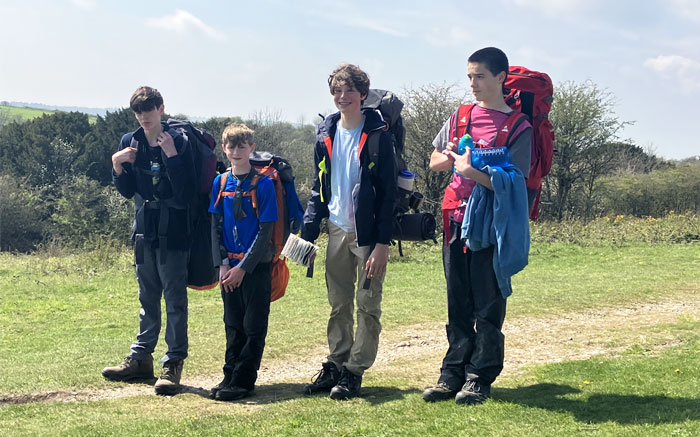
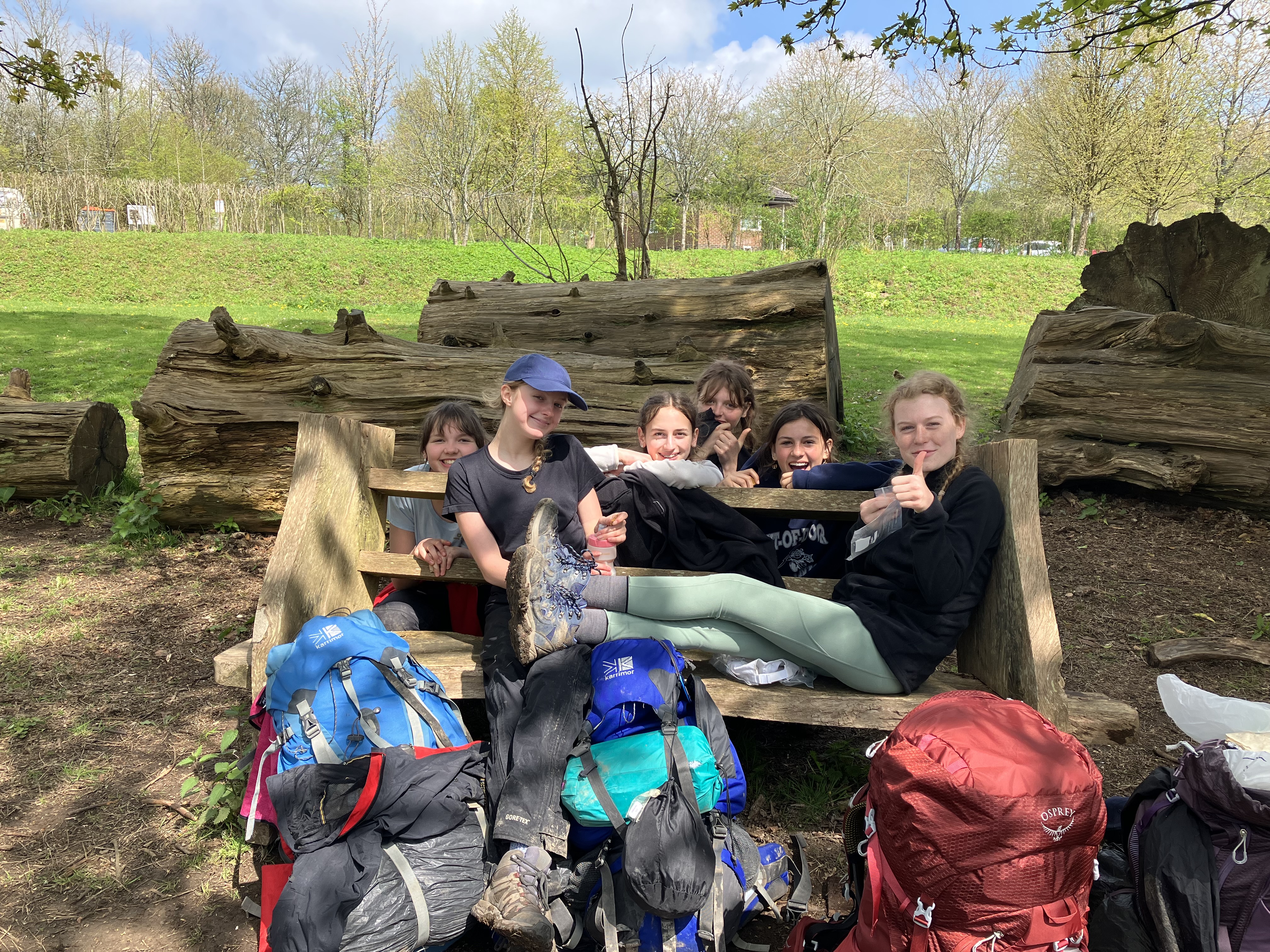
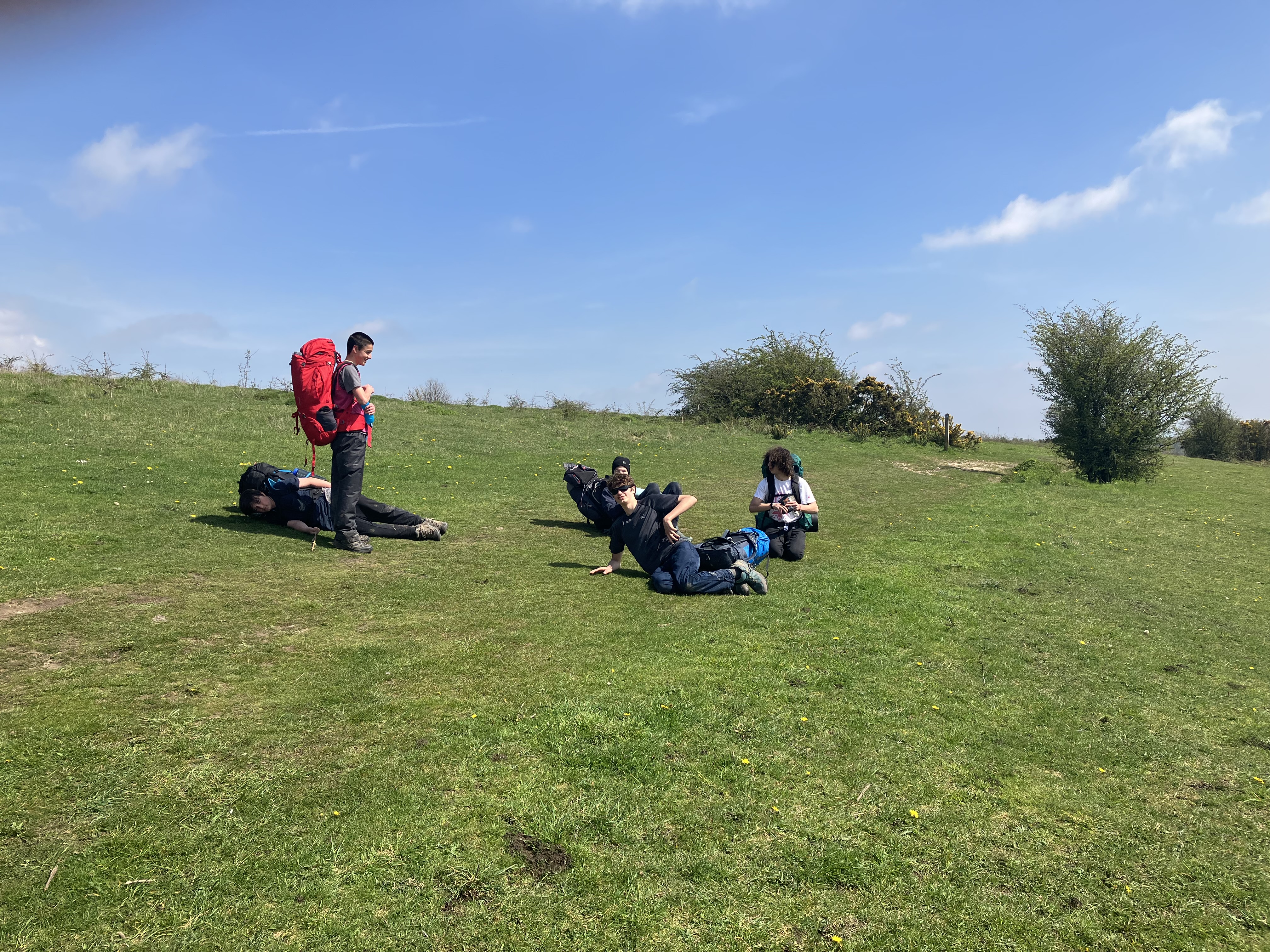
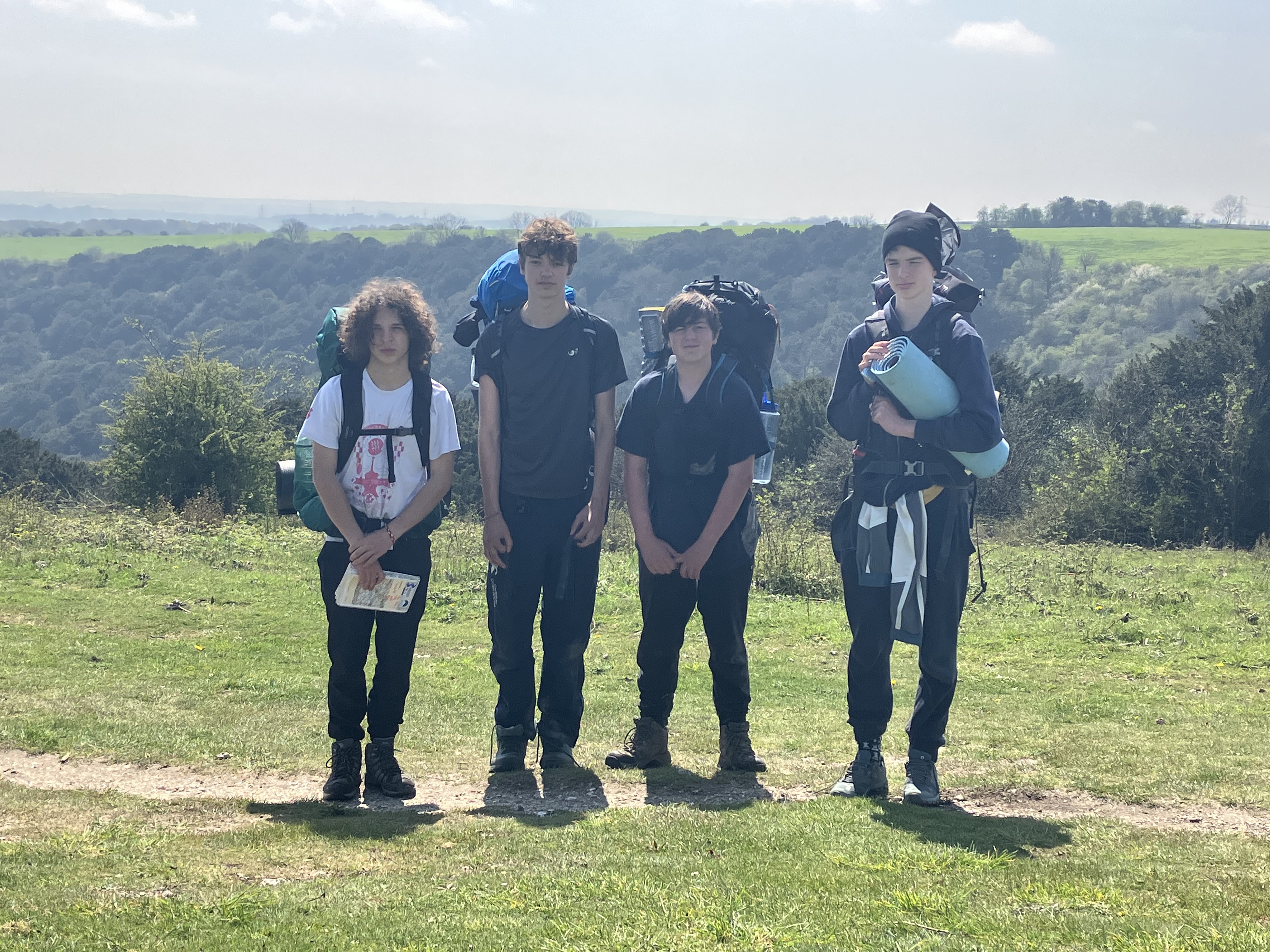
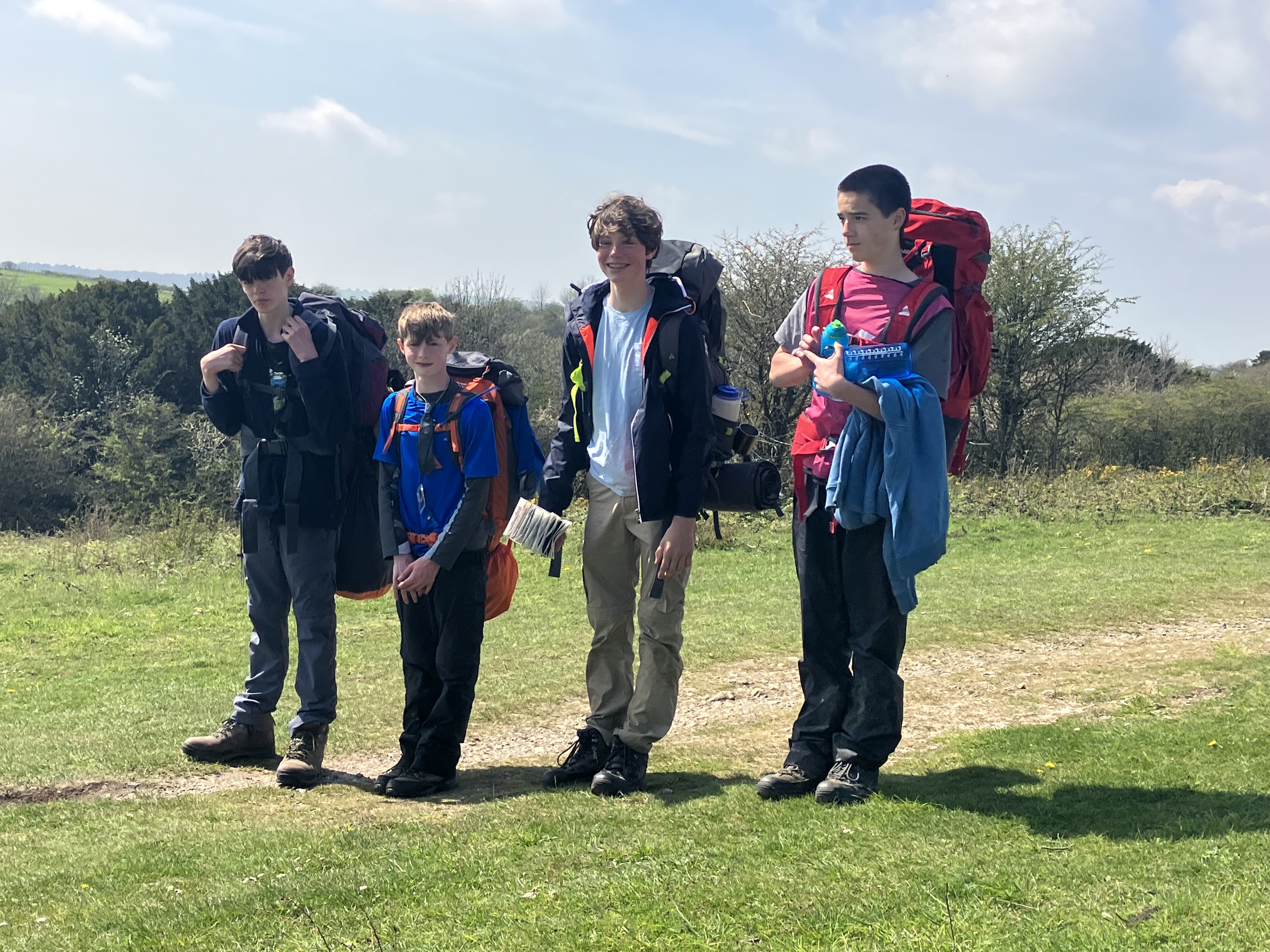
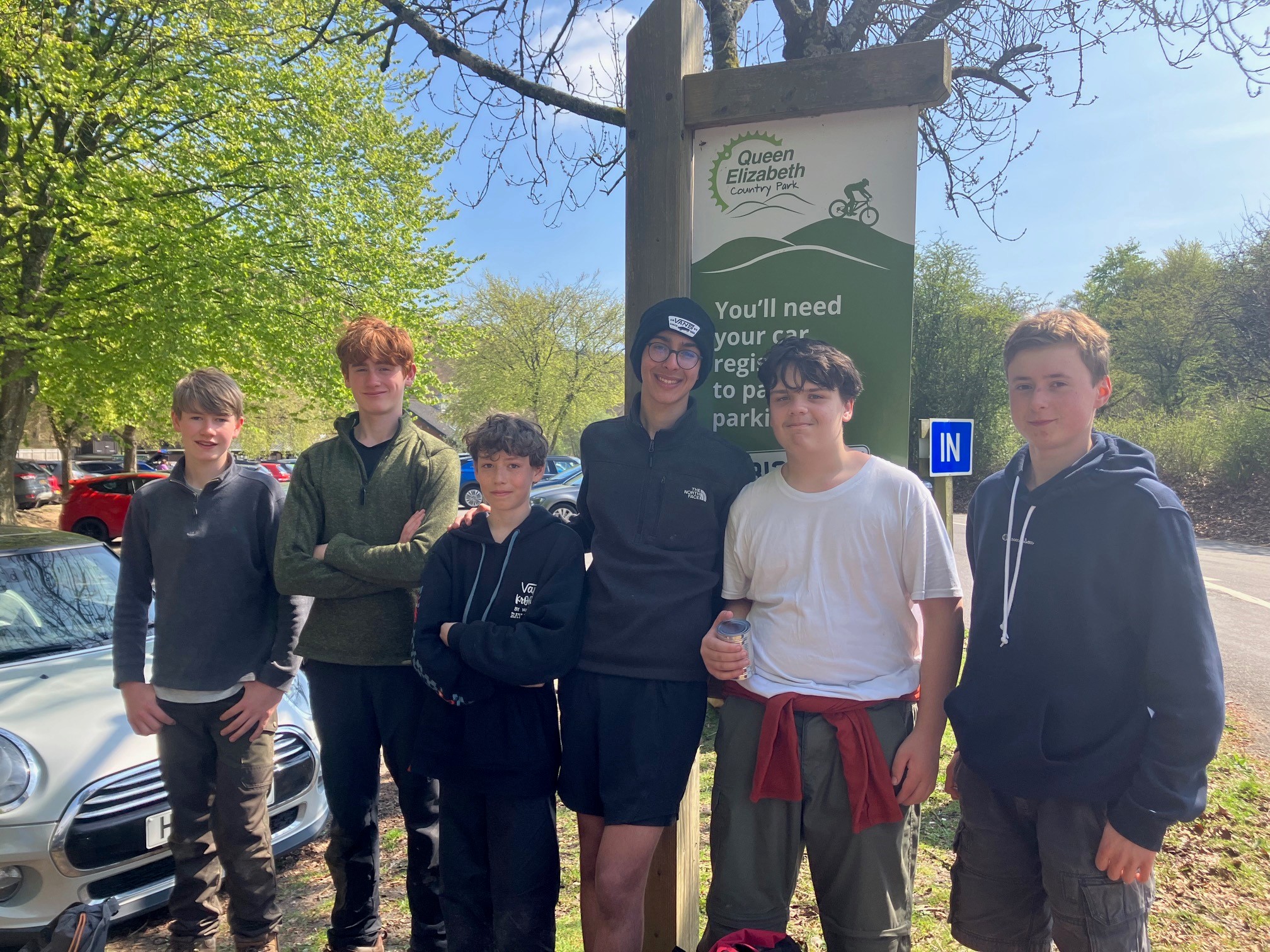
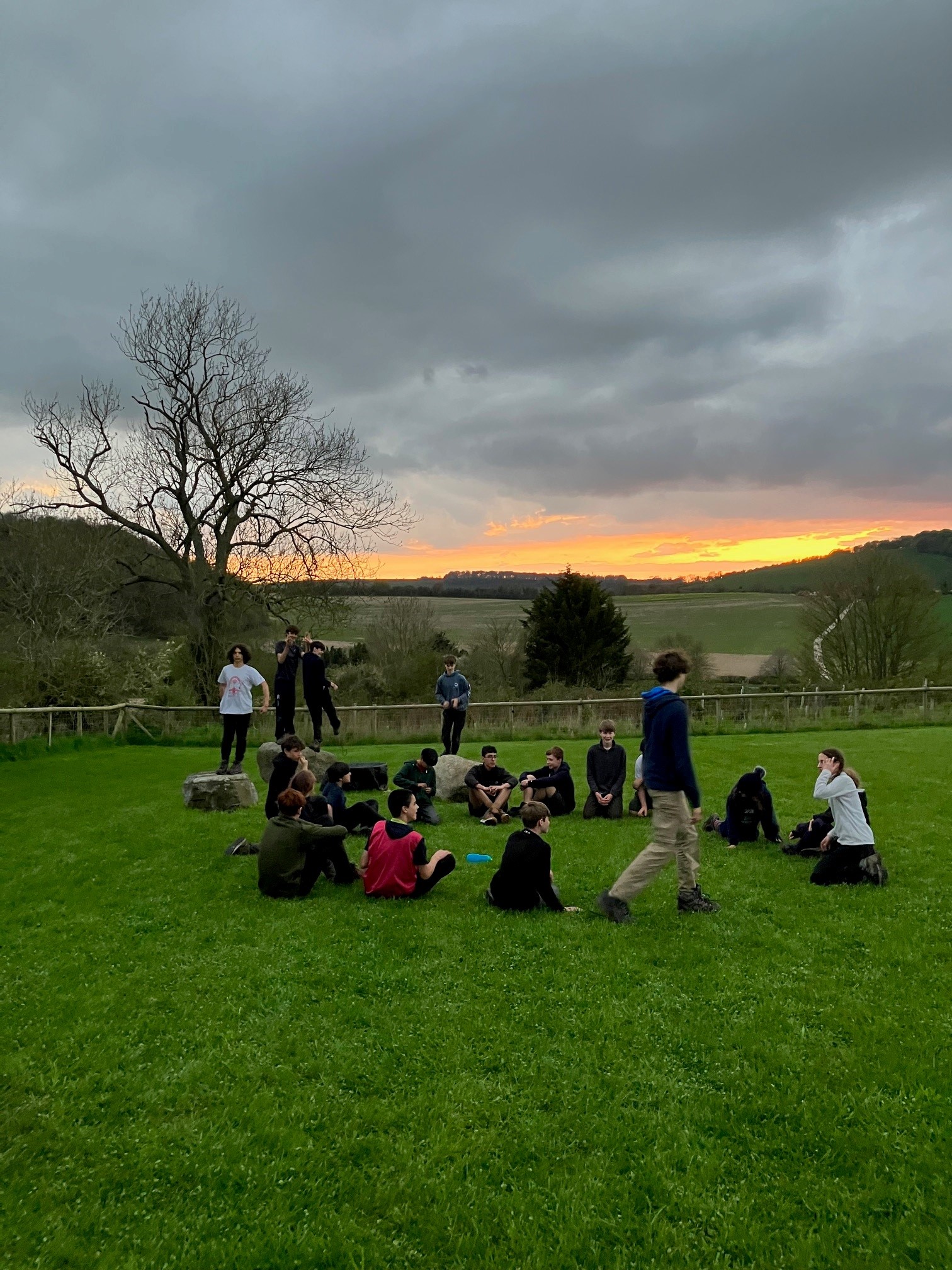
Last Friday, 22 Block 3 students set off from school on their Bronze Duke of Edinburgh (DofE) Qualifying Expedition. Under slightly overcast weather, they worked in groups to walk to Dunscombe Farm, East Meon, where they set up camp for the night.
As students settled into camp they tucked into their evening meal, with food varying from pasta and noodles all the way to fried salmon with gold leaf! Waking up to sunny weather on Saturday morning, the students set off before 9am and arrived at the Sustainability Centre for lunch, finishing at Queen Elizabeth Country Park that afternoon.
See photos from the expedition below:
The DofE adventures continue this weekend as 6.2 students head to Dartmoor for a four-day practice expedition ahead of the qualifying expedition in June.
On Monday 12 December, the Bedales community will once again go to the polls to have their say in the latest Block 3 Projects referendum. This term, the issue on the (digital) ballot paper is climate change, with voters being asked the question: Should the UK government make a legally-binding commitment to reduce greenhouse emissions to net-zero by 2032?
Representatives from both campaigns will be pitching to the voters at whole school assembly in the Quad at 5.30pm on Monday. Voting will open immediately afterwards, from 6pm on Monday and will remain open until 2pm on Tuesday 13 December.
Taking place exactly three years to the day since the last UK General Election, the vote comes at a particularly important and relevant time – both domestically and globally – in the context of this debate. Just this week, the UK government approved plans for the UK’s first new coal mine for 30 years. Internationally, last month saw the much-hyped COP27 summit take place in Egypt, with governments from across the world keen to show they are making progress on tackling Climate Change; however, COP27 convened against the backdrop of a new global poll that found that concern about climate change is actually shrinking, with fewer than half of those questioned believing it poses a ‘very serious threat’. Here in the UK, however, voters seem to want more action on the environment from their government, with 63% of those surveyed in November saying that the government is not doing enough to tackle climate change.
Our two campaign teams have been working hard – allocating campaign jobs, researching their arguments, and planning their strategy to win over the voters. We challenged representatives from each campaign to put forward their argument to the Saturday Bulletin readers in less than 300 words!
The ‘No to 32’ campaign By Flora Meyrick, Block 3
The ‘No to 32’ campaign believes that the date specified in the referendum question itself is too restrictive.
Given that much of our economy relies heavily on non-electric vehicles and carbon exports, if we truly wish to become net-zero we should set a more realistic date that is actually achievable, such as 2050, rather than setting – and missing – yet another deadline that we cannot possibly hope to reach.
The UK government has already made a legal commitment to bring all greenhouse gas emissions to net zero by 2050. Our priority should be ensuring that this existing target is actually met, rather than setting a new one that will not be.
If we wish to succeed in finding a way to reach net-zero, we also need to find better alternatives to provide energy for our nation. For many, the answer is nuclear; however, nuclear radiation can cause lung cancer as people may inhale radiation particles. We believe that the future lies in hydropower.
Hydropower is the cheapest form of renewable energy, and the most obvious choice for an island nation. The government should invest heavily in making progress in this area in order to reach its 2050 target.
Clearly, 2032 – now just a decade away – is too soon to get our country to net-zero in any kind of practical or affordable way. However, finding a renewable source to slowly make the switch from carbon to hydropower by 2050 is the sensible, affordable and achievable route to making the UK net-zero.
Vote ‘No to 32’ to help our country.
The ‘Zero Now’ campaign By Emily Cullen and Lily Maughan, Block 3
The ‘Zero-Now’ campaign believes that unless we start reducing greenhouse emissions immediately, then climate change – with all its damaging effects – will be irreversible. The UK government should make a legally-binding commitment to become a net-zero nation by 2032. The earlier we start, the more time we have left.
10 years may seem too soon, but the UK needs to set an example. It was the first country in the world to create a legally-binding national commitment to cut greenhouse gas emissions via the Climate Change Act of 2008. This gives us a powerful voice and influence with the rest of the world. A reduction in greenhouse gases simply must happen very soon, and a legally-binding agreement commits both government and businesses to this aim, which makes progress much more likely.
Some key policies to reach this target include:
Funding more electric vehicle charging stations, and converting them to be sustainably powered (e.g. solar panelled)
Identifying, prioritising and adapting government investments in infrastructure and innovating technology to address climate change risks effectively
Assist businesses and large emitters in transitioning to being carbon neutral
Financial incentives for improved water and wastewater management
Construction of new sustainable power stations around the UK, made by carbon neutral companies
These are some of the many ways we can reach net-zero by 2032. Achieving net-zero urgently is vital, as it’s the best way we can tackle climate change and reduce global warming. What we do in the next decade to limit emissions will be critical to our future, and currently our target of 2050 is too far off. If we want future generations to thrive then we must act now.
For the last eight months a team of approximately 20 students from Block 3 to 6.1 have been building and electric race car in the Design workshop. We have been doing this with the aim of competing in the national Greenpower competition. It would not have been possible to even start this undertaking without the very generous granting of funds by the Bedales Parents’ Association (BPA) nearly a year ago.
The Greenpower Educational Trust organise this annual competition each year with the aim of engaging young people about science and engineering by challenging them to design, build and race an electric race car which the students drive themselves.
It was with great excitement, and trepidation, that 12 students from Block 3, Block 5 and 6.1 accompanied by three staff entered our first ever event last Sunday (8 May) at one of the spiritual homes of motorsport in the UK – the glorious Goodwood Motor Circuit. It was a fantastic day in which we experienced the full range of emotions associated with any form of motorsport.
The day started off well with a few practice laps to fine tune the car and clock up some all-important driver experience. Unfortunately however our hopes seemed dashed moments into the first actual race of the day. The car suffered a power failure resulting in only about half our power making to the wheels. Our drivers persevered for a few laps until we decided to pit the car and remedy the issue. After nearly two and half hours of trouble shooting, maintenance and stress we managed to get the car back up and running. We were very fortunate that a couple of Greenpower volunteers and one of our competition, in the spirit of our shared endeavour, provided us with some assistance. Many many thanks to those who helped us in our hours of need. Frustratingly no one could accurately diagnose the mystery gremlin so we prepared the car as best we could and entered the second round.
Thankfully the period of doubt and anxiety was swiftly replaced by heart racing joy, elation and exuberance as the car and drivers performed fantastically well in the second round. Our car was fixed, it leapt to life as it should and sped away clocking up an above average 28 miles of racing in the afternoon. The relief was wiped from every face – we had succeeded and were competitively racing! It was an awesome feeling to be able to share in this success and reap the rewards of our many hours of hard work in building our first race car.
It was a long but utterly worthwhile day spent in the wonderful sunshine at Goodwood culminating in an incredibly successful first outing for the car and team. I am so incredibly proud of all who helped build the car, those who raced it and to all those who accompanied and supported us on the day.
I would like to say an enormous and heartfelt thank you to the BPA on behalf of the entire team for the opportunity to get this far and for the many races ahead. We are already planning ways to improve and prepare the car for our next race in September at Dunsfold.
Two Block 3 Projects classes are acting as the two opposing campaign groups in a school-wide referendum next Thursday, 24 March, on the question of whether the Royal Family should be abolished. Here, both sides of the campaign have set out their arguments as they each appeal to students and staff to vote in their favour.
Yes, Revoke the Royals By Lolo Gaio, Wulfie Smith Pink and Anthony Harvey, Block 3 We are campaigning to remove the Royal Family and revoke the Queen’s power as Head of State. We believe that the monarchy is not needed in our democracy, as it is exactly the opposite of democracy; you are born into power, which means achieving or gaining power is based on who you are or who you know or which family you were born into, rather than what you know and what you have done. Here are a few arguments for removing the Royal Family.
One of the main criticisms against the Royal Family is their cost. The Royal Family’s lifestyle is just too expensive to maintain. Staffing costs, catering, hospitality, executive management and any ceremonial functions cost £85.9m of taxpayer’s money. That could be spent on things like education, housing, policing and countless other things.
Monarchs can also be unfit to be heads of state. They shouldn’t be chosen by birth to have huge responsibilities over a country; it seems unfair for someone who could be an incredibly good leader to not have the chance to become a head of state, instead to be replaced by someone who was born into the job, who could be absolutely terrible at it.
Yet, despite the fact that the Queen is Head of State, she has no legal powers. Instead, most of her privileges are exercised by ministers acting on behalf of the Queen, who can act without parliamentary approval. The Prime Minister abuses the Crown’s entitlement, and Parliament has no jurisdiction to take away or limit these rights because they themselves are derived from the monarchy’s privilege!
A well-rehearsed argument from the monarchist’s side is that the Queen brings in tourists and promotes Britain abroad. If the Royal Family bring in tourists to visit the royal palaces, they wouldn’t be demolished if the Monarchy was abolished! And in Versailles, the palaces of the long-gone monarchy receive six million visitors per year, put against Buckingham Palace, which is only open for ten weeks during the summer. Neighbouring Paris in general also receives 35 million visitors per year, against 20 million for London. The argument just doesn’t make sense.
These are a few of the things that we believe should happen if we win the referendum, and a few reasons why keeping the monarchy is a bad idea. If you feel that you agree with any of these arguments, you should vote to revoke the royals in the referendum on 24 March.
No, Save the Queen By Ella Foster-Hill, Miles Farmer and Owen Griffiths, Block 3 In our campaign, we are arguing for the Royal Family to stay, and in this article, we will put across our points as to why we believe this is so important.
The first and probably most crucial argument is simply the huge amount of tourism from overseas that the Royal Family bring to the UK each year. In a report from The Guardian, it was reported that they bring in over £500m every year from overseas tourism alone. Not to mention the fact that they add an overall £1.2bn to the British economy every year!
Another great thing that the Royal Family bring is their charity work. Without them, some huge charities such as the Duke of Edinburgh Award and The Princes Trust wouldn’t exist at all. Two charities which both help so many young people all over the country today.
To take a look at the Queen specifically, she is such an important figure in this country. She is Head of the Commonwealth which makes such great strides towards global peace. In the UK, she provides a neutral status amongst politics in the largely divided government of today. She is the only person who can call a meeting with the Prime Minister to discuss and even overrule decisions made by the government. She also provides hope and clarity to so many in all the small things she does – from her annual Christmas speech, to her messages of reassurance during the pandemic. And she is even on our currency! Getting rid of the Queen would be stripping us of a historic and greatly important figurehead of this country.
The Royal Family give us a sense of tradition but have also adapted to modern day society. We have no reason to dislike them or want them abolished. Support and enjoy the Royal Family because whether you think it or not, they do an awful lot for this country and the world around us.
Two of our hard-working musicians have won through to the final rounds of some prestigious music competitions. Elliot Cundy (Block 3) recently competed in the first round of the Royal Academy of Music’s Junior Department Piano Competition. Elliot performed Chopin’s virtuosic Fantasie Impromptu and was placed in the top three and goes on to compete in the final in a few weeks’ time. This is particularly impressive given that the piano is Elliot’s second instrument after double bass! We wish him every success for the final and our congratulations for his success so far.
Block 4 student Shoshana Yugin Power has won through to the final round of the Winchester Concerto Competition with three other competitors. Shoshana (pictured above at the competition) performed on the flute and was the youngest of all the competitors. It is particularly pleasing that she is through to the next round as she was actually successful in 2021 but the final event was cancelled due to the pandemic. Well done to Shoshana for returning and earning her place in the final again.
Shoshana also won the Under 14 category in the Petersfield Festival Young Composer Competition with her piece Elemental Elements which she composed for flute and piano. It is a piece inspired by the chemical elements and reflects Shoshana’s fascination with science as well as modern musical techniques. The completion was judged by the composer Jonathan Willcocks who also happens to be a former Director of Music at Bedales. We are glad he had the chance to see that creativity is very much alive at Bedales and well done again to Shoshana for making the most of this opportunity.

























 Bedales School Blog
You must be logged in to post a comment.