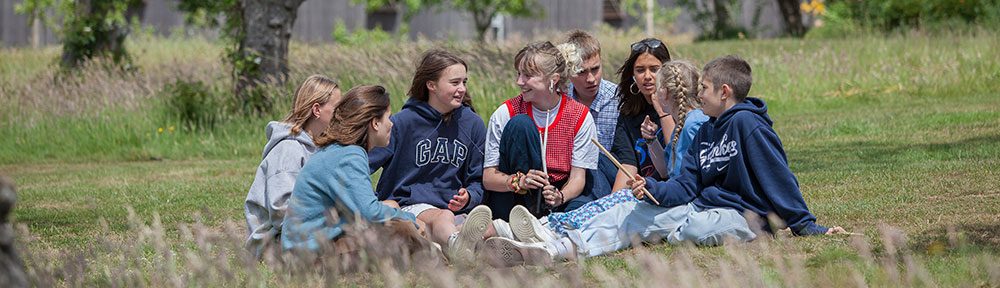
Spring is in the air in Outdoor Work

By Andrew Martin, Head of Outdoor Work

The change in the weather has really brought the farm to life, which is so wonderful to see. Last week our ‘spring’ flock of Southdown and Southdown X Jacob sheep started to lamb. As I write this we have 10 adorable little black lambs running around; we are just waiting on our three Southdowns (Sammi, Saoirse and Sophie), as well as our two Herdwicks, to deliver!

Our two sows, Little Pig and Bessie, didn’t want to miss out on the action either. They have been crossed with a British Saddleback (Basil). Between the two girls they farrowed 18 beautiful little black pigs, each with a white belt around their shoulders.

Running a school farm is a unique and rewarding job. Connecting students to the land and working with the animals is mostly a joy. Showing students across all three schools around the farm is one of my favourite things to do. Finding the balance between education and farming, whilst keeping animal welfare at the heart of everything we do, is a constant thing and something I believe we do very well here. We are not a petting farm nor do we want to be one. We want to educate students about food, farming and the environment, and how they are all linked.

Last weekend was a very strange one. It was probably the first time we felt that fine balance becoming a little unstable.  A combination of new arrivals, shining sun, schools reopening and the prospect of some return to normality, saw – to use a fashionable word – unprecedented numbers of visitors at the Black Barn.

When you have a large number of young, excited children, ramblers, dog walkers and picnickers, the tranquillity of giving birth very quickly disappears and the animals get stressed. This was very evident for a period of time. Everyone thinks their child and dog is safe, but to a sheep every dog is a wolf. Standing chatting beside a very pregnant sheep while dipping into some hummus may sound idyllic, but I’m confident the sheep wouldn’t agree. Likewise noisy children around little piglets and farrowing sows causes distress, resulting in squashed piglets and anxious mums.

So, although I don’t want to sound like a grumpy farmer, maybe this is a timely reminder about the countryside code. It is such a wonderful time of year and being able to experience nature so closely is so very special. Let’s try to remember the animals and their needs, alongside our own, human wants.

For all the latest updates from Bedales Outdoor Work, make sure you’re following us on Instagram and Twitter.

Global Awareness social entrepreneurs continue to make a change

By Abi Wharton, Head of Global Awareness

Block 5 Global Awareness students have continued to practice the art of social innovation whilst learning remotely, utilising even more their skills in campaigning, particularly through social media and internet resources.

Ava Sender Logan has been motivated by the very current topic of food poverty. Ava said: “This lockdown, we have been working on campaigning in Global Awareness. During this project I was interested in the topic of food poverty. For my project, I self-published a book to Amazon; 30 Bites on a Budget. In this book you will find my illustrations, a QR code to a video I have made about food poverty, a poem I have written and 30 meals to make on a budget. The idea behind this is was linked to the new school meals policy where school lunches are no longer free in the UK. I have made 30 lunch ideas which will feed a family of four. These meals cost between £1-2 per person. The book contains a month’s worth of cheap lunches. All profits from this book go to my local food bank. So far, we have raised £80. Please check my book out here.”

Kam Nelson-Clayton and Fifi Phillips began their research investigating period poverty in the UK, a very real issue at the moment, developing their understanding of sustainable period products and the importance of these being more widely available in schools. This led to a business relationship developing with a social enterprise providing sustainable products around the world, with a focus on supporting schools to provide free sanitary products to their students. Kam and Fifi have written a developed business plan and presented this at Bedales, proposing a partnership with Bohunt. This has gained traction and we are hoping that these products will be available in bathrooms around the school and the boarding houses before too long.

Millie Kennedy has been researching far right radicalisation – what causes it, how it happens, how to prevent it, and how to help those affected. Recently, and particularly after the capitol riots in Washington, we have all been on alert to the rise in far-right movements. Milly says: “I wanted to understand why this has come about and how to prevent it from happening in the future. After my research, I came to conclusions about what I could do.  I will be working with the well-being department to add to the curriculum – e.g. how to spot dangerous material online. I have also been in contact with Damian Hinds, MP for East Hampshire, asking what the government is doing about the growing threat, and I will be working with Block 2 pupils at Dunhurst, teaching a lesson on what to look out for on social media and online, to hopefully spread awareness amongst the most vulnerable age group.”

Skylar Cazac has been looking at how to encourage the roll-out of microgrids for rural electrification in South Asia and Africa. Skylar says: “Approximately 13 percent of the world’s population currently live without reliable electricity supplies, and are mainly situated in rural areas of South Asia and Africa. Often, these people have to make do with old diesel generators that are expensive, highly polluting and at times very dangerous. With the rapid decrease in the cost solar and wind power plants and the roll-out of energy storage solutions, renewable energy powered microgrids can provide an excellent climate friendly leapfrog alternative, to enable mass rural electrification. This said, these systems can still be expensive to set up due to technology being used. I have been researching hybrid financing solutions to enable a mass introduction of these systems into areas in need as an important tool in the energy transition. The type of systems that I envisage would combine three strategies to raise equity in order to sponsor and foster the rapid development of microgrids: 1) charitable crowdfunding schemes; 2) a “carbon trading” platform, to raise capital from Western companies that wish to offset their CO2 emissions by financing renewable energy production in developing countries; 3) microgrid finance schemes for the villagers who would benefit from green electricity provided by the highly subsidised microgrids. I would like to collaborate with impact focused financial investors to achieve scale in this project.”

Wellbeing update – Resilience and nutrition

By Kirsten McLintock, Head of Wellbeing & PSHE

Over time, we have seen the conceptualisation of resilience shift from being a trait – you either have it or you don’t – to a characteristic, something you can change over time that is very internally focused. Ultimately, resilience is a process one has to continuously cultivate. This was the message in Wellbeing lessons before half term.
 
Nutrition can help you build resilience, so you aren’t as affected by stress and are able to weather the storm when difficulties and struggles come your way. This is a good thing because it means that when it comes to using your diet to up your resilience, you can continually work to improve (and if you decide to have cake for dinner one night, it doesn’t mean you have failed!)

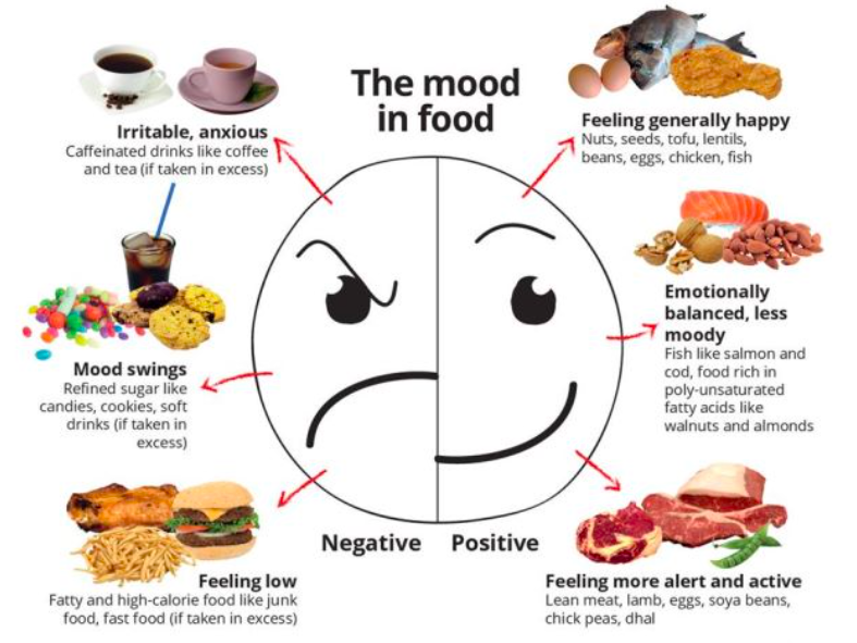
Often I hear students complain of fatigue, poor concentration, low mood, anxiety and sleeplessness; before exploring the wellbeing of their mind, we need to examine their food lifestyle. Potential deficiencies in vitamins and minerals (few adolescents are eating an optimal  diet), what they are choosing to eat and drink (see food pyramid below), portion size and timings (breakfast is vital for teenagers) all affect mood, sleep, motivation and wellbeing. 

Arming adolescents with nutritional knowledge and the self-awareness of how food affects their bodies and mind is key to building resilience and wellbeing. For further information on diet and nutrition for teenagers, I recommend following The Nutrition Guru, Tina Lond-Caulk. Tina has just released The Teenage Health & Wellness Guide. As well as tasty and nutritious recipes and advice, the book also includes recommendations such as encouraging teenagers to consume a daily quality multivitamin and mineral, and the importance of supplementing vitamin D, magnesium and calcium. The latest scientific research also strongly suggests a link between mind health and gut microbiome; Symprove is an excellent choice of daily probiotic.
 
If we focus on eating for wellbeing, realise that we can love and take care of ourselves and have self-compassion, and focus on what we’re consuming, we tend to be healthier in both body and mind. 

Beyond Bedales: Meet the Medics – 1 March 2021

By Cheryl Osborne, Teacher of Biology and Careers Advisor

The next Beyond Bedales event, Meet the Medics, will take place on Microsoft Teams on 1 March at 5.45pm. Six Old Bedalians currently studying or practicing medicine – Luke Austen, Adam Osborne, Claudia Anholt, Ollo Catton, Molly Graham and George Sinclair – will be joining us for this event. Each of the OBs will talk about their application journeys and where they are now, and students will also have the opportunity to ask questions.

This event is a must for anyone who is interested in medicine or another healthcare career,Students interested in attending this event should contact me at cosborne@bedales.org.uk so I can invite them to the event via Teams.

Luke Austen, Clinical Fellow in Acute Medicine, Edinburgh

Luke studied at Bedales Sixth Form from 2010-2012, before doing pre-clinical medicine at Pembroke College, Oxford from 2012-2015 and clinical medicine at Harris Manchester College, Oxford from 2015-2018. He completed FY1 & FY2 year at University Hospitals Birmingham before moving to Edinburgh, where he is currently a Clinical Fellow in Acute Medicine. His main interests are simulation-based education, clinical human factors, resuscitation and critical care. He is pursuing a career in Anaesthetics and Intensive Care Medicine.

Adam Osborne, F2, Aberystwyth and Masters in Global and remote Medicine, Plymouth

Adam left Bedales in 2014 with A levels in Biology, Chemistry and Maths, and an AS in Physics. He studied medicine at the University of Exeter. He spent four years in Exeter (two mostly lectures and learning life sciences, two placement based) and one year in Truro, Cornwall (all placement). He chose not to intercalate but he is now completing a Master’s degree in Global and Remote Medicine at the University of Plymouth (long distance due to COVID) whilst also working as an F2 (18 months out of graduation), in Aberystwyth for the year.

Claudia Anholt, Fourth year, University of East Anglia

Claudia left Bedales in 2014. She did not get into medicine first time round and did not put down a fifth choice, as she only wanted to do medicine. She was going to re-apply following A Level results, but with AAB she applied to the University of Liverpool to do Biomedicine through clearing. Once she completed this degree, she re-applied to medicine and is currently in her fourth year at the University of East Anglia (UEA).

Ollo Catton, Fourth year, University of Bristol, and intercalating BSc Childhood Studies

Ollo left Bedales in 2017. He went straight to the University of Bristol where he is in his fourth year. Ollo is currently intercalating in a BSc in Childhood Studies. 

Molly Graham, Second year, University of Manchester

Molly left Bedales in the summer of 2018 and is currently studying at the University of Manchester in her second year.

Classics in lockdown

By Christopher Grocock, Teacher of Classics

I am utterly indebted to the cooperation and cheerfulness of the Bedales students who have joined in wholeheartedly as we have kept our classes in Latin (and a bit of Greek) going! When we started in the latest lockdown I wasn’t sure how well we would get on – but we have all coped with the challenges of poor internet and strange work stations in our various homes (mainly by laughing when things go wrong – what else could we do?) Looking back over the past couple of months I am intrigued by the good progress we have made, in all the year groups from Block 3 to 6.2.

What’s made this happen? I can think of a few factors. The fact that Latin and Greek are ‘dead’ languages has helped – we don’t depend on the immediacy which is a key positive part of learning a modern language. There is the fact that in isolation students have had more time (with fewer distractions from other students around them!) to work at their own pace, and had the courage to ask for help whenever they needed it. Above all our progress has been helped by the sheer goodwill of all the students (and sympathetic and supportive parents – thank you!) right across the year-groups.

We have accepted that things would go wrong, technologically; we wait. We have coped with strange differences in time-zones and the issues that brings. We have accepted that working from home is challenging and if for any reason a student can’t find the set text book they used only two days before, we give them time to get it; and if it has been buried under something we find something else to do which usefully helps us make progress. And progress we have… to my delight (and relief, let’s be honest!)

I am looking forward to being back in a classroom and seeing students without strange backgrounds on their screens. It will, I admit, take some adjustments. But there has been more thriving than surviving and I hope that everyone involved – myself included – has come out of the experience with lots of lessons learned about how we learn and how we can motivate ourselves when we are ‘back to normal’, however the new normal looks.

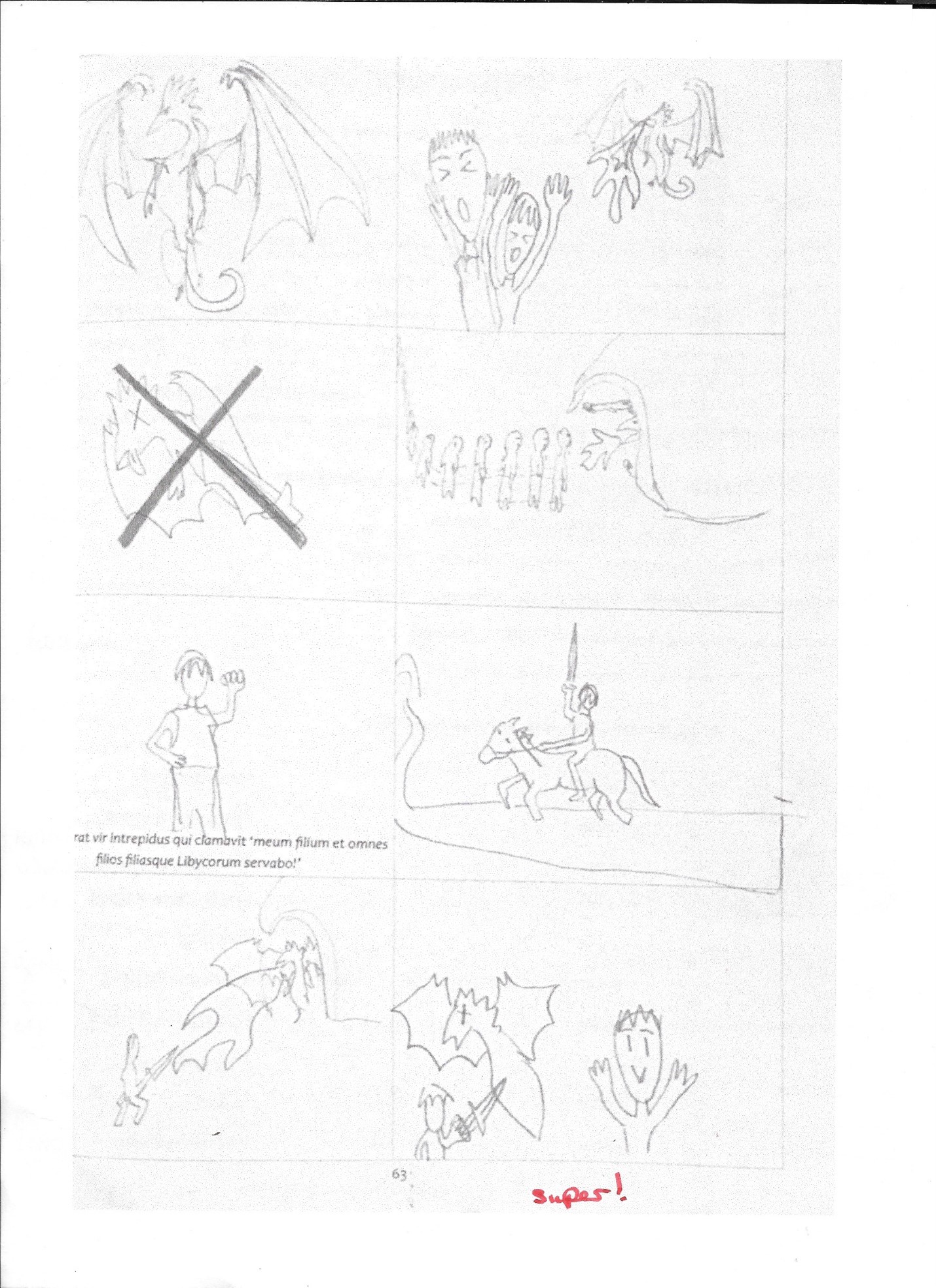
And to close, here’s a challenge to all the Bulletin Readers. This is a passage from our Block 3 workbook, with a quiz at the bottom – put the sentences in the right order.

To help you, I am including Siena’s completed storyboard. Try it for yourselves!

Walking in lockdown

By Chloe Nicklin, Head of Netball

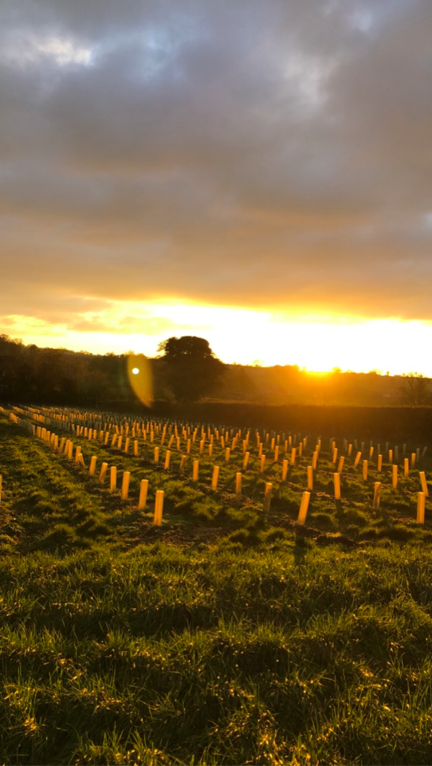
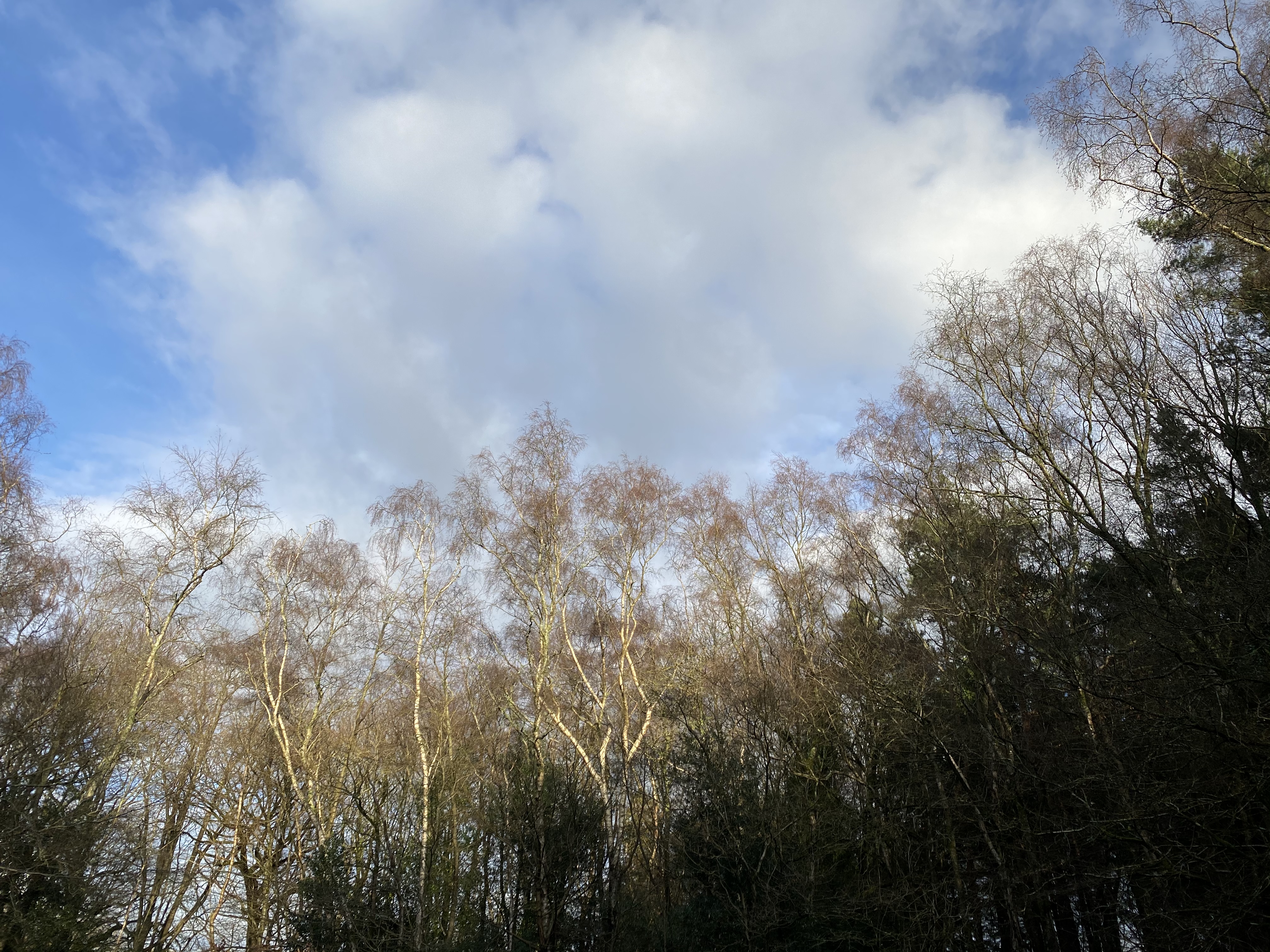
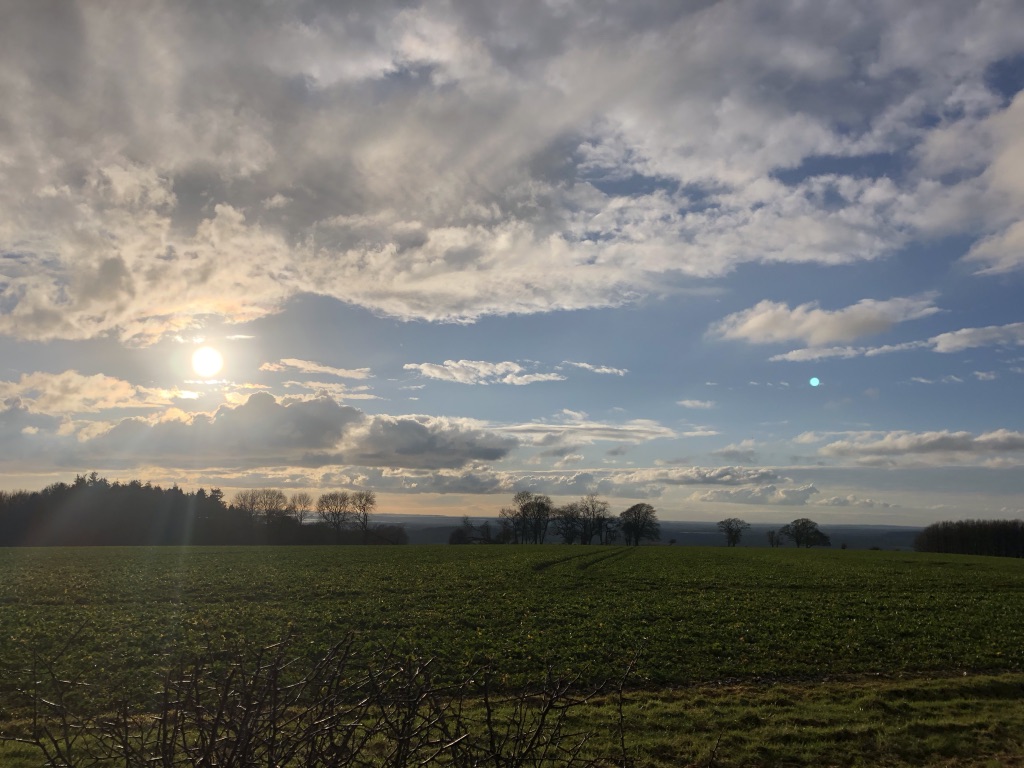
This week, students have been sharing the view from the walks they have been completing as part of their exercise in lockdown. Thank you to Clara Stannah, Lula Goldring, Maia Blake, Maya Martin, Milly Trench, Nissi Mavurah, Posy Kingsley-Pallant and Rosy Riley for their contributions.

Francis Bacon at Bedales

By Ian Douglas, Librarian and Archivist

This week, I was delighted to receive the major new biography of Francis Bacon, by the Pulitzer Prize-winning team of Mark Stevens and Annalyn Swan. It was so kind of them to arrange a complimentary copy for the Memorial Library. The book, hailed as “a captivating triumph” and “the definitive biography”, will be of particular interest to Bedalians because it re-evaluates the time the artist spent living in the Lodge at Bedales during the Second World War.

Bacon had served as a volunteer in the London ARP during the early part of the Blitz, but his severe asthma made it impossible to withstand the suffocating clouds of dust that followed a bombing raid. He was forced to take refuge in the country.

Bacon’s patron and lover Eric Hall, husband of Barbara Hall (Bedales 1908-13) and their friend Ken Keast (Bedales Staff 1939-49) arranged for him to rent the Lodge from 1940 to 1943.

Bedales Lodge, much as it would have appeared during Bacon’s tenancy

Previous biographers have tended not to make much of this interlude. Many have got no further than the comic image of a confirmed urbanite struggling to adjust to the countryside – “waking up with all those things singing outside the window”.

This is due partly to Bacon’s famous reticence about his artistic development prior to 1945, when his reputation was established with the first exhibition of his Three Studies for Figures at the Base of a Crucifixion. This event is widely seen as a watershed in the history of painting — “there was painting in England before the Three Studies, and painting after them, and no one … can confuse the two” — and Bacon himself colluded in attempts to forget all that had led up to it. He destroyed much of his earlier work, and as far as possible he suppressed what he could not destroy.

Stevens and Swann are therefore breaking new ground in exploring the period leading up to this watershed. The years spent at Bedales are re-evaluated as a “critical moment” in the artist’s life; a time of “internal reckoning”. They describe the genesis of the few incomplete works surviving from this time (Man in a CapSeated ManMan Standing and Landscape with Colonnade) which were inspired by news photographs from Picture Post which Bacon used to buy weekly in Petersfield. This work shows “Bacon’s turn towards a more gestural form of figurative painting” as well as prefiguring some of the imagery of the Three Studies.

I’m grateful for this fresh appreciation of Bacon’s Hampshire interlude, and I continue to wonder about his motives in choosing Bedales as his bolt-hole. Was it merely a place where his friends knew of a vacant cottage, or was there a more particular attraction? Bacon had already collaborated in joint exhibitions with OB artists Julian Trevelyan and Ivon Hitchens. He may also have known that John Rothenstein — director of the Tate, who later bought Bacon’s work for the gallery — was a Bedalian. I wonder if he was seeking a sort of urbs in rure, to sustain him in his forced exile among the inconsiderate birds.

The new book draws on material from the Bedales Archive, which receives many such enquiries about the history of the school and its former staff and students. The work of the Archive would be impossible without the generous support of many Old Bedalians. Financial donations, and donations of material relating the life of the school – recent as well as more distant history – are always welcome.

Francis Bacon: Revelations, by Mark Stevens and Annalyn Swan is published in the UK by William Collins. It is available from the publisher, and from all good booksellers.

The cognitive interview

By Anna Sukhikh and Livy Ewing, 6.1

Unfortunately, due to the pandemic the various talks and conferences A Level Psychology students typically would have the opportunity to attend has been limited. However, on Thursday we were fortunate to meet Detective Constable Samantha Hockley in our Psychology lesson for a talk on the cognitive interview, a questioning technique used by the police to enhance retrieval of information about a crime scene from the eyewitnesses and victim’s memory.

Samantha has been working in the police force for 19 years, and as a detective for eight. As a detective, the cognitive interview plays a big role in her everyday life. The cognitive interview is a procedure used by police when interviewing witnesses and victims of crime and is one of the techniques of eyewitness testimony that we learnt about in class. The cognitive interview was developed by Geiselman in 1985, who found that the standard police interview could negatively interfere with eyewitness recall. This technique was further researched by Fischer in 1990, who found that witnesses gave accounts in greater detail when detectives were trained to use the cognitive interview. Sam herself has had much success with this method, including helping to prove a stalker guilty, resulting in a 10-year sentence. 

Sam highlights the importance of making the interviewee feel comfortable. She does this by finding common ground and making herself seem approachable, saying that she likes to appear maternal to the witness/victim. This was slightly surprising to us as we have been conditioned to believe that detectives are often hostile. Upon further discussion, we realised there is a significant importance to making the witness/victim feel comfortable as it can reduce high anxiety, which may negatively impact accurate recall. 

Sam also points out it can be difficult to avoid leading questions, although sometimes it is necessary, because she does not want to place false information into the victim’s head, which could later be used against them in court. This was a really interesting experience for us as a class, as we were able to hear about how the cognitive interview is used in practice and the experience from the side of the interviewer.  

Rehearsing in a pandemic

Teams rehearsals for the Spring Production well underway and filming has begun. Actors have been sent green screens and have sourced costumes with the guidance of the production team (and a few parcels en route to those who don’t have 1920s attire around their houses!) The editing team are already at work and the researchers are checking for accuracy. This image says it all. Our period choice was quite apt it would appear. Here, 6.1 student Elena gives us an actor’s perspective on the experience and how it feels to be involved in a lockdown project.

By Elena Belisario, 6.1
I’ve been performing since about three. Whether I was doing ballet, or singing in the choir, or acting in the school play, I always seemed to be on the stage. There was always this special thrill I got from being backstage and seeing the stage lights go up as I prepared to go on. So when I signed up for the Spring Production and went to that first Teams meeting, I really hadn’t expected that we would actually be doing it virtually, and that the ‘being on stage’ bit was going to be taken out of it. However, this experience has really helped me grow and appreciate how much the crew really play a vital part.

You see, being an actress, or being involved in acting, pre-COVID meant that you would rehearse, learn your lines, get your hair and makeup done by someone else and your costume made by someone else, and you would go on stage and act. The lights seemed to magically always work; the set had somehow magically appeared and, if it was being filmed for the parents, a video would magically appear on the school website or in your parents emails a few weeks later. Being involved in acting during COVID has made the realisation dawn on me that well, maybe, these things don’t just happen magically after all.

I have had to set up a green screen which people found take a surprisingly long time to iron. I had to record myself, thinking about the camera angles and setups and lighting. I had to find my own costume (which involved a lot of digging around my mum’s wardrobe) and I had to do my own hair and makeup (the 1920s bob is really a lot harder than it looks). All of this meant a lot more effort is required than usual, when the crew can do all of that for you. So this experience has really made me so appreciative of the crew and what goes on backstage whilst we actors are so preoccupied with ourselves and our performance.

It’s also taught me about making the most of every circumstance. When COVID first hit and then when schools shut for the second time, my personal reaction was complete meltdown. “All of these opportunities flushed down the drain, all of those memories we are missing out on!” I complained to my friends numerous times over the phone. Hayley and Joanne were real superheroes in the fact that they saw this as not an opportunity flushed down the drain, but an opportunity to do something different. To challenge ourselves and be resilient – that no matter what COVID throws at us, we can adapt and do something different. I have found that very inspiring.

The Spring Production is coming along very well: every rehearsal is exciting and I am so enjoying figuring out my character and learning how to cooperate with everyone online. I honestly can’t wait to see the end result and how all of our work turns out, and when the time comes, I hope that you enjoy watching it too.

This video gives you an insight into our Autumn production, ‘Constellations’ by Nick Payne, which was also delivered during the pandemic. This project was rehearsed and performed on site but adhering to social distancing measures, using duplicate casts across two bubbles to allow for student isolation. I hope you agree that it did not hamper creativity in the slightest and again showcases not only our students talent but their versatility and resilience in these times, which inspires us all.

‘Inspiring and uplifting’ Wednesday Workshops in Drama

By Hayley Cole, Head of Drama

Last lockdown we introduced online, industry-style workshops with professionals in the field. These included online seminars with prolific playwrights and practitioners, alongside well-known and admired OBs, all sharing their insight and passion for following a career in the arts. When back at school last term, these continued in the form of ‘Wednesday Workshops’ (pictured above), which were well-received by students, who gained insight into the industry first-hand and met incredible actors and audition coaches who have helped fuel their ambition and refine their skills.

Now we are in lockdown again, we wanted the opportunity to continue online, and Eve Allin has been organising a vibrant and varied programme of workshops. Students can attend voluntarily in Wednesday’s Powell Time slot each week. Look out for what is on offer next term, and please join us if the topic or speaker sparks your interest. Here, students who have attended share their experiences.

Jessica Asamoa, 6.1 
On Wednesday I participated in a fantastic workshop led by OB Roly Botha. It was a fantastic opportunity for us to develop our skills in monologues, and we all learned a lot from the brilliant feedback which was given. Most importantly, everyone had a lovely time and enjoyed it so much that we all stayed behind at the end to ask questions. It was an extremely enjoyable and engaging workshop.

Eliza Hayward, Block 3
I really enjoyed the recent Drama workshop with Hebe Bartlett. It was really interesting to talk to someone with so much experience. She was engaging and helpful, and gave us such great tips for self-taping and how to get into the acting industry. It was a lot of fun and I learnt a lot. I’m looking forward to more of these workshops.

Nay Murphy, 6.2 and Drama Don
A wonderful and informative workshop led by charismatic Hebe, who is introducing us to the world of professional auditions.

Stella Miller, Block 5
Throughout lockdown, Eve has been putting on the most amazing drama workshops. I was profoundly inspired and uplifted by one of her workshops on theatre directing, where she talked us through the process of directing a play from start to finish; I was even galvanised into conjouring up a whole play of my own from scratch. I could not think of a better way to spend a Wednesday evening in lockdown than talking all things drama with Eve and other OBs.