A letter to 6.2 A Level English

By Julia Bevan, Teacher of English

For the past two years, I have been in the unusual position of teaching a whole cohort of A Level English students. What a privilege this has been; first to get to know you all last year through studying the contemporary Poems of the Decade and an evening with Julia Copus, and then to guide you through some of the pressures of online learning.  

Certainly, my most fulfilling teaching moments last spring involved supporting many of you as you wrote your coursework essays. We worked together, adopting university-style tutorials that were really conducive to the task at hand. In this intimate learning environment, you rigorously dismantled and reassembled your analytical arguments, embedding close textual analysis and context into essays, and become young but impressive scholars of Seamus Heaney, and Arundhati Roy. It is wonderful that I have taught one or two of you since Block 4 and that a number of you are now determined to study English at university: what more could a teacher want?

In the autumn term of this academic year your focus and determination were remarkable. At times as a teacher managing the new COVID secure protocol on site was tough; but it was worth it so that I could introduce you to Mrs. Dalloway by Virginia Woolf in person and watch you draw comparisons between this novel and her older sister Wuthering Heights. Both novels deal radically with early forms of mental health, a subject on which you often edify me.You demonstrated such maturity and sensitivity in November, embracing hybrid teaching early on so that those of you at home self-isolating could stay part of the class discussion. You make me very proud and are a credit to your parents.

I believe passionately that we learn much from creating peak experiences inside and outside the class room and I had hoped to take you on a weekend trip to Haworth in Yorkshire, to visit the Parsonage where Emily Bronte died and to walk up onto the Moors to Top Withens, a remote, abandoned farm considered to be the inspiration for her only novel. Instead we returned to our homes and computer screens and I have had the challenge of trying to inspire you with the poetry of John Keats. 

A poet of the senses, he is a joy to teach in the winter and early spring in Steep, ideally in the Meditation Hut or the Lupton Hall, where two years ago I launched the first ‘Eve of St Agnes Experience’ with Lucy McIlwraith. 

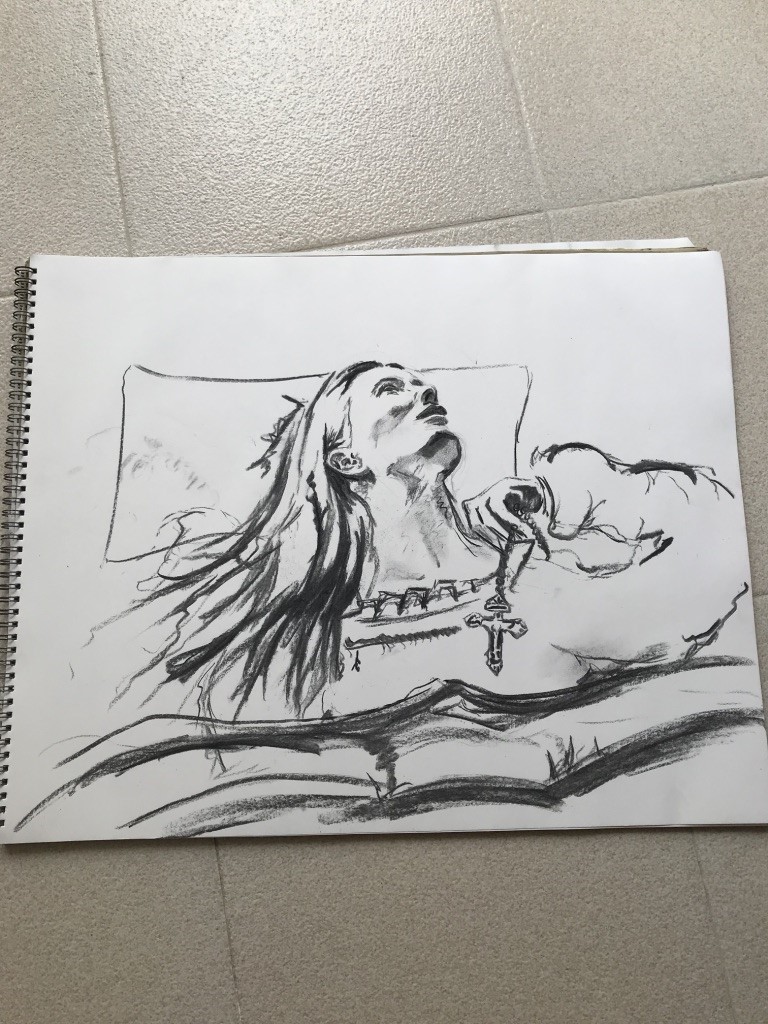
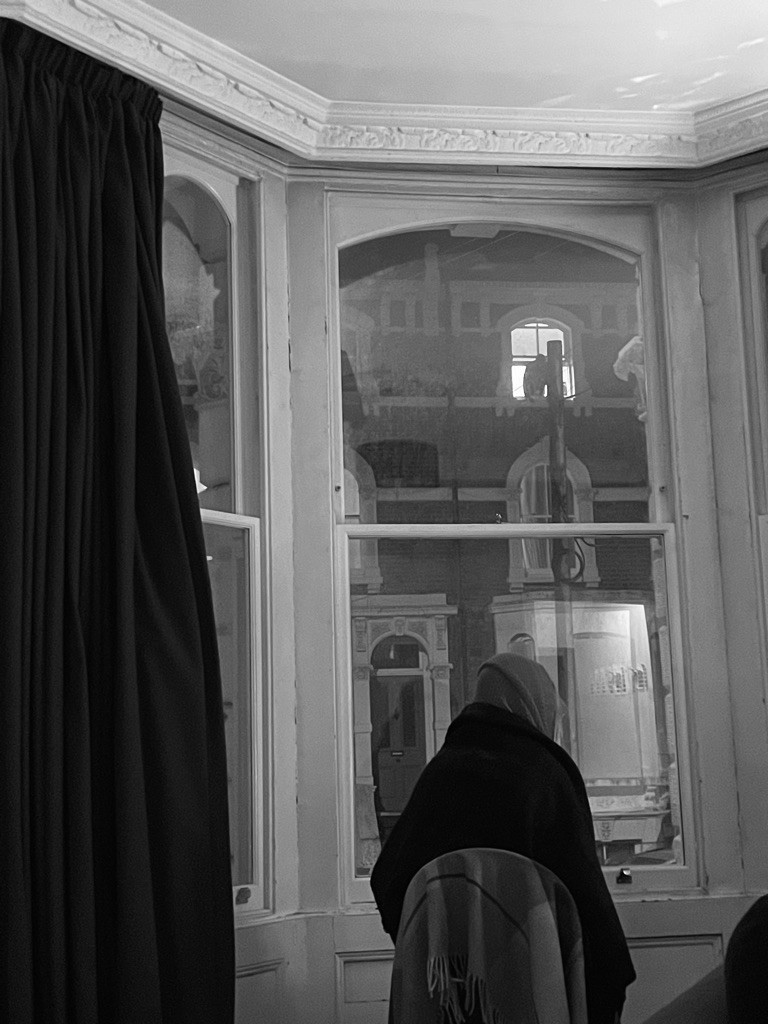
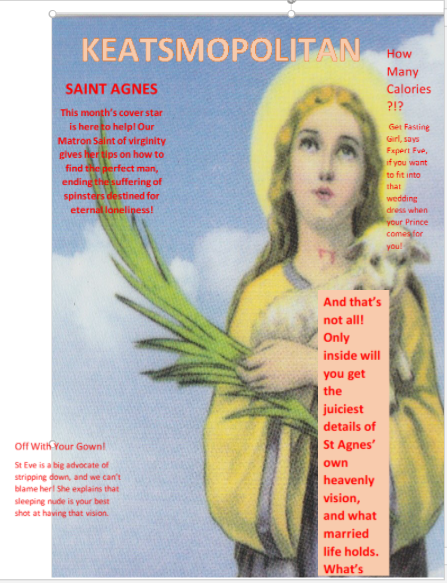
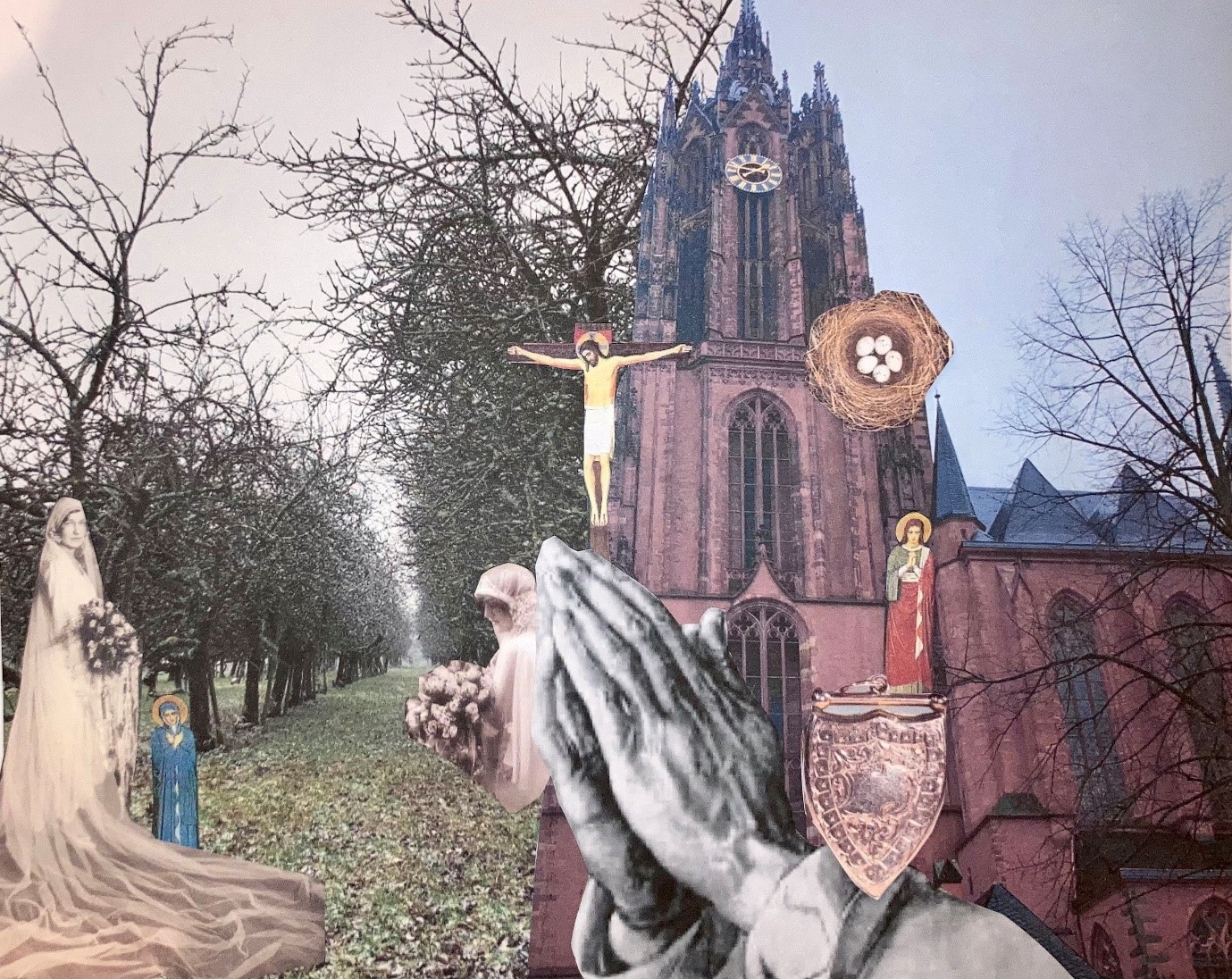
This year I asked you to work on collaborative creative responses to the poem and I have been amazed at what you have achieved from homes many miles apart. Your original work neatly coincides with the publication of an essay entitled ‘Weavers of Dreams in The Eve of St Agnes and A Midsummer Night’s Dream‘ in the English and Media Centre EMAG, co-authored with my partner in Keatsian crime, Lucy. I’ve decided this will be my third and last Keats’ experience, and hope to teach Shakespeare next year. It makes sense to end on such a high.

To all of my 6.2 English students: thank you. “St Agnes moon hath set.” 

Professionally mentored Design project

By Huxley Green, 6.1

6.1 Product Design students have been continuing with the first full project of their A Level studies: designing a learning space to be placed somewhere on the school grounds. This project was to be inspired by a notable designer and feature the use of two particular materials; each student was allocated a different designer and combination of materials. We were then asked to come up with conceptual ideas to be expanded upon at a later date. These would be represented by research and design work in our sketchbooks, a scale model and a CAD model using SolidWorks. Final presentation boards were presented to Old Bedalian Patrick Lewis, a practising architect based in London who is running the project alongside Bedales Head of Product Design Alex McNaughton.

Unfortunately, as we re-entered lockdown in January, most students have been unable to continue their model-making at home, so this has been delayed until later in the year. However, it was possible for us to continue our projects using Adobe InDesign and Photoshop along with SolidWorks from home on their own computers. In-house video tutorials aided us in progressing independently alongside our online classes and one-to-one instruction.

These sessions allowed us to create a wide range of impressive presentation boards, which were presented to Patrick. We each had a window of time to talk Patrick and Alex through our final design at the online group critique presentation session on 28 January, before we received feedback from Patrick about how we could continue and improve our projects.

My project was to combine the beautiful campus and the high-quality Music and Drama of Bedales into a missing element; an outdoor stage inspired by Charles and Ray Eames (my allocated designers), using concrete and plywood (my allocated materials). Other projects included quiet reading areas, sensory learning spaces for Dunannie, social areas and a library/café.

Patrick seemed to be impressed by a scope of designs produced by 6.1 students and we hope to be able to present our evolved and developed ideas, a scale model, and revised and improved presentation boards to Patrick in person later in the year.

Volunteering for DofE

By Julia Bevan, Teacher of English and DofE Manager

While we are in lockdown, it is trickier than usual for students to complete the Duke of Edinburgh (DofE) Award, but I am pleased to see that so many of them remain committed to completing the various sections of the programme despite the circumstances we find ourselves in.

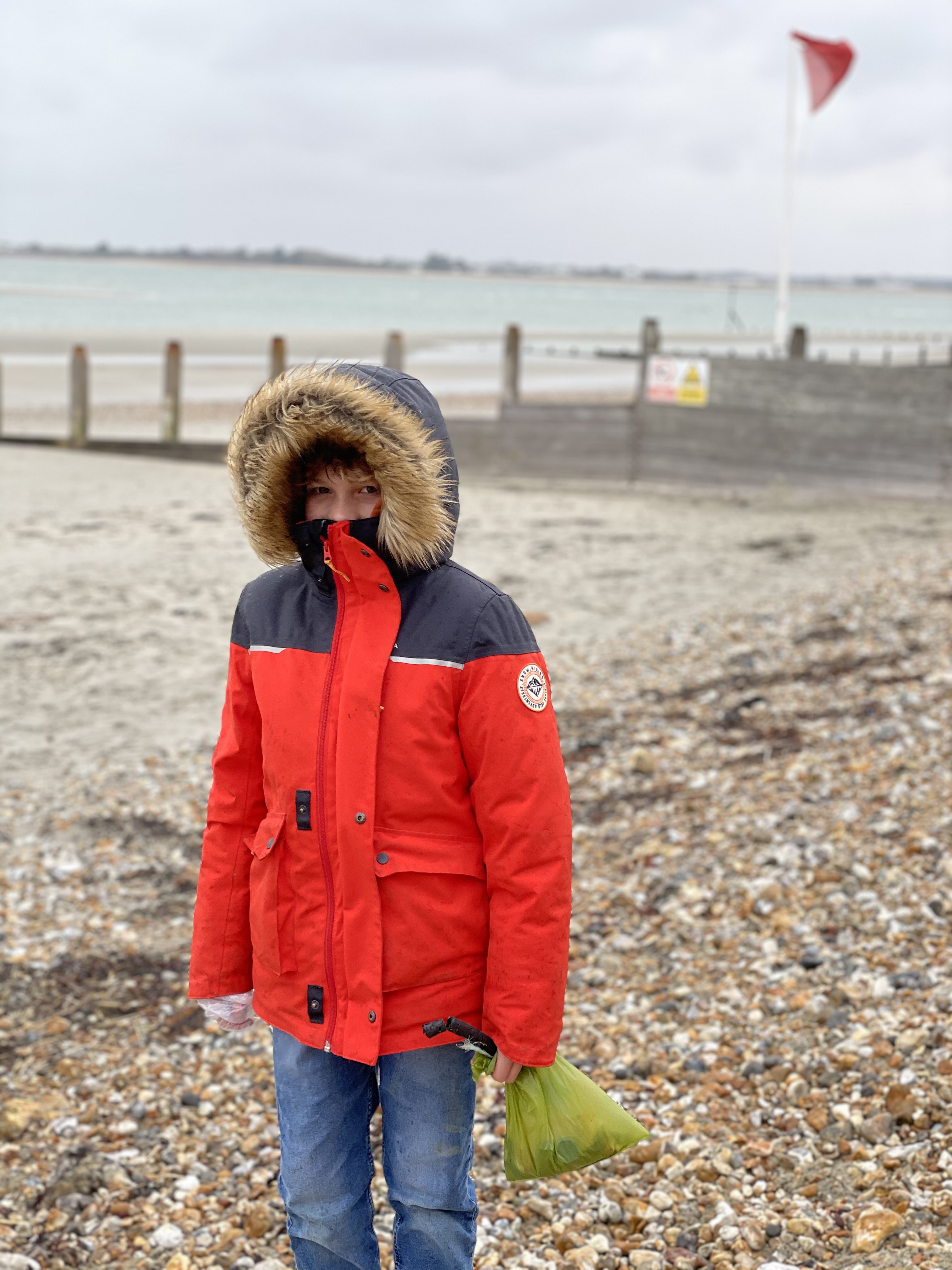
For the Volunteering section of the Bronze Award, Block 3 student Mo Griffiths wrote to West Wittering Estate to request permission to do some litter picking on West Wittering beach. They were very happy for Mo to litter pick at the beach and, as well as giving Mo a quick safety briefing before he set off, offered to lend him a litter picker. Mo wore gloves for the activity and chose to focus on picking up small pieces of plastic which don’t decompose and can stick around indefinitely, causing problems for marine ecosystems.

I look forward to seeing more students’ contributions to their DofE Award in the coming weeks.

Ushering in the spring

By Feline Charpentier, 6.2 Houseparent and Teacher of Outdoor Work

In Living with the Land, our Sixth Form course that launched at the start of this academic year, we talk about the changing of the seasons a lot. About paying attention to the landscape around us, about how the land can influence our own state of mind, and help us be more present. The old calendars which celebrated the earth cycles, marking the four solstices and the four cross quarters, are often good for reminding us of the inevitable change that occurs all around us.

In the traditional calendar we are approaching one of the four fire festivals, a cross quarter moment in the year, known as Imbolc (or St Bride’s, or Groundhog Day, in the US). The other fire festivals are Beltane, Lughnasadh and Samhain. Imbolc this year occurs on the night of 1 February, going into the morning of the 2nd.

Looking out of the window it can seem that all of life is dreary, grey and wet, that there is little to hope for. We are all trapped indoors, and it can feel that spring may never come. And yet, all of life lies dormant beneath the soil. The trees hold the promise of buds, there are snowdrops beginning to flower. It is a matter of weeks before signs of life will begin to show.

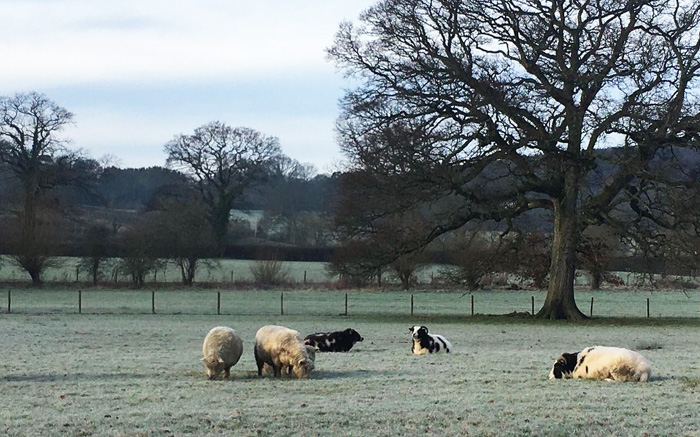
Imbolc literally refers to ‘in the belly’, referring originally to lambing season, which would be beginning about now for many farmers, to the fertility of the soil, the imminent arrival of spring and all the life it brings with it. Our ancestors would have spent time reflecting on the year behind them, and planning the planting for the year ahead. They would have seen this time of year as a time to rest, to recuperate, to sleep and store energy for what was to come.

In some way our current confinement is exactly that, a time to rest, and plan for what lies ahead.

Although we all wish things were different and we might even be wishing the time away, there is hope to be found in the small things, in the inevitable turning of the earth towards the spring, in the time we have been gifted to reflect, to recuperate, to make plans, to hope.

Imbolc brings with it the opportunity to reflect on the darkness of winter, to draw breath and take stock, to prepare for the newness of the spring and summer ahead. To plant seeds, both literally and metaphorically, for the future. In our online ODW lessons we are baking, reading, crafting and making, planting seeds, planning what we will grow this year, looking forward to when we are all here again.

So maybe, this Imbolc, why not write your intentions for the year ahead, plant some seeds, bring a few sprigs of hazel inside to see the buds come out, or even make a solar (or St. Brigid’s) cross if you can gather some Rushes outdoors. Find instructions here.

Building resilience: practical strategies in wellbeing

By Kirsten McLintock, Head of Wellbeing & PSHE

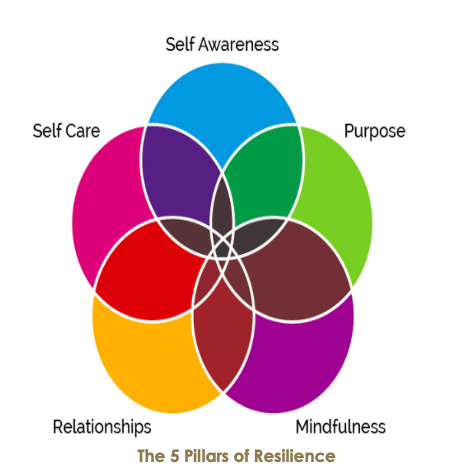
In Wellbeing, we are taking the opportunity during online learning to delve into the practical strategies that we should all have in order to cultivate a resilient spirit. Resilience is at the heart of wellbeing. Over the coming weeks, Blocks 3-5 will be focusing on practising the five pillars of resilience; fostering healthy emotional and mental health strategies for life; learning to manage the uncomfortable and struggles in life; mindfulness practice; and connection and support.

All five pillars of resilience are crucial, but in the coming weeks we will focus on developing self-awareness, self-care and mindfulness practice in our Wellbeing sessions. This week, Bedalians have produced a ‘Wellness Jar’ detailing the activities they are going to do on a daily and weekly basis (plus emergencies and treats) in order to be resilient, thus developing healthy emotional and mental health for life. Have a look at my Wellness Jar below. Students have been asked to share the contents of the Wellness Jar with their loved ones.

Additional strategies for fostering resilience discussed in our Wellbeing lessons have included the importance of keeping routines going – including 9-10 hours of sleep, meal times, exercise, play, cognitively stimulating activities, work and relaxation – so that days have rhythm and structure and are not spent inactive. Endless time without structure, meaning and purpose is unhealthy for the body and mind.

There are a number of resources available for parents and teenagers for mental/emotional health issues. Young Minds has a free helpline for parents (0808 802 5544, available 9.30am-4pm, Monday to Friday), as well as a useful website. Helpful information can also be found on the Royal College of Psychiatrists website. Young people can access support from helplines, text lines and online chat services at any time – Childline (0800 1111), Young Minds Crisis Messenger (text YM to 85258) and the Mix (0808 808 4994).

Industry professionals inspire at Drama department’s Wednesday Workshops

By Hayley Cole, Head of Drama

Throughout the Autumn term, the industry based drama Wednesday workshops have continued, a wonderful opportunity for students to meet and hear from experts in the field.

Actor and drama school audition coach Martha Dancy has continued to work with 6.2 students who are looking to further their study after Bedales to prepare for a career in drama. Her help and guidance has been wholly appreciated by myself and the students, especially this year when the audition process is more varied and virtual than before. 

Our ultimate Wednesday workshop was a real treat. The kindness of professionals in the field during these challenging COVID related times has astounded me. How gracious and giving they have been with their time and how willing they have been to share their expertise. Kate Winslet encompassed this and more. She approached me to ask what she could do to help the Drama department and subsequently gave her up her afternoon to inspire our students with her top tips.  These will stay with them, I am sure, for a lifetime, but what will also stay with them was her wonderfully open, honest and down to earth manner which I and they appreciated so much.

Read students’ accounts of the workshops below.

By Caitlin Layhe Nugent, 6.2

In our first week, Martha talked us through personal statements and how to tailor them to conservatoires. Her insight on the drama school application process is invaluable and we’ve been incredibly lucky that she was kind enough to set time aside to teach us about that process and how it differs from place to place and how best to meet those needs.

By August Janklow, 6.2

Our third session was focused on self tapes. Martha ran us through the proper techniques to use when filming such as: lighting, angle, and eye line. We were instructed to deliver our lines as if there was someone sat behind the camera, reason being that our faces had to be in full focus. This among other things helped us feel more comfortable approaching drama school applications this year.

By Gus McQuillin, 6.2

A Shakespearean monologue properly prepared, is a great way of impressing a drama school during their auditions. Following a few previous sessions with Martha, she had got to learn more about me and how I generally behave and act as a person. This then enabled her to suggest a piece from Romeo and Juliet that she thought would  be a good mix of familiarity but also challenging enough that it isn’t staid and obvious. We were happy with Romeo and Juliet as I know the play, the plot and the dynamics between the characters and their relationships. Martha gave me some fantastic tips to help me become more comfortable with the piece. One was to look up the definition of any words that I didn’t completely understand, allowing me to see how they make sense and then form a coherent speech. She also advised that I completely translate the piece into my vernacular thereby basically modernising the piece so that I could conceptualise how the words might have been said in their time.

By Kit Mayhook-Walker, 6.1

On 9 December, Bedales Drama students were treated to a Wednesday workshop with the Oscar-winning actor, Kate Winslet. During the two and an half hour workshop, Kate answered students’ questions in great detail about her early acting career, the steps she takes getting into character, her favourite performances and her thought-processes behind her performances. She also led a short, scripted scene from the play The White Bike, which was previously a BAC scripted piece. She asked the two actors on stage various questions ranging from when did the characters meet to what their driving ambitions are, as a way of getting behind a character and grounding them in realism. This was followed by an improvisation with a 6.2 drama student where the audience gave them all the information; their names, ages, jobs, the scenario the scene takes place in. Everyone in attendance found this workshop extremely helpful for their future dramatic projects and we hope to see more of Kate in the New Year.

A break from tradition for Autumn production

By Hayley Cole, Head of Drama

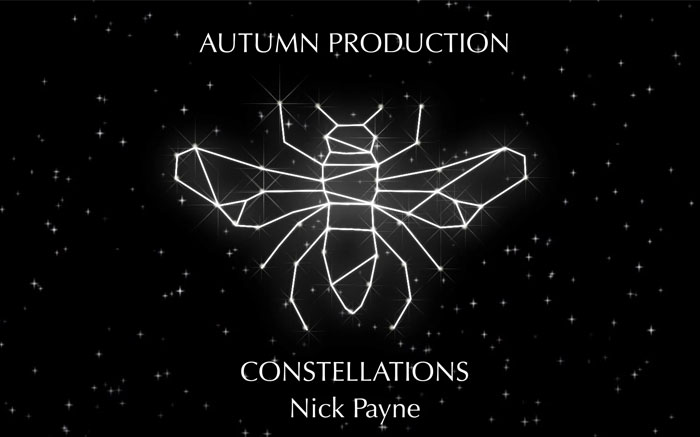
Our Autumn Production this year is Constellations by Nick Payne, which will be performed on four consecutive nights from 7-10 December, with two performances livestreamed for parents at home. A two hander about a couple, their relationship, quantum physics and most importantly love. It follows their journey and the multiple universe theory which means we see the various outcomes of each stage in their relationship. Not exactly your traditional Christmas production, but we never produce traditional productions here.

In previous years our Autumn Production has involved students from the whole school, across all year groups, with a cast and crew totalling more than 50. We have devised our own work, chosen cutting edge musical theatre, Greek tragedy, contemporary texts and adapted work to honour the First World War. But this year, obviously, things are different. The safety of our students and staff is paramount but at the same time we wanted to celebrate the fact we are open again as a school, a creative school, and able to perform again in the theatre. Whilst our numbers are restricted, both on stage and in the auditorium, and social distancing rules must be applied, I didn’t want it to restrict our innovative approach, nor the students’ theatrical experience.

Having watched Lungs at the Old Vic during lockdown, I was inspired by the chemistry Matt Smith and Clare Foy showed on stage and the fact that the chemistry existed despite the metre plus distance between them. This led me to look at similar plays and that’s where I landed at Constellations, a play I have loved for some time but not found the right platform for. However, I needed it to be more inclusive and to give more opportunities to more students. Focusing on the original intention of the play, our interpretation shows the possibilities that exist to anyone anywhere and scenes are explored with different genders and languages as well as sign language. We see the multiple outcomes of this relationship which could have affected any two people, anywhere in the world. Two duplicate casts of eight perform the scenes and transition with dancers who explore the themes of bee keeping, endless love, quantum physics, past, present and future. 

So, whilst the COVID Christmas term has been challenging, it has by no means hampered out creativity and we look forward to sharing our work; in person with the student and staff body and virtually (via live streaming) to parents, next week.   

Match report: First XI v ‘All-Stars’ girls’ hockey

By Kevin Boniface, Head of Hockey

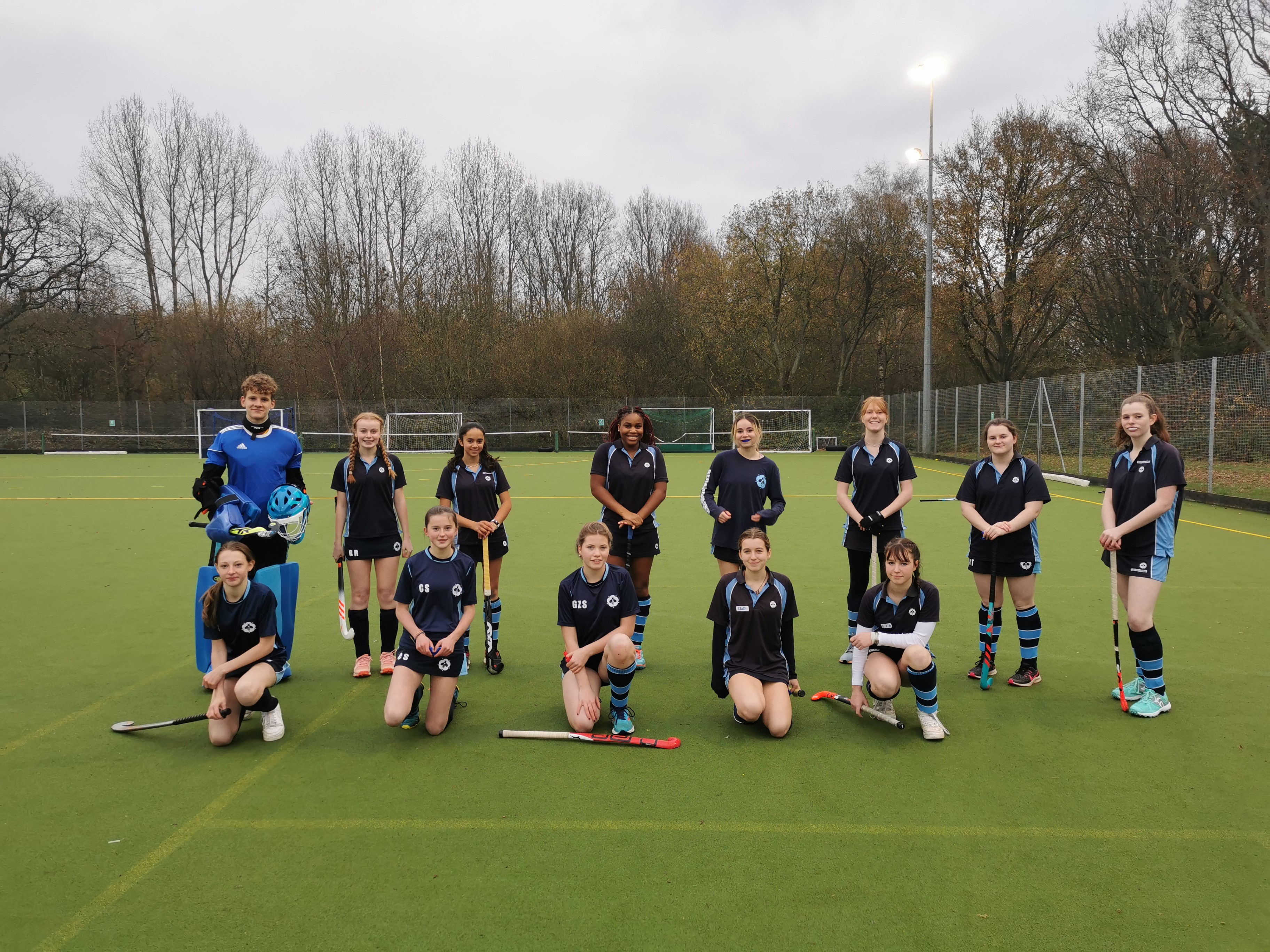
On Wednesday, the much anticipated hockey fixture between the first XI and ‘all-stars’ took place. The all-stars squad was made up of a number of the top performers across Blocks 3, 4 and 5, and was assembled to deliberately challenge a talented and hard-working first team.

As anticipated, the first team came out firing on all cylinders and looking to take advantage of the new look opposition, who were trying to find their feet. However, the all-stars managed to survive the initial onslaught, much owed to England trialist goalkeeper Josh Baty, who had kindly stepped in to fill that position to ramp the game up another notch. Despite the bulk of the attacking possession falling to the first team it was the all-stars who took the lead, through a fine individual goal from Kamaya Nelson-Clayton.

As the game progressed, Rebekah Leach began to have more and more influence for the all-stars, winning numerous tackles, interceptions and displaying an excellent range of passing. The final 10 minutes of the half saw a thoroughly entertaining battle between Rebekah and her equally impressive sister Alisia, who was driving the first team forward. However, no more goals were added and the first team went in 1-0 down.

The second half saw a further ramp up in intensity from the first team, driven by the tireless Mathilda Douglas, who was constant threat. But 15 minutes in and the all-stars defence had stood firm: with Block 3 Eliza Hayward in outstanding form. The all-stars team were now reduced to breakaways and counter-attacks but with the skilful Clara Stannah and pacey Rosy Riley they were always a threat.

However, a mature and calm approach from Esther Stewart and Shanklin Mackillop-Hall ensured nothing came from these breakaways and this calmness began to spread through the first team, firstly,with Gala Pearson cooly converting the equalizer after a melee in the D and then finally with Mathilda Douglas drilling home a deserved goal for her and a deserved winner for the first team. The final result was 2-1 in a competitive and enjoyable fixture. I am sure there will be calls for a replay (and hopefully so!)

Senior Maths Challenge success

By James Welham, Head of Mathematics

Well done to all the students to took part in the UKMT Senior Maths Challenge earlier this term. Particular congratulations to Annabelle Snell for achieving the top score in the school, Gemini Wang for the top score in 6.2 and Chubbs Bailey for the top score in Block 5. 

This year’s certificates go to:

Silver

Orlando Closs (6.2)
Arthur Lingham (6.2)
Gemini Wang (6.2)
Annabelle Snell (6.1)
Raef Macnaughten (6.1)

Gold

Charlie Abbott (6.2)
Sam Wheeler (6.2)
Zakhar Gabriadze (6.1)
Rhiannon Griffiths (6.1)
Isabella McGrath (6.1)

Many congratulations!

Pastoral update: The effects of cyberbullying and a new app to watch out for

By Rick Cross, Deputy Head (Pastoral)

Schools, parents and students have long known about the debilitating effects of cyberbullying, and with numerous restrictions on our freedoms and movements over recent months, the need to be kind to each other online seems even more pertinent.

Students at Bedales, as with young people across the country, have access to a huge range of apps and services, but with this freedom comes responsibility. Parents play a vital role in this process too and in my experience want to help. To that end I would like to highlight Internet Matters as a useful resource, which provides parents with guidance about a rapidly changing world online, and offers reviews of apps for parents.

One app worth being aware is Tellonym, where users can receive messages through the platform which are called ‘Tells’. Every Tell is sent and received to the recipient’s private inbox, which no one else can see. Then, only if a user decides to answer a Tell, the original Tell, and the answer becomes visible to other users. This app has been given a rating of 17+ on the Apple App Store, but we are aware it is being used by younger students at Bedales.

This anonymous app has gathered some concerning reviews and press coverage over recent years. I include it here as a way to open up a conversation with your children about what apps they may be using and how to behave responsibly whilst also staying safe and avoiding risky behaviour. Cyberbullying makes up part of the schools Anti-Bullying policy.

On Tuesday next week, Jen Moore, the Designated Safeguarding Lead (DSL), will host a special session for students about the schools guiding principles and rationale behind the schools filtering system, discussing different sites and platforms students regularly ask for. We want to engage with the student body so they can enjoy the online world safely.