Outdoor Work hosts Bedales’ first ever ‘forge-in’

By Iris Campbell-Lange, 6.1

Outdoor Work is unique in its ability to displace us from the normality of walled classrooms. It enables everyone, regardless of age, to become acquainted with the work that our hands can miraculously create.

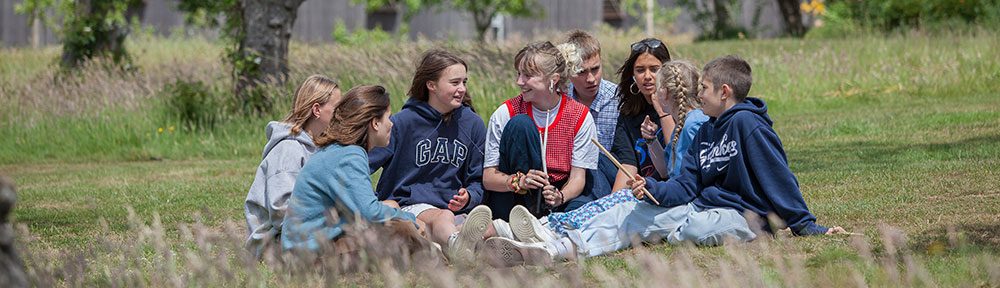
On Saturday I, along with seven other keen blacksmiths (who are either learning blacksmithing as part of their Outdoor Work BAC, have chosen blacksmithing as an enrichment or regularly attend blacksmithing club with our visiting resident blacksmith, Lucille from Little Duck Forge), diverged from the routine of morning lessons and attended Bedales’ first ever ‘forge-in’. A forge-in is the term given to a group of blacksmiths working collaboratively on a project – and in our case, we spent the day making a decorative panel for a new wooden archway to be built at the entrance to Outdoor Work near Steephurst.

Continue reading

Psychology Crime and Deviance Conference

Psychology-conference

By Eliza Goodfellow, 6.2 and Psychology Don

Last Tuesday, the Psychology department welcomed Andrew Lewis and Allan Walker, a convicted murderer and fraudster, to talk about their experiences with the UK’s criminal justice system and life with a criminal record as part of our Psychology Crime and Deviance Conference. They were accompanied by a forensic psychologist who has worked with psychopaths. Her role plays a part in the process of assessing whether prisoners will be able to function adequately if integrated back into society, without posing a threat to the public.

The criminal justice system was outlined to us, and we were given a scenario to discuss whether we thought the man involved was guilty of murder. It came as a surprise to us that the murder we were discussing as a group was in fact the lecturer’s trial – it was at that point that he revealed he was a murderer. The majority of students believed that in the scenario described, Andrew was innocent of murder, guilty primarily of grevious bodily harm (GBH) in an act of self-defence.

Continue reading

Belarus Free Theatre visit

Belarus-Freedom-Theatre

By Livi Grout-Smith, Oscar Clark and Amber Pearson, 6.2

Last Wednesday morning, we were lucky enough to be visited by Natalia Koliada (Director) and Sophie Robins (Head of Communications) from the world renowned theatre company Belarus Free Theatre (BFT).

Created in Belarus in 2005 as an underground theatre company and having to perform in secret locations so as to protect themselves from prosecution from the Russian and Belarusian governments, BFT’s directors, Nikolai Khalezinm and Natalia Koliada, were forced to move to London to escape further persecution and have since directed their actors in rehearsal via Skype calls between London and Minsk. Having chosen the company as the inspiration for our final 6.2 devised piece, we had never thought we would ever get to meet one of them, let alone have lunch with them, as we did during their visit.

Continue reading

Recreating ‘The Eve of St Agnes’

3

A Level English Literature students were transported back in time on Monday when they took part in a practical exercise designed to reinforce their understanding of one of the course’s key texts – The Eve of St Agnes by John Keats – following the success of last year’s experience day centred around the same poem. 

The Eve of St Agnes, which is set in the Middle Ages, was inspired by the legend that unmarried women could see their future husband in their dreams if they performed certain rituals on 20 January, the evening before the feast of St Agnes.

It follows the young maiden Madeline as she escapes a loud and festive family party to go to her bedroom and perform the rituals, hoping to see her lover Porphyro in her dreams, despite being from opposite sides of two rival families.

Madeline does see Porphyro that evening, but her dreams morph into reality as her lover – having snuck into her room while she was at the party – emerges from his hiding place in the closet and attempts to rouse her by laying out a feast and playing the lute.

To bring them closer to Keats’ poem, 6.2 English students were asked to work in groups across two classes to produce tableaux representative of the poem. They sought the help of the school’s costume department to find appropriate attire and recreated the scenes in various locations – including the Lupton Hall, the sand quarry and All Saints Church in Steep, with some venturing as far as Midhurst.

Continue reading

English students exercise persuasion skills in homework debate

By Lucy McIlwraith, Teacher of English

This week, my Block 4 English set were given the chance to debate a subject close to the heart of every member of the school community: homework.

Having learnt about persuasive devices and studied speeches from speakers as diverse as Donald Trump and Greta Thunberg this half term, students have made their own speeches to their class on a wide and eye-opening range of topics. Kipp Bryan had researched fast fashion and advised us all to buy more from vintage clothes shops; Theo argued for a ‘back to basics’ approach to paying footballers; Stella Miller gave an illuminating account of what it has been like to be without a smart phone for the last month and how liberating it has been; and Masha Kulakova argued for more languages to be taught to primary school children. Having practised their skills as solo performers, the class moved on to a more tricky way to persuade an audience: team debates.

Continue reading

Bedales sheep bring victory

IMG_0201

By Andrew Martin, Head of Outdoor Work

On Saturday night at the Small Shepherd’s Club AGM, Kirsten Houser and I were the proud recipients of the McLellan Lambing Trophy (pictured above with Etty and Sasha). The trophy is awarded to the flock with the highest lambing percentage. Although we came second in 2018, in 2019 we were finally victorious!

Here in Outdoor Work, we have a long tradition of keeping sheep. We mostly have Jacobs, a breed prized for their piebald fleece and magnificent curly horns. Not only do they have a distinctive look, they are easy to handle and produce delicious meat. Because of the variation in their fleece, the wool is highly sought after by knitters and weavers.

We also have three smiley-faced South Down ewes. This is a local breed that has grazed the South Downs for centuries and is historically one of the most important British sheep breeds. Keeping them company are two Herdwicks, a breed native to the Lake District. We mostly keep them just because they look so awesome!

Continue reading

New ‘Living with the Land’ course launching September 2020

_MG_1571

By Andrew Martin, Head of Outdoor Work, and Feline Charpentier, Teacher of Outdoor Work

From September 2020, students in 6.1 will be able to choose a new Outdoor Work (ODW) course as one of their sixth form options. ‘Living with the Land’ is a two-year course which will equip students with the practical skills to live lightly off the land, enabling them to look at the wider context for the issues surrounding the environment and our impact upon it. Living with the land around us means having a greater awareness of our environment, living with the seasons, trying to reduce our footprint and applying our new-found knowledge to other aspects of our lives and the community.

It is a natural progression from all aspects covered in the ODW BAC, however it goes into far greater depth and includes significant self-directed work, including a portfolio and a ‘major’ project in the final year. There is currently no clear pathway for a student wishing to take a more practical course at sixth form in environmental subjects. The closest comparable courses are Countryside Management, Food Skills, Sustainability or the planned Natural History GCSE. No courses combine traditional building, cooking and craft skills with aspects of ecology, sustainability and community.

Continue reading

Sixth Form physicists visit the Joint European Torus

By Tobias Hardy, Head of Physics

To fend off the global warming crisis, we need to appeal to the hottest place on earth. The sun’s core is 10 million degrees, but in the Joint European Torus (JET) at Culham, the doughnut-shaped plasma in the reactor consistently reaches temperatures of over 100 million degrees to initiate nuclear fusion between hydrogen isotopes and release enormous quantities of energy. The hydrogen is sourced from seawater, and there are no harmful waste products. What is not to like? Unfortunately, it’s fiendishly difficult to achieve.

The Sixth Form physicists visited JET last week, for an inspiring tour and lectures. The scientists and engineers explained the current developments of this futuristic technology, which has come a long way since its inception in 1983, and has inspired the next generation of fusion reactors, driving the plasma science and fusion research. Ground-breaking and innovative engineering solutions are necessary for the magnetic containment, keeping the super-heated plasma just metres from the surrounding vacuum at almost zero, to harness this potentially limitless resource.

Continue reading

Product Design students visit plastics manufacturer

By Max Lobbenberg, 6.2 and Product Design Don

On 21 November, the 6.2 Product Design class visited Broanmain Ltd, a specialist technical plastics moulder. Broanmain is a family-owned company, which has been operating for over 60 years. They support a wide range of industries from aerospace, electronics and defence to the science sector and consumer goods.

After a presentation on how the injection moulding machines work, Broanmain’s Operations Director, Jo Davis, and Production Manager, Thomas Catinat, showed us around their factory.

Whilst the core of their business is focused on producing injection moulded polymer components, they are one of only 15 companies in the UK to operate specialist thermoset compressive moulding machines. The key difference with these to the usual thermoplastics is that the material is not re-mouldable, and is therefore non-recyclable.

Continue reading

6.1 biologists hear from leading scientists

Venki-Ramakrishnan

By Mary Shotter, Biology Technician

Biologists in 6.1 travelled to the Apollo Theatre in London to hear a series of lectures by some of the country’s leading scientists as part of A Level Biology Live.

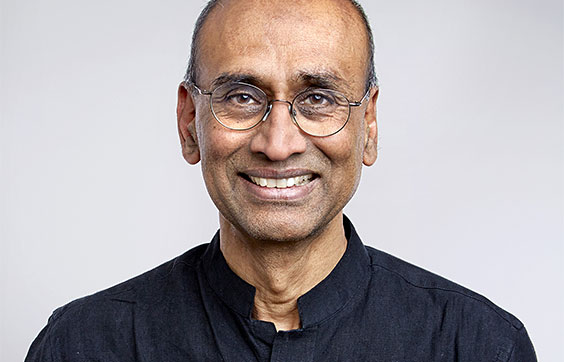
First was 2009 Nobel Prize winner and President of the Royal Society, Professor Sir Venki Ramakrishnan (pictured above), whose many scientific contributions include his work on the atomic structure of ribosomes. Ribosomes exist in their millions in every cell, and are the site where genetic information is read to synthesise proteins from amino acids. He began work on ribosomes in the late 1970s and eventually discovered their complex three-dimensional structure in 2000, with the aid of X-ray crystallography.

Next, Professor Robert Winston – who was the Bedales Eckersley Lecture speaker in 2013 – spoke about manipulating human reproduction, from his work in vitro fertilisation, through to regenerative medicine such as stem cell research and epigenetics, which may turn out to be the most important biological development in the years to come. However, he warned that manipulating the human will always be dangerous, uncertain and unpredictable.

Continue reading