Block 4 Ancient Civilizations students make more than the best of lockdown!

by Christopher Grocock, Teacher of Classics

hippocrates

The summer term’s task for Ancient Civilisations students in Block 4 is to devise and produce a piece of project-based work – something which we have always regarded as a pioneering and progressive approach to exploring the ancient world(s) and one which gives students a free hand to show what they can do. This year our students have chosen some remarkably innovating and diverse topics never investigated before, and the assessment panel which had the privilege of seeing their interim work in on-line presentations last week was suitably impressed by their self-evident interest, enthusiasm, and pride in their work. Topics this year have been as diverse as midwifery in ancient Greece and Rome, tattoos, human sacrifice across the world in ancient times, Persian kings’ propaganda, doctors and medicine, and ancient astrology. The ‘personal research and project’ approach has fitted in very well with the current lockdown situation, and it has wonderful to see the ways in which our students have risen to the challenge – even with communication problems (one student is in northern Italy and one is in Switzerland.)

So much for the teacher’s ‘official’ view What did the students think? Olivia Cooper said ‘I wanted to find out how medicine started because it has come such a long way, and to find out how much the understanding of medicine was affected by religious views in ancient societies.’ Lula Goldring’s motive for choosing ancient Persia was sheer curiosity: ‘I never knew about it but I wanted to find out about it – I find discovering new things interesting.’ Theo Heining-Farmiloe chose to study tattoos ‘because it hadn’t been looked at and I wanted to explore it.’ Inigo Portman was inspired by ‘a family trip to Mexico when I was about 11 or 12. It sparked an interest in the Aztecs.’

How did the students find it? Lula said ‘I had lots of freedom to make choices. It was hard at the beginning because it was all new, but s I learned more it all came together. Not confusing the Persia kings called Darius was a challenge too!’ Inigo and Theo both agreed that doing the presentations of their work in the development stage to a panel of three assessors was the most fun part of the course. ‘I enjoyed researching the Carthaginians, too, because they were completely new to me. The editing process was the most difficult.’ Olivia said ‘I really enjoyed the process of discovery and being able to organize my own research at my own pace. But you have to take responsibility for getting it done. The biggest challenge was figuring out what to include and what to leave out.’ Theo summed the whole exercise up nicely – ‘the interesting part is looking at something which hasn’t been looked at very much, and I wanted to explore it. But writing the essay is the most challenging part!’

As their teacher I have been very impressed by all the work done – and the tenacity that the whole class has shown in doing this – and I’m not sure who has enjoyed seeing these projects take shape, the students, their teacher, or the two assessors who saw presentations of a really fine standard. Lockdown or not, some great things are being achieved!

(Picture: the founding father of medicine, Hippocrates – not Chris G, his beard isn’t so curly)
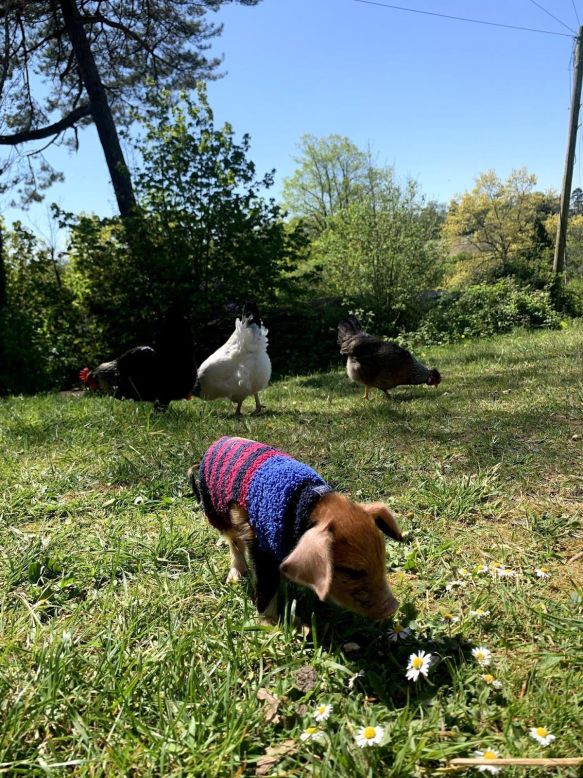
A pig’s life…on the Bedales farm

by Kirsten Houser, Assistant Farm Manager, Bedales

Pig June 2020

On 5 April our Oxford Sandy and Black sow ‘Little Pig’ gave birth to 13 piglets, immediately jostling and squealing to be fed around the clock. Piglets are born with a set of needle sharp teeth, slightly protruding from the sides of their mouths – which they use to defend their chosen teat (they pick one and they stick to it). In commercial pig rearing settings, piglets will have these teeth clipped or ground down to prevent them from injuring each other, which is something that we don’t do here on the Bedales farm, for obvious welfare reasons. We leave mum and babies to get on with things as nature intended. Likely because of the size of the litter, competition for teats was even higher than normal and after a week or so we noticed two of the piglets had some scratches to their faces and were beginning to look weaker and smaller than their siblings. Sadly we lost one of the two, it died at 10 days old, and it looked as though, without some help the second piglet would soon die too. The decision to bottle feed a baby animal is never an easy one – once humans step in that animal loses out on the perfectly tailored nutrition, warmth, and security that its parent provides, not to mention the playtime and social lessons of being part of a litter. Still, there are always exceptions, and having done some research I knew that the only thing this little piglet needed was some milk in her tummy and somewhere warm to sleep. The scratches on her face were causing her eyelids to become swollen, so she couldn’t find her way to mum’s teats for a feed. She was basically getting weaker and weaker, and not able to hold her head up anymore. At this point I decided to take her home.

My partner Lisa and I managed to make up some emergency piglet milk – full fat cows milk, egg yolks and honey, and we set about trying to get Bridget (as we named her) to drink. Bridget’s first feed was only 2 ml, but it was enough to get her through the next couple of hours. She was tiny, wobbly and weak, but we settled her onto a heat mat, made her a jumper from a sock and surrendered ourselves to two-hourly feeds, even through the night. I’m pleased to say that within a week, Bridget started to show signs of improvement and a feisty character emerged. She became firm friends with our collie, Fennel, and let us know when she was hungry with a bossy squeal and much determined nudging. Meanwhile, her brothers and sisters were moving from the pig sty into the Bedales woods and were almost twice her size. We worried she might never catch up.
Weeks passed, lockdown continued and the piglet in our living room grew out of the sock
jumpers and into a puppy crate under the table. She started playing with the dog and following us into the garden, running around and oinking enthusiastically. Pigs are very intelligent creatures, and Bridget learned to sit on command (with food encouragement) and even trotted beautifully to heel! I took her with me to feed the other Bedales animals and we met lots of the on-site community on our walks. It became clear, sadly, that Bridget would soon outgrow my small flat, and that a move outside was on the cards. Having been roughly the size of a guinea pig, Bridget was now the size of a small spaniel, and had worked out how to open the fridge door – oh dear.

Bridget’s siblings were all sold on to lovely new homes (some of whom are Bedales and
Dunhurst families) at the age of 8 weeks. We have our two sows here already, as well as two piglets kept on, so I began to research a new home for Bridget, somewhere she would be provided with the tubby rubs, cherry tomatoes and toast crusts to which she had become accustomed.

Manor Farm near Southampton is a council-run working historic farm open to the public who are able to see up-close their various native and rare breed livestock, in the Victorian farmyard. After a visit to the school to meet Bridget (who behaved very well) the staff at Manor Farm were sure that her clear star-quality (I might be biased) and friendliness with people would make her a great pig to take on. A week or so later, this Tuesday just passed, we loaded Bridget up and drove her over on a bright sunny afternoon to her new home. The farm there (like us) is still closed because of Coronavirus, but they hope to have Bridget well settled in by the time their visitors return this Summer. She will soon be joined by a pair of Tamworth piglets, who will be
closer to her in size than her own siblings, we hope she will enjoy some pig company. When she’s old enough she’ll have her own piglets to look after, and best of all – we’ll be able to visit whenever we like. Lockdown, even on the beautiful Bedales site, has been a confusing and anxious time for everybody, but taking care of this little pig has bought lightness and laughter into our lives, a reminder of the power that animals have to help us stay grounded through difficult times. Thank you Bridget.


Virtual visit to Sadler’s Wells for Chalayan’s ‘Gravity Fatigue’

Gravity-Fatigue

By Lucy Albuquerque, Block 5

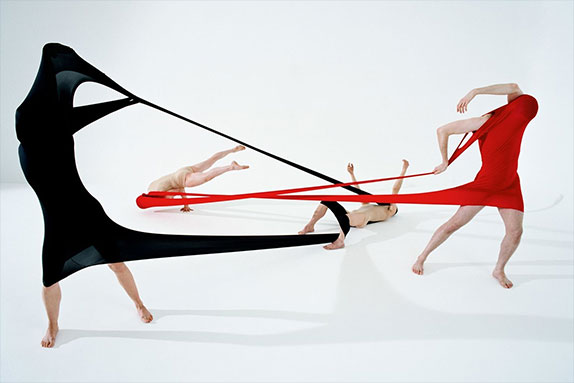
We recently took a virtual school trip to go and see Hussein Chalayan’s Gravity Fatigue at Sadler’s Wells Theatre. Gravity Fatigue is a mixture of a dance and fashion show all in one, and this is what makes this show so unique.

As Chalayan is a fashion designer, not a choreographer himself, he worked with Damien Jalet to create the show. Chalayan wanted to show the connection between clothes and movement, and how they work together in space. He uses other ways as well as movement to portray the message to the audience; for example, he explores different floorwork and how the dancers engage with their costumes.

Throughout the show, the lighting stood out to me, as it was used to show a change of dancer or the emotion that Chalayan was trying to embody. Lighting was also used to highlight the direction that dancers moved in – for instance, when a circular spotlight lit up, the dancers turned in a circle as if in a trance, reflecting the shape of the lighting.

Continue reading

Outdoor Work update – Summer 2020

By Andrew Martin, Head of Outdoor Work

The Summer term is usually the busiest and most rewarding; students can literally see the fruits of their labour all around them. But at the moment, certain areas of Outdoor Work (ODW) remind me of a post-apocalyptic movie. People have gone, tools have been left, a shoven leaning against a wall is slowly being choked by bindweed as it makes its way up the shaft. Yet despite the eerie silence and our missing workforce, plants still grow and animals still need tending…

Every year we time the lambing of our Jacob sheep to start at the beginning of the Summer term. This year at the black barn, we got 26 lambs from 15 ewes. Across the yard, our two sows, Bessie and Little Pig, were busy giving birth to 22 piglets between them. The barnyard was buzzing with new life and a welcome distraction for passers-by on their daily lockdown walk.

We currently have around 90 sheep on the farm. They are all at different stages of life and require a lot of hands-on work. Social distancing and farming don’t really go well together and it is at times like this that the term ‘Bedales bubble’ has been very appropriate. Without the help of students, regular jobs like weighing, treating, foot trimming, shearing and moving sheep have been a challenge. But my ‘ODW bubble’ of Kirsten, Marcella, Oscar Kingsley-Pallant, Josh Baty and my family has worked wonders!

Continue reading

Old Bedalian Mila Fernandez inspires students in virtual Dance workshop

Dance-workshop

By Charlotte Land, 6.1

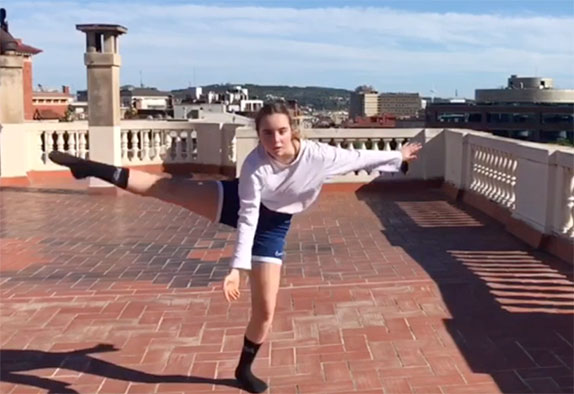
On 4 June, A Level Dance students were fortunate enough to take part in an online workshop run by Old Bedalian Mila Fernandez. Mila studies dance at Trinity Laban Conservatoire of Music & Dance in London, The workshop focused on imagery and improvisation, merging the two concepts together to form a piece of dance.

We began the workshop by imagining a beach and its waves and, while working on our breathing, started moving around the space before adding arm gestures. We then proceeded to change the dynamics by making the movement more complex, using differing levels and the whole body. The second part of the workshop also included the use of imagery, but this time it was a piece of clothing. We began by moving only our backs, playing around with how expressive you can be using only your torso. We envisioned our garments and started to create movement for their different parts: colour, texture, how it felt to wear it, etc. It was an interesting approach we haven’t tried before, and it pushed us out of our comfort zones. One 6.1 student felt they had learned how to let loose and allow their body to flow without having to think about what was coming next.

Continue reading

Bedales, biodiversity and lockdown

Biodiversity

By Cheryl Osborne, Teacher of Biology

Lockdown will be one of those defining moments. We will all remember where we were and what we were doing. For me, it will be the transition from standing in front of a class of children in my lab, to sitting staring at a computer screen on my sofa – an alien world and one that I am not enjoying! However, it hasn’t all been bad. The stillness and quiet has let nature be heard and during lockdown both Mary Shotter, our Biology technician, and I have immersed ourselves in it.

Mary has taken a biodiversity study of the Bedales site, and I have been taking photos of the wildflowers during my daily walks in the vicinity of Bedales. From these walks, I have put together some wildflower quizzes that have been available on the B-More Teams channel. I have really learnt a lot doing this and seen flowers that I hadn’t noticed before. My husband and I have been lucky, living close to school and the Ashford Hangers. The unnerving quiet of a deserted A3, which we walked over daily in those early days, allowed the birds and the rustling of the trees to be heard and heightened our awareness of nature all around.

Continue reading

Block 3 explore ecosystems for Ecology project

Ecology 1

By Cheryl Osborne, Teacher of Biology

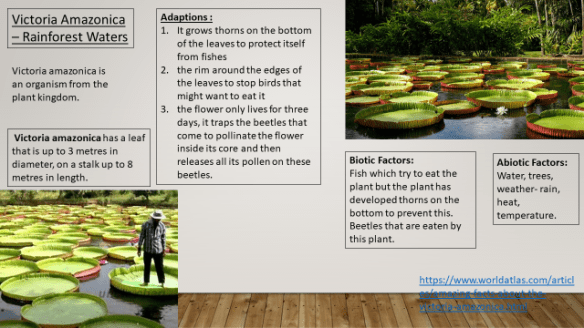
In the five weeks before half term, Block 3 students were engaged in a project for Biology, researching an ecosystem. They chose their own ecosystems, which ranged from rainforests to cold deserts, coral reefs to wetlands. They were asked to identify three habitats within their ecosystem, to look at the biotic and abiotic factors affecting each habitat, and then finally to look at the adaptations of three organisms within each habitat.

The project enabled students to be independent in their learning and to be creative. They learnt research skills and the need to reference the websites that they used. Those who looked at the marking criteria carefully performed really well. The projects were presented as PowerPoints, word documents, posters and even a website (which can be accessed here).

Continue reading

Inspiration for an EPQ – a student’s perspective

EPQ

By Eloise Cooper, 6.1

The idea for my EPQ came to me in a Religious Studies class, when we were arguing about the line between a cult and religion. The arguments from all sides (all religions are cults, there is a line between cults and religions, and that they can flow back and forth, etc) appealed to me, and as someone who’s always been interested in social dynamics, I decided to do an EPQ on it, with my title as ‘To what extent is a cult different from a religion?’

Overall, doing an EPQ has been an incredible experience. Taking a title and a few vague ideas and spinning it into a 5000-word dissertation has been very rewarding. I’ve read books, watched documentaries, interviewed people and found research papers that I would have otherwise never read.

Continue reading

Block 3 get creative for Atomic Models Project

Atomic-Models-lrg

By Olly Hoult, Teacher of Chemistry

This week the Chemistry Department instructed Block 3 to construct models an atom and an ion as part of the Atomic Structure and the Periodic Table topic. What makes Chemistry such a challenging subject is that it involves studying a broad range of abstract concepts. Learning about atoms and ions is an example of this.

The building blocks of the universe are so small they are almost impossible to visualise. Therefore scientists use models to help conceptualise the mysterious quantum world. The model of the atom is ever evolving as scientists produce new experiments which question previously accepted theory. We believe model building is a necessary tool in science teaching as it gives students a more authentic experience of the scientific process while as teachers it gives a more detailed insight into what students have learned from this topic. In these challenging times of remote learning we also felt the task was useful as an exercise to get students off their screens and really let their creativity take over.

Joel Edgeworth has this to say about his model: “For my atomic model project I made a neutral neon atom and a positively charge Sodium ion. For my project I used pizza boxes and the stands which the pizzas are held on. I made two models for each particle, the nucleus and the electronic configuration, and I used a tea grain to show the relative size of a nucleus in proportion to the rest of the atom / ion.”

Continue reading

Wellbeing update

By Kirsten McLintock, Head of Wellbeing & PSHE

Block 3 have been prompted to reflect on ‘character’ from The Guardian article, The real Lord of the Flies: what happened when six boys were shipwrecked for 15 months. For centuries western culture has been permeated by the idea that humans are selfish creatures. That cynical image of humanity has been proclaimed in films and novels, history books and scientific research. But in the last 20 years, something extraordinary has happened. Scientists from all over the world have switched to a more hopeful view of mankind. As we are living through this unprecedented lock down and as our theme in Wellbeing for Block 3 this year is ‘empathy’ I felt this cross-curricular article would resonate with Bedalians. The real Lord of the Flies is a tale of friendship and loyalty; one that illustrates how much stronger we are if we can lean on each other, and that we should always look for what is good and positive in people. As a Block 3 student reflects: “I enjoyed reading this article a lot. I found it very interesting and I enjoyed the expectations vs reality of it all. Books make it appear as if people being trapped on an island together will lose all sanity. Good to know that isn’t necessarily true!”

For Block 4’s theme on identity this year we have been exploring self-awareness and acceptance. Dr Brene Brown’s research and teachings permeate the entire Wellbeing curriculum provision at Bedales, so it was opportune to task students with watching her two TED talks.  Dr Brown is perhaps best known for TEDx talk, The Power of Vulnerability. Recorded at an event in Houston in 2010, the talk is one of the five most popular in TED history, with more than 60 million views. It summarises a decade of Brown’s research on shame, vulnerability and courage.

Continue reading