Bedales, biodiversity and lockdown

Biodiversity

By Cheryl Osborne, Teacher of Biology

Lockdown will be one of those defining moments. We will all remember where we were and what we were doing. For me, it will be the transition from standing in front of a class of children in my lab, to sitting staring at a computer screen on my sofa – an alien world and one that I am not enjoying! However, it hasn’t all been bad. The stillness and quiet has let nature be heard and during lockdown both Mary Shotter, our Biology technician, and I have immersed ourselves in it.

Mary has taken a biodiversity study of the Bedales site, and I have been taking photos of the wildflowers during my daily walks in the vicinity of Bedales. From these walks, I have put together some wildflower quizzes that have been available on the B-More Teams channel. I have really learnt a lot doing this and seen flowers that I hadn’t noticed before. My husband and I have been lucky, living close to school and the Ashford Hangers. The unnerving quiet of a deserted A3, which we walked over daily in those early days, allowed the birds and the rustling of the trees to be heard and heightened our awareness of nature all around.
Continue reading

Block 3 explore ecosystems for Ecology project

Ecology 1

By Cheryl Osborne, Teacher of Biology

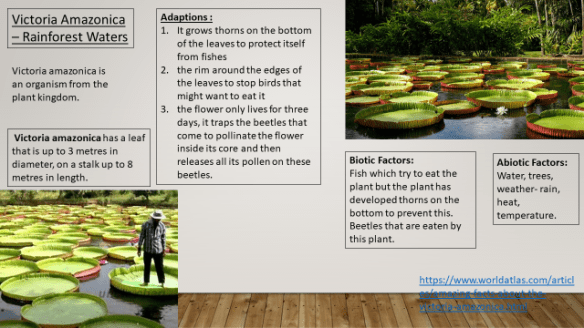
In the five weeks before half term, Block 3 students were engaged in a project for Biology, researching an ecosystem. They chose their own ecosystems, which ranged from rainforests to cold deserts, coral reefs to wetlands. They were asked to identify three habitats within their ecosystem, to look at the biotic and abiotic factors affecting each habitat, and then finally to look at the adaptations of three organisms within each habitat.

The project enabled students to be independent in their learning and to be creative. They learnt research skills and the need to reference the websites that they used. Those who looked at the marking criteria carefully performed really well. The projects were presented as PowerPoints, word documents, posters and even a website (which can be accessed here).

Continue reading

Inspiration for an EPQ – a student’s perspective

EPQ

By Eloise Cooper, 6.1

The idea for my EPQ came to me in a Religious Studies class, when we were arguing about the line between a cult and religion. The arguments from all sides (all religions are cults, there is a line between cults and religions, and that they can flow back and forth, etc) appealed to me, and as someone who’s always been interested in social dynamics, I decided to do an EPQ on it, with my title as ‘To what extent is a cult different from a religion?’

Overall, doing an EPQ has been an incredible experience. Taking a title and a few vague ideas and spinning it into a 5000-word dissertation has been very rewarding. I’ve read books, watched documentaries, interviewed people and found research papers that I would have otherwise never read.

Continue reading

Design challenge to improve the DCR for upcoming Badley Day

DCR-Batcave

By Ana Simmons, Senior Day Houseparent and Teacher of Ceramics

With another Badley Day on the horizon, thoughts have turned back to the last one and all that we achieved back in September. There’s something incredibly rewarding by the way in which everyone chips in together to improve and enhance areas of the school as well as the way in which the work done on the day lives on for years for others to enjoy.

In the Day House we were exceptionally proud of the facelift we gave to our ‘Batcave’ or quiet room. Under the close supervision of Chloe, the Art Technician, students from all years spent the day covering the walls with a mural inspired by shapes and lines found around the Bedales estate. It became a collective masterpiece and makes the once dingy space now a fresh and vibrant place for people to escape to.

Continue reading

Block 3 Art students sketch the view from their windows

By Andy Cheese, Teacher of Art

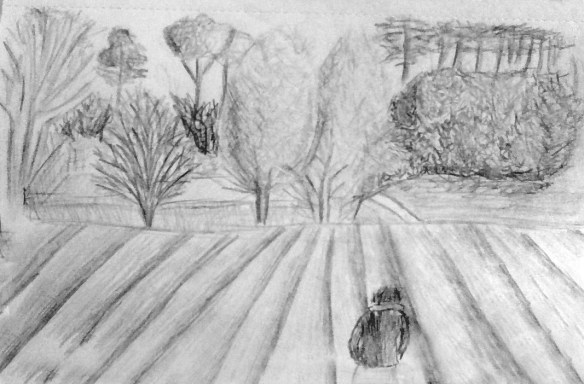
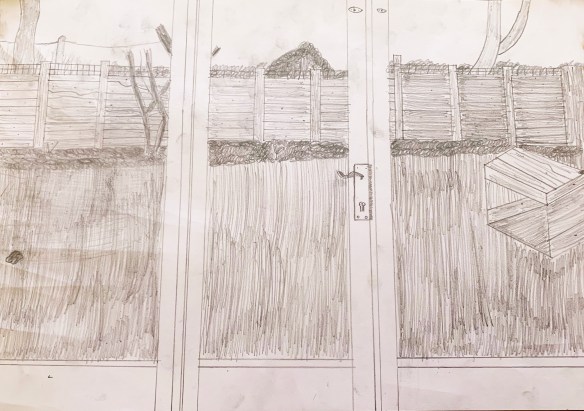
During the first week of remote learning, I wanted to extend students’ drawing skills using a basic theme of ‘looking out the window’.

I supported this task with a sheet on what to focus on when drawing – for example, concentrate on the foreground detail, or make the background more interesting. I also added more support sheets on perspective – one and two-point – if some of the students wanted to complete some exercises while we are working from home.

You can see some of the finished pieces of work below.

dylan hui

By Dylan Hui

george bedford

By George Bedford

jamie bradbury

By Jamie Bradbury

madeline Farley

By Madeline Farley

Matilda (Alejandra-Matilde) Celma Rodriguez-Fonseca - drawing window

By Matilda Celma Rodriguez-Fonseca


Living and thinking sustainably

Sustainability

This article was originally published in the Old Bedalian Newsletter 2020.

The whole school community has been doing more to reuse, reduce and recycle in the wake of the climate change campaign that has been dominating the streets and the media, drawing attention to the urgency of the global changes that need to be made.

Bedales hosted a ‘Funeral for the Planet’ earlier this year, where a climate emergency was announced. The event was organised by Bedales Head of Geography Paul Turner, who became one of the UK’s first United Nations-accredited climate change teachers. Bedales’ Geography department has also recently launched the UK’s first climate breakdown scheme of work, collaborating with other teachers and organisations.

Following this, a group of 60 students joined a climate change protest in March, marching from Parliament Square to Buckingham Palace and were encouraged by the amount of support they received from tourists, construction workers and even police officers. Students took part in more protests in Petersfield and in London, with a small group attending a symposium on climate change at the London School of Economics. A number of speakers were present including Lord Stern, Chair of the Grantham Research Institute on Climate Change and the Environment, who addressed the question of, ‘What should individuals, communities, schools and universities do to stop climate change?’

Continue reading

An old-fashioned Bedales fireside

By Clare Jarmy, Head of Able, Gifted & Talented, Oxbridge, Academic Scholars & PRE

It’s a temptation once you’ve been here a while to harken back to the old days as if you were there. The reality is that the Bedales ‘fireside’ – a relaxed evening with music, snacks, games and chatting round a fire – has not been a staple part of the Bedales way of life for a long time, probably not since the times when staying in at the weekend was the norm for everyone. But the important thing about being aware of a school’s history and ethos is that you have a vocabulary, an established set of practices, on which to draw, especially in more challenging times.

So what could have been more appropriate on Thursday night than to spend the evening round the fire with the Bedalians who were still in school – many here to keep working on Art and Design – playing games, chatting, drinking hot chocolate, and listening to music? We had Monopoly, jigsaws, word games, and some very special Star Wars Lego that Clive Burch had saved for such an occasion!

Continue reading

Conserving the Bedales Archive

Bedales-Archive

Last week Jane Kirby (Old Bedalian and Volunteer Archivist) and Ian Douglas (Librarian) attended a conservation workshop arranged by the School Archivists Group. This organisation brings together staff and volunteers working in over 250 independent schools, who between them share responsibility for looking after a vital part of the national heritage.

Top of the bill on this occasion was expert advice on preserving photographs, film and textiles. Jane and Ian can now confidently distinguish an albumen print from a silver gelatin print, and understand their different preservation needs. We have also been cautiously sniffing our film collection for signs of the dreaded ‘vinegar syndrome’.

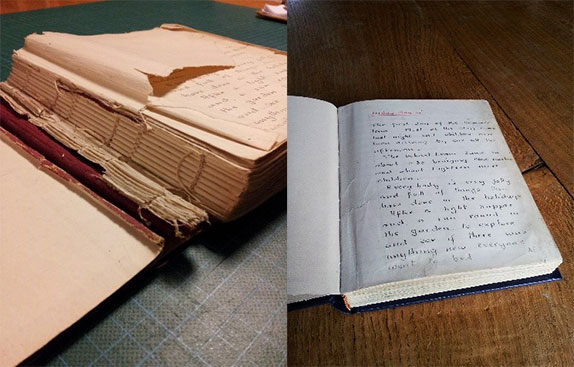
In our own recent conservation work, Jane has been making bespoke light-proof boxes, to protect some early Bedalians’ photo albums. Ian has conserved and rebound this 1930s diary written by Dunhurst pupils.

Continue reading

Bedales scientists support Dunannie STEM event

By Liz Stacy, Head of Chemistry

Last Saturday was Bedales Pre-prep, Dunannie’s STEM themed Open Morning. Five of our Block 5 students – Rhiannon Griffith, Milo Whittle, Ben Bradberry, Mabel Watson and Athena Lucas – filled their lab coat pockets full of chocolates (the one and only time they will be allowed to put food in a lab coat!) and headed down to Dunannie to help the children with their science experiments.

There was an amazing range of experiments on offer, from making lava lamps using immiscible liquids and building circuits to power buzzers, to programming the Beebot robots to move and light up on command and looking at field line patterns using magnets. The students were tasked with judging each exhibit on presentation and also the scientific knowledge of the children manning the experiment. They also fielded questions from prospective parents about what studying at Bedales was like and the excellent opportunities on offer for students interested in pursuing science. I thought Milo was maybe a bit harsh giving one small six-year-old five out of ten for scientific knowledge – he did award a lot of chocolate though!

Continue reading

British Museum exhibition brings students closer to Ancient Greek epics

By August Janklow and Gus McQuillin, 6.1

6f0a68f4-86bc-4c5a-b316-1b147f0ad86e

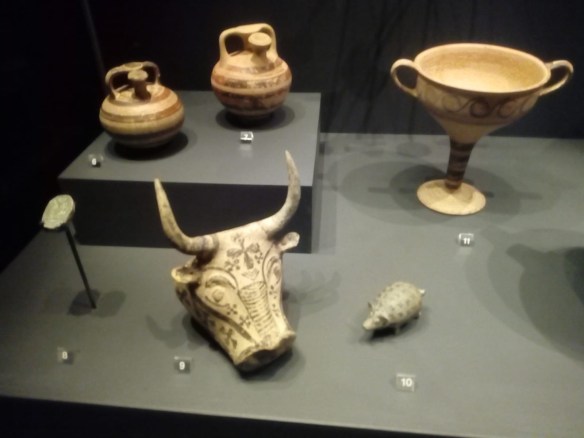
On 28 February, those of us in the 6.1 Classics class visited the British Museum’s Troy: Myth & Reality exhibition. It was an extraordinarily well curated collection of anything and everything relating to Troy, in order to help us better understand The Iliad by Homer.

The museum had lots of ancient pieces of art and stories relating to Troy. They had lots of vases and other items of treasury dating back roughly 4,000 years. The artefacts came from museums across the world and also reflected that these stories have inspired artists, sculptors, potters, writers and musicians of every century. A highlight was the massive wood-framed Trojan horse that hung over the main room to bring us into the Trojan world.

Continue reading